Big red panda just the role model tween girls need Turning Red can be valuable resource for parents

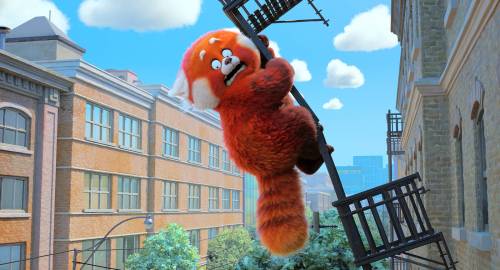
Turning Red, the buzzed-about animated film from Chinese-Canadian director Domee Shi now streaming on Disney Plus, is a heartwarming and groundbreaking entry into Disney-Pixar’s catalogue, thanks to its thoughtful, honest — and funny — depictions of puberty, menstruation, adolescent rebellion, and life as a 13-year-old girl.

Read this article for free:


or

Already have an account? Log in here »

To continue reading, please subscribe:

Subscribe and receive a limited-edition Free Press branded hat or tote.

Digital Subscription

One year of digital access for only $205*

  • Enjoy unlimited reading on winnipegfreepress.com
  • Read the E-Edition, our digital replica newspaper
  • Access News Break, our award-winning app
  • Play interactive puzzles

*First annual payment billed as $205.00 + GST for one year. This annual subscription will automatically renew at $233.00 + GST every 52 weeks (10% off the regular annual price of $259.35). Offer available to new and qualified returning subscribers only. Cancel any time.

To continue reading, please subscribe:

Add Free Press access to your Brandon Sun subscription for only an additional

$1 for the first 4 weeks*

  • Enjoy unlimited reading on winnipegfreepress.com
  • Read the E-Edition, our digital replica newspaper
  • Access News Break, our award-winning app
  • Play interactive puzzles
Start now

*Your next Brandon Sun subscription payment will increase by $1.00 and you will be charged $17.95 plus GST for four weeks. After four weeks, your payment will increase to $24.95 plus GST every four weeks.

Opinion

Hey there, time traveller!
This article was published 25/03/2022 (1653 days ago), so information in it may no longer be current.

Turning Red, the buzzed-about animated film from Chinese-Canadian director Domee Shi now streaming on Disney Plus, is a heartwarming and groundbreaking entry into Disney-Pixar’s catalogue, thanks to its thoughtful, honest — and funny — depictions of puberty, menstruation, adolescent rebellion, and life as a 13-year-old girl.

It’s also become a lightning rod for controversy for its… depictions of puberty, menstruation, adolescent rebellion, and life as a 13-year-old girl.

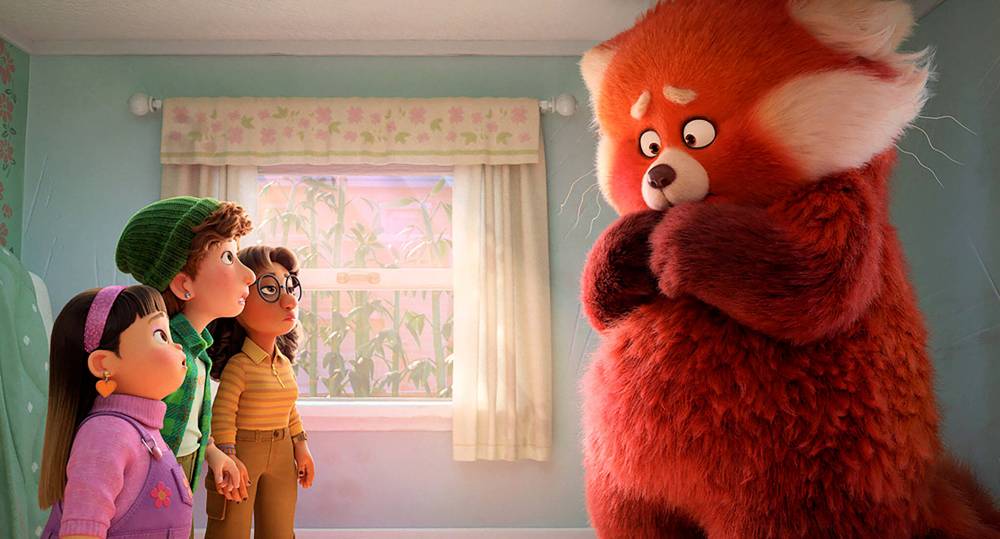
Set in Toronto circa 2002, Turning Red is about a Chinese-Canadian girl named Meilin “Mei” Lee, who is trying to reconcile her life as the overachieving, dutiful daughter of parents with sky-high expectations — particularly her overbearing mom, Ming (Sandra Oh) — and as the quirky, boy-band fangirl who loves her besties, drawing, having crushes, and school.

When Mei gets her period — or when “the red peony blooms,” as her mom puts it — she finds out she was born with hereditary blessing/curse, passed down through her matrilineal line: the ability to transform into a giant red panda whenever she experiences an intense emotion, be it anger, humiliation, happiness or excitement.
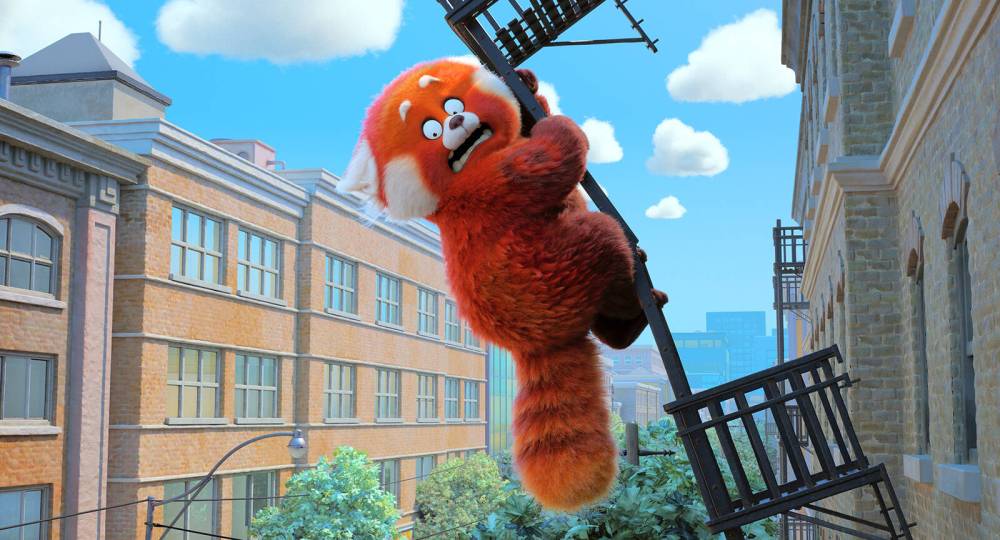
If that sounds like an on-point description of what it’s like to go through puberty, bingo.

This storyline has created some discomfort among parents who have taken to social media to express their concerns that the film is “inappropriate.” Which is too bad, because Turning Red gets so much right: the division of family and friend life, and the pain of having to hide pieces of yourself from both; the potency of hormone-fuelled rages and crying jags; the discovery that your parents are people, too; the agony and ecstasy of figuring out who you are and what your values are; and the importance of having bodily autonomy.

Also, it’s pretty incredible to see boxes of maxi pads — a normal fixture of bathroom vanity cabinets the world over — in a Pixar film.

This idea that talk of menstruation is somehow “mature content” seems misguided, considering the average age of one’s first period is 12. Some kids are 10. For my part, I was 11 and still in elementary school, young enough that were no maxi pad dispensers in the girls’ bathroom — which would have been, uh, really handy. Point being, those are solidly kid/tween ages. This conversation needs to happen way sooner than one may think.

This idea that talk of menstruation is somehow “mature content” seems misguided, considering the average age of one’s first period is 12.

Others took issue with a scene in which Mei is drawing her crush as an anime-style merman. Look, just because 13-year-old girls are noted horndogs, it doesn’t mean they are actually “doing it.” When I was in Grade 8, the inside of my locker door was positively plastered with magazine photos of Joshua Jackson, who played Pacey Witter in Dawson’s Creek, a show that was actually probably too mature for me. But I also wore oversized Umbro soccer shorts and Northern Reflections T-shirts — a uniform that practically screamed, “I am not nor have I ever been sexually active.” The point is, I was figuring all of this out in a completely benign way. Just like Mei.

Never in the history of time has silence around totally normal things such as getting your period and navigating one’s nascent sexuality made these things go away. The red peony will bloom whether you talk about it or not. All silence does is create confusion and mystery and, eventually, shame and secrecy.

Being a teenage girl is hard, but being a tween girl — that little space between 9 and 13 that’s neither child nor teen — is a particularly confusing cusp. It is also a woefully under-served market when it comes to media that isn’t, say, a Judy Blume novel.
In an interview with Vulture, Rachel Shukert, creator of The Babysitters Club, the recently cancelled Netflix series based on the beloved series by Ann M. Martin, mused that “people are extremely uncomfortable with this period in girls’ lives. It seems to be the time of life that girls lose faith in themselves, and I think it’s because they don’t see representation of where they’re actually at. Girls are expected to go straight from Doc McStuffins to Euphoria. They’re not ready for TV about having sex, but they don’t want to be little girls. So who are they?”

We need more media that, as Shukert puts it, meets tween girls where they are. That Pixar is dipping a toe into coming-of-age narratives should be a welcome move; Turning Red is actually an incredible resource for parents navigating these conversations, should they choose to see it that way. As Mei herself notes, “We’ve all got a messy, loud, weird part of ourselves hidden away, and a lot of us never let it out.” Let’s create the kinds of conversations and spaces where we can unleash our inner pandas.

jen.zoratti@winnipegfreepress.com

Twitter: @JenZoratti

Jen Zoratti

Jen Zoratti
Columnist

Jen Zoratti is a Winnipeg Free Press columnist and author of the newsletter, NEXT, a weekly look towards a post-pandemic future.

Our newsroom depends on a growing audience of readers to power our journalism. If you are not a paid reader, please consider becoming a subscriber.

Our newsroom depends on its audience of readers to power our journalism. Thank you for your support.

History

Updated on Friday, March 25, 2022 9:13 AM CDT: Amends wording re: 13-year-old girls
Report Error Submit a Tip

More Stories

Turning Red can be valuable resource for parents

Jen Zoratti 5 minute read Preview

Turning Red can be valuable resource for parents

Jen Zoratti 5 minute read Friday, Mar. 25, 2022

Turning Red, the buzzed-about animated film from Chinese-Canadian director Domee Shi now streaming on Disney Plus, is a heartwarming and groundbreaking entry into Disney-Pixar’s catalogue, thanks to its thoughtful, honest — and funny — depictions of puberty, menstruation, adolescent rebellion, and life as a 13-year-old girl.

It’s also become a lightning rod for controversy for its… depictions of puberty, menstruation, adolescent rebellion, and life as a 13-year-old girl.

Set in Toronto circa 2002, Turning Red is about a Chinese-Canadian girl named Meilin “Mei” Lee, who is trying to reconcile her life as the overachieving, dutiful daughter of parents with sky-high expectations — particularly her overbearing mom, Ming (Sandra Oh) — and as the quirky, boy-band fangirl who loves her besties, drawing, having crushes, and school.

When Mei gets her period — or when “the red peony blooms,” as her mom puts it — she finds out she was born with hereditary blessing/curse, passed down through her matrilineal line: the ability to transform into a giant red panda whenever she experiences an intense emotion, be it anger, humiliation, happiness or excitement.

Read
Friday, Mar. 25, 2022

International flavour: Canadian investors may want to make like Ottawa, diversify beyond U.S.

Joel Schlesinger 6 minute read Preview

International flavour: Canadian investors may want to make like Ottawa, diversify beyond U.S.

Joel Schlesinger 6 minute read 2:01 AM CDT

Canada is learning the hard way about the dangers of putting too many eggs in its U.S. economic basket.

Much has been made about the need to diversify our economy away from the United States.

Diversification is understandably beneficial. The more varied streams of revenue a nation has, the less affected the economy will be when one of those sources is interrupted.

The same can be said about investment portfolios.

Read
2:01 AM CDT

Tibial tray connected to aerospace sector …

Aaron Epp 6 minute read Preview

Tibial tray connected to aerospace sector …

Aaron Epp 6 minute read Monday, May. 4, 2026

There are thousands — perhaps tens of thousands — of people in the United States who are walking around with Manitoba-made metal parts in their bodies.

After Winnipeg-based manufacturing solutions provider Precision ADM Inc. got started in 2015, one of its first jobs was fabricating U.S. Food and Drug Administration-approved tibial trays — a critical component for knee replacement surgery that transmits loads from the femur to the tibia, ensuring stability, alignment and durability over millions of cycles of use.

Manufacturing the tibial trays for a client in the U.S. stands out as a vivid memory for Martin Petrak, the company’s co-founder and president.

“We made something that could go into a human, that should be there for the rest of their life,” he says. “We thought, we’ve finally done something significant here as an organization, as a company, with staff that believed that we could do this.”

Read
Monday, May. 4, 2026

Letters, Oct. 3

7 minute read 2:01 AM CDT

A morning in the life …

My very first lesson does not start when I walk into that lecture hall, oh no — it starts long before. It begins when I walk to my car, check the estimated arrival time to the University of Manitoba and hope that Winnipeg traffic agrees with it.

A drive that appears completely manageable changes almost immediately when I’m greeted by a tsunami of orange pylons and a line of cars that appears to go on forever. Traffic moves by the inch, lanes magically disappear and the detour I took yesterday now has a detour of its own. These factors make me do a calculation that I have become all too familiar with. How late can I arrive and still find parking, run to my class across campus and get to class with enough time left to make it worth it?

I have grown used to people saying, “Why not just leave earlier?” I do. But when I’m already leaving for my 8:30 a.m. class at 7 a.m., there’s only so much I can do. This drive that some would think is relaxing is one that feels like an assignment that I didn’t know I had to complete and is due at 8:30 a.m.

Anhang widow faked Jewish heritage to find refuge in Israel, trial told

Claude Adams 5 minute read Preview

Anhang widow faked Jewish heritage to find refuge in Israel, trial told

Claude Adams 5 minute read Friday, Sep. 21, 2018

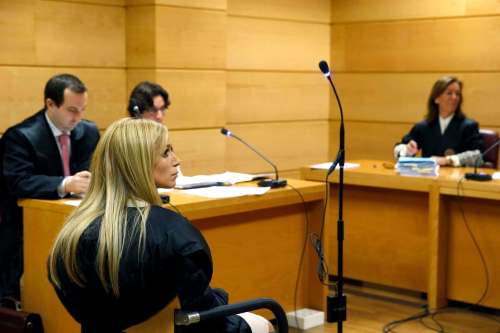
SAN JUAN, PUERTO RICO — Looking for a safe refuge from American justice, the widow of murdered Winnipeg native Adam Anhang used forged documents to claim she was Jewish, and then asked an Israeli lawyer: “How can I be protected? Is Israel American soil?”

A jury in San Juan heard the account of international deception Friday in the trial of Aurea Vazquez-Rijos, accused with her sister and a boyfriend of conspiring to have Anhang killed in 2005 in a bid to get their hands on millions of dollars from his estate.

The forgery scheme, which included the widow’s mother and brother, was revealed through the introduction of dozens of emails and documents by the prosecution, which closed its case Friday.

Vazquez-Rijos was not Jewish; however, in her pre-nuptial agreement with Anhang in 2005, she promised to convert to Judaism within two years of their wedding. Anhang was killed six months later in an assault on a San Juan street, with his wife by his side. The killer later told police he’d been promised $3 million by the three accused to kill Anhang.

Read
Friday, Sep. 21, 2018

Broadening prediction-market gambling a bad idea

Editorial 4 minute read Preview

Broadening prediction-market gambling a bad idea

Editorial 4 minute read 2:01 AM CDT

Let’s make a prediction: sooner or later, when Canadian governments find a way to take their own cut of the action, prediction-contract gambling on everything from sports to entertainment to political decisions is going to come to Canada.

And that’s a horrible, dangerous, pernicious idea.

Unless you have particular access to information — either inside information or strategic information based on skills or education — you’re not likely to make money at it. In fact, structurally, you’re likely to lose. In prediction markets, you basically pay an amount, plus fees from the company involved, to bet on whether something will or will not happen within a certain time frame. The amount you pay for your contract depends on how other people are also betting.

As Wealthsimple describes it, “You buy whichever side you think is right. Prices move with demand, so if the market leans towards one outcome, the more that side costs. If a lot of people are backing the TSX to finish above 38,000, yes gets more expensive and no gets cheaper.”

Read
2:01 AM CDT