Galloway testifies of ‘numerous’ faculty-student relationships in UBC arts program

Advertisement

Advertise with us

VANCOUVER - Author and former University of B.C. creative writing chair Steven Galloway says there was no prohibition on sexual relationships between students and faculty, and he knows of “numerous instances” of similar relationships in the university’s faculty of arts. 

Read this article for free:


By clicking the button above, an account will be created and you will begin to receive some of our recommended newsletters. You may opt out of any newsletter by visiting your Email and Communication Preferences page or by clicking "unsubscribe" at the bottom of any email.

or

Already have an account? Log in here »

To continue reading, please subscribe:

Digital Subscription

One year of digital access for only $1.44 a week*

  • Enjoy unlimited reading on winnipegfreepress.com
  • Read the E-Edition, our digital replica newspaper
  • Access News Break, our award-winning app
  • Play interactive puzzles

*Billed as $5.77 plus GST every four weeks. After 52 weeks, price increases to the regular rate of $19.95 plus GST every four weeks. Offer available to new and qualified returning subscribers only. Cancel any time.

To continue reading, please subscribe:

Add Free Press access to your Brandon Sun subscription for only an additional

$1 for the first 4 weeks*

  • Enjoy unlimited reading on winnipegfreepress.com
  • Read the E-Edition, our digital replica newspaper
  • Access News Break, our award-winning app
  • Play interactive puzzles
Start now

*Your next Brandon Sun subscription payment will increase by $1.00 and you will be charged $17.95 plus GST for four weeks. After four weeks, your payment will increase to $24.95 plus GST every four weeks.

VANCOUVER – Author and former University of B.C. creative writing chair Steven Galloway says there was no prohibition on sexual relationships between students and faculty, and he knows of “numerous instances” of similar relationships in the university’s faculty of arts. 

The trial, where the bestselling author alleges defamation over unproven sexual assault allegations, entered its fifth day in B.C. Supreme Court with the lawyer for the main defendant telling Galloway that his cross-examination would not be a “tea party.” 

Arden Beddoes questioned Galloway about a voice mail he left for the woman identified only as A.B. in November 2015, offering an apology, saying he was ashamed and was working to be a better person and “turn over a new leaf.” 

Author and former University of British Columbia professor Steven Galloway, back right, and his wife Katie Wagner are seen through a window as they leave B.C. Supreme Court during a lunch break at his defamation lawsuit, in Vancouver, on Tuesday, Oct. 6, 2026. THE CANADIAN PRESS/Darryl Dyck

Galloway told the court that he is ashamed for having an affair with the student and cheating on his wife, but he didn’t think he would be fired for violating the university’s conflict of interest policy. 

He told the court that no other faculty members had ever been terminated for similar conduct, though he says he should not have cheated on his wife, let alone with a student. 

Beddoes asked Galloway if he kept having sexual relationships with students, bringing up his current wife and fellow writer Katie Wagner, but Galloway said she had not been a student for “well over a year” when they got together. 

The court heard how Galloway had repeatedly called both A.B. and fellow faculty member Keith Maillard in November 2015, after receiving an email where the woman, a former student several years his senior, had described feeling at risk and “unsafe.” 

Beddoes suggested the numerous calls were him “panicking,” but Galloway said he wanted to tell Maillard, a mentor and “father figure,” about the affair himself, knowing his longtime friend would be disappointed. 

Galloway’s defamation lawsuit against A.B. and others was originally filed in 2018, and the author of “The Cellist of Sarajevo” alleges his career was destroyed by allegations of rape and sexual assault, which he denies and were found unsubstantiated by a former B.C. Supreme Court judge. 

Several people originally named as defendants have settled with Galloway and offered public apologies, and A.B., whose name is under a publication ban, is not testifying in the case due to mental health struggles related to the lawsuit. 

The court heard this week that her defence no longer includes an assertion she was assaulted, but rather that she reported the alleged assaults. 

This report by The Canadian Press was first published Oct. 9, 2026. 

Report Error Submit a Tip

More Stories

What Tannis Richardson taught me about museums

Stephen Borys 6 minute read Preview

What Tannis Richardson taught me about museums

Stephen Borys 6 minute read Thursday, May. 14, 2026

Tannis Richardson believed museums should never intimidate people. That sounds obvious. It is not.

Since her passing in April, I have often found myself thinking about the many conversations we shared over my nearly two decades as director and CEO of the Winnipeg Art Gallery–Qaumajuq. Some took place in galleries, boardrooms and community events. Others unfolded quietly in her home, surrounded by art and memories gathered over a lifetime of curiosity and generosity.

Our conversations repeatedly returned to the same questions: What makes a museum meaningful? Who is it for? And why do so many cultural institutions still make ordinary people feel they are standing on the outside looking in?

Tannis helped shape my answers to those questions.

Read
Thursday, May. 14, 2026

Letters, Nov. 25

7 minute read 2:00 AM EST

Money vs. well-being

Re: Menopause drug made in Canada won’t be available to Canadians (Nov. 20)

The ironic situation regarding the menopause drug is disturbing, but not a total surprise. While it is an invaluable need for its patients, in the end, corporate interests dictate profit is the priority, not people.

It’s not even a case, I suspect, in which the drug is an ongoing money-losing proposition in Canada, it’s just that the pharmaceutical company can make more money selling it elsewhere.

New pup could help quell dogged depression

Maureen Scurfield 5 minute read Friday, Jul. 7, 2023

DEAR MISS LONELYHEARTS: My boyfriend had to put his childhood dog down recently, and he’s devastated. I never anticipated it hitting him this hard, but I do understand. I’ve had a couple of dogs in my life, and I totally get the bond.

I’m worried because he’s spending a lot of time in bed, calling in sick to work and showing signs of serious depression. He’s not showering and he’s wearing the same clothes a lot. I tried to be there for him from the start, but it’s getting to be really tiresome. It’s been three long weeks of going over and watching him mourn his dog. We barely do anything anymore other than watch TV in relative silence. I feel that bringing this up would be selfish, so here I am writing you. Is this normal? I don’t feel like it is. What can I do?

— Patience Wearing Thin, Elmwood

Dear Wearing Thin: Some people really need a dog, and they mourn the death of a beloved canine in their life, until the day they get another one. A new puppy could help your man, but not if he says, “No way!” It may be too soon, though it does sound like he has a serious case of doggy need. If he’s the least bit open to it, do some scouting.

Calls for help from residents of Winnipeg care home lost in bureaucracy, neglect

Niigaan Sinclair 7 minute read Preview

Calls for help from residents of Winnipeg care home lost in bureaucracy, neglect

Niigaan Sinclair 7 minute read Tuesday, May. 7, 2019

This is a story about forgotten people.

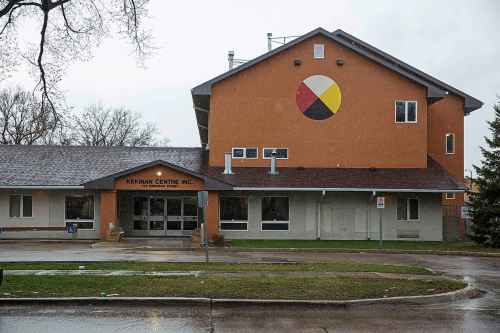
KeKiNan Centre is an assisted living centre for Indigenous seniors that has been operating since 1991. Lauded as the first of its kind, KeKiNan (“our home” in Cree) was created in response to the growing number of seniors who needed an affordable home and had specific needs — such as staff who could speak Indigenous languages.

For 20 years, KeKiNan existed as a 31-unit, single-floor building at 100 Robinson Ave., in Winnipeg’s North End, for “independent” Indigenous residents over the age of 65. 

In 2010, KeKiNan expanded, adding a 28-unit, three-storey building next door (102 Robinson Ave.) as “assisted living” for those people over the age of 55. The new building came with promises to provide culturally specific programming, such as ceremonies, feasts and staff fluent in Indigenous languages.

Read
Tuesday, May. 7, 2019

Fact Check

1 minute read Thursday, Nov. 30, 2023

Fact Check

Having problems with the form?Contact Us Directly |

Remembering the Trib

Ben Waldman 6 minute read Preview

Remembering the Trib

Ben Waldman 6 minute read Wednesday, Aug. 26, 2020

Every story has a beginning and an end, and for the Winnipeg Tribune, the end came abruptly and painfully 40 years ago.

For 90 years, the paper had been a willing combatant with the Free Press for local news supremacy, its staff pushing itself beyond its means to rankle authority in a competitive market. The Trib was an underdog — a paper that documented Winnipeg life with the spirit of the city itself bleeding through its pages in black ink.

But on Aug. 27, 1980, the presses came to a screeching halt.

A day earlier, the paper’s editor-in-chief Dona Harvey, the first woman to hold that role at a metropolitan daily newspaper in Canada, was summoned to the Winnipeg Inn to meet with the president and vice-presidents of Southam Inc., which owned the Tribune.

Read
Wednesday, Aug. 26, 2020