A harrowing American moment, repackaged for prime time
Advertisement
Read this article for free:
or
Already have an account? Log in here »
To continue reading, please subscribe:

Digital Subscription
One year of digital access for only $205*
- Enjoy unlimited reading on winnipegfreepress.com
- Read the E-Edition, our digital replica newspaper
- Access News Break, our award-winning app
- Play interactive puzzles
*First annual payment billed as $205.00 + GST for one year. This annual subscription will automatically renew at $233.00 + GST every 52 weeks (10% off the regular annual price of $259.35). Offer available to new and qualified returning subscribers only. Cancel any time.
To continue reading, please subscribe:
Add Free Press access to your Brandon Sun subscription for only an additional
$1 for the first 4 weeks*
- Enjoy unlimited reading on winnipegfreepress.com
- Read the E-Edition, our digital replica newspaper
- Access News Break, our award-winning app
- Play interactive puzzles
*Your next Brandon Sun subscription payment will increase by $1.00 and you will be charged $17.95 plus GST for four weeks. After four weeks, your payment will increase to $24.95 plus GST every four weeks.
Read unlimited articles for free today:
or
Already have an account? Log in here »
Hey there, time traveller!
This article was published 09/06/2022 (1559 days ago), so information in it may no longer be current.
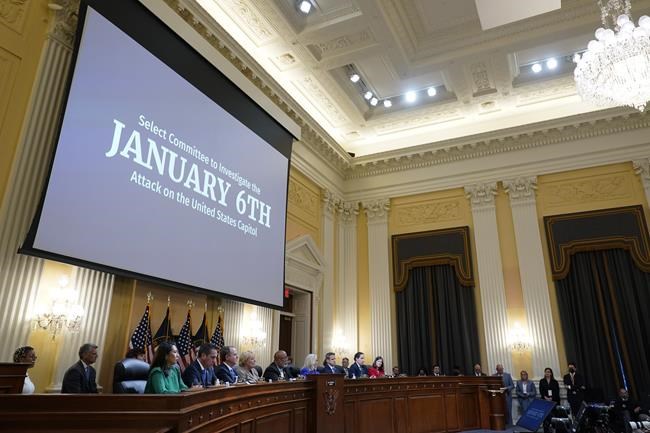
NEW YORK (AP) — Promised: New footage. New testimony. New and damning revelations designed to eliminate all doubt. Hired to package it all for the airwaves: A former network news president. The time slot: 8 p.m. on the East Coast, once a plum spot for the most significant television programming in the land.
Presented in prime time and carefully calibrated for a TV-viewing audience (itself increasingly an anachronism), the debut of the Jan. 6 hearings was, in essence, a summer rerun. Designed as a riveting legislative docudrama about an event that most of the country saw live 18 months ago, it tried mightily to break new narrative ground in a nation of short attention spans and endless distractions.
But did it? Can it? Even with gripping, violent video and the integrity of American democracy potentially at stake, can a shiny, weeks-long production that prosecutes with yesterday’s news — news that has been watched, processed and argued over ad nauseam — punch through the static and make a difference today?
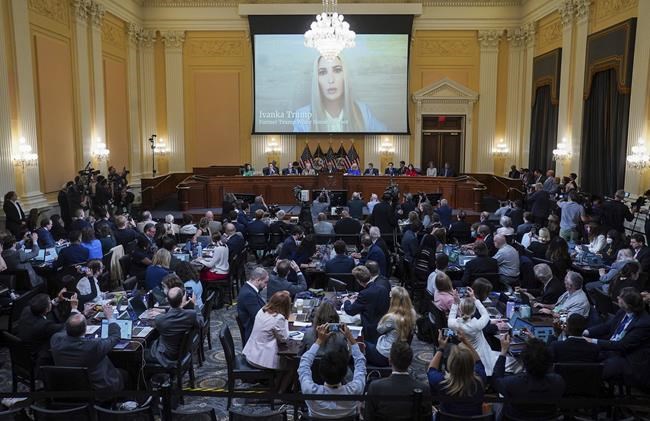
“The idea of a televised investigative proceeding maybe feels a little obsolete when so many people already had so much access to what happened,” said Rebecca Adelman, professor and chair of media and communication studies at the University of Maryland, Baltimore County. “This is a population that by all evidence is fatigued by a lot of things. I’m not sure how much sustained attention anyone has left at this point.”
That’s why the hearings needed one key thing most legislative committees lack: a professional TV executive — someone who could arrange and curate violent amateur and surveillance video, 3D motion graphics, eyewitness testimony and depositions into a storyline built to echo.
Enter James Goldston, the former president of ABC News. The language Axios used in reporting his involvement was instructive. Goldston, it said, would approach Thursday night’s hearing “as if it were a blockbuster investigative special” with “the makings of a national event.”
Those are not often words you hear about a committee hearing. They’re the words of showmanship — something politics has always had, actual governance less so.
During the media-savvy (for its era) Kennedy administration, the historian Daniel J. Boorstin famously coined the term “pseudo-event” — an event conducted expressly for the purpose of being noticed. While that isn’t the case with the Jan. 6 hearings — actual governance is taking place — the buildup and presentation makes it easy to conclude otherwise.
Could it be that this is the only way to grab the public’s attention? After all, since Jan. 6, 2021, much of America has moved on to fresh worries.
Rep. Jim Jordan, R-Ohio, seized on some of those in a series of tweets attacking the committee. “When’s the prime-time hearing,” he asked in six tweets, followed by “on $5 per gallon gas,” “on baby formula shortages,” “on record crime in Democrat-run cities,” “on the left’s 2020 riots,” “on record high grocery prices,” “on Democrats attacking parental rights at school board meetings” and “on threats against Supreme Court Justices and their families.”
By many appearances, the country is operating as it was before the insurrection. Joe Biden was inaugurated as scheduled 14 days after the insurrection. No evidence of election fraud surfaced. The pandemic ebbed. People are talking about guns and gas prices and Russia — not its interference in U.S. elections, but its invasion of Ukraine.
All of this, of course, belies the fact that the Capitol riot undermined the sanctity and security of the democratic process. After more than 200 years in which the peaceful transfer of power was taken for granted in America, it suddenly and very violently wasn’t.
And yet, in this meme-soaked era when loud events fade from the consciousness and are replaced by other loud events within days, it apparently takes what is essentially a Very Special Episode of Congress, packaged up like a documentary brimming with video clips and text-message screengrabs, to get the public’s attention.
And that public is … who, exactly?
The masses of Donald Trump supporters and opponents who have dug in their heels on both sides — those who think this is ridiculous political posturing and those who insist that day represented an existential threat to democracy — may not be the target audience. More likely, it is Americans who retain an open mind and have kind of moved on; who could use a reminder in the most American way possible: by being presented with an on-screen drama to consume. (Unless you watch Fox News prime time, which vociferously refused to air it, though other Fox platforms did).
High-profile public legislative hearings about the workings of government — from the Army-McCarthy hearings in 1954 to the Watergate hearings in 1973 to the Iran-Contra hearings in 1987 — have a history of drawing the nation’s attention and being their era’s version of must-see government TV.
But all those came in the days when a “phone” was something that made calls and was plugged into the wall — well before the era of media fragmentation produced by the internet and, a decade later, the rise of social media and content creation in your pocket.
The raw material presented Thursday night was at times banal and procedural (depositions, speeches). But at times (the violent and profane video montage, the eyewitness testimony of Capitol police officer Caroline Edwards), it felt compelling, terrifying and immediate.
“We’ve lost the line! We’ve lost the line!” viewers heard one Capitol police officer shout as he was being attacked by rioters. Yelled another, terror in his voice: “Officer down!” And this chilling shout, from the background of one scene of chaos: “We’re coming!”
Then the production values took center stage — a perfectly timed voiceover of Trump saying, “They were peaceful people” and “the love in the air, I’ve never seen anything like it” before the sequence fades out.
These are surely the moments that will be cannibalized on social in coming hours and days. So much of political discourse happens online these days, and what was once must-see TV is now on your phone, on demand. Content producers on TikTok and Twitter and Instagram are driving the moments to remember. And if this was a produced TV show, those will be its tiny offspring.

“People will be making their own spinoffs, a few seconds at a time,” said Robert Thompson, director of the Bleier Center for Television and Popular Culture at Syracuse University. “Now … we’re in the age of developing stories as an interactive video game, where you take the coverage of that day and you turn it into a meme and get 30 million viewers. I think that’s how a lot of people are going to experience these hearings.”
So check out your social media feeds, 2022-style, for the next phase of this drama — political and entertaining and unsettling all at once, and aggressively, messily American.
“We watched the preseason. We watched the season. And now this is behind the scenes in `American Politics: The Sport,‘” said John Baick, a historian at Western New England University. “I don’t think anyone’s going to remember where they were when they watched the Capitol investigations.”
___
Ted Anthony, director of new storytelling and newsroom innovation at The Associated Press, has written about American culture since 1990. Follow him on Twitter at http://twitter.com/anthonyted
Related Articles
Jan. 6 witness: Trump 'detached from reality' over election
Advertisement Advertise With Us
Advertisement Advertise With Us