EXPLAINER: Alopecia ‘strips people of their identity’
Advertisement
Read this article for free:
or
Already have an account? Log in here »
To continue reading, please subscribe:

Digital Subscription
One year of digital access for only $205*
- Enjoy unlimited reading on winnipegfreepress.com
- Read the E-Edition, our digital replica newspaper
- Access News Break, our award-winning app
- Play interactive puzzles
*First annual payment billed as $205.00 + GST for one year. This annual subscription will automatically renew at $233.00 + GST every 52 weeks (10% off the regular annual price of $259.35). Offer available to new and qualified returning subscribers only. Cancel any time.
To continue reading, please subscribe:
Add Free Press access to your Brandon Sun subscription for only an additional
$1 for the first 4 weeks*
- Enjoy unlimited reading on winnipegfreepress.com
- Read the E-Edition, our digital replica newspaper
- Access News Break, our award-winning app
- Play interactive puzzles
*Your next Brandon Sun subscription payment will increase by $1.00 and you will be charged $17.95 plus GST for four weeks. After four weeks, your payment will increase to $24.95 plus GST every four weeks.
Read unlimited articles for free today:
or
Already have an account? Log in here »
Hey there, time traveller!
This article was published 29/03/2022 (1622 days ago), so information in it may no longer be current.
Alopecia is an autoimmune disorder that affects millions of people around the world. But to many women — and to Black women, in particular — it is much more. It’s about beauty and race, about culture and about the uncertainty that the disorder creates around people’s perception of themselves.
So during the 94th Academy Awards ceremony on Sunday night, when comedian Chris Rock threw a pointed joke at Jada Pinkett Smith about her hair loss that some felt was insensitive, the event exposed many layers of feeling for those who wrestle with the disorder.
It also threw a spotlight on the disorder, which is little discussed but fairly common and affects a wide range of people, including children.
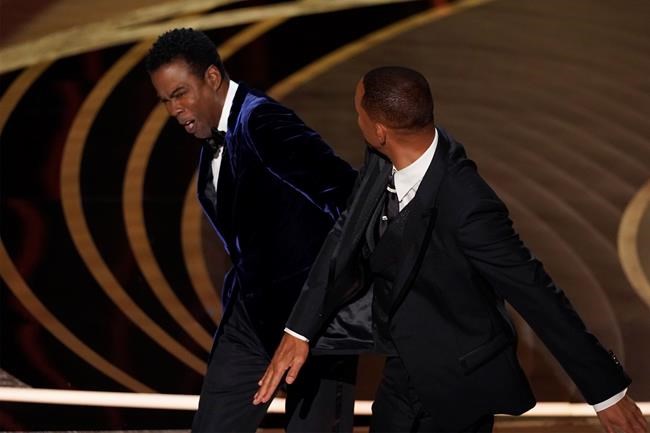
Actor Will Smith, who stunned millions when he walked onstage and slapped Rock over the joke about Pinkett Smith, has since apologized to the comedian, the academy and viewers.
Here are some of the things about alopecia that are reverberating:
___
WHAT’S IT LIKE TO HAVE ALOPECIA?
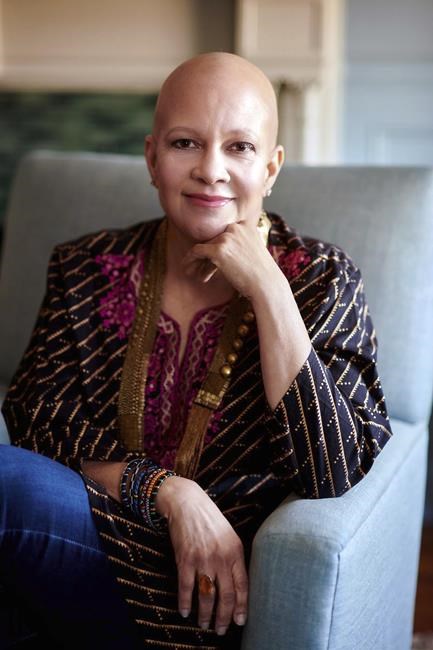
Rock’s joke was tough to hear for New York interior designer Sheila Bridges.
She spoke to Rock for his 2009 documentary “Good Hair” about the importance of hair in Black culture. She talked about the shame and humiliation of losing hers to the disease, how her hairstyle is intertwined with her racial identity and how the loss of her hair affected her sense of femininity and social currency.
The Oscars slap left Bridges with conflicting emotions: She condemned Smith’s assault on Rock, sympathized with Pinkett Smith and was deeply disappointed in Rock.
“It is not easy as a woman to navigate life without any hair and a society that is obsessed with hair,” Bridges said.
She doesn’t wear wigs because she doesn’t want to, and also hopes to normalize and de-stigmatize the appearance of bald women.
But even a decade after she decided to go bald in public, Bridges said it’s still difficult for some to accept: “I rarely make it through the week without someone saying something that’s very, very insensitive.”
While it’s unclear if Rock was aware of Pinkett Smith’s diagnosis, hair in general can already be a fraught landscape for Black women, who have been expected for generations to alter their natural hair texture to fit a white standard of beauty. Even wealthy and famous Black actresses have said it can be tough to find Hollywood stylists who know how to do their hair.
Black women are 80% more likely to change their natural hair to meet social norms at work, according to a 2019 study by the Dove personal care division of the Unilever USA company.
Black students are also far more likely than other students to be suspended for dress code or hair violations, according to the research that helped convince the U.S. House to vote to prohibit discrimination based on natural hairstyles earlier this month.
“The only good thing that can come out of all this is that alopecia is front and center,” Bridges said about the Oscars slap.
___
WHY HAS HAIR BEEN IMPORTANT TO BLACK REPRESENTATION?
For many Black Americans, grooming and styling choices are intertwined with a desire to buck what is considered normal or acceptable by wider society. From Afros and cornrows to wigs and hair extensions, Black hair can be more than just style statements.
Black women and girls watching the Supreme Court nomination and confirmation hearings for Judge Ketanji Brown Jackson said in interviews with AP that they were moved to see someone who wears her hair in “ sisterlocks” ascend to such a prominent position. It’s a style that uses natural hair woven into micro locs and is known for its versatility.
Seeing someone like Jackson embrace her natural hair, instead of conforming to societal beauty standards, served as a reminder to those women and girls to not shrink themselves in order to succeed, they said.
For Black women in the public eye, losing the pride and representation symbolized by their hairstyles can add another layer to the professional and self-esteem challenges of hair loss.
___
WHAT CAUSES ALOPECIA?
Alopecia areata, the autoimmune disorder Pinkett Smith has, can make hair fall out of the scalp in patches. It can also affect other parts of the body, like eyebrows and nose hair.
Alopecia can come on quickly, is unpredictable and can be incredibly tough to deal with mentally, said Brett King, a hair loss expert at Yale Medicine.
“Imagine if you woke up today missing half of an eyebrow,” he said. “That unpredictability is one of the things that’s so mentally treacherous and awful because you have no control of it … it’s a disease that strips people of their identity.”
While seldom discussed, it’s actually fairly common: the second biggest cause of hair loss, after male or female pattern balding. About 2% of people have it. It’s not physically painful, in some cases it spontaneously goes away and it can be treated.
___
HOW DOES IT AFFECT WOMEN? WHAT ABOUT KIDS?
Hair is a large part of anyone’s appearance, and for women it’s bound up with cultural concepts about what makes them look feminine.
“Most women are expected to have good hair,” said William Yates, a Black Chicago-based certified hair loss surgeon. “They’re well aware that men lose their hair and ‘bald gracefully,’ so to speak, but a female losing their hair is devastating.”
The condition also tends to hit people when they are relatively young. Most are diagnosed before age 40, and about half of them are children when the disorder first appears, said Christopher English, a board-certified dermatologist for Intermountain Healthcare in Salt Lake City.
Having the condition is especially tough for teenagers, for whom appearance anxiety and peer pressure are often already at an all-time high, said Gary Sherwood, communications director at the National Alopecia Areata Foundation. In Elkhart, Indiana, a 12-year-old girl with the disorder took her own life this month after she was bullied at school, her family has said.

Some studies have also pointed to the disease being more prevalent among Black and Latino people, Sherwood and Yates said. The National Institutes of Health states it affects all racial and ethnic groups, men and women.
Rock’s joke was “not unusual,” Sherwood said. “This has been around as long as there have been humans on Earth … for centuries people would not talk about it.”
He’s hoping one good outcome of the Oscars slap will be more education, awareness and empathy.
___
AP Race and Ethnicity writers Annie Ma in Charlotte, North Carolina, and Aaron Morrison in New York contributed to this story. Whitehurst reported from Salt Lake City.
Related Articles
Academy: Will Smith refused to leave Oscars after Rock slap
Advertisement Advertise With Us
Advertisement Advertise With Us