Two Fox journalists killed in Ukraine, underscoring dangers

Advertisement

Advertise with us

NEW YORK (AP) — A veteran videographer and a 24-year-old Ukrainian journalist working for Fox News were both killed when their vehicle came under fire outside of Kyiv, the network said on Tuesday.

Read this article for free:


By clicking the button above, an account will be created and you will begin to receive some of our recommended newsletters. You may opt out of any newsletter by visiting your Email and Communication Preferences page or by clicking "unsubscribe" at the bottom of any email.

or

Already have an account? Log in here »

To continue reading, please subscribe:

Digital Subscription

One year of digital access for only $1.44 a week*

  • Enjoy unlimited reading on winnipegfreepress.com
  • Read the E-Edition, our digital replica newspaper
  • Access News Break, our award-winning app
  • Play interactive puzzles

*Billed as $5.77 plus GST every four weeks. After 52 weeks, price increases to the regular rate of $19.95 plus GST every four weeks. Offer available to new and qualified returning subscribers only. Cancel any time.

To continue reading, please subscribe:

Add Free Press access to your Brandon Sun subscription for only an additional

$1 for the first 4 weeks*

  • Enjoy unlimited reading on winnipegfreepress.com
  • Read the E-Edition, our digital replica newspaper
  • Access News Break, our award-winning app
  • Play interactive puzzles
Start now

*Your next Brandon Sun subscription payment will increase by $1.00 and you will be charged $17.95 plus GST for four weeks. After four weeks, your payment will increase to $24.95 plus GST every four weeks.

Hey there, time traveller!
This article was published 15/03/2022 (1678 days ago), so information in it may no longer be current.

NEW YORK (AP) — A veteran videographer and a 24-year-old Ukrainian journalist working for Fox News were both killed when their vehicle came under fire outside of Kyiv, the network said on Tuesday.

Pierre Zakrzewski, 55, and Oleksandra “Sasha” Kuvshynova were traveling Monday in Horenka with Fox News reporter Benjamin Hall, who remains hospitalized.

“Today is a heartbreaking day for Fox News Media and for all journalists risking their lives to deliver the news,” the network’s CEO, Suzanne Scott. said in a staff memo.
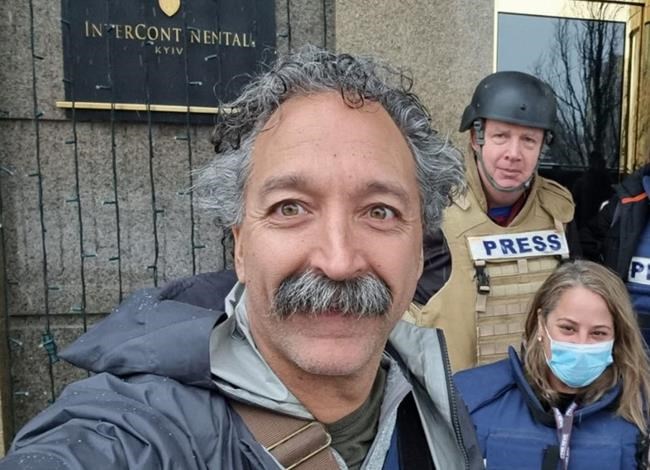
This image released by Fox News Channel shows cameraman Pierre Zakrzewski while on assignment with colleagues, Fox News correspondent Steve Harrigan and Jerusalem-based senior producer Yonat Friling, background right, in Kyiv. Zakrzewski was killed in Ukraine on Monday, March 14, 2022, when the vehicle he was traveling in was struck by incoming fire. Zakrzewski was a veteran war photographer who had covered conflicts in Iraq, Afghanistan and Syria for Fox. (Pierre Zakrzewski/Fox News via AP)

On Sunday, documentary filmmaker Brent Renaud, another veteran of covering war zones, died when Russian forces opened fire on his vehicle in Irpin, also outside of Kyiv.

The death of three journalists in a short span underscores the dangers faced by people chronicling the war in Ukraine, even those with extensive experience reporting from conflict zones.

The dangers for journalists seem to be increasing by the day, as the fighting seems to get more brutal and concentrated in more urban areas, said Summer Lopez, director of the Free Expressions Program at PEN America.

Zakrzewski, an Irish citizen who was based in London, had covered conflicts in Iraq, Afghanistan and Syria for Fox and won an internal “unsung hero” award for playing a key role last year in getting Fox’s freelancers and their families out of Afghanistan after the U.S. withdrawal. He had been working in Ukraine since February.

“Such a fine man,” tweeted Fox national security reporter Jennifer Griffin.

Trey Yingst, another colleague who worked with Zakrzewski in Ukraine, called him “as good as they come.”

Kuvshynova was a local “fixer,” as is known in war zones. She helped Fox crews navigate the Kyiv area, gathered information and spoke to sources. She had a passion for music, the arts and photography, Scott said in the staff memo.

“Several of our correspondents and producers spent long days with her reporting the news and got to know her personally, describing her as hard-working, funny, kind and brave,” Scott wrote. “Her dream was to connect people around the world and tell their stories and she fulfilled that through her journalism.”

In Washington on Tuesday, the Ukrainian ambassador to the United States, Oksana Markarova, thanked reporters who are on the ground in Ukraine.

“Risking their lives to tell the world the truth” is something that Ukraine and the world desperately need, she said at the National Press Club.

Jane Ferguson, a PBS “NewsHour” correspondent in Ukraine who has also reported from Afghanistan, Iraq, Somalia and Syria, said on Twitter that the war “is incredibly tough to cover as a field reporter, unlike any I have seen or experienced before.”

With intense artillery fire that can reach for miles and a vague fluidity of army positions, there is really no front line, Ferguson wrote.

Ferguson said she and her crew were recently pulled out of their car at gunpoint by Ukrainian soldiers who mistakenly thought they were being filmed from the car. The journalists were waved on after their credentials were checked, “but for a few minutes it was pretty nasty.”
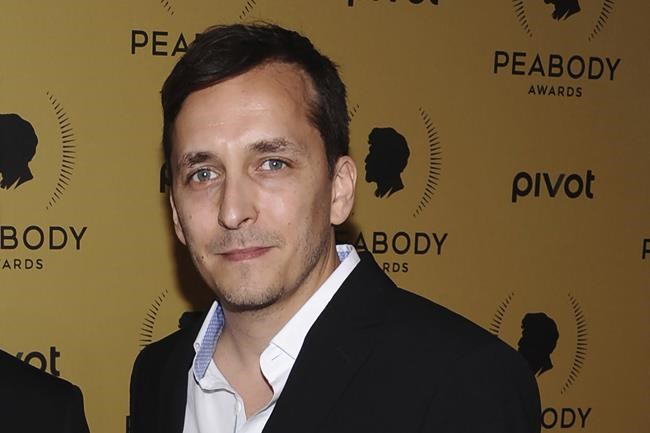
ARCHIVO - Brent Renaud asiste a un evento el 31 de mayo de 2015, en Nueva York. (Foto por Charles Sykes/Invision/AP, Archivo)

There are few journalists officially embedded with troops — as they were in Iraq and Afghanistan, for example — so many reporters are driving around independently, and without good intelligence, which is particularly dangerous, Ferguson said.

In an interview, ABC News reporter Martha Raddatz said Ukraine reminded her of covering the siege of Sarajevo because there are no U.S. troops there.

“That is a huge thing for me,” she said. “You realize, ‘Oh, wait. There are no Americans here. There’s no protection for us here.’ I think you’re very cognizant of that.”

Gulnoza Said, coordinator of the Europe and Central Asia Program for the Committee to Protect Journalists, has been hearing from journalists in Ukraine concerned about checkpoints where it isn’t clear if they’re coming upon Russian or Ukrainian soldiers.

She said journalists are telling her they are worried that Ukrainian authorities may be seeking to limit the areas and hours in which they can work.

“I need to find out exactly what they want to do,” she said. “I hope it is not because they want to control the narrative of the war.”

News of Zakrzewski’s death hit particularly hard Tuesday in Ireland. Irish premier Micheal Martin said he was deeply disturbed by the news.

“My thoughts are with their families, friends and fellow journalists,” Martin said. “We condemn this indiscriminate and immoral war by Russia on Ukraine.”

___

Associated Press correspondents Lynn Elber in Los Angeles and Danica Kirka in London contribute to this report.

Report Error Submit a Tip

More Stories

New chapter for Yellowquill University College

Tory McNally 7 minute read Preview

New chapter for Yellowquill University College

Tory McNally 7 minute read Yesterday at 2:01 AM CDT

Sometimes, a milestone is about much more than a degree. It is about opportunity, recognition and the doors that open for the people who come next.

Yellowquill University College reached a historic milestone on Oct. 1, when new Manitoba legislation came into effect formally recognizing the institution within the province’s post-secondary education system and granting it authority to award degrees.

Established in 1984, Yellowquill is now Manitoba’s first fully recognized First Nations-owned and operated post-secondary institution with degree-granting authority.

It is an achievement worth celebrating, not only for Yellowquill and the communities it serves, but also for what it represents about education, career development and the future of Manitoba’s workforce.

Read
Yesterday at 2:01 AM CDT

Alberta’s immigrants feeling xenophobic chill from some questions in Monday’s referendum

Melissa Martin 10 minute read Preview

Alberta’s immigrants feeling xenophobic chill from some questions in Monday’s referendum

Melissa Martin 10 minute read Thursday, Oct. 15, 2026

EDMONTON — When Gurnam Singh Dodd came to Canada in 1976, he landed first in southern Ontario, where his brother lived. At the time, the province was mired in the era of stagflation, and it was difficult to find work; but he had some friends living in Edmonton, and asked for their advice.

“Come to Alberta,” they told him. It was a land of opportunity. The economy was booming, bolstered by soaring oil and gas prices; Dodd could surely find multiple jobs within days. With that, the young Sikh newcomer packed up and headed west, looking to put down roots on the edge of the Canadian Prairies.

Nearly 50 years later, that proved to be a wise decision. Dodd worked hard to succeed in his new home, moving up from his first minimum-wage jobs to a successful career with Edmonton Transit, and then as a driver’s licence examiner. He raised a thriving family, gave back to his community and became, in all ways, a very proud Albertan.

Around the turn of the millennium, eager to do his part in the province’s public life, he joined what was then Alberta’s Progressive Conservative party, under the leadership of premier Ralph Klein. (Klein’s father, Dodd says proudly, was a friend, and helped get him into politics.)

Read
Thursday, Oct. 15, 2026

Women wearing appropriate clothes to gym not asking for men’s opinions

Jen Zoratti 4 minute read Preview

Women wearing appropriate clothes to gym not asking for men’s opinions

Jen Zoratti 4 minute read Yesterday at 2:01 AM CDT

Prior to last Saturday, I was the blissful sort of person who could say “who is that, again?” when I heard the name Shane Gillis.

Now, I know him as the comedian who said “women just dress like whores now” at the gym during his opening monologue on Saturday Night Live — a show that fired him in 2019, by the way, for being racist and homophobic on a podcast yet continues to invite him back as a host for some reason.

Gillis also likened women’s short shorts (the kind one might wear to lift weights, say) to neon fishing lures.

“And don’t look. You’re not allowed to look. For real, don’t look, because they are filming,” he said.

Read
Yesterday at 2:01 AM CDT

Carney’s ‘counterweight’ summit strategy

David McLaughlin 5 minute read Preview

Carney’s ‘counterweight’ summit strategy

David McLaughlin 5 minute read Yesterday at 2:01 AM CDT

Modern summit diplomacy had very inauspicious beginnings. Winston Churchill is widely credited with coining the phrase “summit” in 1950 to describe a conference of global leaders. But it was another British prime minister, Neville Chamberlain, who initiated the first actual summit meeting 12 years earlier — with Adolf Hitler, no less.

It didn’t go well.

Over a one-month period, the two leaders met three times over the fate of Czechoslovakia. Hitler threatened war. Chamberlain threatened appeasement. Guess who won?

Chamberlain was so desperate for a peace deal and so convinced he alone could convince Hitler, that he swallowed his inhibitions and flew in an airplane for the very first time in his life. “If at first you don’t succeed, try, try again” he told reporters, explaining his tenacious summit activity. Skeptical of the spectacle, British Foreign Office wags quietly amended it to, “If at first you don’t concede, fly, fly again.”

Read
Yesterday at 2:01 AM CDT

The threat from outside Canada

Dan Lett 4 minute read Preview

The threat from outside Canada

Dan Lett 4 minute read Yesterday at 2:01 AM CDT

The 10-question referendum being held in Alberta on Monday, Oct. 19, is not the first time the unity of Canada has been threatened by a vote within one province. It is, however, the first referendum of this type to take place in an age of unfettered social media misinformation and deliberate foreign interference.

From mischievous comments by U.S. President Donald Trump about making Canada the 51st state to technology trillionaire Elon Musk’s urgings to Quebec and Alberta to separate, there are clear signs foreign interests are trying to influence Monday’s vote. But there are also less-obvious efforts at work to influence the referendum and destabilize Canada.

The Canadian Security Intelligence Service (CSIS) and independent think-tanks such as the Centre for Artificial Intelligence, Data and Conflict at the University of Regina have documented incidents involving Russian-linked automated content farms posting thousands of misleading articles about the referendum campaign on social media platforms. The content, CSIS has said, focuses on erroneous claims about the benefits of separation and the liabilities of remaining in Canada.

In the face of all that activity, Prime Minister Mark Carney has been alarmingly unconcerned. Campaigning in Alberta this week, Carney said Ottawa is closely monitoring disinformation campaigns. He added that, in his conversations with foreign governments, all have agreed to stand down from any activities that might be perceived as threats to democracy.

Read
Yesterday at 2:01 AM CDT

Hydro to power down old infrastructure

Chris Kitching 5 minute read Preview

Hydro to power down old infrastructure

Chris Kitching 5 minute read Friday, Oct. 16, 2026

Manitoba Hydro is promising fewer power outages in Winnipeg once it replaces or converts 41 electrical substations in a project the utility says will last up to 20 years and cost as much as $1.2 billion.

Spokesman Peter Chura said upgrades to the electrical distribution system will improve safety, reliability and resiliency, and reduce maintenance costs.

“We’ve been clear for a few years now that aging infrastructure is a challenge for the province going forward, so our programs like this are solving that problem incrementally,” he said Friday.

Many substations in Winnipeg are nearing the end of their service life or operating close to capacity. The upgrades will increase capacity, said Craig Sambrooke, Hydro’s construction community liaison.

Read
Friday, Oct. 16, 2026