Interesting choice of words
Google study in search trends offers insight into Canadian phrasing
Advertisement
Read this article for free:
or
Already have an account? Log in here »
To continue reading, please subscribe:
Digital Subscription
One year of digital access for only $1.44 a week*
- Enjoy unlimited reading on winnipegfreepress.com
- Read the E-Edition, our digital replica newspaper
- Access News Break, our award-winning app
- Play interactive puzzles
*Billed as $5.77 plus GST every four weeks. After 52 weeks, price increases to the regular rate of $19.95 plus GST every four weeks. Offer available to new and qualified returning subscribers only. Cancel any time.
To continue reading, please subscribe:
Add Free Press access to your Brandon Sun subscription for only an additional
$1 for the first 4 weeks*
- Enjoy unlimited reading on winnipegfreepress.com
- Read the E-Edition, our digital replica newspaper
- Access News Break, our award-winning app
- Play interactive puzzles
*Your next Brandon Sun subscription payment will increase by $1.00 and you will be charged $17.95 plus GST for four weeks. After four weeks, your payment will increase to $24.95 plus GST every four weeks.
Read unlimited articles for free today:
or
Already have an account? Log in here »
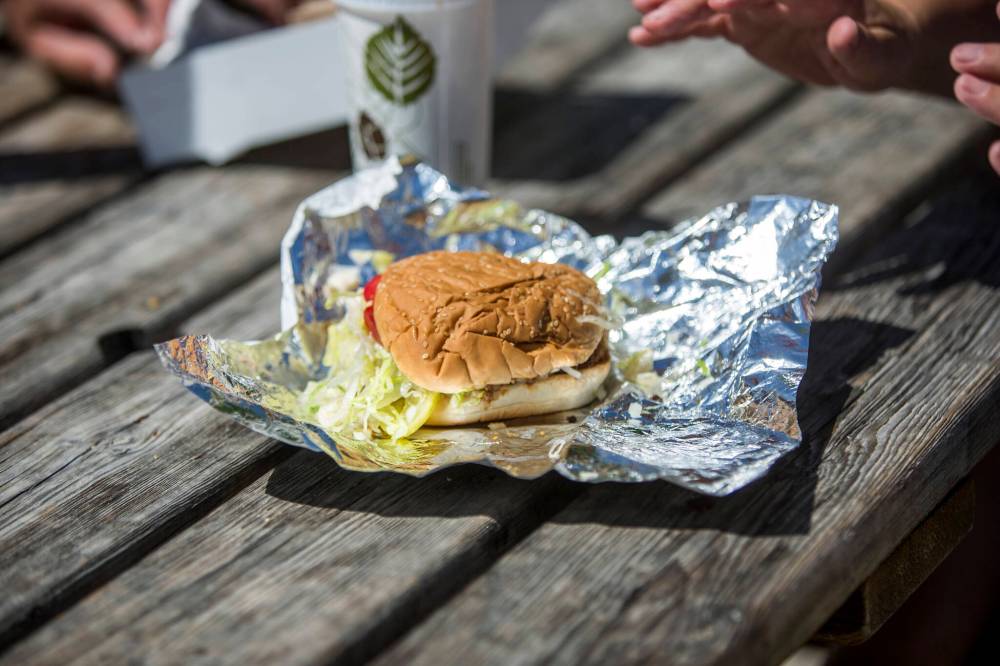
‘We’ve finished our spongee game. Let’s grab a fat boy before we hit the parkade.”
Or how about: “Put your garbage mitts on to clean the eavestroughs before the wedding social.”
These are phrases that could only be uttered by a Manitoban. But, while the fat boy and wedding social’s hometown origin stories are as solidified as honey dill, other Manitobanisms which have been identified by Google may come as a surprise.
“I’ve never used ‘parkade’ in my life before, so that’s why it’s so funny,” says Simon Langlois, a Montreal-based search trends expert at Google.
“But we compared ‘parkade’ and ‘parking garage,’ and ‘parkade’ accounts for 84 per cent of comparative search interest in Manitoba.”
According to the Dictionary of Canadianisms on Historical Principles, the term — a portmanteau of “parking” and “arcade” — has roots in American English but gained traction in Western Canada after it was prominently used by the Hudson’s Bay Company in the post-war era.
Add it to the list of HBC relics, then — alongside historic charters, colonial paintings and other artifacts — that continue to circulate in Winnipeg after the company’s official closure on June 1, 2025.
Langlois has been thinking a lot about Canadianisms, Manitobanisms and Quebecisms recently. As part of Google Canada’s 25th anniversary, he and his colleagues have been researching what a quarter-century of collective Canadian Google search history can reveal about the words Canadians use and the regional customs behind them.
“Search offers a unique lens into the words, the traditions and the cultural references that connect communities and that reflect regional identity across the country,” he says.
John Calogeris, an owner of VJ’s Drive-In burger joint on Main Street near Broadway, is proud to hear that “fat boy” — a Winnipeg hamburger heavy with a distinct chili sauce — continues to be a popular search item here.
“It’s been around forever, my friend. I’ve been doing this since I was 16 or 17 years old. I’m with my cousins; they’re my partners, too. It’s not just me. We have our staff, our loyal staff. We’ve been doing this for about 43 years now,” he says.
“This is where it originated, my friend, right here.”
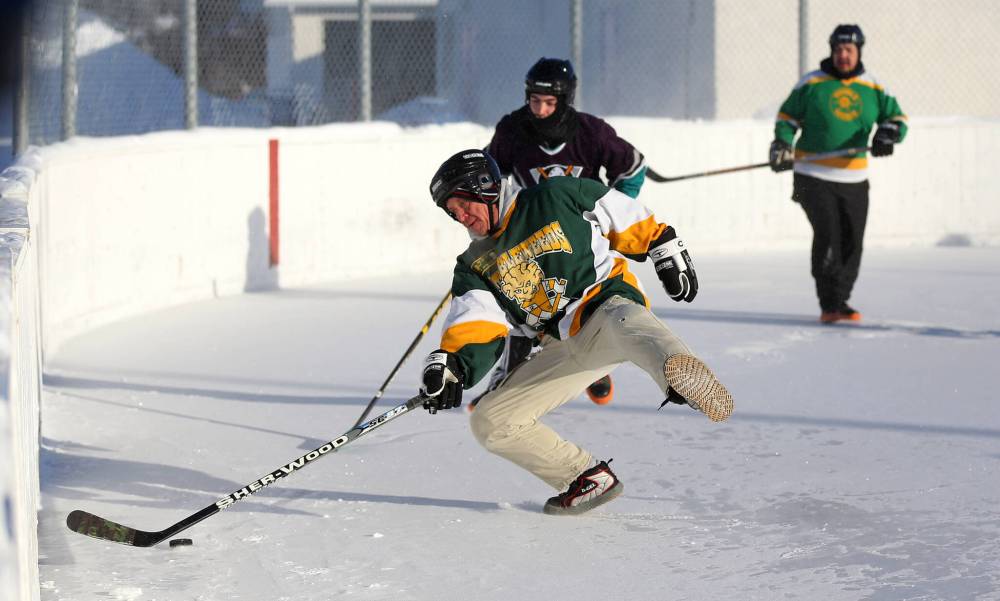
Langlois has yet to try the signature Winnipeg burger, and it may not be a shock that it doesn’t sound like he’s ever heard of “spongee,” a variant of hockey using a sponge puck played almost exclusively in Winnipeg, until it popped up in his research.
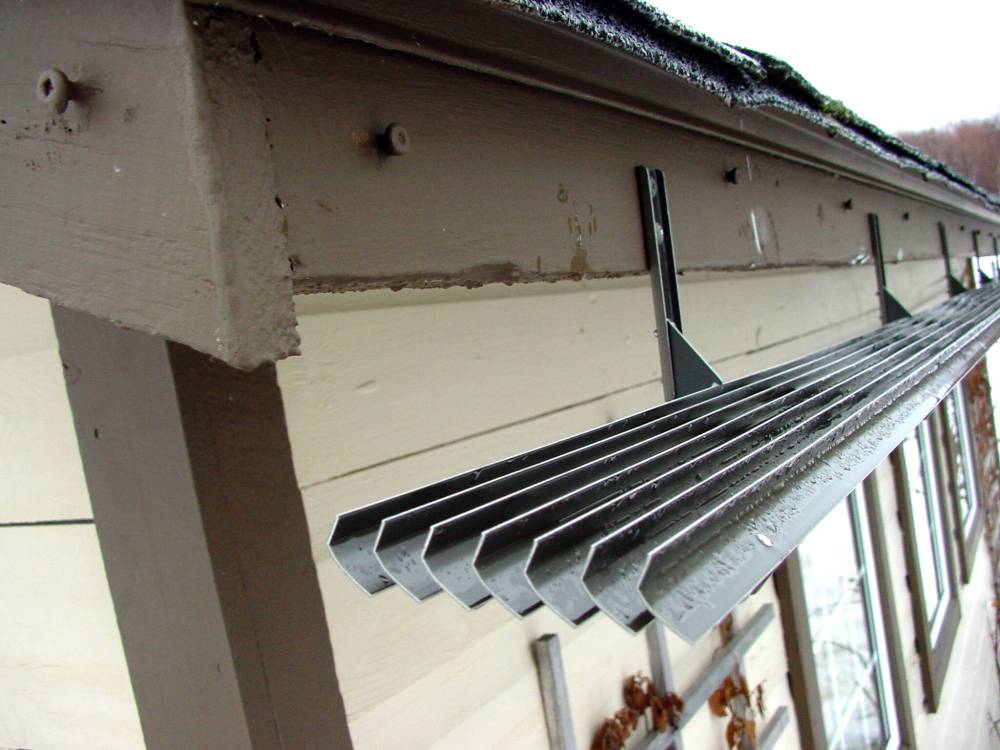
However, his unfamiliarity with “eavestrough” may surprise, especially if we mistakenly assume it’s used widely outside our neck of the woods.
According to the latest edition of the Dictionary of Canadianisms, the term is likewise American in origin — its first citation is in Herman Melville’s 1851 novel Moby-Dick — but today is “25 times more common in Canadian English than in American English.”
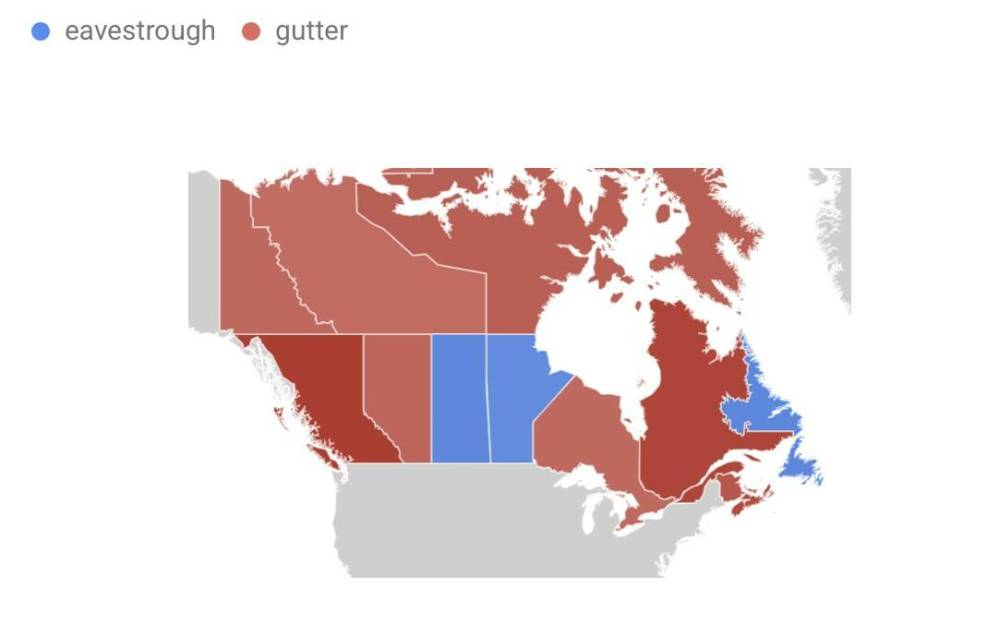
And it appears to enjoy special currency on the Prairies.
“Most of the other provinces will use ‘(rain) gutter’, except Saskatchewan and Manitoba. B.C. favours ‘gutter’ at 91 per cent, so that’s a big difference,” Langlois says.
Daniel Christopher has worked in eavestroughing for several years but had a lost-in-translation moment a few years ago with his Japanese partner when it came to explaining his livelihood.
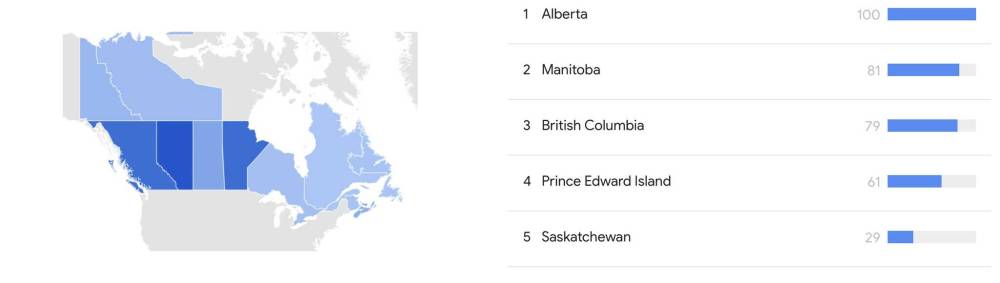
“She doesn’t understand the term ‘eavestroughing,’ so I go to translate it and I was pretty surprised to find it was regional because I’d been doing (eavestroughing) for seven or eight years and my dad had done it about 48 years,” says Christopher, an owner of Gutter-Tech Eavestroughing Ltd.
“I also realize that Winnipeggers and, maybe Canadians generally, we’ll measure distance in time — like ‘it’s five minutes up the road.’ That was hard to explain to her at first, too.”
“Pop,” “two-four,” “serviette,” “mickey,” “toque,” (an anglicized spelling of the French “tuque”) “runners” — there are many regionally specific terms and sayings that unite anglophone Canadians.
Langlois says that a lesser-known one is “pencil crayon,” in contrast with the more American “coloured pencils,” which is also reflected in Google Trends research.
How well do American manufacturers respond to such regional idiosyncrasies?
Search Google Images for “Crayola pencil crayons” and you’ll find boxes clearly marketed to Canada, with one reading: “Coloured Pencils/Crayons de Couleur.”
While respecting Canada’s bilingualism and our spelling of “colour,” does Crayola’s subtle lack of linguistic accommodation here go beyond omitting “pencil crayons”?
“What’s funny is that I’m thinking about what I was seeing (in Quebec) when I grew up, and it was ‘crayon à colorier,’” says Langlois. “‘Crayon à colorier’ or ‘crayon couleur’ — it’s like we say both, but some people will say, ‘crayon à colorier.’”
Langlois recognizes that there are real limits to what Google Trends can tell us sociologically. It’s useful for picking out patterns but not necessarily explaining why people are searching for a term or what they mean by it.
“It doesn’t really tell us the way that people talk in their daily lives, or we don’t know if maybe they search something because this is what’s going to be easier to search on the internet, right?” he says.

“It happens often for me that I will search for a term in English because I know there’s more information about everything in English on the internet.”

This point may seem to encourage a broader concern that the internet is, in fact, flattening out regional speech patterns. The loss of some cultural distinctiveness may be the price of greater interconnectivity.
Our Google search trend expert offers a more techno-optimistic outlook.
“Regional identity remains strong, so you will continue to search for the words that you’ve been speaking with or that you’ve learned. (Google) search reflects the traditions, the foods, the language that make communities unique and I think that’s really where it finds beauty,” Langlois says.
Calogeris makes a similar point in a more local accent: “Winnipeg is unique in itself with its attitude and its mentality. It’s a whole different animal altogether, brother. When your cage is up for eight months in the winter, that changes your perspective on a lot of things.”

conrad.sweatman@winnipegfreepress.com


Conrad Sweatman is an arts reporter and feature writer. Before joining the Free Press full-time in 2024, he worked in the U.K. and Canadian cultural sectors, freelanced for outlets including The Walrus, VICE and Prairie Fire. Read more about Conrad.
Our newsroom depends on a growing audience of readers to power our journalism. If you are not a paid reader, please consider becoming a subscriber.
Our newsroom depends on its audience of readers to power our journalism. Thank you for your support.