40 shining years
U of W marks gallery’s anniversary with group alumni exhibition

Advertisement
Read this article for free:
or
Already have an account? Log in here »
To continue reading, please subscribe:

Digital Subscription
One year of digital access for only $205*
- Enjoy unlimited reading on winnipegfreepress.com
- Read the E-Edition, our digital replica newspaper
- Access News Break, our award-winning app
- Play interactive puzzles
*First annual payment billed as $205.00 + GST for one year. This annual subscription will automatically renew at $233.00 + GST every 52 weeks (10% off the regular annual price of $259.35). Offer available to new and qualified returning subscribers only. Cancel any time.
To continue reading, please subscribe:
Add Free Press access to your Brandon Sun subscription for only an additional
$1 for the first 4 weeks*
- Enjoy unlimited reading on winnipegfreepress.com
- Read the E-Edition, our digital replica newspaper
- Access News Break, our award-winning app
- Play interactive puzzles
*Your next Brandon Sun subscription payment will increase by $1.00 and you will be charged $17.95 plus GST for four weeks. After four weeks, your payment will increase to $24.95 plus GST every four weeks.
Read unlimited articles for free today:
or
Already have an account? Log in here »
Lux et veritas floreant, or Let light and truth flourish, is the University of Winnipeg’s motto.
It’s also a fitting title — and guiding theme — for a group exhibition celebrating the 40th anniversary of Gallery 1C03, the university’s campus art gallery.
Curated by Gallery 1C03 director and curator Jennifer Gibson and independent curator Jenny Western — both university alumni themselves — Lux et Veritas Floreant features works by U of W alumni artists KC Adams, Dee Barsy, Scott Benesiinaabandan, Jaimie Isaac, Judah Iyunade, Kegan McFadden, Shivanya Ra, Paul Robles and Melanie Zurba.
Ruth Bonneville / Free Press
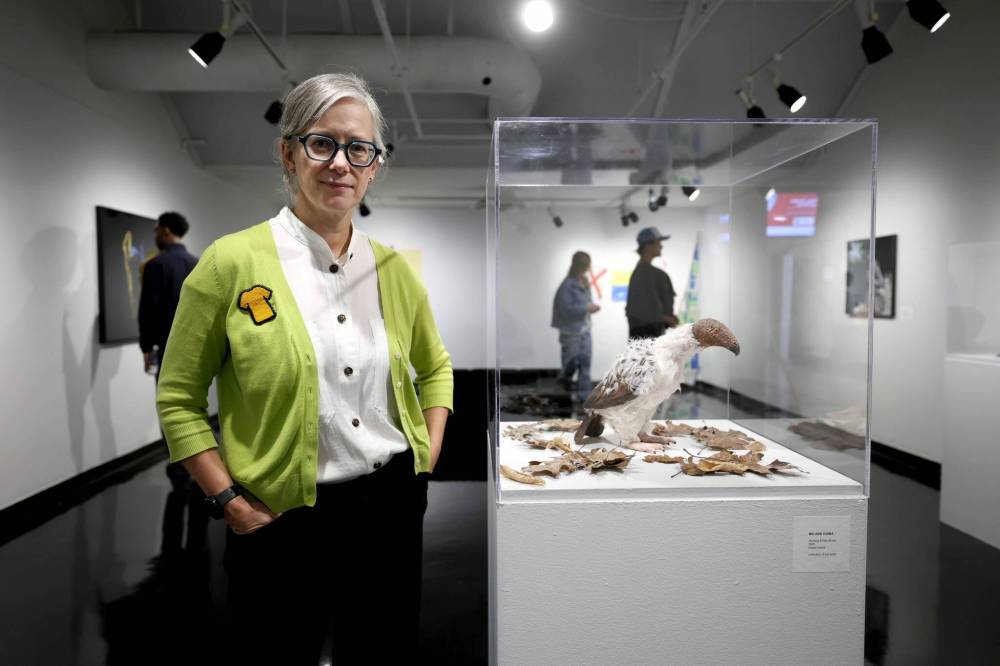
Jennifer Gibson, curator of Gallery 1C03 says Lux et Veritas Floreant / Let Light and Truth Flourish, says the exhibition is another way to engage one’s senses differently.
There is also a film component. A 7 p.m. screening tonight at Dave Barber Cinematheque features 10 films by alumni artists, including Steve Bates, Ian Bawa, Mahlet Cuff, Christina Hajjar, Mike Maryniuk, Kevin Settee, Leslie Supnet and Ted Turner. Isaac and Iyunade also have films in the program.
Although U of W doesn’t have a studio-based visual arts program, it has produced its share of acclaimed visual artists. As such, the exhibition reflects a breadth of artists working across a variety of mediums, each expressing those ideas of light and truth in their own ways.
KC Adams is a later-in-life alum of the downtown university. The relational maker, educator, activist and mentor completed her undergrad at Concordia University in Montreal, graduating in 1998, then returned to school in 2022 to earn her master’s degree in cultural studies, curatorial stream, from the U of W.
“I took two years because I’m a full-time artist and a mom, and it was the greatest decision of my life,” says Adams, who had one of her first solo exhibitions at Gallery 1C03.
“I feel like it enriched my career even more, so it’s exciting to be a part of this. I’m like the opposite of a lot of people here; they went to school here first and then started their career. I kind of did it the opposite way.”
Ruth Bonneville / Free Press
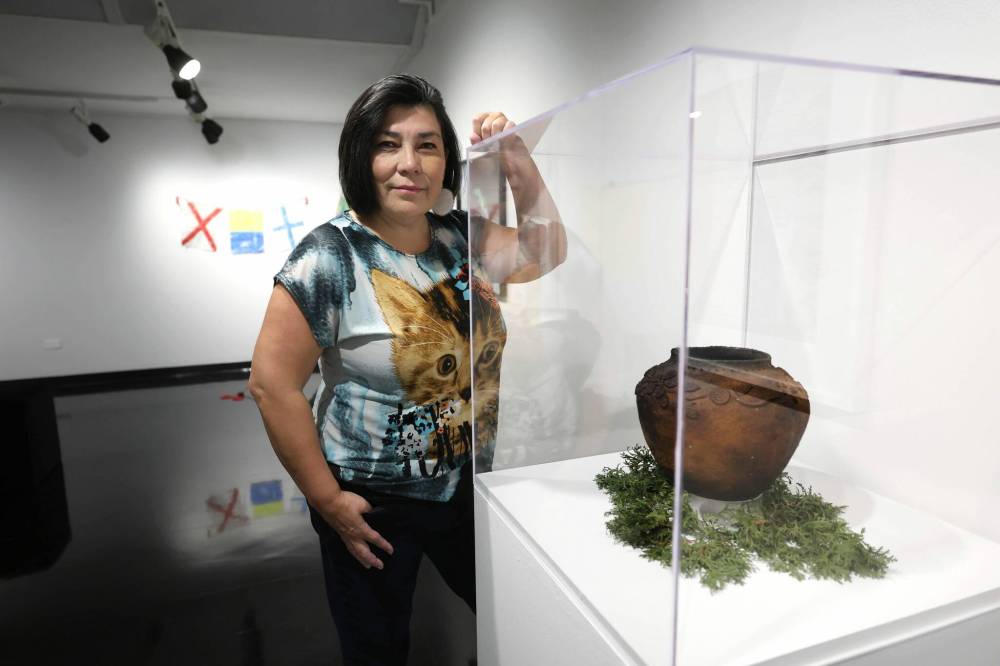
University of Winnipeg alumni artist KC Adams with her pottery
Adams, a member of the Fisher River Cree Nation living in Winnipeg, has long explored technology in relation to her Indigenous culture in her decades-long art practice. The two pieces included in the exhibition look at ancient technologies.
The first, 2025’s Water Carrier, is an ornate vessel made from locally harvested clay that celebrates form, function and intergenerational knowledge.
“While somebody would just look at and go, well, that’s just a pot, like it’s a clay vessel — but this is actually tons of research that has gone on in creating this,” she says. “This is from research from archaeologists, going out on the land, sampling different clays, and trying to recreate clay vessels that were based on pottery sherds that I’ve found and looked at in museums and galleries.
“We don’t have anyone living who remembers how to make them, so it’s about bringing that knowledge and that technology back.”
The second, 2020’s Birch Bark Technology: Gage’gajiwaan, was inspired by that most versatile workhorse of materials.
Supplied
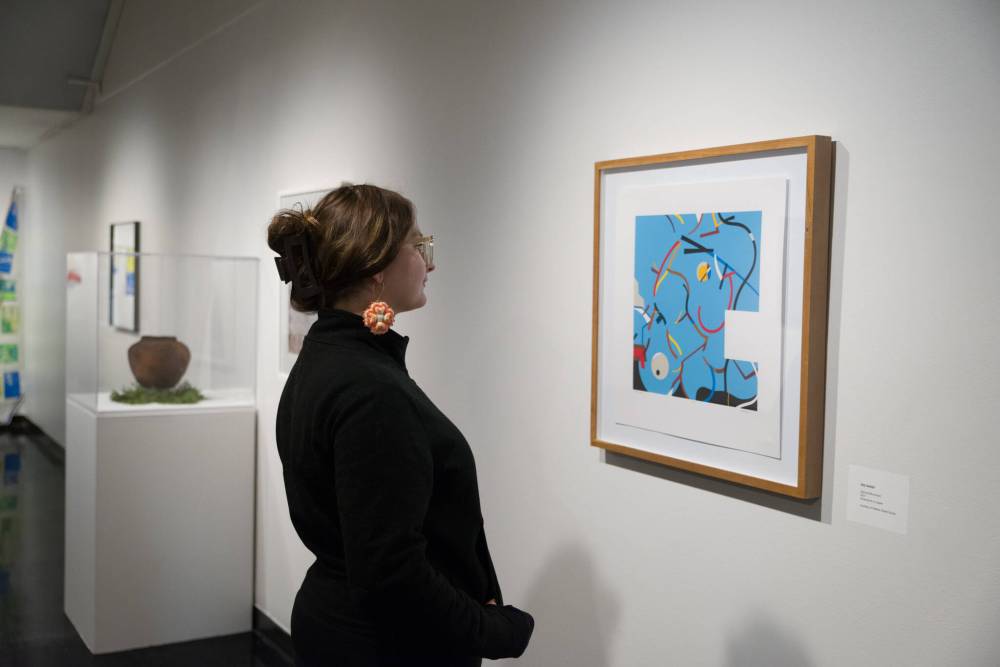
U of M alumni artist Dee Barsy
“Birch bark is such an incredible technology. It’s waterproof and it’s been made into so many tools and so many things, like canoes, which is a technology we still use today,” Adams says.
“The birch bark represents that understanding of the importance of water as well, and this is an actual drawing of communities that are all connected by water.”
The work is a relief map-meets-circuit board, with rapids, lakes and rivers beaded onto a birch-bark background. A dot-dot-dot pattern represents rapids, the circles are lakes and the longer unbroken strands are rivers connecting it all.
“And so, every single spot here, what you’re seeing are communities. These are the waterways. These are what connects us. And I love how that water connects us all. It’s just thinking about technology in a different way, what connects us and how we communicate with one another,” she says.
Having an accessible, approachable art gallery on campus is also a vital site of connection and communication.

Sarah Fuller photo
Scott Benesiinaabandan’s cloth, quill, ghost lands.
“It’s so incredibly important,” Adams says. “A lot of kids that are coming to school, they’re fresh out of high school, they’ve probably never seen an art gallery before. Given their studies, they don’t have the opportunity to go to art galleries, or they don’t have the comfort or the confidence to go because there’s this strange idea that people will point fingers at you and say, ‘Why are you here?’
“Having a gallery in a university is so important, and I feel like Jennifer chooses works that enrich the classes that they’re taking.”
Anyone can explore the exhibitions on view whenever the gallery is open, but students from a wide variety of classes also come to 1C03 as part of their studies. Art offers a different — and often more visceral — entry point into the topics and themes they might be discussing.
“What I often say when the classes come in here, I talk about how you come here to university, you’re in a classroom setting for the most part, and you’re listening to your professor lecture, and maybe you’re giving presentations and having discussions in the class,” Gibson says. “But this is another means of learning, to really engage your senses differently.”

“When you come in here, you’re learning visually, that knowledge that the artists have to bring,” Adams adds. “Too often we don’t think of that as a learning medium.”
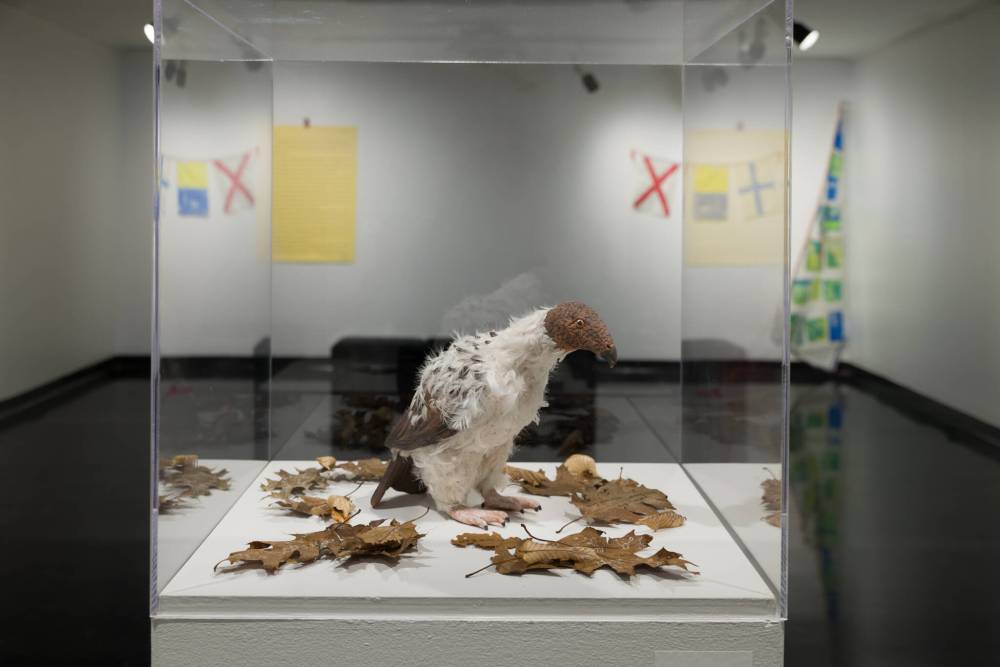
Sarah Fuller photo
Melanie Zurba’s Nothing Exists Alone
Gibson also sees Gallery 1C03 as a slow space in which to engage with art and ideas.
“We’re inundated with visual culture now. We’re on our phones all the time. Let’s take some actual time to stop and pause and actually look at the work in front of us, the physical work in front of us, as opposed to work on a screen,” she says.
Lux et Veritas Floreant is on view until Nov. 13.
jen.zoratti@winnipegfreepress.com
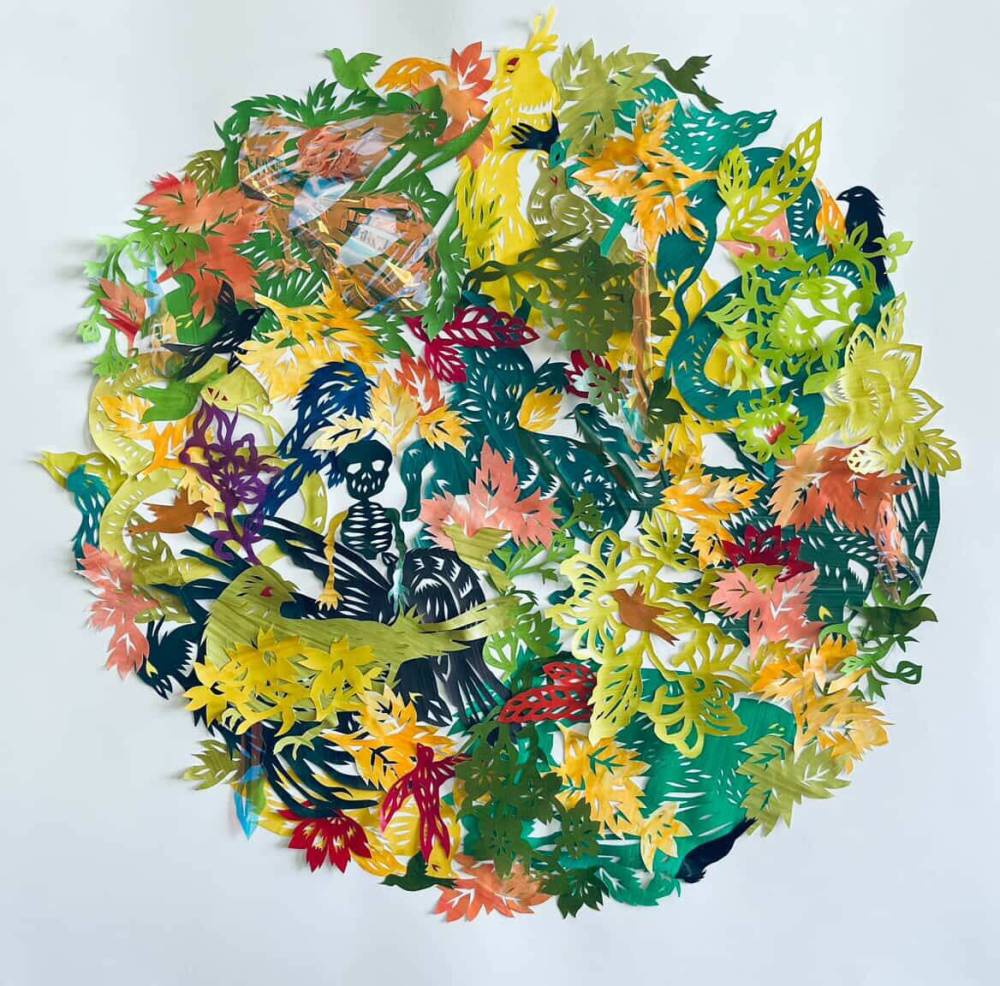
Supplied
Paul Robles’s September Moon Harvest
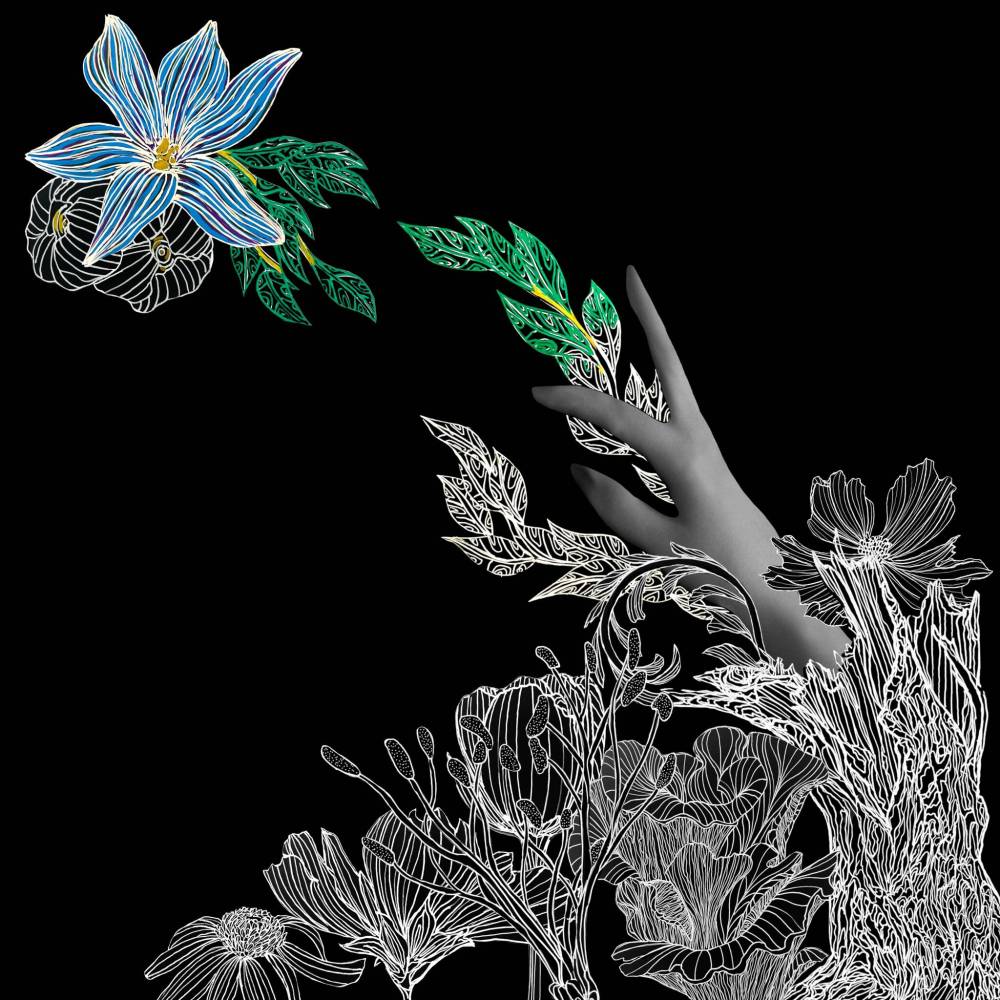
Supplied
Shivanya Ra’s Becoming From Beyond Reach

Supplied
Jadah-Iyunade’s Telephone Gossip.
Jen Zoratti is a Winnipeg Free Press columnist and author of the newsletter, NEXT, a weekly look towards a post-pandemic future.
Our newsroom depends on a growing audience of readers to power our journalism. If you are not a paid reader, please consider becoming a subscriber.
Our newsroom depends on its audience of readers to power our journalism. Thank you for your support.
Exhibition preview
Lux et Veritas Floreant/Let Light and Truth Flourish
● Gallery 1C03, University of Winnipeg
To Nov. 13
Related free programming: Film screening at Dave Barber Cinematheque, tonight at 7 p.m., followed by discussion with Christina Hajjar, Jaimie Isaac and Leslie Supnet
Artist talk with Scott Benesiinaabandan, Paul Robles and Leslie Supnet: Wednesday, Oct. 7, at 2:30 p.m. in Convocation Hall (second floor of Wesley Hall), U of W
Screening of Levers by Rhayne Vermette: Monday, Oct. 26, at 6 p.m. in EG Hall (third floor of Centennial Hall), U of W
Jen Zoratti is a Winnipeg Free Press columnist and author of the newsletter, NEXT, a weekly look towards a post-pandemic future.
Our newsroom depends on a growing audience of readers to power our journalism. If you are not a paid reader, please consider becoming a subscriber.
Our newsroom depends on its audience of readers to power our journalism. Thank you for your support.
Advertisement Advertise With Us
Advertisement Advertise With Us