Sisler program creating new generation of animators
Advertisement
Read this article for free:
or
Already have an account? Log in here »
To continue reading, please subscribe:

Digital Subscription
One year of digital access for only $205*
- Enjoy unlimited reading on winnipegfreepress.com
- Read the E-Edition, our digital replica newspaper
- Access News Break, our award-winning app
- Play interactive puzzles
*First annual payment billed as $205.00 + GST for one year. This annual subscription will automatically renew at $233.00 + GST every 52 weeks (10% off the regular annual price of $259.35). Offer available to new and qualified returning subscribers only. Cancel any time.
To continue reading, please subscribe:
Add Free Press access to your Brandon Sun subscription for only an additional
$1 for the first 4 weeks*
- Enjoy unlimited reading on winnipegfreepress.com
- Read the E-Edition, our digital replica newspaper
- Access News Break, our award-winning app
- Play interactive puzzles
*Your next Brandon Sun subscription payment will increase by $1.00 and you will be charged $17.95 plus GST for four weeks. After four weeks, your payment will increase to $24.95 plus GST every four weeks.
Read unlimited articles for free today:
or
Already have an account? Log in here »
The characters start as crude shapes and stand-ins, then take on form. Your Elsa, Miles Morales or Buzz Lightyear are born, but move only in key poses, like a picture book.
This is the layout and blocking stage of 3D and 2D digital animation’s pipeline, after storyboarding. Then comes the often most laborious phase: animation proper.
It starts with the “roughs,” where motion starts to connect poses. Now you can see Buzz and Woody take off on that rocket or that line of webbing spring from Miles Morales’s hand, but it looks a little like a flipbook.
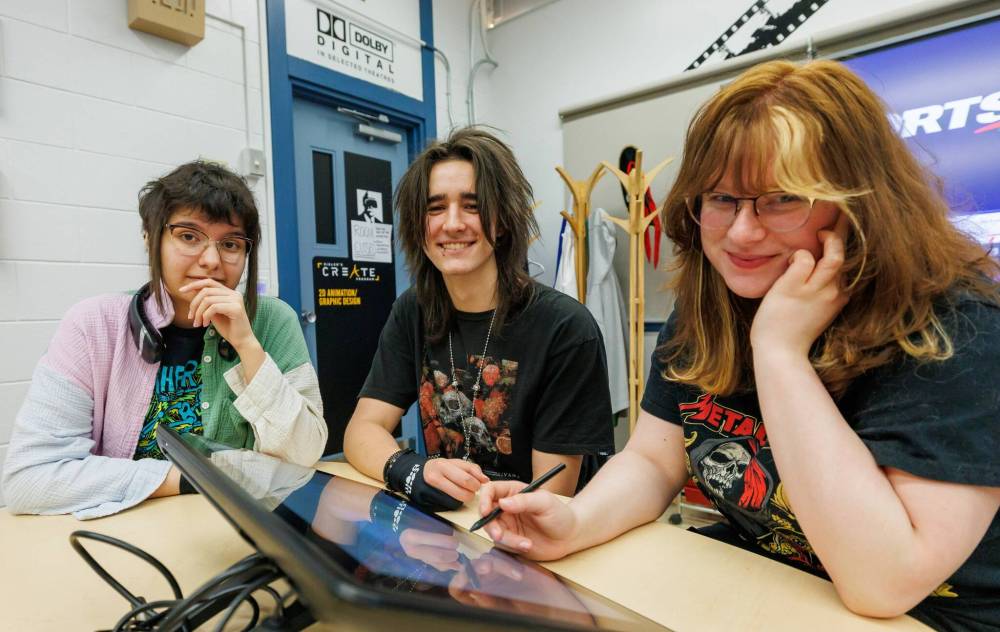
MIKE DEAL / FREE PRESS
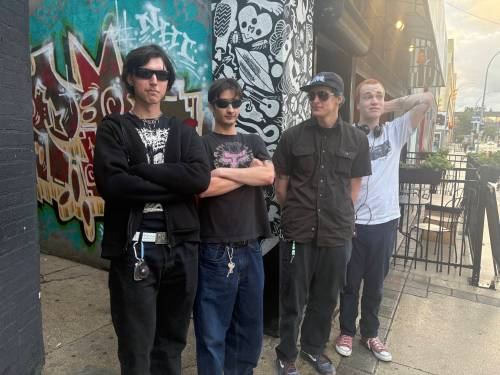
From left: Ethan Hall, Jerzy Fleury and Killian Halldorson are animators in the Sisler High School Create program.
From here animators work meticulously to create “spline passes” for fluidity. Little details still jut out — such as awkward movement arcs and timings — so more passes are made until only the smallest imperfections remain. Time for clean-up.
“I, as well, hated clean-up, but it actually turned me into a really good animator because I was able to physically trace over every awesome animator’s animation, so it was very educational for me,” says Tara Audibert, director of Stevie and the Sacred Animals.
Via Zoom, she’s addressing three 19-year-old Indigenous animators, whom she’s just met, interning on the Eagle Vision production. The show features animators from Toronto’s Sinking Ship Entertainment and is licensed by APTN and CBC.
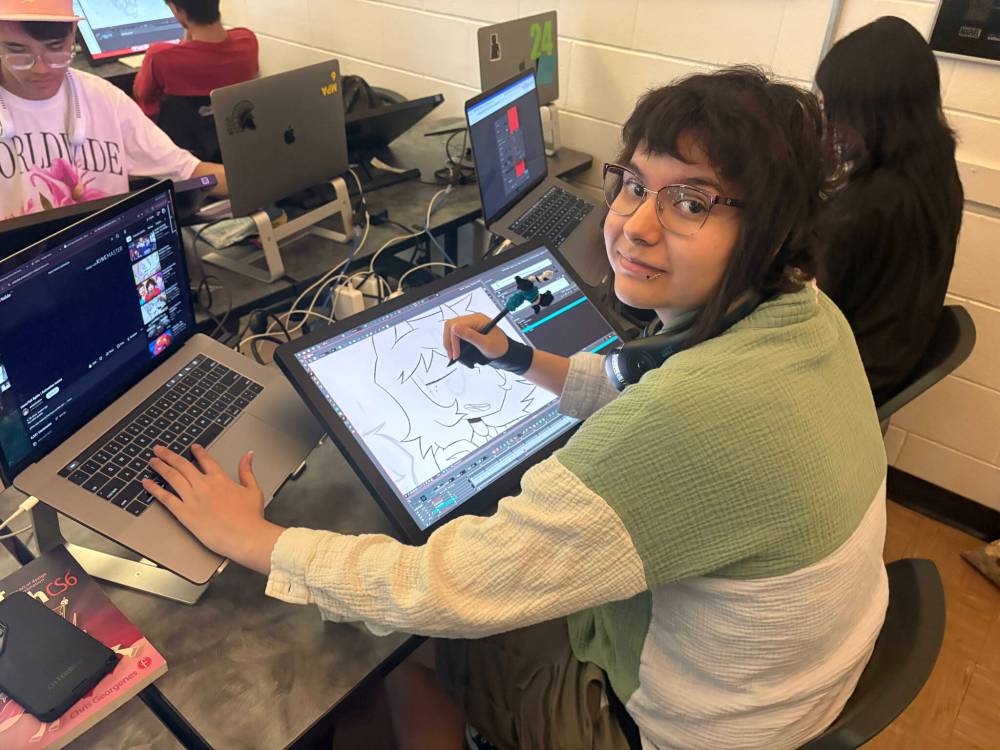
All three interns are paid and also participants in Sisler Create, a post-high school program that helps aspiring digital creatives transition into the industry or post-secondary training.
Students have had internships at major companies including Nickelodeon and Ubisoft, and some graduates have gone on to big things — such as working on the popular 2018 film Spider-Man: Into the Spider-Verse.
Unlike other interns this year on Stevie, Ethan Hall doesn’t hate clean-up — or “cleans,” as he calls them.
“Rough or cleans, I don’t really mind either,” says Hall, who went to Sisler for high school, and started animating in Grade 10. “(I’m excited for) the opportunities it can lead to and I and really want to be involved with animation.”
It’s good that he’s flexible because he’ll be rolling with Stevie’s fast, quota-driven production environment and jumping in where needed within its complex division of labour.
“Somebody else might be doing the key poses, and then passing off to you. The majority of the animation is going to be like … moving the parts around, kind of in a puppet kind of way,” Audibert, a Wolastoqey artist, filmmaker and game developer, tells the trio.
While it will be something of a trial by fire, a love of animation and its working parts is clearly shared by everyone in the meeting. Audibert beams when she talks about Stevie.
“It’s a super-cute show and very interesting because it involves us doing animation overtop of live-action backgrounds. The audience is three- to five-year-olds (learning) the Seven Sacred Teachings,” she says.
The teachings, represented by seven animals, are foundational to Anishinaabe culture, and Stevie’s premise has the universalist quality of values-based kids programming you might see on PBS.
In it, spunky six-year-old Stevie, an Ojibwa girl from the city, moves to her First Nation community after her mom’s divorce. There she and her cousins befriend and play games with seven baby animals in the woods. The baby turtle has lessons to teach about truth, the beaver about wisdom, the bear about courage and so on.
“I’m not really that involved with my culture like I used to be. I just kind of dwindled away from it. But this will be my way of getting back into it,” Hall says.

Sisler Create is funded primarily through the Winnipeg School Division, with help from the philanthropic Schroeder Foundation and additional grants. Forty per cent of the program’s participants, not all of whom are Indigenous, are Sisler grads.
Ginny Collins, industry liaison with the program, says many students lack access to the expensive equipment it takes to build up a portfolio.
“It’s basically seen as your transition year into industry or post-secondary. At the end of the year, students will have a short film or a game or some assets for a portfolio,” she says.
“It’s an incredible opprtunity to get studio experience right out of the gate. It’s a rare chance to prove themselves at a professional level and get a major resumé boost.”
winnipegfreepress.com/conradsweatman
Conrad Sweatman is an arts reporter and feature writer. Before joining the Free Press full-time in 2024, he worked in the U.K. and Canadian cultural sectors, freelanced for outlets including The Walrus, VICE and Prairie Fire. Read more about Conrad.
Our newsroom depends on a growing audience of readers to power our journalism. If you are not a paid reader, please consider becoming a subscriber.
Our newsroom depends on its audience of readers to power our journalism. Thank you for your support.