Star of slow film anything but
Award-winning doc featured at local festival

Advertisement
Read this article for free:
or
Already have an account? Log in here »
To continue reading, please subscribe:

Digital Subscription
One year of digital access for only $205*
- Enjoy unlimited reading on winnipegfreepress.com
- Read the E-Edition, our digital replica newspaper
- Access News Break, our award-winning app
- Play interactive puzzles
*First annual payment billed as $205.00 + GST for one year. This annual subscription will automatically renew at $233.00 + GST every 52 weeks (10% off the regular annual price of $259.35). Offer available to new and qualified returning subscribers only. Cancel any time.
To continue reading, please subscribe:
Add Free Press access to your Brandon Sun subscription for only an additional
$1 for the first 4 weeks*
- Enjoy unlimited reading on winnipegfreepress.com
- Read the E-Edition, our digital replica newspaper
- Access News Break, our award-winning app
- Play interactive puzzles
*Your next Brandon Sun subscription payment will increase by $1.00 and you will be charged $17.95 plus GST for four weeks. After four weeks, your payment will increase to $24.95 plus GST every four weeks.
Read unlimited articles for free today:
or
Already have an account? Log in here »
Hey there, time traveller!
This article was published 08/11/2025 (327 days ago), so information in it may no longer be current.
A 90-year-old Manitoba woman was the hit of the Hot Docs documentary film festival in April in Toronto. You can come to that conclusion honestly since the film — Agatha’s Almanac — won Best Canadian Feature Documentary at the festival.
And now we can see what the fuss was about. The film is playing at Gimme Some Truth, the 16th edition of the Dave Barber Cinematheque’s own documentary festival. It screens today at 3 p.m.
The film wears its distinction proudly, but not too proudly. With its gentle, considered pace and its lovingly composed, Zen-like images of agricultural beauty, it is the antithesis of some of the typically provocative docs out there.
Supplied Agatha’s Almanac features Agatha Bock growing, cooking and canning food, and maintaining her property.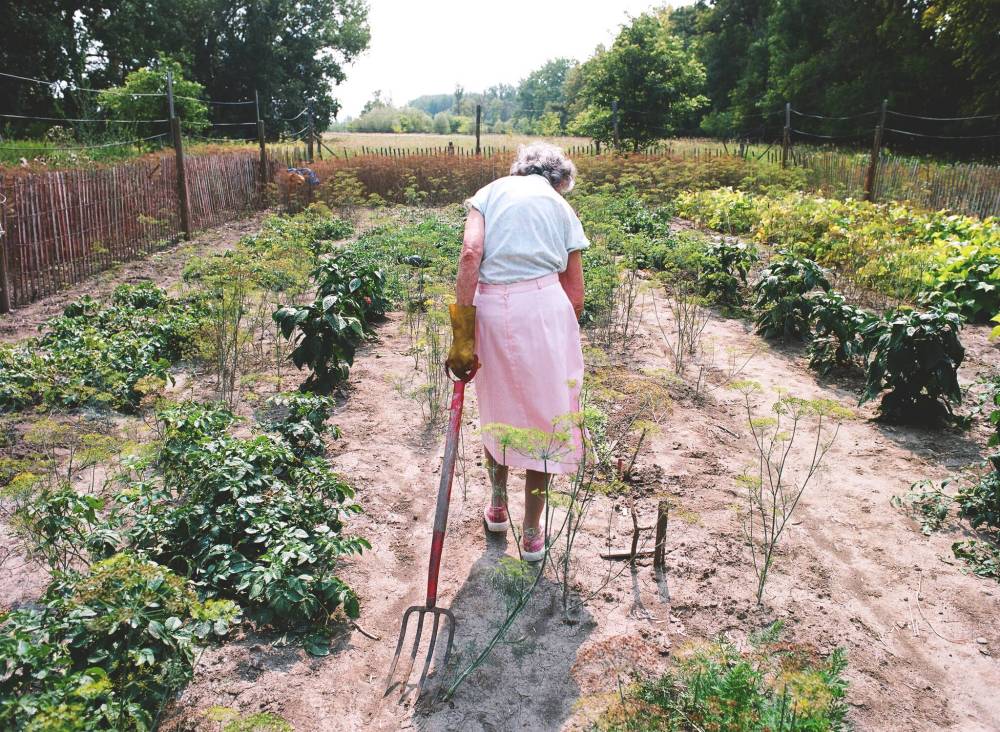
It’s more of a barn-builder than a barn-burner.
And that is due to the film’s subject, the disarmingly unpretentious Agatha Bock.
The film was a labour of love for Saskatoon-based director Amalie Atkins, Agatha’s niece, who travelled to Agatha’s 54-acre southern Manitoba homestead beginning in 2019 to film her aunt — who doesn’t own a car or a cellphone, or have running water — just going about the business of growing, cooking and canning food, and maintaining her property.
Supplied 90-year-old Agatha Bock was the hit of the Hot Docs documentary film festival in April in Toronto where Agatha’s Almanac won Best Canadian Feature Documentary.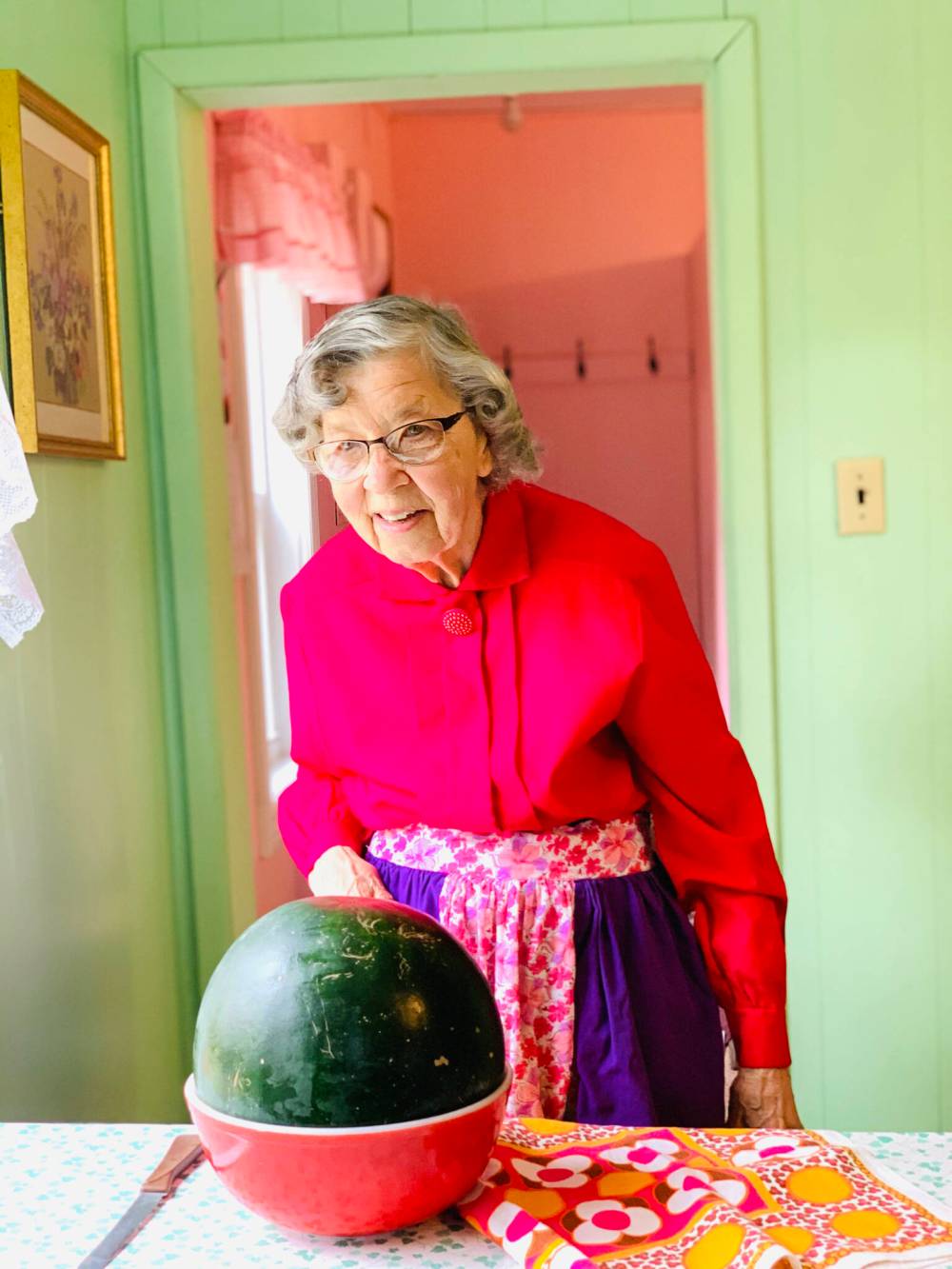
Atkins, in conjunction with Winnipeg cinematographer (and director in her own right) Rhayne Vermette, lovingly details the ephemera of Agatha’s life, including baskets, pails and appliances labelled with masking tape along the lines of “Very good bucket — 2003” and “very noisy fan.”
“She started by taking a few pictures. I didn’t even know she was doing this initially, and then she eventually decided she would make it film out of it. And so she just kept coming and coming,” Bock says.
“Many years ago, I did a very short documentary on (Agatha’s) bean harvest with a Super 8 camera, and she was totally into that at the time, so it didn’t take much convincing. I just showed up,” Atkins says.
Atkins says her crew was very small, often just herself and Vermette, sometimes a couple more — all women — for bigger shoots.
The meditative Agatha’s Almanac might be considered a work of slow cinema, but Atkins says that classification wasn’t a function of diminished energy on the part of her subject.
“She moves faster in real life than in the film, so that is a little bit of a deception. She’s faster than what the camera can sometimes capture. Getting her to slow down enough or even to follow my direction was maybe a challenge sometimes because she wants to do her work and maybe not be slowed down by all this movie-making business, because you have stuff to do,” Atkins says.
Supplied A Year in a Field observes a stretch of land near Cornwall featuring Longstone, a 4,000-year-old phallic monolith.
Curiously, another work at the fest that might be considered a slow film has a Manitoba connection.
Labelled “a quiet film by Christopher Morris,” A Year in a Field observes a stretch of bucolic land near Cornwall featuring a 4,000-year-old phallic monolith known as the Longstone.
Morris began shooting the film on the winter solstice of 2020, a period where global disasters both social and natural would shake the world.
The local connection is that the film is the first feature to be distributed by Spectacular Optical, a company founded by Winnipeg-born writer/filmmaker (and former Cinematheque programmer) Kier-La Janisse.
Given Janisse’s history with horror film, both as a programmer and filmmaker — she directed the epic folk-horror doc Woodlands Dark and Days Bewitched under the banner of Severin Films — one might expect she would have chosen a genre film to be her first foray into distribution.
“I am starting to add film distribution on a small scale to Spectacular Optical for films that I personally love but that don’t fit the genre parameters of Severin,” Janisse says, adding that A Year in the Field feels somewhat connected to the folk-horror genre.
“But that’s because the resurgence in folk horror is less about the horror and more about the folk. The ‘folk’ aspects of folk horror — the history, the landscape, the old beliefs — these are the reasons people are drawn to those films. The horror is just the hook.”
A Year in a Field screens Sunday at 5:15 p.m.
randall.king.arts@gmail.com
In a way, Randall King was born into the entertainment beat.
Our newsroom depends on a growing audience of readers to power our journalism. If you are not a paid reader, please consider becoming a subscriber.
Our newsroom depends on its audience of readers to power our journalism. Thank you for your support.
In a way, Randall King was born into the entertainment beat.
Our newsroom depends on a growing audience of readers to power our journalism. If you are not a paid reader, please consider becoming a subscriber.
Our newsroom depends on its audience of readers to power our journalism. Thank you for your support.
Advertisement Advertise With Us
Advertisement Advertise With Us