‘Death doula’ helps bereaved through grieving process
Holidays a particularly difficult time for those experiencing loss

Advertisement
Read this article for free:
or
Already have an account? Log in here »
To continue reading, please subscribe:

Digital Subscription
One year of digital access for only $205*
- Enjoy unlimited reading on winnipegfreepress.com
- Read the E-Edition, our digital replica newspaper
- Access News Break, our award-winning app
- Play interactive puzzles
*First annual payment billed as $205.00 + GST for one year. This annual subscription will automatically renew at $233.00 + GST every 52 weeks (10% off the regular annual price of $259.35). Offer available to new and qualified returning subscribers only. Cancel any time.
To continue reading, please subscribe:
Add Free Press access to your Brandon Sun subscription for only an additional
$1 for the first 4 weeks*
- Enjoy unlimited reading on winnipegfreepress.com
- Read the E-Edition, our digital replica newspaper
- Access News Break, our award-winning app
- Play interactive puzzles
*Your next Brandon Sun subscription payment will increase by $1.00 and you will be charged $17.95 plus GST for four weeks. After four weeks, your payment will increase to $24.95 plus GST every four weeks.
Read unlimited articles for free today:
or
Already have an account? Log in here »
Hey there, time traveller!
This article was published 12/12/2022 (1343 days ago), so information in it may no longer be current.
Grief is hard work no matter the time of year, but it’s especially tough in December.
Many people experience heightened grief around significant dates, such as birthdays or anniversaries, but the holiday season can be especially challenging because it’s a season — not just a day — that’s often steeped in tradition and memories.
Moving through grief may mean tears and anger at the most inopportune times as we’re inundated with jingles reminding us to be “merry and bright.”
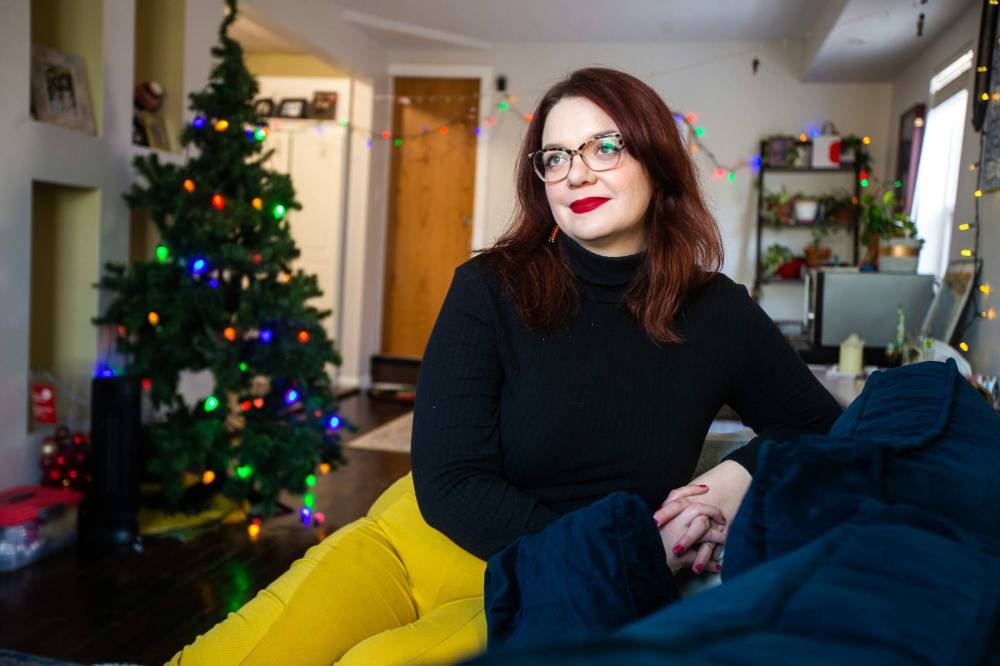
MIKAELA MACKENZIE / WINNIPEG FREE PRESS
End-of-life doula Jess Seburn supports grieving people emotionally, physically, spiritually and practically.
Allow yourself to approach the holidays differently in light of a loss, even when others have expectations of you.
Jess Seburn knows this all too well. Her best friend died suddenly in 2014 and she experienced several other losses afterwards. She says it was challenging to find the support she needed.
So she decided to try and give meaning to her grief. During the pandemic, Seburn signed up for a virtual course at Douglas College in British Columbia to become an end-of-life doula, also known as a “death doula.” She wanted to be a support system for other people.
“My passion is supporting the bereaved, those left behind. I resonate with the folks who are grieving.”
The word “doula” comes from the Greek meaning “woman who serves,” though most associate it with someone who helps women throughout pregnancy and birth. In recent years, however, more people have come to recognize the need for as much support at the end of life as at the beginning.
Although Seburn’s focus is on the people left behind after someone dies, an end-of-life doula can support the dying, their companions or people who are grieving. This year will be especially lonely for those who have lost loved ones to COVID-19. Victims of the pandemic may be a reason why there’s more grief than usual.
“My goal is to get people talking about grief. There’s a lot of avoidance but I really think, especially with the pandemic, how can you ignore it? How do you ignore death?” Seburn says.
Unlike hospice workers, doulas do not tackle medical issues. Instead, they support clients emotionally, physically, spiritually and practically, stepping in whenever and wherever needed.
“I went to a funeral once with (a client.) They had their family there with them but I said, ‘Do you want a friend there?’ He said yes. And I was there,” she says. “That’s why I call myself ‘Friend at the End’ because I’m your professional grief-support friend.”
Seburn took the course during the pandemic because she needed time to heal following her own personal loss. She spent the first half of 2020 processing a lot of feelings that she had put on the backburner.
“That notion of taking time, I think that’s why I did the training when I did — because suddenly, I did have time,” she says. “I think the pandemic either brought up a lot of grief or allowed people to feel some things that they had blocked with being busy.”
Seburn has also assisted clients with paperwork and logistics, such as insurance and funeral co-ordination.
“I may not have all the answers off the top of my head, but I’m the person who will pick up the phone and email because it’s so overwhelming when you have to, on top of all this horrible emotional loss you’re experiencing, deal with all the bureaucratic stuff.”
For those grieving, it’s important to remind yourself that it’s exhausting. The big, sweeping emotions that come along with it can tire you out. Couple that with the hectic holiday season, loss of appetite and trouble sleeping, and it’s easy to see how you could become depleted quickly. That’s why it’s important to set boundaries and focus on your well-being.
Now is the time to have more conversations about what the grief experience is. So many life experiences are swept under the rug with shame; a lot of Seburn’s work is dismantling that shame.
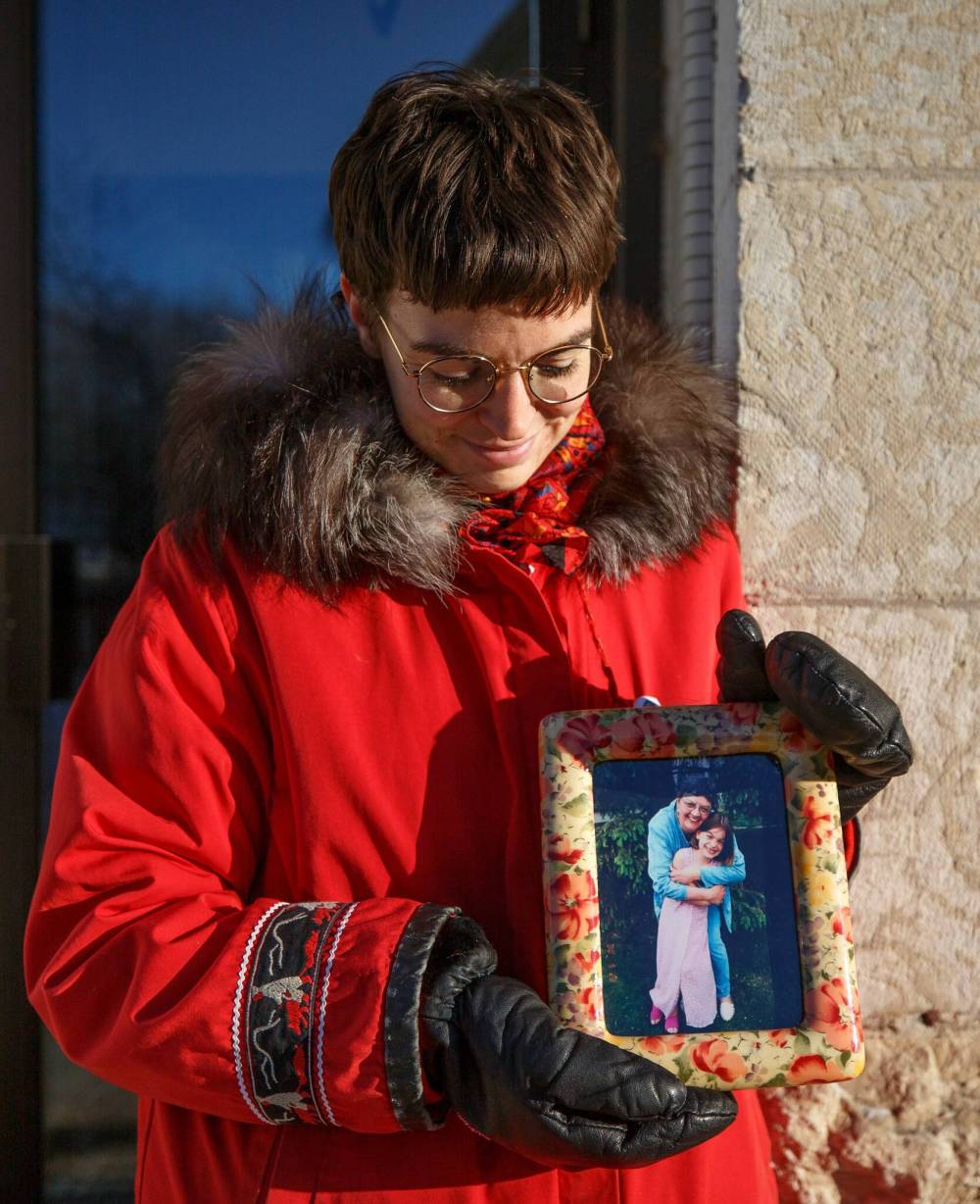
MIKE DEAL / WINNIPEG FREE PRESS
Rebecca Hume’s maternal grandmother, Katherine Hood, died last spring; Hume is figuring out how to navigate her first Christmas without her.
“People will tell you to ‘be strong.’ Being strong doesn’t mean keeping a stiff upper lip,” Seburn says. “Being strong means finding a reason to keep going. Find your reasons.”
Since its founding in 2016, the End of Life Doula Association of Canada (EOLDAC), an organization that promotes high-quality end-of-life care, has grown to nearly 500 members at various stages of their learning and work in the field.
“Our goal is to normalize the work and be a part of your circle of care. We believe all people deserve an illness/end-of-life doula,” says Sue Phillips, vice-president of the association.
Phillips says the organization has seen a robust increase in memberships over the last five years.
“(I’m not able to) firmly say that the pandemic was responsible for the increase. If anything, the pandemic prevented some people from being able to provide support in person,” she says.
Seburn has found a common thread since she began her work as a death doula — people experiencing grief typically wish they had a friend group.
“Because death is still very taboo, people are looking for a peer and want to talk to a friend who’s gone through something similar,” she says. “So often, whether it’s at work, with friends or family, if people aren’t doing the work to address their own grief, it can be really hard to show up and be the first to talk about it.”
Grief affects every part of your health; some of what you experience may include responses that don’t feel socially acceptable. You might find that tears come easily in unexpected places or maybe you can’t cry at all. Allow yourself space to acknowledge the loss or despair you’re feeling. Those feelings matter and will do more harm if you don’t acknowledge they exist.
There’s a wide spectrum of possible ways to feel and deal with grief, and they don’t have to match anyone else’s experience or expectations. Seburn says she ensures her clients have mental-health resources if they need them.
“I’m not a therapist but I have a lot of knowledge and lived experience,” she says.
Navigating the holidays during times of grief is complex. Gatherings tend to bring into focus a person’s absence and families can have differing expectations about how to handle celebrations. One of the most challenging things about grief is the isolation of it — and that includes being in a room full of people but still feeling alone.
“I think what happens during the holidays is that there’s a lot of pressure to be happy and make the most of the season. It’s almost like, ‘Well, don’t be sad, you’re going to ruin the vibe,’” Seburn says. “This is a happy time of year for a lot of people, but it’s not for everyone. Whatever your grief experience is, having a support system that lets you express whatever you may be feeling is key to having a bit better of a holiday season.”
Often, the holidays magnify feelings of loss. For Rebecca Hume, this holiday season will be the first without her maternal grandmother, who died last spring.
“This is our first Christmas without my grandma. This topic is pretty new to me because this was my first major loss. I was very close to my grandmother,” she says. “(Grief during the holidays) is challenging because you’re missing a core person. And not everybody wants to bring it up or talk about it, so it’s like an elephant in the room.”
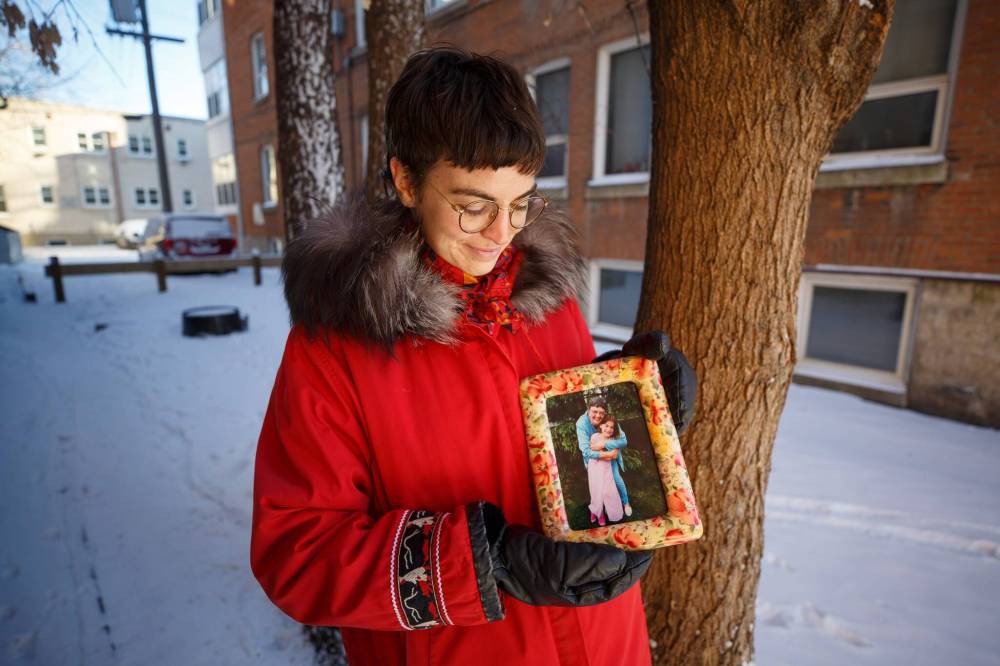
MIKE DEAL / WINNIPEG FREE PRESS
Rebecca Hume turned to a ‘death doula’ to help her write her late grandmother’s eulogy.
Hume contacted Seburn last April when she needed support related to her grandmother’s funeral service.
“My experience with (Seburn) is through her helping guide me in the process of writing a eulogy. I really connected with the writing prompts she gave me and, looking back on it now, it was a really good processing tool,” she says. “To have had (Seburn), who’s trained to receive this kind of information, meant a lot.”
For Hume, grief isn’t necessarily linear. It comes and goes; when it does come, she holds space for it. When she’s feeling sad, she does something that makes her feel close to her grandmother.
“My grandma was a maker. She was constantly making little things for people,” Hume says. “So, now I’m doing that, with cross-stitching or painting, and then giving them to friends. I’m also getting back into music because she was a piano player.”
Seburn says this is something she encourages with her clients, when they’re ready — to take something painful and transform it into something meaningful.
“That could be making that person’s favourite recipe or going to the place that reminds you of them,” she says.

If you’re one of the ones not experiencing pain and remorse this holiday season, it’s important to recognize that other people’s grief doesn’t necessarily need to subdue your joy. Just remember to be self-aware.
“Have an awareness that there are people who, in your immediate circles and beyond, are feeling deep grief. There are little things that we can do to let them know that they’re not alone. Show up and support however you can,” Seburn says.
The holidays tend to bring grief and loss into sharper focus. We all experience grief differently and we all heal differently, too.
sabrinacarnevale@gmail.com
@SabrinaCsays
Sabrina Carnevale is a freelance writer and communications specialist, and former reporter and broadcaster who is a health enthusiast. She writes a twice-monthly column focusing on wellness and fitness.
Our newsroom depends on a growing audience of readers to power our journalism. If you are not a paid reader, please consider becoming a subscriber.
Our newsroom depends on its audience of readers to power our journalism. Thank you for your support.
Sabrina Carnevale is a freelance writer and communications specialist, and former reporter and broadcaster who is a health enthusiast. She writes a twice-monthly column focusing on wellness and fitness.
Our newsroom depends on a growing audience of readers to power our journalism. If you are not a paid reader, please consider becoming a subscriber.
Our newsroom depends on its audience of readers to power our journalism. Thank you for your support.
Advertisement Advertise With Us
Advertisement Advertise With Us