Winging it
Raising chickens in urban environment yields joy (and some eggs)
Advertisement
Read this article for free:
or
Already have an account? Log in here »
To continue reading, please subscribe:

Digital Subscription
One year of digital access for only $205*
- Enjoy unlimited reading on winnipegfreepress.com
- Read the E-Edition, our digital replica newspaper
- Access News Break, our award-winning app
- Play interactive puzzles
*First annual payment billed as $205.00 + GST for one year. This annual subscription will automatically renew at $233.00 + GST every 52 weeks (10% off the regular annual price of $259.35). Offer available to new and qualified returning subscribers only. Cancel any time.
To continue reading, please subscribe:
Add Free Press access to your Brandon Sun subscription for only an additional
$1 for the first 4 weeks*
- Enjoy unlimited reading on winnipegfreepress.com
- Read the E-Edition, our digital replica newspaper
- Access News Break, our award-winning app
- Play interactive puzzles
*Your next Brandon Sun subscription payment will increase by $1.00 and you will be charged $17.95 plus GST for four weeks. After four weeks, your payment will increase to $24.95 plus GST every four weeks.
Read unlimited articles for free today:
or
Already have an account? Log in here »
Hey there, time traveller!
This article was published 25/11/2022 (1355 days ago), so information in it may no longer be current.
Instead of a set of golf clubs or cosy sweater, veterinary epidemiologist David Waltner-Toews’ 70th birthday gift from his wife was a box filled with seven chicks.
He wondered if his wife was sneakily finding a long-term project for him in his retirement.
Waltner-Toews, who grew up in Winnipeg, is no stranger to chickens; he has written books about chickens and travelled around the world to combat avian influenza (bird flu). But while he studied flocks living in various conditions — from large commercial operations to free-range birds roaming around small villages in Honduras and Java, it’s very different having to tend a flock living in his own backyard in a residential area in Kitchener, Ont.
David Waltner-Toews photo
While he has written about chickens before, Waltner-Toews found raising seven of his own to be quite a learning experience.
“It is one thing to give advice to farmers about disease control (which as a veterinarian I have been known to do), or cut open a dead chicken to determine cause of death,” he writes. “I soon discover that it is quite another thing to raise chickens oneself.”
He details the trials and tribulations of caring for his flock in his memoir, A Conspiracy of Chickens.
Waltner-Toews is also the author of four non-fiction books, three works of fiction and eight books of poetry. He was appointed to the Order of Canada for his leadership and expertise to ecosystem approaches to health and for supporting development worldwide. In A Conspiracy of Chickens, he combines anecdotal information on his flock along with a general history of chickens and how they fit into the economy and environment of many countries.
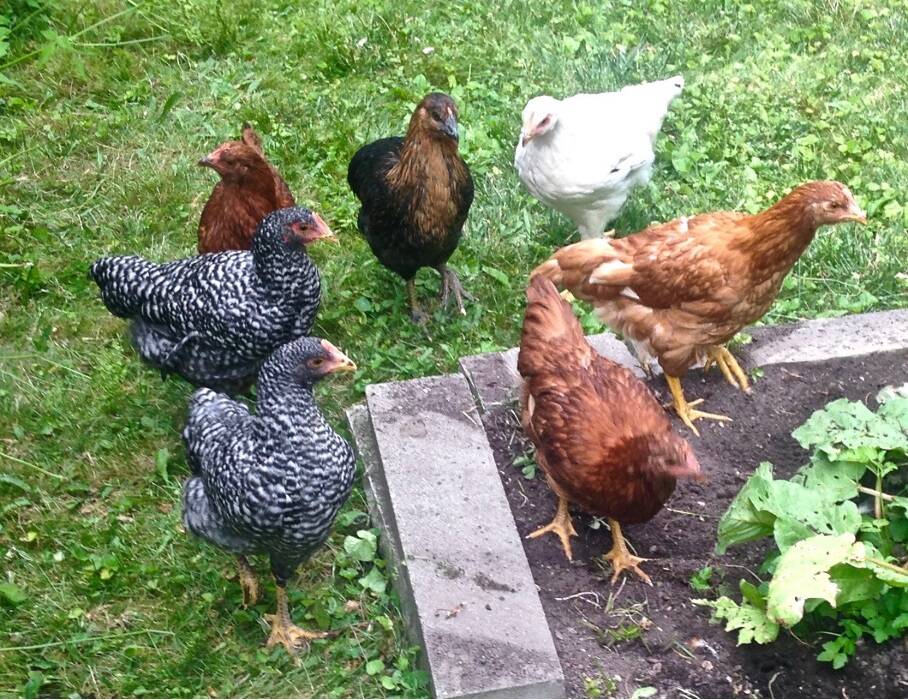
Displaying his whimsical side, Waltner-Toews names his seven chicks after deceased female relatives including his mother Nettie and oldest sister Elfrieda. As the chickens grow, each one develops unique characteristics and ways of coping with communal life inside their coop.
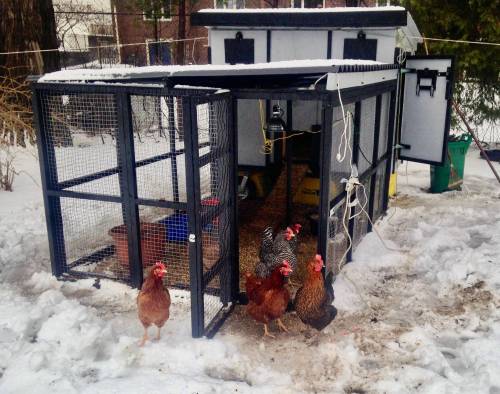
Being a scientist, Waltner-Toews first researches various coop designs and factors in the extreme cold temperatures of a Canadian winter. He also wants to ensure his chickens are able to wander around the yard when weather permits. Other considerations include maintaining friendly relationships with his neighbours, who must sign agreements allowing him to establish his backyard operation, in accordance with a municipal bylaw.

Supplied photo
Author David Waltner-Toews
A bylaw enforcement officer had to inspect and approve the final coop design to make sure it was built properly and met the correct size requirement. Despite having passed inspection, Waltner-Toews soon discovers the coop’s design flaws that he must quickly rectify to maintain the health and safety of his hens.
He also reports on the process needed to encourage young hens to begin laying eggs in the coop’s nest boxes. One step is placing golf balls in the nests so the chickens will learn where to lay eggs. Eventually the birds begin to each lay about one egg a day, the normal rate of production for this type of flock.

The name for Waltner-Toews’ memoir comes from his thoughts about how people and animals interact, and the idea of including what are traditionally farm animals in urban environments to help with food security. “Maybe backyard urban chickens are a conspiracy, bringing people back in touch with life, death, and chicken soup made from scratch,” he writes. “When developers create one of their ‘housing estates,’ they should include in their plans several small, probably mixed, farms where milk cows, chickens, and pigs might be raised, as well as vegetables and forages.”
Waltner-Toews admits that raising urban backyard chickens isn’t a solution to large-scale economic issues, but is feasible on a small-scale. He calculates the cost of a dozen free-range eggs is about $6, and he pays about $40 a month for feed, so the approximately 10 dozen eggs his chickens lay each month cost about $4 a dozen. Of course, he isn’t including a cost for the labour he provides for his flock. He also tallies up the enjoyment he gains from his chickens.
“The chickens got me away from the computer and outside,” he writes. “There’s lots of evidence that’s good for a person’s health and well-being. Drawing on the help of friends to build and care for the girls has helped me to recognize and value my social connections in new ways.”
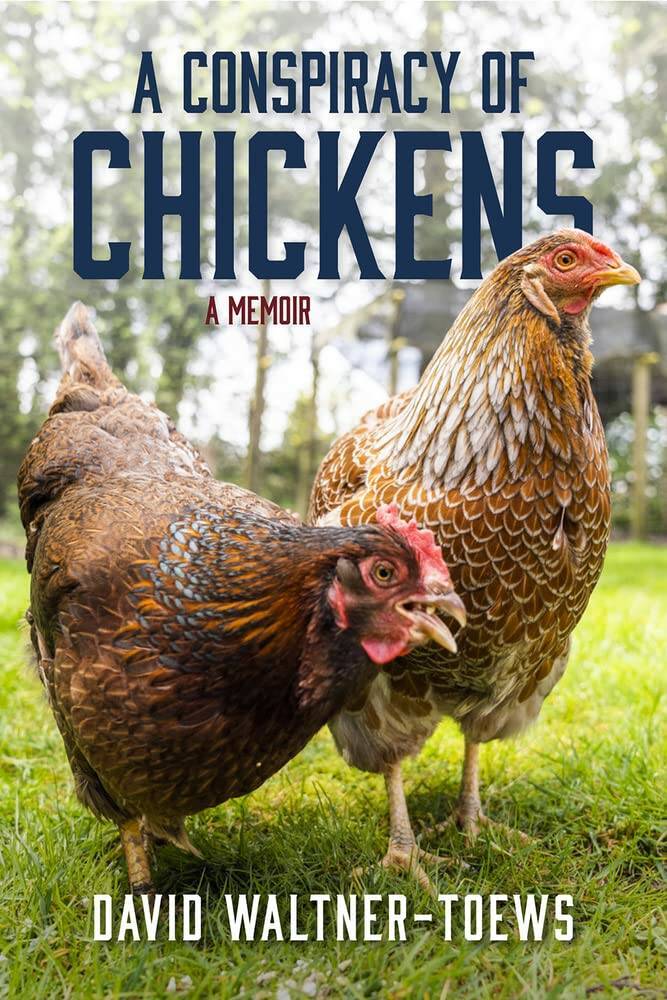
A Conspiracy of Chickens
A Conspiracy of Chickens might not inspire everyone to rush out and buy chicks, but it does provide insight about chickens and their lengthy, enduring relationship with humans.
Andrea Geary is a freelance writer in Winnipeg.
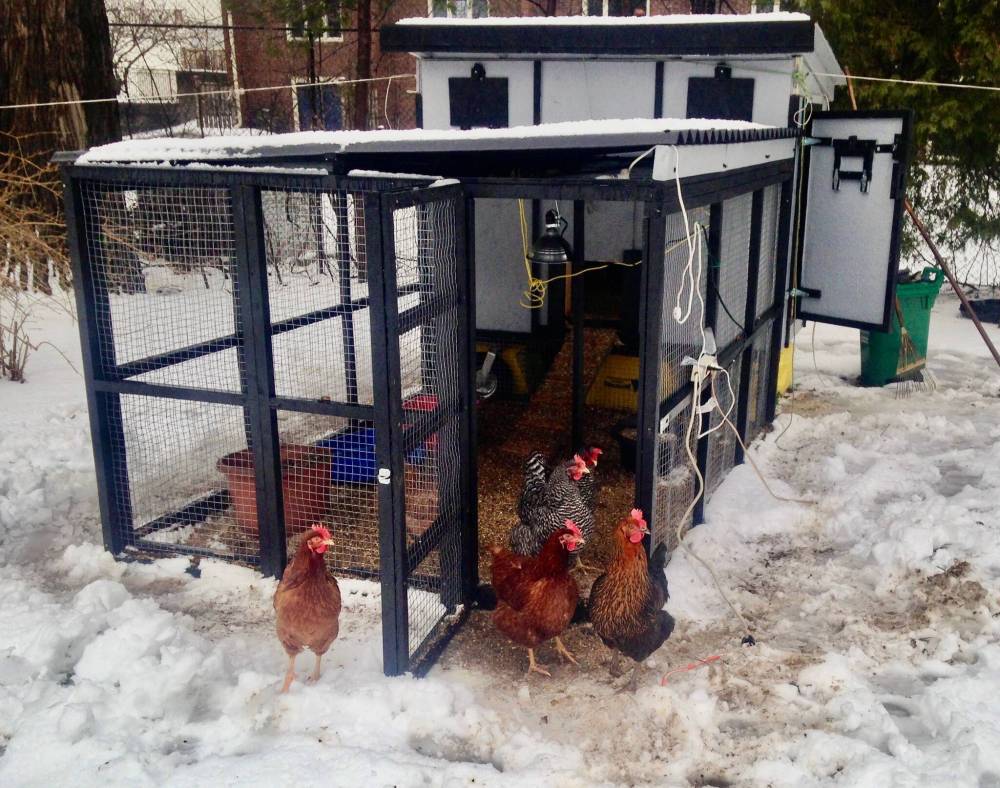
David Waltner-Toews photo
Waltner-Toews researched various coop designs and factors in the extreme cold temperatures of a Canadian winter.