Food for thought
Fasting girl at mysterious heart of austere adaptation of Emma Donoghue novel

Advertisement
Read this article for free:
or
Already have an account? Log in here »
To continue reading, please subscribe:
Digital Subscription
One year of digital access for only $1.44 a week*
- Enjoy unlimited reading on winnipegfreepress.com
- Read the E-Edition, our digital replica newspaper
- Access News Break, our award-winning app
- Play interactive puzzles
*Billed as $5.77 plus GST every four weeks. After 52 weeks, price increases to the regular rate of $19.95 plus GST every four weeks. Offer available to new and qualified returning subscribers only. Cancel any time.
To continue reading, please subscribe:
Add Free Press access to your Brandon Sun subscription for only an additional
$1 for the first 4 weeks*
- Enjoy unlimited reading on winnipegfreepress.com
- Read the E-Edition, our digital replica newspaper
- Access News Break, our award-winning app
- Play interactive puzzles
*Your next Brandon Sun subscription payment will increase by $1.00 and you will be charged $17.95 plus GST for four weeks. After four weeks, your payment will increase to $24.95 plus GST every four weeks.
Read unlimited articles for free today:
or
Already have an account? Log in here »
Hey there, time traveller!
This article was published 19/11/2022 (1447 days ago), so information in it may no longer be current.
Slow, serious and intense, The Wonder is set in Ireland in 1862, but it begins with an unnecessary framing device: We are shown a cluttered soundstage and told we are about to see a film about “people who believe in their stories with complete devotion.”
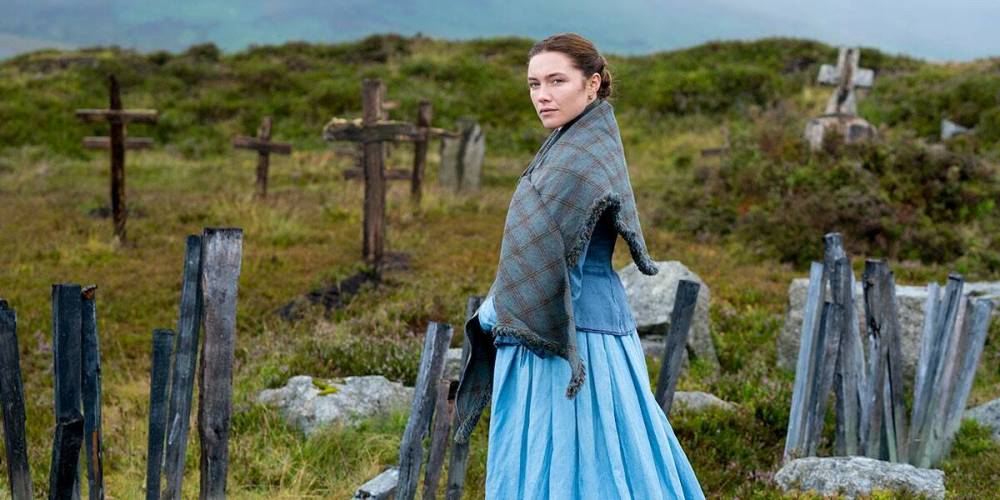
Emphasizing artifice is an odd angle to take when your star is the extraordinary Florence Pugh (Midsommar, Little Women and the recent Don’t Worry Darling), who grounds anything she does in the urgent here and now.
As with her 2016 breakout role in Lady Macbeth, she brings unforced emotional authenticity to this historical drama, making it feel immediate and original.
Element Pictures
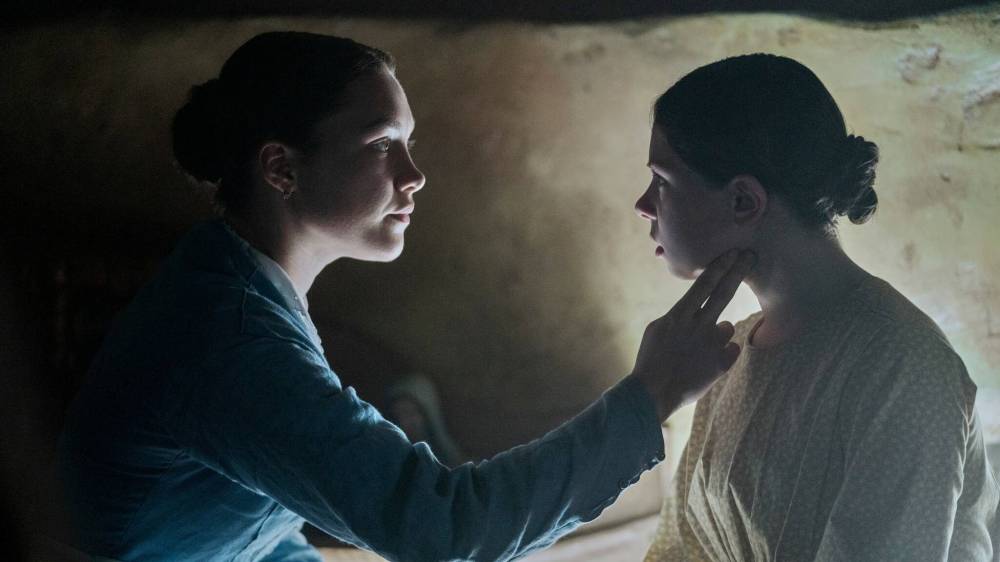
Florence Pugh, left, and Kila Lord Cassidy play nurse and patient in The Wonder.
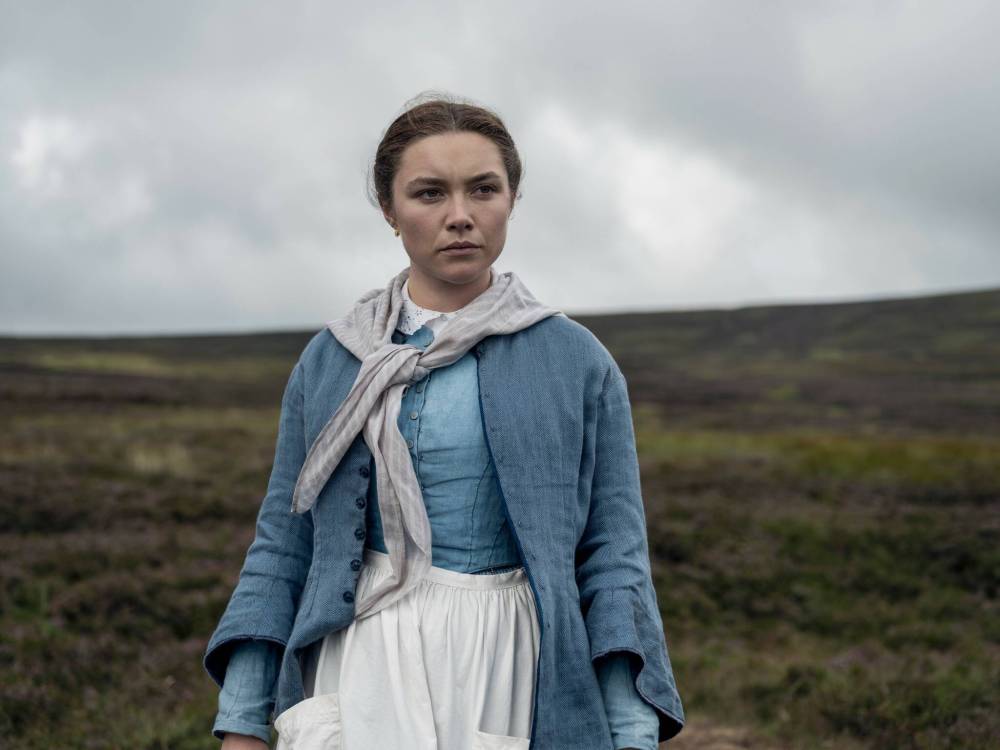
Pugh plays Lib Wright, a tough-minded English nurse and veteran of the Crimean War brought to a small village in Ireland where she is tasked with keeping watch over Anna (Kila Lord Cassidy), an 11-year-old girl who has apparently survived without eating for four months.
Lib will alternate eight-hour shifts with an Irish nun (Josie Walker), and in 14 days, the two will make their reports to a panel of village men, including the local priest (Ciarán Hinds) and doctor (Toby Jones).
Sebastián Lelio, a Chilean director whose films include Gloria, A Fantastic Woman and the English-language Disobedience, collaborates with screenwriter Alice Birch (known for her work on Succession and Normal People) to adapt Canadian-based Irish writer Emma Donoghue’s 2016 novel. (Donoghue’s Room has also been made into an award-winning movie.)
Donoghue has drawn here on the Victorian phenomenon of “fasting girls,” who often gained fame for reportedly consuming nothing. The experiences of these young women could be an expression of true religious faith, a fraudulent bit of financial opportunism, or the result of what we would now call an eating disorder.
The case of Anna is kept deliberately ambiguous, at least until the film’s harrowing end.
Element Pictures
Florence Pugh brings her usual emotional authenticity to her role as a 19th-century nurse.
Lib is the English outsider, the rationalist, who seems to be set against the Irish Catholic villagers. But the film is careful not to reduce the conflict here to a simple science-vs.-faith binary.
Lib compassionately cares for Anna and struggles to understand her. At first, she looks on the religious rituals of Anna and her family with skepticism, but she also views their closeness and affection with envy. And Lib is also nursing her own secret grief: We see she is a laudanum addict who has her own nightly ritual.

The people around Anna, still haunted by the hunger of the Great Famine, project onto her what they need to see.
The priest believes Anna is emulating the saints by subsisting on manna from heaven. The doctor takes the view that this is a new scientific development — perhaps the girl has learned to convert sunlight into nourishment, or perhaps she subsists on a vital energy that can’t yet be apprehended. William Byrne (Tom Burke), who forms a tentative relationship with Lib, is a newspaperman hoping for a scandalous story while holding back on a story of his own.
At the almost silent centre of all this, Anna is played with luminous, self-contained serenity by the young Lord Cassidy. The part of Anna’s mother, Rosaleen, is acted by Lord Cassidy’s own mother, Elaine Cassidy, which gives added layers to their interactions, especially as Anna’s sacrificial fast enters a dangerous new phase.
Element Pictures
Lib Wright (Florence Pugh) is in Ireland to watch over a young girl who allegedly hasn’t eaten in months.
As Lib fights for the life of her patient and Anna’s community battles for her soul, Lelio and Birch temper the potential melodrama with a minimalist script that verges on the abrupt. The beauty here is atmospheric — you can almost smell the wet wool and turf fires — but austere, underpinned by strange lighting and an often deliberately discordant soundscape.
The film concludes with another view of that soundstage, reminding us this is all a story. We don’t really need reminding — The Wonder has already demonstrated, powerfully, the ways stories can both sustain us and harm us.
Studying at the University of Winnipeg and later Toronto’s York University, Alison Gillmor planned to become an art historian. She ended up catching the journalism bug when she started as visual arts reviewer at the Winnipeg Free Press in 1992.
Our newsroom depends on a growing audience of readers to power our journalism. If you are not a paid reader, please consider becoming a subscriber.
Our newsroom depends on its audience of readers to power our journalism. Thank you for your support.
Advertisement Advertise With Us
Advertisement Advertise With Us