Coats of many colours
Clothing designer Wendy Sinclair draws on Ojibwa heritage for her vibrant clothing

Advertisement
Read this article for free:
or
Already have an account? Log in here »
To continue reading, please subscribe:

Digital Subscription
One year of digital access for only $205*
- Enjoy unlimited reading on winnipegfreepress.com
- Read the E-Edition, our digital replica newspaper
- Access News Break, our award-winning app
- Play interactive puzzles
*First annual payment billed as $205.00 + GST for one year. This annual subscription will automatically renew at $233.00 + GST every 52 weeks (10% off the regular annual price of $259.35). Offer available to new and qualified returning subscribers only. Cancel any time.
To continue reading, please subscribe:
Add Free Press access to your Brandon Sun subscription for only an additional
$1 for the first 4 weeks*
- Enjoy unlimited reading on winnipegfreepress.com
- Read the E-Edition, our digital replica newspaper
- Access News Break, our award-winning app
- Play interactive puzzles
*Your next Brandon Sun subscription payment will increase by $1.00 and you will be charged $17.95 plus GST for four weeks. After four weeks, your payment will increase to $24.95 plus GST every four weeks.
Read unlimited articles for free today:
or
Already have an account? Log in here »
Hey there, time traveller!
This article was published 05/07/2021 (1889 days ago), so information in it may no longer be current.
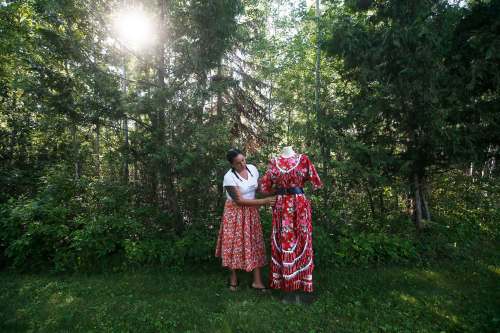
A sewing machine has been part of Wendy Sinclair’s life for as long as she can remember.
She drew inspiration from creative relatives while growing up at Brokenhead Ojibway Nation, which is about 70 kilometres northeast of Winnipeg, and has turned that love of fabrics, colours and patterns into a growing career.
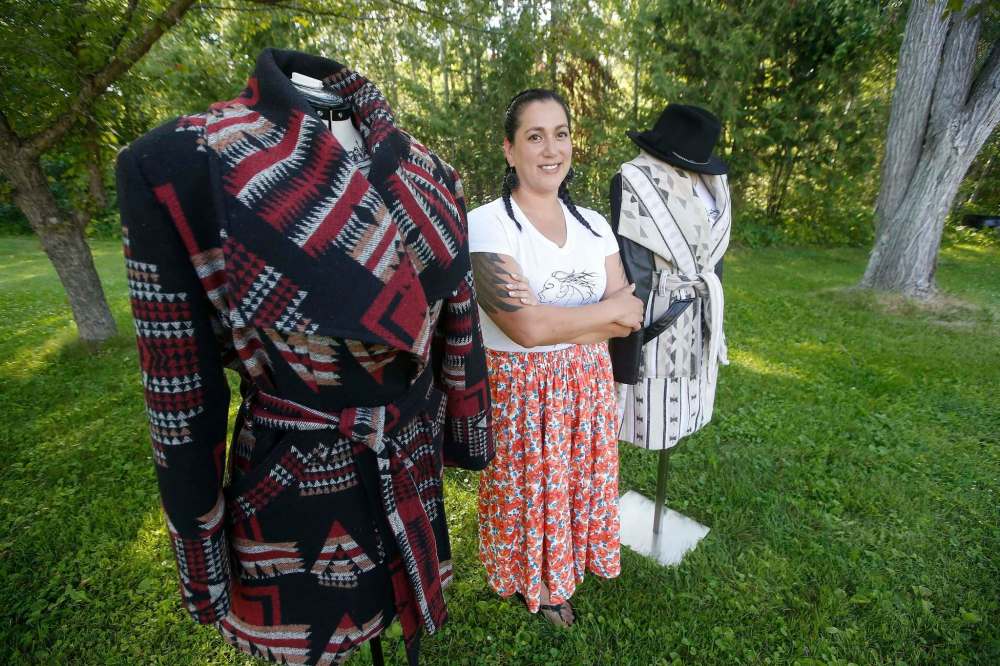
“My granny, my aunties and my mom were all sewers. My mom always had a sewing machine and as a kid, I was always drawn to it,” says Sinclair, 34, who designs clothes, outerwear, ponchos and blankets for her business and brand, Pretty Windy Designs.
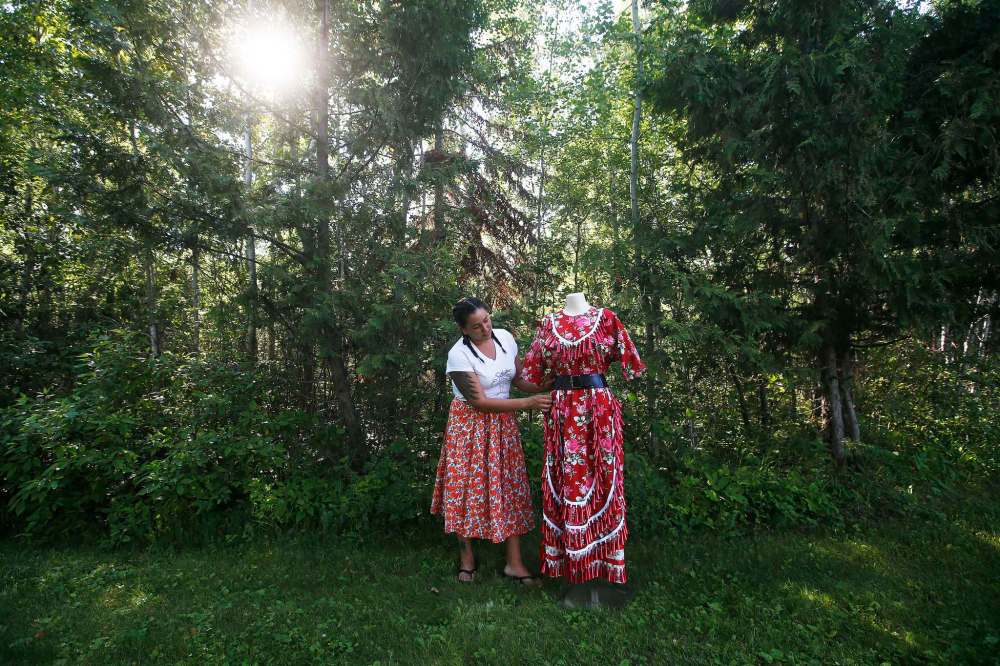
“So my granny made star blankets, ribbon skirts, ribbon dresses, and mom made smaller stuff, so she always had a sewing machine,” she remembers. “I would make clothes for me and my friends, and then I’d get them to pick out the ones they like. I was always drawn to that when I was really young and I always knew that’s what I wanted to do.”
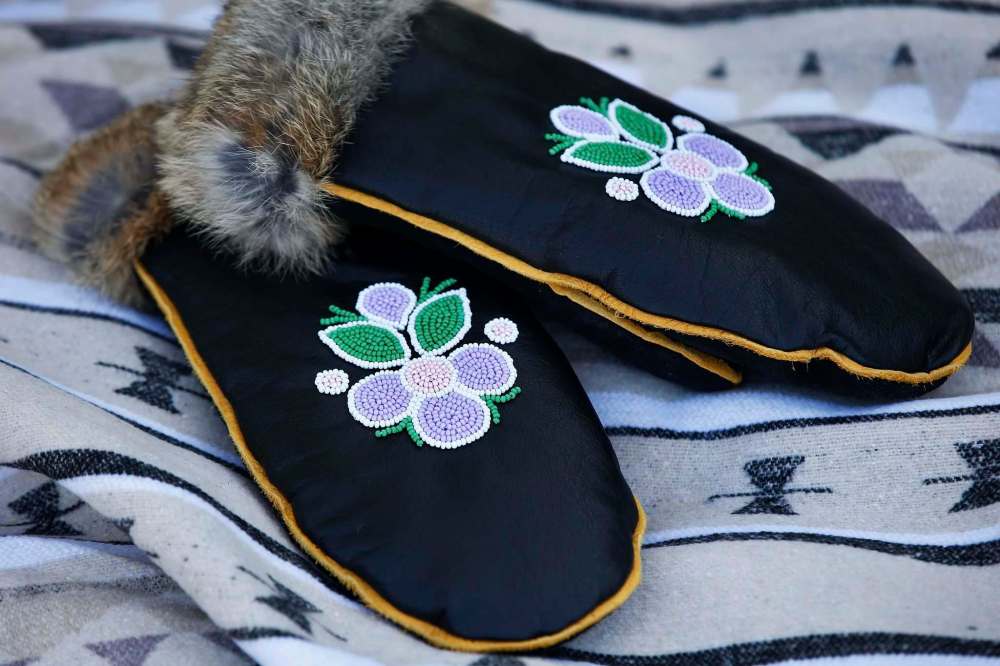
Her heritage plays a key role in many of Pretty Windy’s colourful designs. She says floral patterns in Ojibwa clothing date back to the 18th century and were inspired by the plants that grew near where her ancestors lived, such as wild roses, water lilies, strawberry and blueberry flowers and fruit.
Ribbon skirts are also part of Indigenous tradition in many parts of Canada, including for the Ojibwa.
“A lot of the florals that I use, I grew up seeing on our ribbon skirts and our dresses, so I’m very drawn to florals. When I’m picking out colours, I always think back and try to get my Aboriginal spin on it,” says Sinclair, who adds the hashtag #showingyourfirstnationsroots on Pretty Windy Designs’ Facebook and Instagram sites, which are festooned with colourful examples of her work.
“It’s all from what we find on our land.”
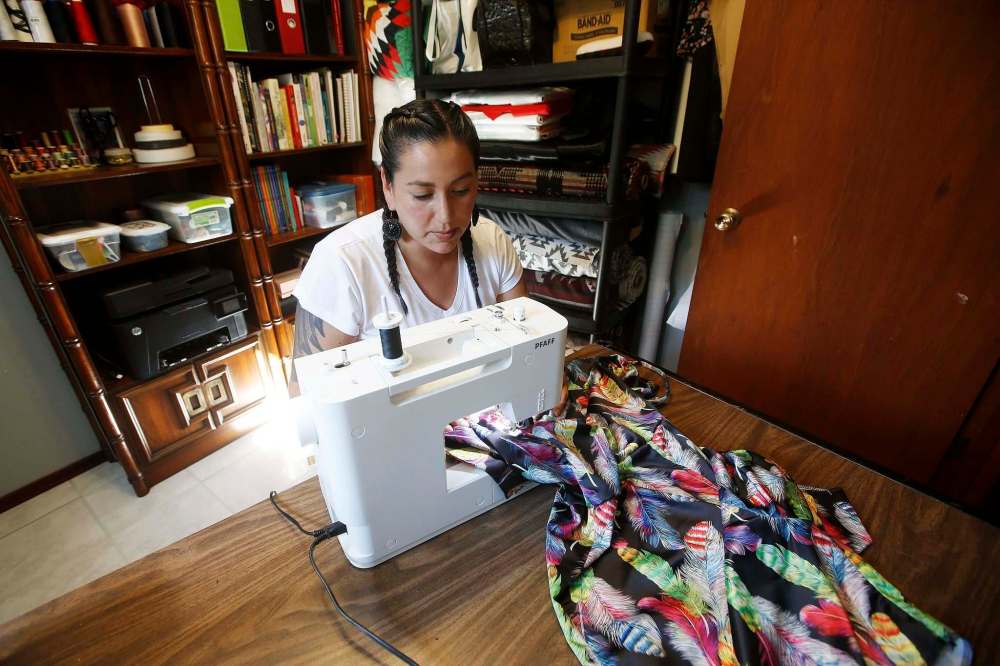
While Sinclair acknowledges the creativity she soaked up from her mother and other relatives sparked her love of fashion and sewing, she’s combined those gifts with her drive to reach her dreams. She began high school in Selkirk but her love of fashion and sewing led her to Murdoch MacKay Collegiate’s fashion design program, where she would take traditional high school classes in the mornings and fashion later in the day.
“That kind of kick-started it. I just loved going to school because I knew I would go to fashion in the afternoon and make things,” she says.
She followed the dual diploma she earned there with a business administration diploma from Red River College — “My dad said if you want (fashion) to be your career, you should also take the business part as well” — and in 2016 she graduated from the fashion design program at Winnipeg’s MC College before starting Pretty Windy Designs.
She’s taken the business from modest beginnings, selling ponchos and blankets at Christmas craft sales and casino gift shops, to a going concern that keeps her sewing machine whirring as she fills orders from across Canada, and as of last December, the United States.
“Right now what I’ve been doing, I call it my trial-and-error (period),” she says. “I’ve seen what I like, what I don’t like, and I’m trying to narrow it down to some of the things I do really like doing.”
Jackets are one of those items she enjoys designing and making, and one recent commission took a sample of her work to a nationwide audience.
Her cousin, Daniel Monkman, the singer and guitarist who goes by the stage name Zoon, was invited to perform at an all-Indigenous presentation called the Reclaimed Sessions that was part of Juno Awards week at the beginning of June.
When he needed a new jacket for the gig, the Polaris Prize-longlisted artist knew who to call for a fashion favour.
“I was like ‘How many days do I got?’ It had to be out here by (June) 3rd. OK, so no sleep tonight,” she recalls with a chuckle.
“Still, it was so cool to see him wearing my jacket during his performance. I was just so thrilled… I was showing my son, ‘Look, Mom made that!’ It was a surreal moment.”
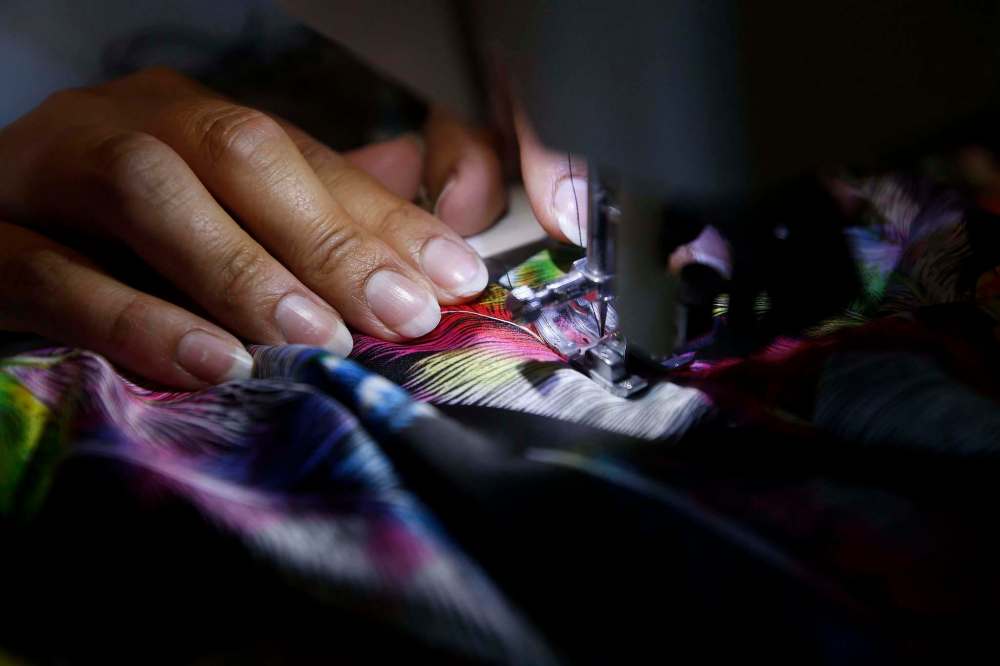
Her latest commission is closer to home. She’s making ceremonial vests for the chief and band council at Brokenhead, where she works as an administrative assistant, and she says the vests will be made from melton wool with satin liners with floral decorations that come from Ojibwa tradition.

Ojibwa culture plays a big part in what fabric she purchases for the garments and blankets she designs and sells. She buys from Indigenous fabric makers when she can, but also turns to wholesalers in Winnipeg, Montreal and the United States.
One of her goals is to make her own fabrics, but she says the first step is to take Pretty Windy Designs from an evenings-and-weekends business to a full-time operation that would allow her to focus her work on making new clothes and textile items and spend more time with her family, including her three-year-old son.
“I would love to wake up and get started on my orders, but right now I go to work and the evenings I cut things out and get things going. On the weekends I’m sewing pretty much constantly,” she says. “I just do it in my house right now, but my goal is to have my own shop because it feels like my sewing room keeps getting smaller and smaller when I keep buying fabric.”
alan.small@freepress.mb.ca
Twitter:@AlanDSmall
Alan Small has been a journalist at the Free Press for more than 22 years in a variety of roles, the latest being a reporter in the Arts and Life section.
Our newsroom depends on a growing audience of readers to power our journalism. If you are not a paid reader, please consider becoming a subscriber.
Our newsroom depends on its audience of readers to power our journalism. Thank you for your support.
A design dilemma
Among the fashion statements being made in 2021 are those connected to the recent discoveries of unmarked graves of former residential school students in British Columbia and Saskatchewan.
Orange Shirt Day is Sept. 30, and its inspiration comes from residential-school survivor Phyllis Jack Webstad, who on her first day at a residential school in B.C. had her clothes taken from her, including an orange shirt that was a gift from her grandmother.
In 2021, Canadians, with or without Indigenous ancestry, have begun wearing orange T-shirts while visiting memorials created across Canada to honour the dead children.
Orange T-shirts create an awkward situation for Indigenous people involved in fashion like Wendy Sinclair.
“As a daughter of a residential-school survivor, I was not interested in making a profit off the sales of orange T-shirts, but I am starting to think that Canadians are interested in wanting to know more of the dark history of this country,” she says. “They want to become allies and show their support.”
She and her mother are teaming up to make and sell T-shirts through Sinclair’s company, Pretty Windy Designs, with her mother creating the artwork. Proceeds will go to organizations that will help residential school survivors.
Alan Small has been a journalist at the Free Press for more than 22 years in a variety of roles, the latest being a reporter in the Arts and Life section.
Our newsroom depends on a growing audience of readers to power our journalism. If you are not a paid reader, please consider becoming a subscriber.
Our newsroom depends on its audience of readers to power our journalism. Thank you for your support.
Related Articles
Warm and fuzzy for Winnipeg winter



Advertisement Advertise With Us
Advertisement Advertise With Us