Indigenous video series share sacred teachings

Advertisement
Read this article for free:
or
Already have an account? Log in here »
To continue reading, please subscribe:

Digital Subscription
One year of digital access for only $205*
- Enjoy unlimited reading on winnipegfreepress.com
- Read the E-Edition, our digital replica newspaper
- Access News Break, our award-winning app
- Play interactive puzzles
*First annual payment billed as $205.00 + GST for one year. This annual subscription will automatically renew at $233.00 + GST every 52 weeks (10% off the regular annual price of $259.35). Offer available to new and qualified returning subscribers only. Cancel any time.
To continue reading, please subscribe:
Add Free Press access to your Brandon Sun subscription for only an additional
$1 for the first 4 weeks*
- Enjoy unlimited reading on winnipegfreepress.com
- Read the E-Edition, our digital replica newspaper
- Access News Break, our award-winning app
- Play interactive puzzles
*Your next Brandon Sun subscription payment will increase by $1.00 and you will be charged $17.95 plus GST for four weeks. After four weeks, your payment will increase to $24.95 plus GST every four weeks.
Read unlimited articles for free today:
or
Already have an account? Log in here »
Hey there, time traveller!
This article was published 05/06/2021 (1956 days ago), so information in it may no longer be current.
Knowledge can be kept, but it can’t be owned, and must be shared, Anishinaabe elder David Courchene says. As important as it is throughout one’s lifetime to learn — a language, a song, a tradition, a history — perhaps nothing is as important as giving those lessons to those who’ve yet to learn them.
In his lifetime, he remembers his grandmother teaching him to always give others respect, love, and honesty, and recalls elders before him showing him the value of honesty, wisdom, humility, courage, and truth.
“I remember bringing my mother food before she passed away, sitting down and eating with her,” says Courchene, who is known as Nii Gaani Aki Innini, or Leading Earth Man, and who founded the Turtle Lodge International Centre for Indigenous Education and Wellness on Sagkeeng First Nation. “She said to me, ‘That’s a good deed you’ve done, and the great spirit will repay you for this kindness.
“It was one of the most profound teachings of my life: to be able to give and share what you have is very sacred.”
What makes a teaching sacred is the sharing of it, Elder Courchene says, and in a new series of short videos directed and written by Indigenous filmmaker Erica Daniels of Peguis First Nation, seven laws sacred to Indigenous people across Turtle Island — respect, love, courage, honesty, wisdom, humility, and truth — are shared with great clarity and care.
The eight-video series was launched Thursday to coincide with the beginning of National Indigenous History Month. It is available online and was produced in partnership with the lodge, IG Wealth Management, Peg City Pictures Inc., and the Manitoba 150 Committee. Versions are available in English, French, and Anishinaabemowin.
“These seven sacred laws are such an important tool in helping Indigenous people to reconnect with our culture, because it was taken away from us,” says Daniels, referring to the attempted erasure of Indigenous history, culture, language and identity under the racist, colonial framework that came after contact, typified by the brutal residential school system which operated in Canada until 1996. “And it’s also important for non-Indigenous people to look at our history and learn about who we truly are, and the beautiful culture we come from.”
The series begins with the story of creation. “In the beginning, there was only darkness and silence, but the sound of the sacred rattle broke the silence,” Courchene tells a group of youth gathered around him at the lodge. Over the course of the series, Courchene introduces the audience to the seven teachings, along with the animals — the buffalo, eagle, bear, beaver, wolf, turtle, and sabe, a large, hairy man reminiscent of a sasquatch or bigfoot — that represent them, through the eyes of an animated central character, a young man on a vision quest, seeking truth and understanding.
For Courchene, the project is centred on the real life experience of this rite of passage, and of a lifetime of learning, during which teachings like those depicted revealed themselves to him with the help of elders in Sagkeeng and elsewhere, and the land itself.
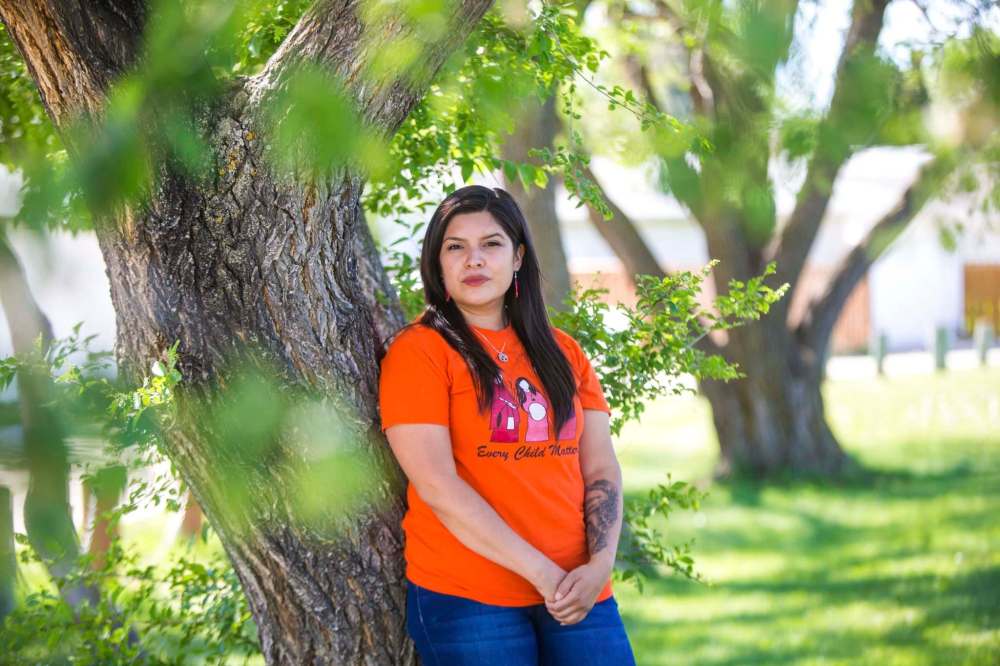
For Daniels, who’s learned from and known Courchene since she was 19, the videos are deeply personal, and gave her an opportunity to preserve those teachings on camera.
“A big part of my purpose in the world as an Indigenous filmmaker and storyteller is sharing with everybody the beauty of where we come from and who we are,” she says. “There’s so much racism and discrimination, and if people really knew who we are and our history, they’d understand our history and see that we are strong and resilient.”
Both Courchene and Daniels see culture as a chance to bridge gaps and break down barriers, finding common ground in teachings that also form the basis of most global religions and cultural groups. It was also important to both that the story was told with Indigenous voices, and in the sacred lodge, allowing viewers at home to learn alongside the group sitting inside it.
“That’s where it all begins,” says Daniels. “Elders telling stories.”
The story told in the short series is always pertinent, but especially so in recent days, both Courchene and Daniels say. Last week, ground-penetrating radar technology uncovered an unmarked burial ground at the site of the former Kamloops Indian Residential School, with the bodies of 215 Indigenous children buried there. The discovery of the graves has led to a nationwide reckoning with the genocidal realities of the residential school system, along with significant pain for survivors and Indigenous people, who carry the burden of intergenerational trauma.
“I think with the recent disclosure of what happened to these 215 children, this is a very appropriate time for us to release these teachings,” Courchene says. “I think people are looking for hope and wanting to correct the wrongs which have been done. It’s going to take a lot of work, but it will take people of the heart to change the world.”
“It creates an opportunity to let native people take leadership in reconciliation, which we don’t do only for ourselves, but for all peoples,” he said.
Daniels said that it has been a very heavy week for Indigenous people. “There’s a lot of grief, but a lot of community coming together to heal,” she says. The timing of the video series’ release only reinforces the importance of sharing of teachings which were sought to be erased by the residential school system and colonialism, she said.
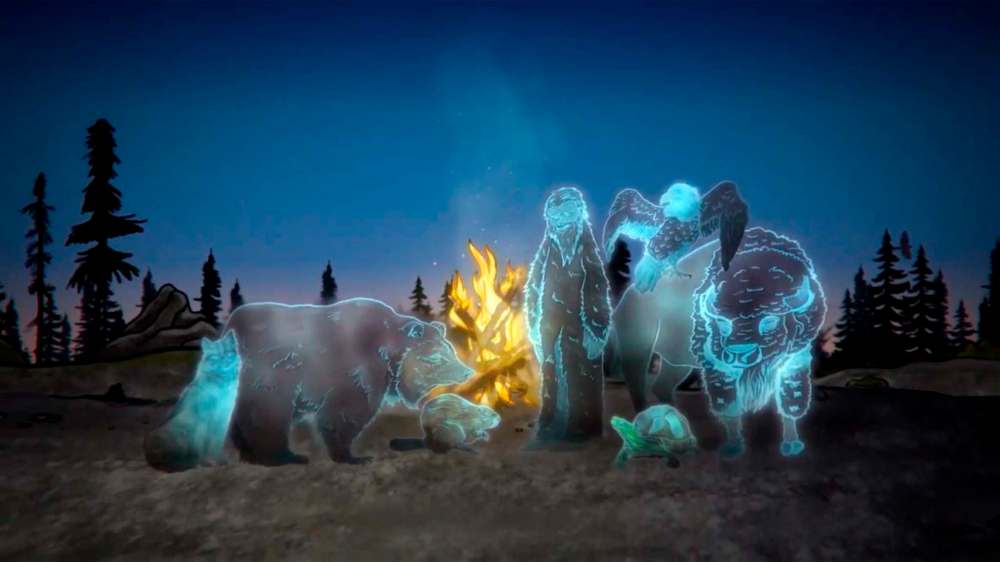
The seven teachings, both Courchene and Daniels say, are important for all people to take to heart right now, and they both especially hope young people watch them, learn from them, and some day, transfer that knowledge to the generations yet to come.
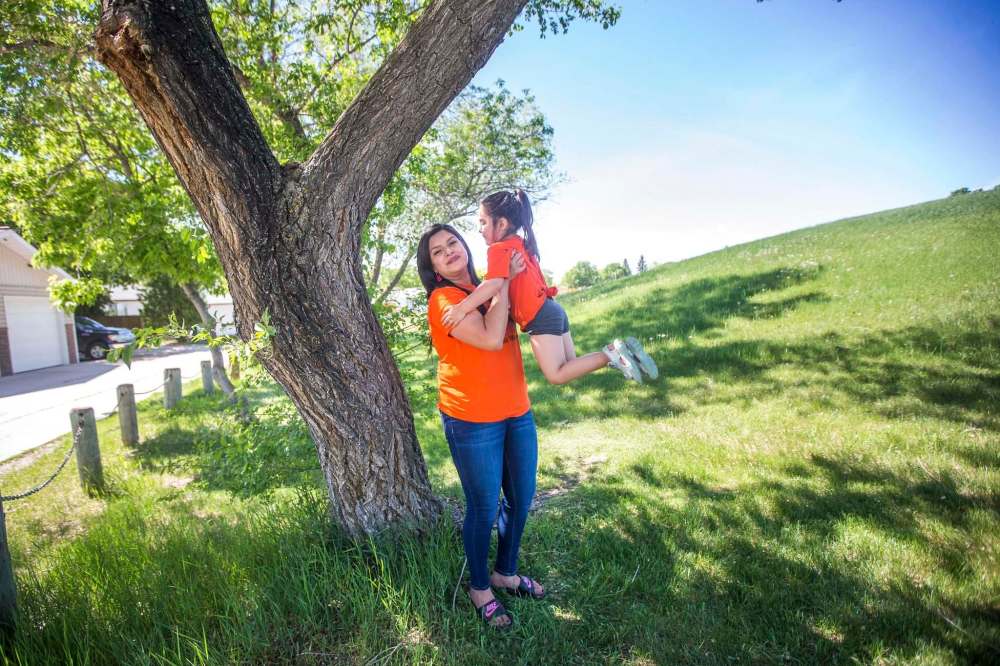
Throughout the production process, Daniels would show clips to her three-year-old daughter. “I’d show her cuts, and she’d say, ‘Another one! Another one!’ Daniels says. The same thing happened at producer Jeff Newman’s house, she said.
Soon after seeing the series, Daniels’ daughter told her she had a dream with an eagle and a wolf. “I was completely amazed. She watched this and it connected to her spirit and her identity,” she says, something she hopes all viewers can experience in some form.
“I feel very proud,” Courchene says of the series. “It’s always been my dream to share with the world our identity as a people, and I think these teachings help us do that.”
ben.waldman@freepress.mb.ca
Ben Waldman covers a little bit of everything for the Free Press.
Our newsroom depends on a growing audience of readers to power our journalism. If you are not a paid reader, please consider becoming a subscriber.
Our newsroom depends on its audience of readers to power our journalism. Thank you for your support.
Ben Waldman covers a little bit of everything for the Free Press.
Our newsroom depends on a growing audience of readers to power our journalism. If you are not a paid reader, please consider becoming a subscriber.
Our newsroom depends on its audience of readers to power our journalism. Thank you for your support.
Related Articles
Running to conquer and reclaim
Advertisement Advertise With Us
Advertisement Advertise With Us