

Extreme, unpredictable weather keeping farmers on edge
Advertisement
Read this article for free:
or
Already have an account? Log in here »
To continue reading, please subscribe:
Digital Subscription
One year of digital access for only $1.44 a week*
- Enjoy unlimited reading on winnipegfreepress.com
- Read the E-Edition, our digital replica newspaper
- Access News Break, our award-winning app
- Play interactive puzzles
*Billed as $5.77 plus GST every four weeks. After 52 weeks, price increases to the regular rate of $19.95 plus GST every four weeks. Offer available to new and qualified returning subscribers only. Cancel any time.
To continue reading, please subscribe:
Add Free Press access to your Brandon Sun subscription for only an additional
$1 for the first 4 weeks*
- Enjoy unlimited reading on winnipegfreepress.com
- Read the E-Edition, our digital replica newspaper
- Access News Break, our award-winning app
- Play interactive puzzles
*Your next Brandon Sun subscription payment will increase by $1.00 and you will be charged $17.95 plus GST for four weeks. After four weeks, your payment will increase to $24.95 plus GST every four weeks.
Read unlimited articles for free today:
or
Already have an account? Log in here »
The severity and frequency of extreme weather in Manitoba has proven challenging for some crop farmers, while they say the future remains uncertain.
“If the weather is severe enough, there’s nothing you can do,” said Nick Rempel, who farms just south of Winnipeg.
Rempel said the most difficult part of this past growing season was weather going from one extreme to the other.
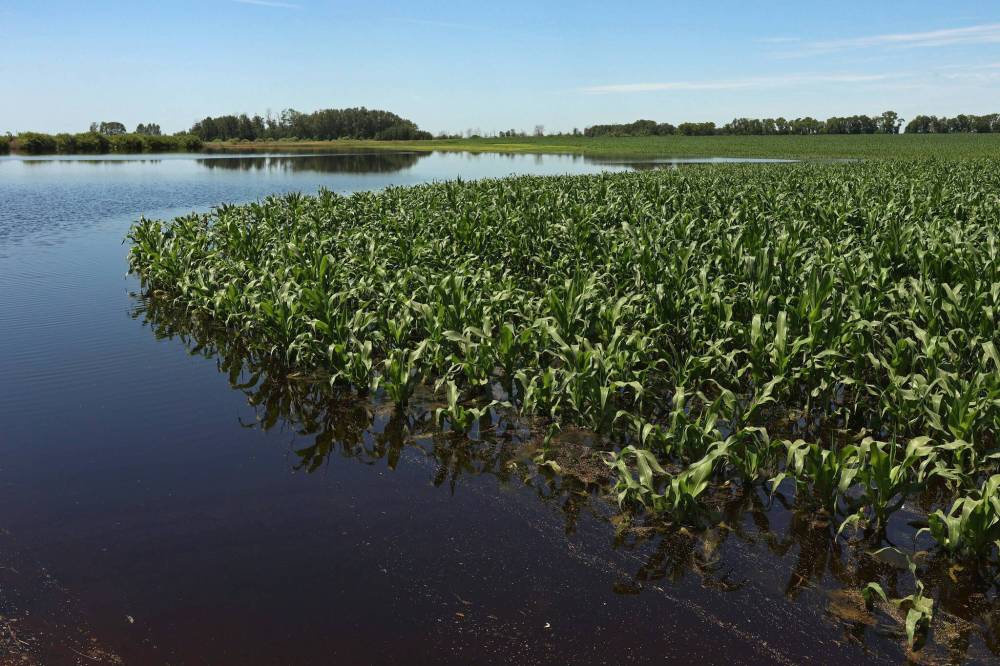
A field of corn crops sits partially submerged in flood water from the Assiniboine River in July. (Tim Smith/The Brandon Sun Files)
“How cold it was in the spring, to how hot it was right after,” said Rempel.
Over the summer, Manitoba saw excessive amounts of rain in some areas of the province. In June alone, 50 municipalities declared states of emergency and many agricultural fields were damaged by flooding.
There has been an extreme switch from those wet conditions over the summer. Manitoba has seen unusually warm weather this fall and there has been no significant snowfall so far this season.
Agriculture and Agri-Food Canada’s Drought Monitor map shows Manitoba to be partially under a moderate drought rating, with some areas under a severe drought, as of October 31.
“At the end of (October), 27 per cent of the Prairie region (Alberta, Manitoba, and Saskatchewan) was classified as Abnormally Dry or in Moderate to Severe Drought, including 6 per cent of the region’s agricultural landscape,” according to Agriculture and Agri-Food Canada’s website.
Some farmers choose to look at the brighter side of things but remain cautious for the future.
Thorsten Stanze, a farmer near Rosenort, said that the extended period of warm weather this fall has helped his late-season crops.
Manitoba has seen warmer weather this fall due to El Niño, a natural climate pattern caused by warmer-than-usual water in the central and eastern tropical Pacific Ocean that is bringing warmer than usual weather to much of the country.
The daytime average in Winnipeg for November is 0 C according to The Weather Network.
Instead, the city has seen warmer daytime highs, spanning from 5 C on Nov. 2 to 13 C on Nov. 16, which is 13 C higher than the historical average.
“Right now, we have adequate moisture for next year, but it really depends on what the growing season brings,” said Stanze.
He said that while his late-season crops have been doing well, last year’s crops suffered because of the extreme heat in July.

Manitoba saw temperatures rise to the mid-30s C that month, and the humidex hit the mid-40s, according to Environment and Climate Change Canada.
To handle the extreme weather that has become common in the province, Stanze said he is looking to change the crops he grows. His farm currently grows canola, spring wheat, oats, soybeans, grain corn, and fall rye.
“Those extremes are getting more severe and it gets very hard to plan what kind of crops to grow the next year,” said Stanze.
He added the hardest part is not being able to predict what the next few years will look like in terms of extreme weather.
“It extremes in different directions and that makes it difficult,” said Stanze.