Wedding vows, widows’ shrouds
Canadian war brides faced uncertainty, tragedy at Second World War’s end
Advertisement
Read this article for free:
or
Already have an account? Log in here »
To continue reading, please subscribe:
Digital Subscription
One year of digital access for only $1.44 a week*
- Enjoy unlimited reading on winnipegfreepress.com
- Read the E-Edition, our digital replica newspaper
- Access News Break, our award-winning app
- Play interactive puzzles
*Billed as $5.77 plus GST every four weeks. After 52 weeks, price increases to the regular rate of $19.95 plus GST every four weeks. Offer available to new and qualified returning subscribers only. Cancel any time.
To continue reading, please subscribe:
Add Free Press access to your Brandon Sun subscription for only an additional
$1 for the first 4 weeks*
- Enjoy unlimited reading on winnipegfreepress.com
- Read the E-Edition, our digital replica newspaper
- Access News Break, our award-winning app
- Play interactive puzzles
*Your next Brandon Sun subscription payment will increase by $1.00 and you will be charged $17.95 plus GST for four weeks. After four weeks, your payment will increase to $24.95 plus GST every four weeks.
Read unlimited articles for free today:
or
Already have an account? Log in here »
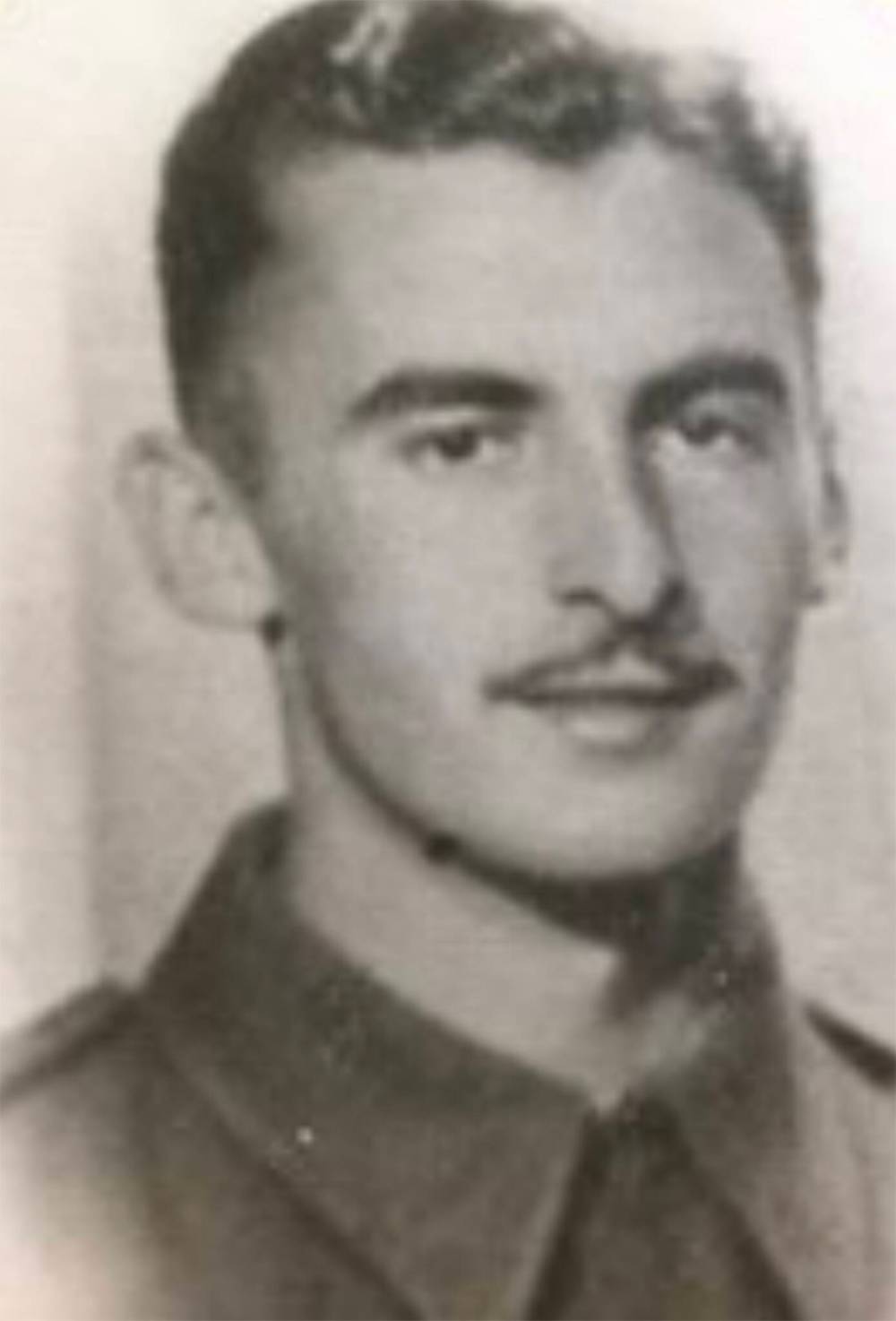
On D-Day, June 6, 1944, Cpl. Roger Firman landed on Juno Beach alongside his comrades in the Royal Winnipeg Rifles. Two days later, on what remains the blackest day in the regiment’s storied history, Roger and dozens of other riflemen were captured and murdered by Nazis from the 12th SS Panzer Division (Hitlerjugend).
The few who were lucky enough to escape told army authorities they believed some men were still alive as prisoners of war and that others had escaped but their whereabouts were unknown. Consequently the men were officially listed as “missing” until their fate was established after the Second World War was over.
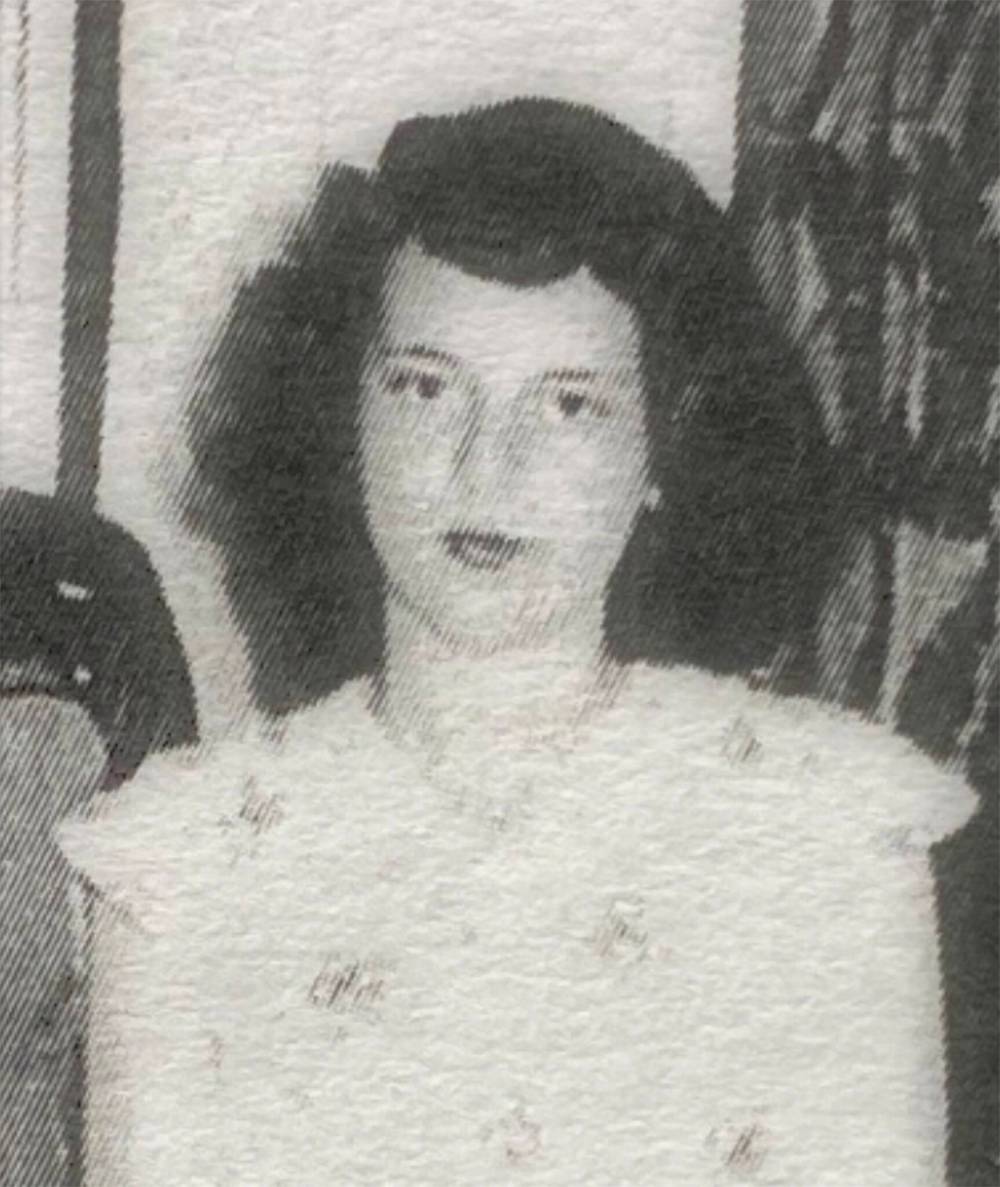
Roger, 21, left behind his 18-year-old wife Jean (née Cooke), whom he had married 19 days earlier, and a loving family in Transcona. It was a torturous year of uncertainty for his new bride and family until they finally learned his fate.
Supplied
Jean Cooke
The letters of Roger, Jean and her mother Rosina Kate Cooke were generously donated in 2020 to the Royal Winnipeg Rifles Museum and Archives by Roger’s niece, Elaine St. Hilaire. They are, as Canadian author and historian Melynda Jarratt wrote in her book War Brides, “reminders of marriages that were contracted in happier times, but for whom no future ever came.”
There were approximately 48,000 Canadian war brides from the Second World War. More than 44,000, along with their 21,000 children, made the long trip to Canada to be with their ex-soldier husbands. Four thousand came to Manitoba.
There is no official record of how many Winnipeg Rifles married British, Belgian or Dutch women during the war, however it was not uncommon, according to Jim Parks, a D-Day veteran and, at the age of 102, the regiment’s last Second World War survivor.
“I remember there were several who took the train up to marry women from London, Sheffield, Birmingham or Liverpool,” Parks said.
Uncertain lives
In two cases, the member of the regiment never made it home. One of the war brides chose to start a new life in Canada, even after her husband’s death.
Mary Waldron was a nurse from Sheffield, England, who married Ernie Gold of Pine Falls in October 1944. Ernie was killed when the Canadian army moved into Germany in early 1945. Mary came to Pine Falls in 1946 with their son David. David was named after Ernie’s brother, who was murdered on the same day as Firman. Mary continued in her nursing and had a successful career in Pine Falls and northern Alberta. She eventually married Ernie’s brother George and had another son.
In Jean’s case, she chose to remain in England.
In his 1942-43 letters to his sister, Roger wrote that he was finished with his Winnipeg girlfriends as they “will not commit to anything definite and are afraid of what the future may have in store.” That changed when he met Jean, an English girl from Yarmouth, on the Isle of Wight, where the Rifles were stationed in the winter of 1943-44.
Supplied
Cpl. Roger Firman
The two were determined to be together. Jean’s mother Rosina wrote that “Roger is a perfect gentleman with her, no stupidness indoor or out.” Even though she was opposed to a marriage, she signed the necessary consent form since Jean was underage. In an April 17, 1944, letter to Roger’s mother Emilie Firman, she wrote: “They have both had their blood test and have come with papers for me to consent to Jean marrying, but rest assured as I said the end of the war.”
Rosina wrote again on May 7 saying Roger and Jean had become engaged, but she remained certain they would not marry until the war was over. However, their young love could not be thwarted, with Roger receiving permission to marry from the Rifles’ commanding officer.
In a May 23 letter, Roger told his mother they married in the Catholic church in Freshwater, Isle of Wight. “I know that you are probably worrying greatly over me, and that you may think that I did wrong by getting married so soon. Jean was beautiful all in white.”
He made what would be his final request to his mother.
“She will write to you, please answer won’t you. Mom when you write tell her that you will be glad to see her. I know she worries greatly over you.”
In late June, Roger was confirmed as missing.
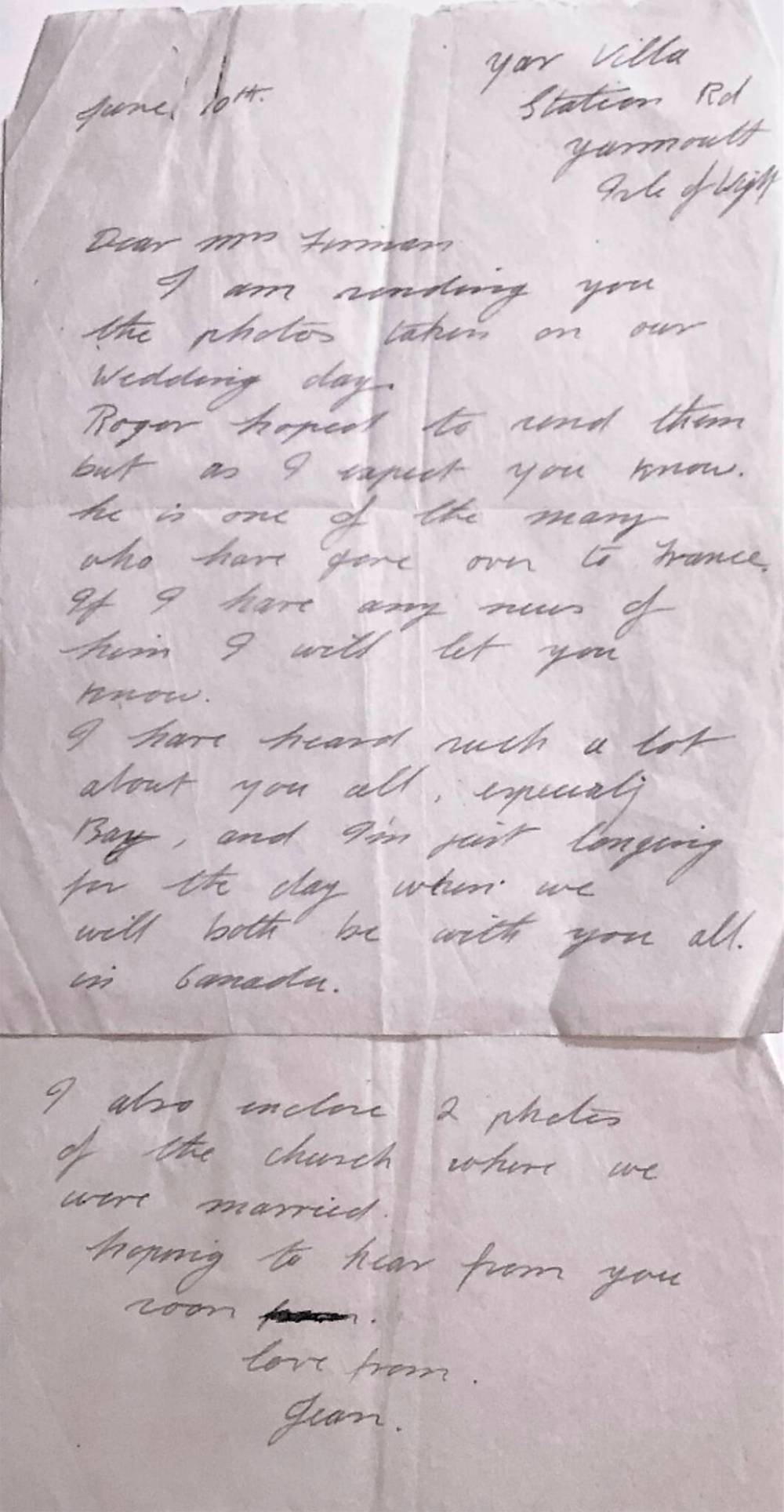
“I can’t really believe that anything has happened to him,” Jean wrote Emilie. “Don’t give up hope. I haven’t. I’m confident that he will come back to me then we shall take up our life where we left off and try to forget this awful time we are going through now. Roger said to me when he left me (We mustn’t say goodbye, people only say that when they part, and I’m only away for a little while. It is the price we have to pay for happiness such as ours.) and I am thinking that. As soon as I get any more news, I will let you know.”
In Jean’s 1944 and early-1945 letters to Emilie, she continued to express her hopes Roger would come back safely and that they could begin their life together.
“I’m confident that he will come back to me then we shall take up our life where we left off and try to forget this awful time we are going through now ….” she wrote. “Won’t it be wonderful if our Roger comes back. I still believe he will mum, so don’t give up hoping and praying. You asked what he would do when he came back to civilian life. He wanted to carry on with a course in criminology and eventually go into the fingerprint department in Winnipeg. He often planned that.”
Supplied
A newly wedded Jean wrote Roger Firman’s family days after he was considered missing following D-Day.
Shared grief
The long-feared truth emerged in June 1945, when the family received official notification Roger had been murdered on June 8, 1944.
Rosina wrote to the Firmans, sharing in their grief.
“The letter which followed the telegram to us contained the same news, but with a sentence of sympathy. My dear. How can I write to you? Words are poor comfort at these times. Jean has taken it better than I thought she would; underneath it all, not hearing anything, she thought he must be gone.”
Jean was soon faced with choice of emigrating to Canada to live with Roger’s family as a widow or remaining in England. She decided she couldn’t come to Canada with the other war brides. Her mother was in poor health and “had no one else.”
But she was determined to meet his family.
“You know I would still like to come out and see you all. Mother says I should in the spring, would you have me? If (I) came it would only be for a few months,” she wrote in September 1946.
There is no letter from Jean describing how she felt about her trip to Canada and meeting the large Firman family.
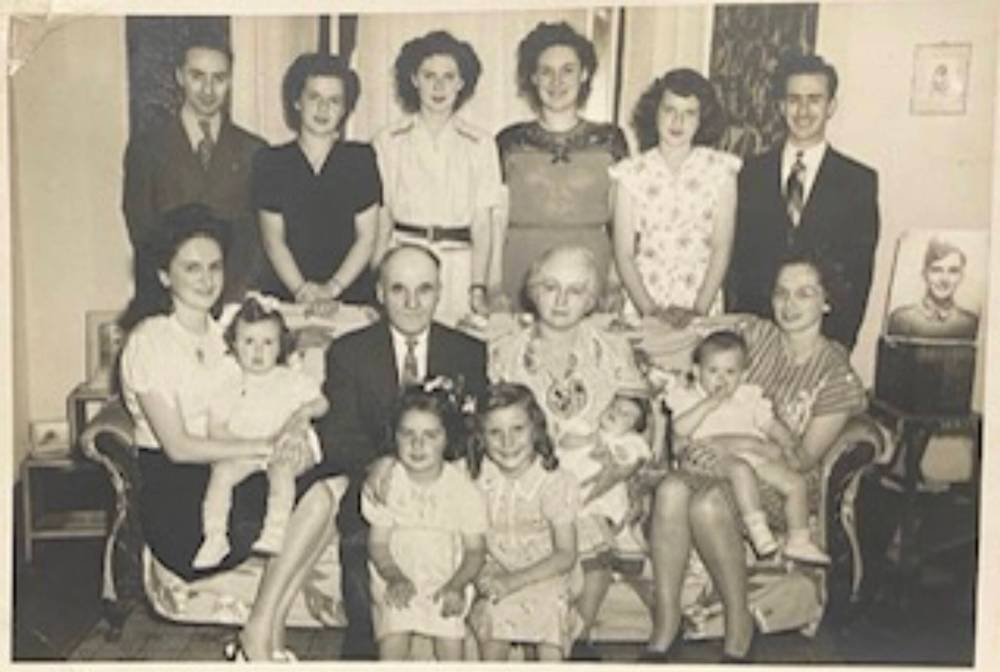
In a letter postmarked July 1947, Jean’s mother wrote: “I am very pleased to say Jean arrived home that Saturday, looking well, after having such a wonderful and lovely time.
Supplied
The Firman family in 1947

“But you have my sincere thanks for your loving care of her. I am sure Jean will often wish she was still out with you. When people here ask her if she is pleased to be home, ‘No, I only came home to see my mother.’ that is her answer. Well she is settling down all right, but her thoughts and talks are of you all, which I love to hear.”
Did meeting Roger’s parents, sisters and brothers provide Jean with closure and the ability to move on from the tragedy of the war years?
Britain was still under rationing in the early post-war years, and Jean’s few letters from 1947 and 1948 wished her in-laws well and thanked them for their gifts of food and fabric for making dresses. Roger, however, was no longer mentioned.
In July and October 1948, the Firmans received their last letters from Jean. She had gotten married in June, and her married name was Bell. In her last letter, Jean wrote she had a baby girl named Susan.
Ian Stewart is the author of Voices of War: Royal Winnipeg Rifles Canada, 1944-1945