Story of Canadian electronic music hits all the right notes
Advertisement
Read this article for free:
or
Already have an account? Log in here »
To continue reading, please subscribe:
Digital Subscription
One year of digital access for only $1.44 a week*
- Enjoy unlimited reading on winnipegfreepress.com
- Read the E-Edition, our digital replica newspaper
- Access News Break, our award-winning app
- Play interactive puzzles
*Billed as $5.77 plus GST every four weeks. After 52 weeks, price increases to the regular rate of $19.95 plus GST every four weeks. Offer available to new and qualified returning subscribers only. Cancel any time.
To continue reading, please subscribe:
Add Free Press access to your Brandon Sun subscription for only an additional
$1 for the first 4 weeks*
- Enjoy unlimited reading on winnipegfreepress.com
- Read the E-Edition, our digital replica newspaper
- Access News Break, our award-winning app
- Play interactive puzzles
*Your next Brandon Sun subscription payment will increase by $1.00 and you will be charged $17.95 plus GST for four weeks. After four weeks, your payment will increase to $24.95 plus GST every four weeks.
Read unlimited articles for free today:
or
Already have an account? Log in here »
While Canada’s place in the global histories of rock and folk have been firmly established, the country’s contributions to the development of electronic music is perhaps less well known. Michael Rancic’s A Nation of Tinkerers is a welcome correction to this, tracing the multiple ways in which Canadian musicians, composers, producers, DJs, engineers and inventors have played a crucial part in creating the sonic landscape of the present.
In a typically Canadian fashion, the story begins with institutions, tracing how the National Film Board, the National Research Council and various research studios housed at universities in the 1950s and ‘60s served as incubators for audio experiments, developing instruments and equipment that would generate the electronic bleeps and bloops that would come to define postwar modernity.
Rancic’s title comes from composer Bill Buxton, who speculated that Canada’s place at the forefront of explorations of the intersection of music and technology derives from a national tendency toward everyday experimentation.

(Alaina Cyr photo)
Michael Rancic
The story Rancic tells is not one of technological advancement through individual genius, but instead of persistence and playfulness, often in the shadows and away from the glare of musical celebrity.
The refusal of a “great man” kind of history doesn’t mean there aren’t compelling figures here. One of the joys of Rancic’s book is its focus on musicians and composers whose names may not be immediately familiar, but who are part of the history of electronic music in Canada. There’s Norma Beecroft, for instance, whose experiments with electronics and tape loops make her one of Canada’s most important composers of the postwar period. Beecroft’s work as a producer for the CBC in the 1960s and ‘70s also ensured ordinary listeners were exposed to new electronic sounds.
After the institutional focus of these opening chapters, Rancic’s book follows electronic music as it travels from the soundlabs to the streets, from the concert halls to the clubs. The late 1960s and early ‘70s see the synthesizer shape popular music, from the out-there psychedelic experiments of a band such as Syrinx to how ostensibly non-electronic artists, such as Anne Murray, began to integrate electronic sounds on their LPs. Syrinx’s John Mills-Cockell is another key figure whose influence Rancic’s work illuminates. Not only did he add the electronic sheen to Murray’s Honey, Wheat and Laughter LP, Syrinx’s song Tillicum served as the theme to CTV’s news magazine Here Come the 70s, bringing new electronic sounds into Canadian living rooms and pushing the single into the top 40.
Perhaps the most compelling chapters of Rancic’s history come with the arrival of disco, reggae, hip-hop and new wave music in the late 1970s and early ‘80s. Everything was happening all at once, with artists across the board pushing sonic envelopes to produce new sounds, from the reggae funk dub experiments of Jackie Mittoo and Leroy Sibbles to the ecstatic electronic disco beats and synthesized strings of Gino Soccio and Pierre Perpall.
These innovations, Rancic makes clear, do not happen in a vacuum. The history of electronic music in Canada is tied to the arrival of immigrants from the West Indies to Canada in the 1960s and ‘70s, and their efforts to import a soundsystem culture to a colder climate. Likewise, the rise of disco and synthpop is inextricably intertwined with LGBTTQ+ activism in Canada, perhaps best exemplified by the queer cold wave of Carole Pope and Rough Trade.
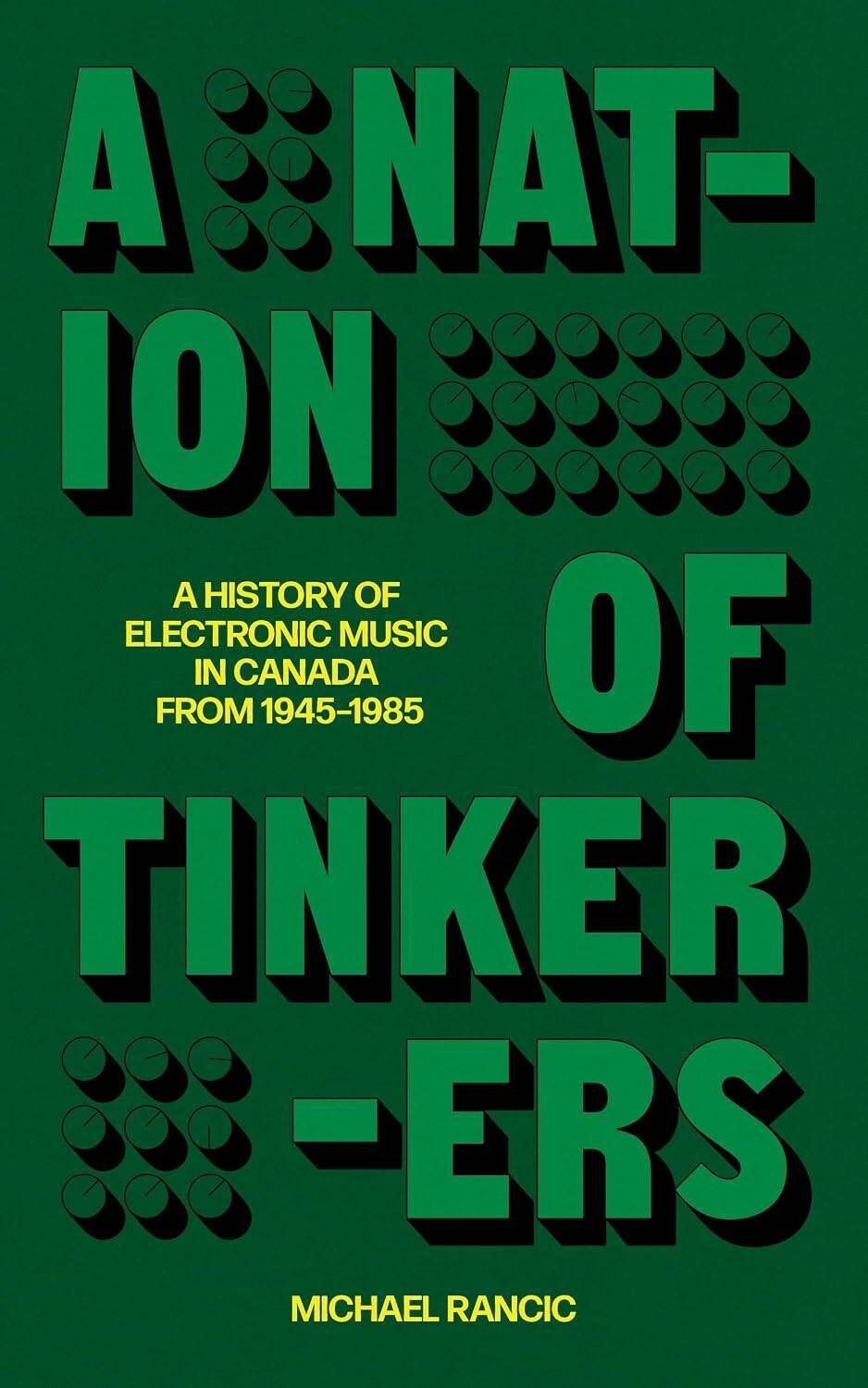
A Nation of Tinkerers

In A Nation of Tinkerers, Rancic delivers a comprehensive history of the technological innovations that animated Canadian music in the postwar period. In doing so, he provides an essential pre-history of Canada’s musical present. We live in an era where electronic sounds are a normal, even inescapable, part of our national soundscape.
Andrew Burke is a professor in the department of English at the University of Winnipeg.