

Make international doctors feel welcome — or risk losing them

Advertisement
Read this article for free:
or
Already have an account? Log in here »
To continue reading, please subscribe:
Digital Subscription
One year of digital access for only $1.44 a week*
- Enjoy unlimited reading on winnipegfreepress.com
- Read the E-Edition, our digital replica newspaper
- Access News Break, our award-winning app
- Play interactive puzzles
*Billed as $5.77 plus GST every four weeks. After 52 weeks, price increases to the regular rate of $19.95 plus GST every four weeks. Offer available to new and qualified returning subscribers only. Cancel any time.
To continue reading, please subscribe:
Add Free Press access to your Brandon Sun subscription for only an additional
$1 for the first 4 weeks*
- Enjoy unlimited reading on winnipegfreepress.com
- Read the E-Edition, our digital replica newspaper
- Access News Break, our award-winning app
- Play interactive puzzles
*Your next Brandon Sun subscription payment will increase by $1.00 and you will be charged $17.95 plus GST for four weeks. After four weeks, your payment will increase to $24.95 plus GST every four weeks.
Read unlimited articles for free today:
or
Already have an account? Log in here »
Manitoba has spent years trying to recruit more doctors to address a chronic shortage of physicians. It has opened new pathways for internationally trained doctors, expanded recruitment efforts and encouraged physicians from around the world to make this province their home.
But there is a troubling contradiction in those efforts. While Manitoba is increasingly relying on international doctors to keep its health-care system functioning, many of those same doctors are being treated as outsiders once they arrive.
A new report from the College of Physicians and Surgeons of Manitoba should be a wake-up call for the provincial government, the medical profession and anyone who believes the province needs to do a better job recruiting and retaining physicians.
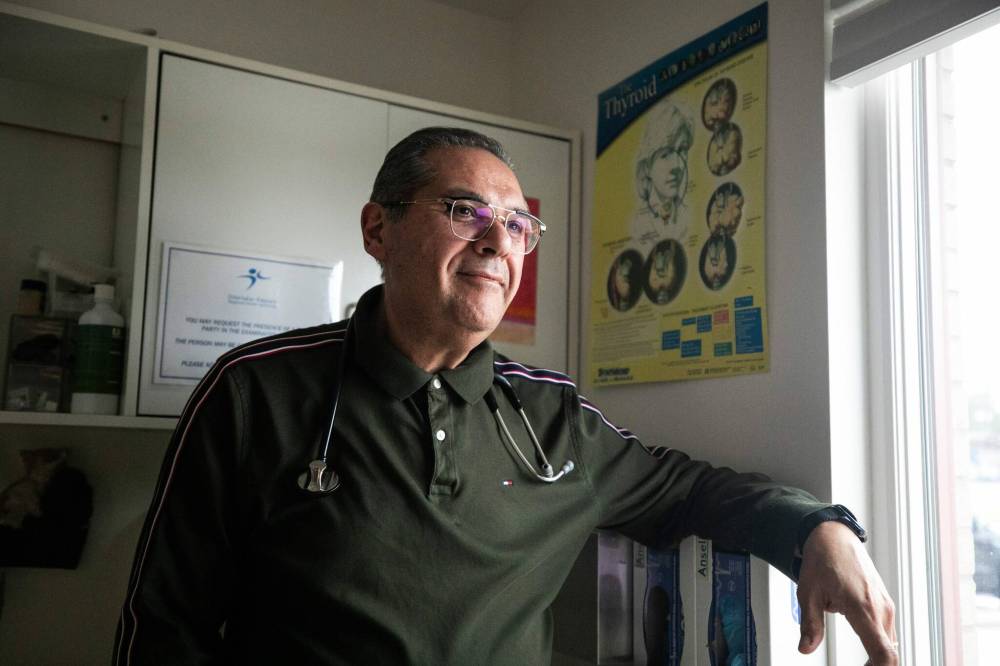
(Mikaela MacKenzie / FREE PRESS)
Dr. Nader Shenouda is seen at his family practice in Oakbank on Monday. He moved to Manitoba from Egypt in 2007.
The report, titled Strengthening Integration into Practice, found 64 per cent of internationally educated doctors surveyed experienced some form of discrimination or harassment in the workplace. That includes mistreatment by patients and their families, as well as by fellow physicians.
That’s an appalling statistic. And it’s particularly disturbing given how dependent Manitoba has become on doctors trained outside Canada.
International medical graduates account for 37 per cent of all physicians in Manitoba. Last year, they represented 61 per cent of new physician registrations in the province, with 216 internationally trained doctors joining the medical workforce between 2025 and 2026.
These aren’t marginal contributors to the health-care system. They are an essential part of it. Without them, Manitoba’s physician shortage would be considerably worse.
Yet many are facing discrimination based on their race, ethnicity, country of origin and religion. The survey also found that internationally educated physicians overwhelmingly felt their education and professional skills weren’t being recognized equally to colleagues with comparable qualifications.
How does that make any sense?
Consider the experience of Dr. Nader Shenouda, who moved to Manitoba from Egypt in 2007. He chose this province partly because it was one of the few jurisdictions in Canada offering pathways for internationally trained physicians to practise medicine.
After completing his program, he began working in Arborg. But even there, where patients in a smaller community were fortunate to have access to a doctor, he encountered prejudice.
Patients complained they couldn’t understand his accent or asked whether there was another Canadian graduate working at the clinic.
Imagine spending years studying medicine, moving halfway around the world to help address a shortage of doctors, completing the necessary requirements to practise here and then having patients question your qualifications because you weren’t educated in Canada.
Shenouda says some of his international colleagues have experienced even worse treatment, including discriminatory comments from other physicians.
This isn’t simply a matter of hurt feelings or cultural misunderstandings. It’s discrimination, and it has no place in a modern health-care system.
Doctors should be judged on their competence, professionalism and ability to provide quality care, not where they were born, what their names sound like or whether they speak with an accent.
There are legitimate differences in medical training and professional practices between countries. Those differences need to be understood and addressed through appropriate education, orientation and professional standards. But they should never become an excuse for prejudice or treating internationally trained doctors as second-class members of the profession.
The college deserves credit for acknowledging the problem and establishing a working group to develop solutions. Its new mandatory two-day orientation program for internationally trained physicians covers professional standards, patient-centred care, cultural safety, documentation and workplace expectations.
The college is also developing new standards of practice to help physicians integrate into Manitoba’s medical workforce. There is even discussion about making the orientation mandatory for all new doctors, including those trained in Canada.
That’s a sensible idea. Integration shouldn’t be a one-way street in which international doctors are expected to adapt to an established medical culture while their Canadian-trained colleagues make little effort to understand the challenges they face.
Orientation programs alone won’t eliminate discrimination. The medical profession needs to confront the attitudes and behaviour that are contributing to the problem. Hospitals, clinics and medical practices must have clear expectations about respectful treatment, meaningful ways to report harassment and accountability when those expectations aren’t met.
Patients also need to understand that discriminatory demands about the background or birthplace of their physician are unacceptable.

The stakes are considerable. Manitoba already has a serious physician recruitment and retention problem. A recent Doctors Manitoba report found that 658 doctors are considering leaving the province or retiring within the next three years. Another 158 physicians left during the last fiscal year, up from 138 the year before.
The college’s survey also found that 17 per cent of respondents were considering leaving Manitoba within five years, with poor workplace environments, interpersonal problems and burnout among the reasons.
Manitoba can’t afford to lose doctors because they feel unwelcome, undervalued or discriminated against.
Recruiting physicians from other countries is only half the job. Making them feel welcome, recognizing their skills and giving them a fair opportunity to build careers here is the other half.
tom.brodbeck@winnipegfreepress.com
Tom has been covering Manitoba politics since the early 1990s and joined the Winnipeg Free Press news team in 2019.
Our newsroom depends on a growing audience of readers to power our journalism. If you are not a paid reader, please consider becoming a subscriber.
Our newsroom depends on its audience of readers to power our journalism. Thank you for your support.
Advertisement Advertise With Us
Advertisement Advertise With Us