

Finance minister has impossible choice as federal budget looms

Advertisement
Read this article for free:
or
Already have an account? Log in here »
To continue reading, please subscribe:
Digital Subscription
One year of digital access for only $1.44 a week*
- Enjoy unlimited reading on winnipegfreepress.com
- Read the E-Edition, our digital replica newspaper
- Access News Break, our award-winning app
- Play interactive puzzles
*Billed as $5.77 plus GST every four weeks. After 52 weeks, price increases to the regular rate of $19.95 plus GST every four weeks. Offer available to new and qualified returning subscribers only. Cancel any time.
To continue reading, please subscribe:
Add Free Press access to your Brandon Sun subscription for only an additional
$1 for the first 4 weeks*
- Enjoy unlimited reading on winnipegfreepress.com
- Read the E-Edition, our digital replica newspaper
- Access News Break, our award-winning app
- Play interactive puzzles
*Your next Brandon Sun subscription payment will increase by $1.00 and you will be charged $17.95 plus GST for four weeks. After four weeks, your payment will increase to $24.95 plus GST every four weeks.
Read unlimited articles for free today:
or
Already have an account? Log in here »
It’s federal budget week, and that means every newspaper columnist, self-proclaimed think tank subject matter expert and opposition critic has suggestions for what Ottawa “must” do.
In no particular order: Finance Minister François-Philippe Champagne “must” provide tax cuts for small business to survive, provide tax cuts for big business to become bigger and wealthier, massively increase transfer payments to the provinces, make life more affordable for average people and undertake enormous, strategic investments in the economy to make Canada less reliant on the United States.
If you’re wondering how any finance minster can do all of that, all at once, the answer is they can’t. But that’s the nature of pre-budget submissions: do what we want, even if it makes it impossible for you to do the things that other people think must be done.
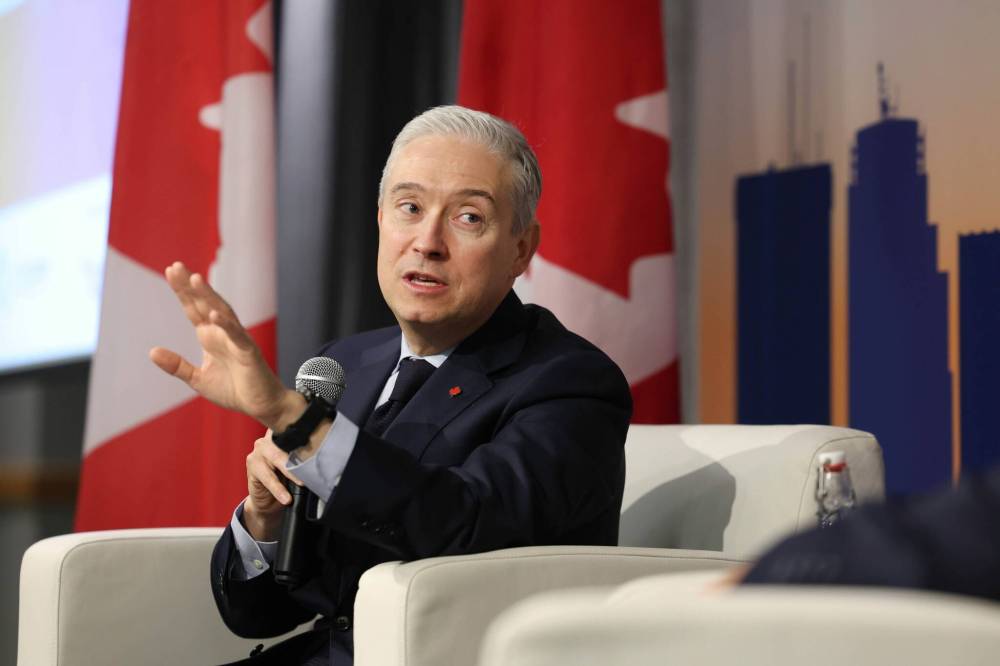
RUTH BONNEVILLE / FREE PRESS FILES
Federal Finance Minister François-Philippe Champagne
That is not to say all budget submissions are worthless. It’s just that you can’t cut government taxes and levies on businesses while also providing more robust investment in industries, infrastructure and people — and still have any hope of containing the debt.
You could get closer to all that if — and this is the huge, often unspoken ‘if’ that seems to be left out a lot of the noise that is aimed at the federal government — we had built greater fiscal capacity when we had the chance.
There are a lot of things that have eroded fiscal capacity in Canada and other countries. Quickly summarizing, we’ve suffered several seismic economic disruptions (2008 global financial meltdown; COVID-19 pandemic) that required massive amounts of government stimulus to prevent economies from collapsing.
This, in turn, triggered rapid growth in budget deficits and debt, which means greater costs of servicing the debt and less fiscal capacity to mitigate the next financial crisis. The Parliamentary Budget Office estimates that at current trajectory, Canada will be spending about $80 billion to service its debt by the end of this decade.
How does a federal government mitigate all those conflicting forces? Champagne can cut spending, which will be hard and, in some instances, only trigger a slowing of economic growth. He can continue to spend at current levels and hope that economic growth digs us out of our fiscal hole.
What he shouldn’t do is cut taxes, even though just about every constituency lobbying Ottawa is looking to pay a little less. With affordability on everyone’s radar, that seems to be a compelling option until you realize that previous federal governments eviscerated our future fiscal capacity by emphasizing tax cuts over prudent fiscal management.
The best example of this was former Conservative prime minister Stephen Harper’s decision to cut the Goods and Services tax twice: from seven to six per cent in 2006 and from six per cent to five per cent in 2008.
Two decades on from those decisions, the analysis of Harper’s GST cut has come fully into focus.
The reductions in GST did nothing to create sustained lower prices as inflation and opportunistic price fluctuations back-filled any “savings” almost immediately. The exception was big-ticket items such as cars, boats and newly built homes, where cutting two points of sales tax was, and still is, quite noticeable.
Thus, poorer Canadians got no relief while wealthier Canadians buying big-ticket items got significant savings and the federal treasury suffered what economists call “a permanent fiscal hole.”
Calculations vary on how much money Ottawa has lost from the GST cuts, but there is near consensus it would have reaped an additional $12-15 billion each year, or $250 billion to $300 billion over the last 20 years.
It’s impossible to say with any confidence what this added money would have done to budget balances or debt given changes in government and other seismic economic events, such as the pandemic.
Why dwell on a two-decade-old fiscal policy? Harper’s GST gaffe is important context when we look at the options Champagne has now and how tax increases have essentially been taken off the table.
The tax policy of former prime minister Justin Trudeau’s governments was a mash up of modest middle-class tax cuts, an improved and consolidated child benefit coupled with an increase to the highest tax bracket and fewer tax concessions for businesses.
However, the tinkering by the Trudeau governments never recovered any of the fiscal capacity that was lost in the GST cuts.

Where does that leave us in the lead up to Thursday’s budget? As is the case with provincial budgets, the only way out of deficit seems to be through greater economic growth, which is difficult with the U.S. trying to permanently disable the global economy.
Champagne is unlikely to raise taxes, but he is equally unlikely to cut taxes. Affordability measures could take the form of greater direct benefits. Efforts to broaden export opportunities for Canadian businesses promise greater growth, but likely not for years down the road.
The harsh reality is that two decades after we gave away valuable fiscal capacity, we’re stuck with an impossible choice between deep spending cuts or amassing greater debt.
And that’s no choice at all.
dan.lett@winnipegfreepress.com
Born and raised in and around Toronto, Dan Lett came to Winnipeg in 1986, less than a year out of journalism school with a lifelong dream to be a newspaper reporter.
Our newsroom depends on a growing audience of readers to power our journalism. If you are not a paid reader, please consider becoming a subscriber.
Our newsroom depends on its audience of readers to power our journalism. Thank you for your support.
Advertisement Advertise With Us
Advertisement Advertise With Us