Patients of the past
History of Irish mental asylum dug up in dream-like, genre-blending prose
Advertisement
Read this article for free:
or
Already have an account? Log in here »
To continue reading, please subscribe:
Digital Subscription
One year of digital access for only $1.44 a week*
- Enjoy unlimited reading on winnipegfreepress.com
- Read the E-Edition, our digital replica newspaper
- Access News Break, our award-winning app
- Play interactive puzzles
*Billed as $5.77 plus GST every four weeks. After 52 weeks, price increases to the regular rate of $19.95 plus GST every four weeks. Offer available to new and qualified returning subscribers only. Cancel any time.
To continue reading, please subscribe:
Add Free Press access to your Brandon Sun subscription for only an additional
$1 for the first 4 weeks*
- Enjoy unlimited reading on winnipegfreepress.com
- Read the E-Edition, our digital replica newspaper
- Access News Break, our award-winning app
- Play interactive puzzles
*Your next Brandon Sun subscription payment will increase by $1.00 and you will be charged $17.95 plus GST for four weeks. After four weeks, your payment will increase to $24.95 plus GST every four weeks.
Read unlimited articles for free today:
or
Already have an account? Log in here »
One inescapable plot point in the horror genre happens early on where, unbeknownst to the cast of characters, they move through a portal, leaving their normal world to enter a whole new one where evil exists and is going to challenge them. In the 1996 computer game Diablo, the portal for the player’s protagonist is a door leading to the basement of a cathedral where evil waits to be confronted.
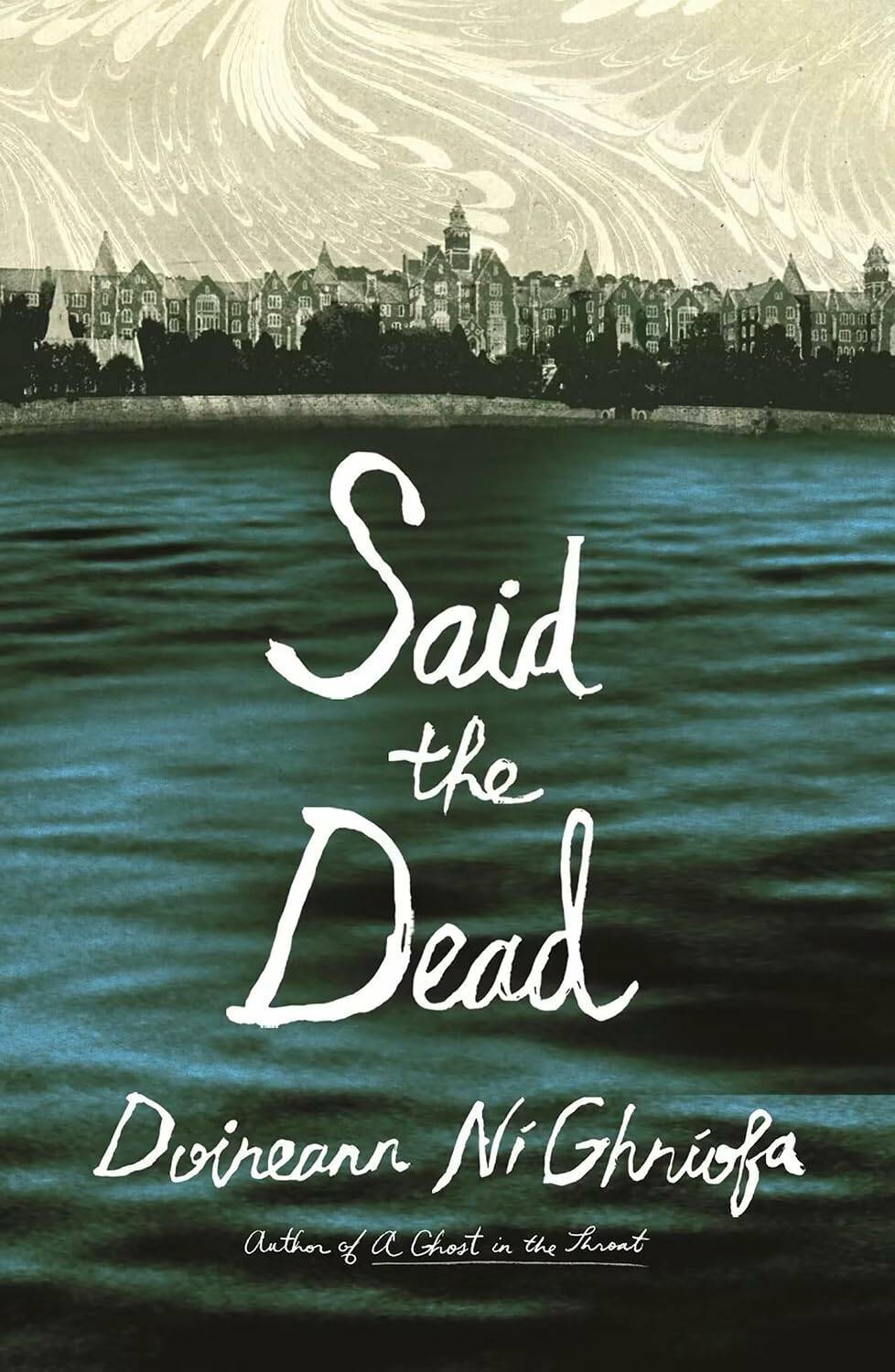
Irish author Doireann Ní Ghríofa, whose acclaimed non-fiction work A Ghost in the Throat won the James Tait Black Biography Prize for its genre-blending finesse, returns in a similar style in Said the Dead. Here, the text has a strikingly similar inciting incident to Diablo, excluding the fantastical horrors sitting beneath the cathedral; the horrors in Ní Ghríofa’s text are real recorded experiences left behind in medical casebooks in the city archives of Cork, Ireland.
The narrator, presumably Ní Ghríofa, is drawn towards the redevelopment of a local mental asylum, where one of the few original intact structures awaiting demolition is a decaying church. It’s there, amid decomposing wood pillars, dust-covered pews and discoloured stained glass, where the narrator missteps and falls straight to the floor, finding a fragment of a lead frame, which once held stained glass, beneath her hand in the shape of the letter “L.” The narrator falls through a figurative portal and discovers the driving power behind the rest of the text.

Brid O’Donovan photo
Doireann Ní Ghríofa’s latest book melds literary biography, poetry, history in rich, powerful passages.
Lucia Strangman was one of the first female doctors to work in a mental asylum in Cork. She began her career in the 1890s recording the progress, or lack thereof, of the many patients living within the institution’s walls.
The narrator behaves as if she’s looking top-down into a spirit world, as if she’s moving outside her physical self, and describing her visions — or applying the best possible words to a dream out of the fear the images will fade.
“Dark lull, dull gleam, the lullaby sung by a velvet stream. A river always welcomes ankles, but then it wants legs, wants shoulders, wants heads. Resisting its strength, she stepped to wading depth. To the Knee. To the Hip. To the breast. Turning, then, she nodded towards them in their nightdresses, and if they came, it was only because they recognized her as one of them,” Ní Ghríofa writes.
Through the medical casebooks of Lucia Strangman, Ní Ghríofa pulls together the story of a variety of women living within the institution over a century earlier. Recorded are many different Marys and Margarets, an Elizabeth, Bridget, Jane — lists of patients go on and on.
Adding to the text’s genre-blending structure is poetry. Ní Ghríofa, who has published seven books of poetry, uses poems throughout the biography like they are personal journal entries, responding to what she is learning in real time.
After learning a patient under Lucia’s care is dying, Ní Ghríofa breaks up the text with a poem:
“Terrible to see,
And terrible to read.
The sorrows of these lives —
What draws her towards them?
Said the Dead
What might it reveal of her own pain,

That she chooses to immerse herself
Entirely in the lives of others?”
The poems throughout the text feed into the dream-like quality of the writing and makes the reading experience truly feel like the reader is inside the mind of the narrator, carefully connecting the pieces of the lives they’re learning about.
Said the Dead is a thoroughly researched and powerful genre-blending literary biography showcasing the lives of people who would be left unknown if not for the deep connection Ní Ghríofa made by recognizing herself in each of the women recorded who lived decades or more before her.
Jesse Brogan is a freelance writer from Winnipeg.