Halton police in Ontario uses AI in hiring, training 911 call takers

Advertisement

Advertise with us

Halton regional police in Ontario are using artificial intelligence in the recruitment and training of 911 call takers and dispatchers. 

Read this article for free:


By clicking the button above, an account will be created and you will begin to receive some of our recommended newsletters. You may opt out of any newsletter by visiting your Email and Communication Preferences page or by clicking "unsubscribe" at the bottom of any email.

or

Already have an account? Log in here »

To continue reading, please subscribe:

Digital Subscription

One year of digital access for only $1.44 a week*

  • Enjoy unlimited reading on winnipegfreepress.com
  • Read the E-Edition, our digital replica newspaper
  • Access News Break, our award-winning app
  • Play interactive puzzles

*Billed as $5.77 plus GST every four weeks. After 52 weeks, price increases to the regular rate of $19.95 plus GST every four weeks. Offer available to new and qualified returning subscribers only. Cancel any time.

To continue reading, please subscribe:

Add Free Press access to your Brandon Sun subscription for only an additional

$1 for the first 4 weeks*

  • Enjoy unlimited reading on winnipegfreepress.com
  • Read the E-Edition, our digital replica newspaper
  • Access News Break, our award-winning app
  • Play interactive puzzles
Start now

*Your next Brandon Sun subscription payment will increase by $1.00 and you will be charged $17.95 plus GST for four weeks. After four weeks, your payment will increase to $24.95 plus GST every four weeks.

Halton regional police in Ontario are using artificial intelligence in the recruitment and training of 911 call takers and dispatchers. 

The force said American AI firm GovWorx provides the technology to create emergency call simulations to help 911 applicants improve their decision-making, communication and crisis management skills.

Halton police 911 communications bureau manager Brian Dodd said the new technology helps the force identify the right candidates from the beginning of the hiring process. 

He said the department has been facing a staffing crisis because not all candidates applying for 911 jobs succeed in their training after they are hired. 

“The training takes quite a long time, takes close to a year,” he said in an interview.

“What we’re trying to (do) at the very beginning stage in recruiting, is to find the right candidates … and this software helps us do that through some testing and using AI scenarios.”

Dodd said police are also using the same AI in 911 communicator training and it will be used to evaluate their work after they are hired. 

“We are proud to be the first Canadian customer and the first Canadian agency to be using this type of technology,” he said.

Halton police said the use of AI in the hiring of 911 dispatchers reduces candidate evaluation time by 50 per cent. 

“This technology is used successfully in hundreds of communication centres in the U.S.” Dodd said.

“We’ve been working with them and speaking to them about the success.”

He said the Halton police service currently has 75 dispatchers and call takers and is aiming to hire between four and eight new ones this year.

Halton police started using another technology called SARA AI to take certain types of non-emergency phone calls.

They said the SARA AI reduced 911 wait time by almost two seconds a call.

“There is a standard in North America, that we can proudly say that we meet, which is that 90 per cent of all 911 calls are answered within 15 seconds,” Dodd said.

“Obviously, if we can do better than that … that’s what we strive to do.”

Police say the bot has answered 95,367 calls so far this year, spent 1,195 hours talking to residents and sent more than 2,470 text messages to people to help them report incidents elsewhere, such as through the collision reporting centre.

This report by The Canadian Press was first published Oct. 9, 2026.
Report Error Submit a Tip

More Stories

Hydro is getting ahead of itself

Tim Sale 5 minute read 2:00 AM CDT

Manitoba Hydro is pressing ahead with its proposed $3-billion gas-turbine project in Brandon as though approval was a foregone conclusion. Six weeks of Public Utilities Board hearings exposed serious doubts about the need for three turbines, their escalating cost and whether more affordable alternatives have been adequately examined. Yet before the PUB has delivered its recommendations and the government has authorized the investment, Hydro applied for an environmental license on Oct. 8.

Starting the environmental review early may save time but proceeding before the premier and his cabinet have made a decision risks reducing regulatory scrutiny and political approval to mere formalities. Has the government already given Hydro the green light?

Few dispute that Manitoba will need more capacity as demand grows. Daymark Energy Advisors, the PUB’s independent consultant, concluded that Hydro had established a need for additional capacity by 2030. However, Daymark questioned the size of the projected shortfall, Hydro’s load forecasts and its turbine cost assumptions. Hydro itself acknowledged that its planning costs were based on 2024 information, and that surging North American demand for gas turbines has since put significant upward pressure on prices. Then there’s the impact of Trump’s trade war. These are not minor details, but updated costs have not been obtained.

The bigger problem is how Hydro has framed the alternatives. Interim CEO Hal Turner recently argued that wind and battery storage alone cannot reliably carry Manitoba through prolonged extreme cold. Fair enough. However, critics are not proposing wind and batteries alone.

Feared cuts to facilities, services not in proposed four-year civic budget

Joyanne Pursaga 5 minute read Preview

Feared cuts to facilities, services not in proposed four-year civic budget

Joyanne Pursaga 5 minute read Friday, Mar. 6, 2020

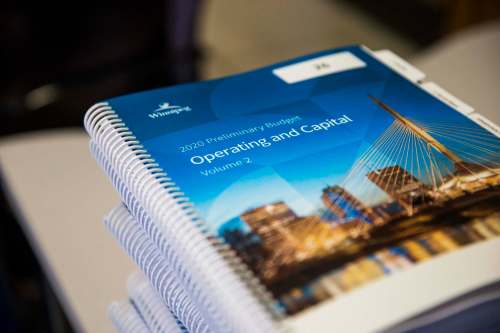
Winnipeg’s 2020-23 draft budget includes far fewer civic facility closures than some critics have feared, but the proposed cuts that remain are sparking backlash.

Under the city’s four-year preliminary operating budget, all pools, arenas and libraries that are currently open will remain open — if the spending blueprint is finalized, as is.

Mayor Brian Bowman said the decision comes in response to community rallies against proposals that could have resulted in the closure of up to five pools, five arenas, and three libraries.

“Our priority in this budget process was to keep the lights on at libraries and pools and rec facilities,” he said Friday.

Read
Friday, Mar. 6, 2020

Most incumbents regain their seats… but not all

Kevin Rollason 8 minute read Preview

Most incumbents regain their seats… but not all

Kevin Rollason 8 minute read Thursday, Oct. 27, 2022

When it comes to civic elections, voters like incumbents — but that doesn’t mean they are always invincible.

Read
Thursday, Oct. 27, 2022

Start date of Phase 2 yet to be finalized; public, business, industry asked for input

Carol Sanders 9 minute read Preview

Start date of Phase 2 yet to be finalized; public, business, industry asked for input

Carol Sanders 9 minute read Thursday, May. 21, 2020

Manitoba has unveiled a sweeping plan to reopen more sectors earlier than projected, giving the green light to bars, pools, splash pads, gyms, rinks, tattoo parlours, estheticians, and travel to tourist destinations north of the 53rd parallel.

"Early and decisive actions, along with the hard work of Manitobans have made a difference in our fight against COVID-19, and I want to thank Team Manitoba for all you've done," Premier Brian Pallister said during a Thursday morning teleconference.

The months of handwashing and handwringing Manitobans have been doing to prevent the spread of the novel coronavirus are paying off, officials said.

On May 4, outdoor restaurant patios, hair salons, playgrounds, elective surgery and health services such as physiotherapy were allowed to resume under Phase 1 of Manitoba's reopening plan.

Read
Thursday, May. 21, 2020

Fact Check

1 minute read Thursday, Nov. 30, 2023

Fact Check

Having problems with the form?Contact Us Directly |

Province chips in $15M to bring Pantages Playhouse back to life

Gabrielle Piché 4 minute read Preview

Province chips in $15M to bring Pantages Playhouse back to life

Gabrielle Piché 4 minute read Tuesday, May. 5, 2026

A string quartet performed at the Pantages Playhouse Theatre Tuesday in celebration of a $15-million contribution from the province to raise the curtain at the historic landmark again.

The musicians provided the backdrop to Premier Wab Kinew’s announcement of the cash injection to “help bring the Pantages Playhouse back to life.”

The theatre — which opened in 1914 and was once a hub for vaudeville performers, including Charlie Chaplin — has been closed for eight years.

“This is a tremendous project to advance arts and culture in Winnipeg and across Manitoba, but it’s also a big investment in our downtown,” Kinew said.

Read
Tuesday, May. 5, 2026