Break point

Veteran sportswriter Matthew Futterman uncovers the many pitfalls of professional tennis in The Cruelest Game

Advertisement

Advertise with us

Why does tennis drive so many of its top athletes mad, leading some to quit at the peak of their career? Matthew Futterman explores this question after several years of full-time tennis writing for the Athletic, the sports arm of the New York Times.

Read this article for free:


By clicking the button above, an account will be created and you will begin to receive some of our recommended newsletters. You may opt out of any newsletter by visiting your Email and Communication Preferences page or by clicking "unsubscribe" at the bottom of any email.

or

Already have an account? Log in here »

To continue reading, please subscribe:

Subscribe and receive a limited-edition Free Press branded hat or tote.

Digital Subscription

One year of digital access for only $205*

  • Enjoy unlimited reading on winnipegfreepress.com
  • Read the E-Edition, our digital replica newspaper
  • Access News Break, our award-winning app
  • Play interactive puzzles

*First annual payment billed as $205.00 + GST for one year. This annual subscription will automatically renew at $233.00 + GST every 52 weeks (10% off the regular annual price of $259.35). Offer available to new and qualified returning subscribers only. Cancel any time.

To continue reading, please subscribe:

Add Free Press access to your Brandon Sun subscription for only an additional

$1 for the first 4 weeks*

  • Enjoy unlimited reading on winnipegfreepress.com
  • Read the E-Edition, our digital replica newspaper
  • Access News Break, our award-winning app
  • Play interactive puzzles
Start now

*Your next Brandon Sun subscription payment will increase by $1.00 and you will be charged $17.95 plus GST for four weeks. After four weeks, your payment will increase to $24.95 plus GST every four weeks.

Why does tennis drive so many of its top athletes mad, leading some to quit at the peak of their career? Matthew Futterman explores this question after several years of full-time tennis writing for the Athletic, the sports arm of the New York Times.

This is Futterman’s third book. His first, Running to the Edge, chronicled a group of Olympic runners and their visionary coach. His second, Players, explained how sports became big business.

Futterman is a veteran sportswriter who has covered many Olympic Games and World Cups, as well as the NFL and NBA. But the tennis beat hit different. “I was completely blown away, immediately, by how miserable tennis players were,” he said in an interview on The Tennis Podcast.
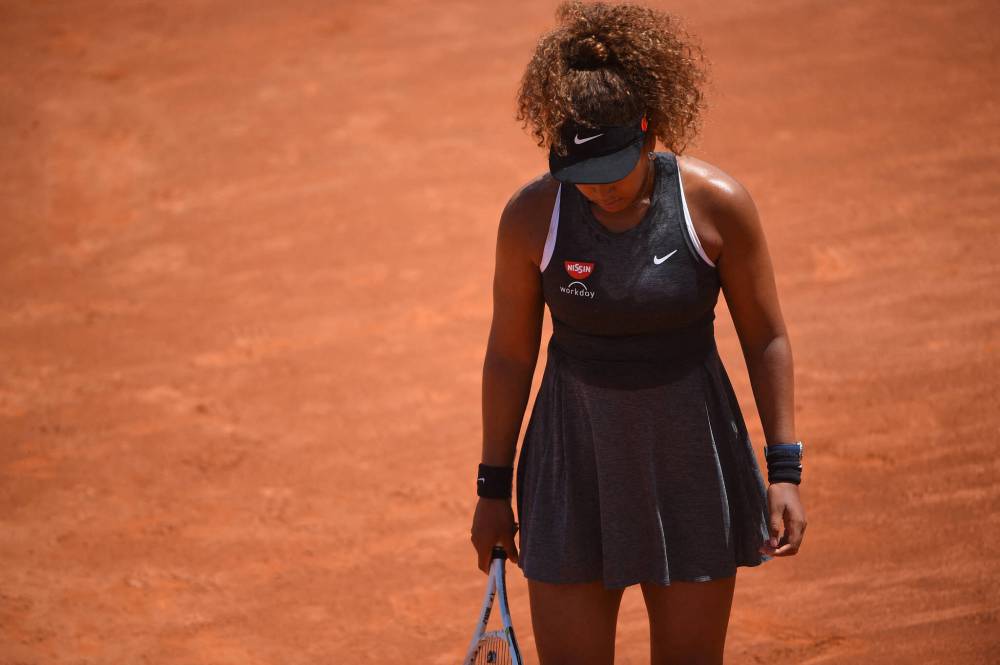
Corinne Dubreuil/ TNS
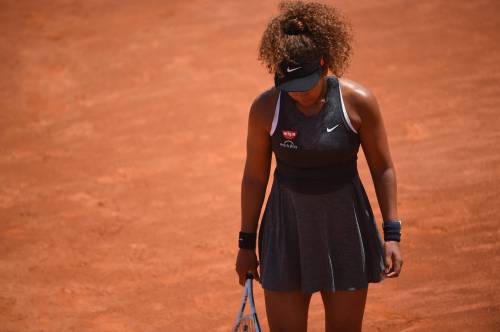
                                In 2021, former women’s top-ranked tennis player Naomi Osaka stepped away briefly from the sport, opting to prioritize her mental health.

Corinne Dubreuil/ TNS

In 2021, former women’s top-ranked tennis player Naomi Osaka stepped away briefly from the sport, opting to prioritize her mental health.

Tennis pros might be miserable because of the sport’s gruelling season, which spans 11 months and six continents. Or because the sport lacks a bona fide players’ union, leaving athletes to labour as independent contractors without a safety net.

Or it might be the money. Fabulous wealth awaits the sport’s top athletes, but those outside the top 100 often scrape by. “The hundredth-best basketball player in the NBA is likely making $12 million a year,” Futterman writes. “The hundredth-best tennis player is struggling to break even.” Thus, the reality for most pros is “(w)orkaday matches against no-names in odd locales in front of sparse crowds.”

Those who reach the sport’s pinnacle sometimes experience it as a precipice. “When I win I don’t feel happy, I feel more like a relief,” Naomi Osaka, a four-time Grand Slam champion, says. “And then when I lose I feel very sad. And I don’t think that’s normal.”

The Cruelest Game focuses on the 2020s — a decade of transition in tennis — with occasional forays into earlier decades. Superstars and prominent rivalries get their own chapter, while emerging players share a chapter or get a few pages each.

Futterman is fascinated by “the codes” of tennis. They are the keys that unlock a player’s ability to thrive on tour, a precise and personal balance of excellence and happiness. He believes a player can know the codes but not have the talent to realize them, or have raw talent in spades but find the codes elusive.
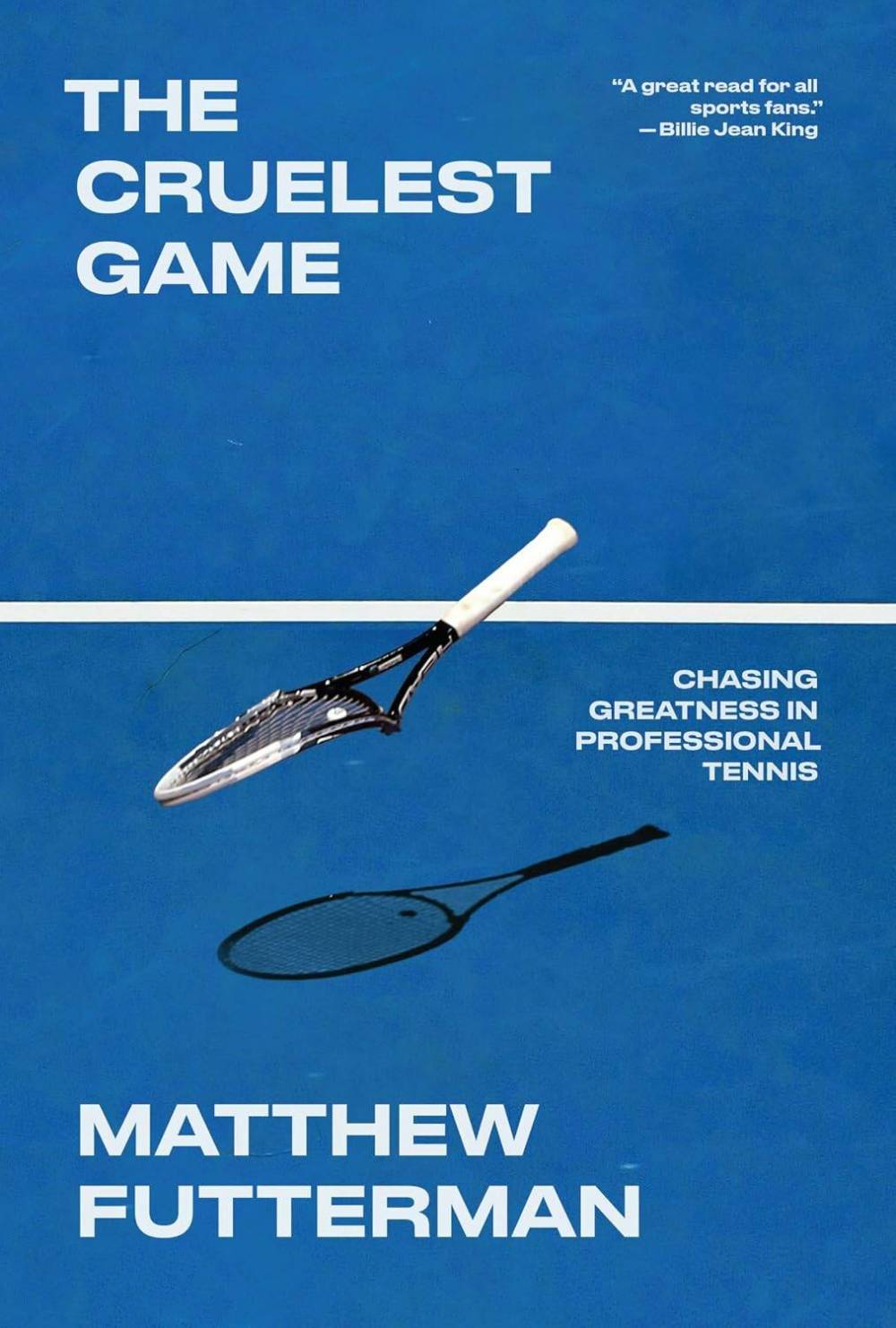
The Cruelest Game

The Cruelest Game

Tennis writers come in several varieties. Futterman is the sort who focuses on personalities and narratives rather than statistics and matches. He wants to know what makes a player tick, on and off the court, and excels at unpacking the mental side of the game, rendering vivid portraits of intense and contradictory icons such as Novak Djokovic, Andre Agassi, and Iga Świątek.

Great writing makes the familiar strange; Futterman excels at revealing the weirder norms of tennis, like eight-year-olds shipping off to training academies and 15-year-olds turning pro. A chapter on the parent-as-coach dynamic brilliantly juxtaposes Grand Slam finalists Casper Ruud and Stefanos Tsitsipas, yielding a fascinating study in contrast. “Tennis is about as small and incestuous a sport as there is,” Futterman writes. “Nearly everyone is somehow related — either by marriage or blood or a coaching tree or a representative.”

Futterman manages to secure a jaw-dropping amount of access to top players. If a pro isn’t particularly articulate or introspective, he seeks out their coach or trainer, especially those who have helped champions find or recover the codes.

Futterman isn’t an elegant writer, employing clipped sentences and the occasional awkward wording. Certain passages read like they were written too quickly and edited too lightly. One page appears to contain two versions of the same paragraph.

Content to describe, he doesn’t wade into ongoing debates about how to make professional tennis less cruel. A follow-up book could explore the sport’s political and structural issues.
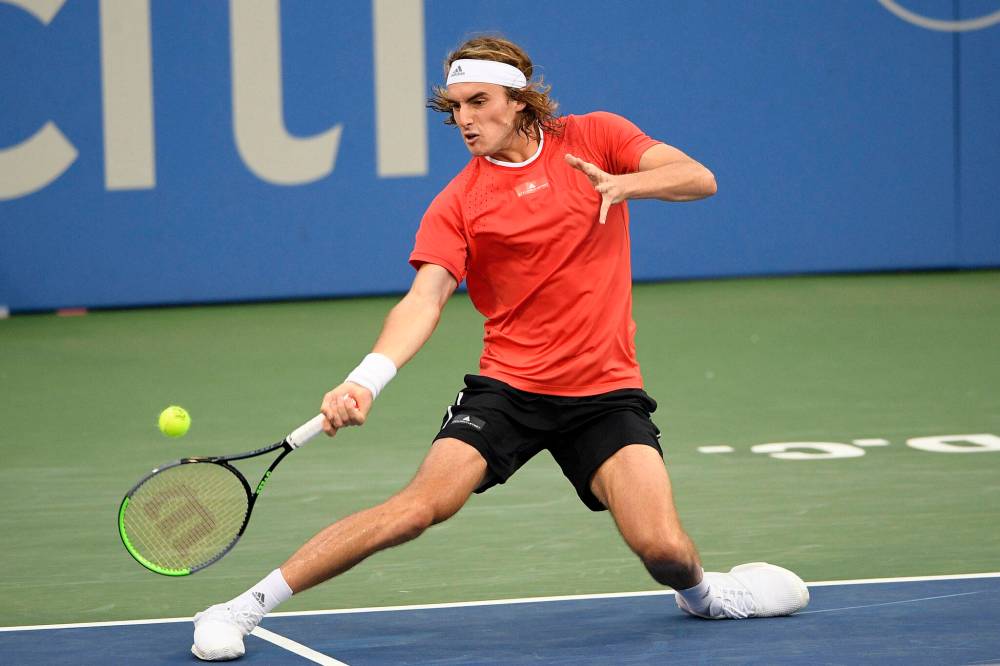
Nick Wass / Associated Press files
                                Until recently, Greek tennis pro Stefanos Tsitsipas seen here in 2019 in Washington, was coached by his father Apostolos.

Nick Wass / Associated Press files

Until recently, Greek tennis pro Stefanos Tsitsipas seen here in 2019 in Washington, was coached by his father Apostolos.

Jordan Ross is a Winnipeg writer and recreational tennis player who recently became a dad. If his son shows an interest in tennis, he’ll let someone else coach.


Report Error Submit a Tip

More Stories

‘We know we’re not going to beat Mother Nature’: Ice prep begins at Princess Auto Stadium for Heritage Classic

Mike McIntyre 7 minute read Preview

‘We know we’re not going to beat Mother Nature’: Ice prep begins at Princess Auto Stadium for Heritage Classic

Mike McIntyre 7 minute read 5:56 PM CDT

Derek King typically has ice in his veins.

But the Manitoban admits there may be a few more butterflies than usual as he prepares for the ultimate home game — the 2026 Heritage Classic between the Winnipeg Jets and Montreal Canadiens.

“This is so exciting to be back,” King, the NHL’s vice-president of hockey operations and facilities operations, said Tuesday afternoon.

“It’s definitely going to be a fun event to be part of.”

Read
5:56 PM CDT

The Parade will soon end, but the show will go on

Lanny McInnes 3 minute read Preview

The Parade will soon end, but the show will go on

Lanny McInnes 3 minute read Saturday, Oct. 10, 2026

While the Manitoba Home Builders’ Association’s 2026 Fall Parade of Homes comes to an official close on Sunday, that doesn’t mean your chance to visit Manitoba’s newest and finest show homes will end as well. Almost all the show homes that have been part of this year’s Fall Parade will remain open for viewing well after the Parade of Homes ends.

MHBA builders have seen outstanding crowds visit the 130 new homes entered in this year’s Fall Parade. This year’s entrants certainly did not disappoint, providing an amazing array of design, style, quality, craftsmanship and choice for prospective homebuyers or those seeking inspiration.

Our Fall and Spring Parades of Homes are showcase events hosted by the MHBA that demonstrate the best that the new home building industry has to offer. Whether you’re in the market for a new home, considering a change or just looking for ideas for your current home, no other Parade of Homes in Canada provides this kind of opportunity for people to experience such a collection of new home concepts, features and decor.

Nowhere else in Canada can homebuyers visit this many unique show homes. Only MHBA builders can enter show homes in our Parade of Homes, so you know you are visiting homes offered by Manitoba’s best and most reputable builders when you view a Parade show home. Winter is a great time for new homebuyers to visit show homes, because it allows you to see many of the home features in full operation, like the heating system and the lighting.

Read
Saturday, Oct. 10, 2026

Herd ushers in new era of men’s hoops with roster of newcomers

Joshua Frey-Sam 7 minute read Preview

Herd ushers in new era of men’s hoops with roster of newcomers

Joshua Frey-Sam 7 minute read 7:16 PM CDT

The stage is new. The role, however, is a familiar one to Taven Vigilance.

For the first time since his days as a highly touted high school recruit at Oak Park, Vigilance will be asked to help drive the Manitoba Bisons offence this season.

An elevated role for the 6-7 guard, entering his third year comes as the Bisons turn the page to a new era of the men’s basketball program, having lost all five of its starters from a season ago.

Vigilance spent this summer honing his craft, knowing this opportunity was coming. He focused on his ability to dribble off a screen, in particular, which is a common demand of Bison ball-handlers who need to understand how to decisively read defenders off the pick.

Read
7:16 PM CDT

Former Oilers teammates square off for first time

Ken Wiebe 7 minute read Preview

Former Oilers teammates square off for first time

Ken Wiebe 7 minute read Yesterday at 4:41 PM CDT

Calvin Pickard has been many things to Stuart Skinner.

An ally, sounding board, confidante and most importantly, a close friend.

They were a goalie tandem for parts of three seasons with the Edmonton Oilers, making two trips to the Stanley Cup final, combining for 29 playoff wins, but falling just short of achieving the ultimate goal on both of those occasions.

They were opponents just once last season when the Oilers and Pittsburgh Penguins met for the first time since the trade that shipped Skinner to Pennsylvania, but it was Tristan Jarry – the guy he was traded for – standing at the opposite side of the rink.

Read
Yesterday at 4:41 PM CDT

Veteran sportswriter uncovers the many pitfalls of professional tennis

Reviewed by Jordan Ross 4 minute read Preview

Veteran sportswriter uncovers the many pitfalls of professional tennis

Reviewed by Jordan Ross 4 minute read Friday, Oct. 9, 2026

Why does tennis drive so many of its top athletes mad, leading some to quit at the peak of their career? Matthew Futterman explores this question after several years of full-time tennis writing for the Athletic, the sports arm of the New York Times.

This is Futterman’s third book. His first, Running to the Edge, chronicled a group of Olympic runners and their visionary coach. His second, Players, explained how sports became big business.

Futterman is a veteran sportswriter who has covered many Olympic Games and World Cups, as well as the NFL and NBA. But the tennis beat hit different. “I was completely blown away, immediately, by how miserable tennis players were,” he said in an interview on The Tennis Podcast.

Tennis pros might be miserable because of the sport’s gruelling season, which spans 11 months and six continents. Or because the sport lacks a bona fide players’ union, leaving athletes to labour as independent contractors without a safety net.

Read
Friday, Oct. 9, 2026

Hydro’s unpredictable fortunes

Editorial 4 minute read Preview

Hydro’s unpredictable fortunes

Editorial 4 minute read 2:00 AM CDT

Hope for rain. Or snow. Or both.

There’s a truism buried deep in a financial outlook in Manitoba Hydro’s 2025-26 annual report, released in late September: “Manitoba Hydro’s net income is highly dependent on several uncontrollable factors.”

Those factors include the risk of drought reducing hydroelectric production and sales (a situation that means the utility will have to purchase more power, especially in winter), the rate of inflation, the actual cost of purchased electricity and increased interest rates that would mean Hydro will have to spend more servicing its $26.55 billion debt.

The report outlines that several of those factors came together during the utility’s last full fiscal year — along with huge costs to replace equipment damaged in a long, dry summer of forest fires.

Read
2:00 AM CDT