A loving legacy

Missing grandfather’s writing spurs moving memoir, short fictions

Advertisement

Advertise with us

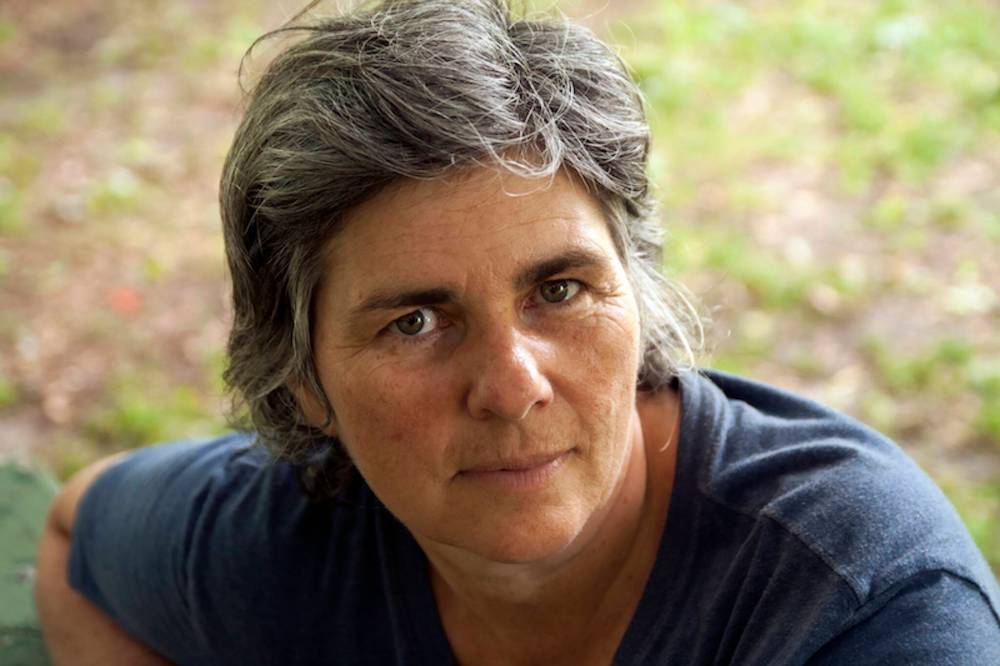
Born in the U.K., having grown up in B.C. and now based in Kingston, Ont., prolific author Helen Humphreys is no stranger to personal memoirs. Among her numerous books, including nine novels, four books of poetry, and five works of creative non-fiction, she has written about the hidden history of the apple and how it connected agriculture and human settlements in North America in The Ghost Orchard, and the devastating loss of her brother in Nocturne — two seemingly unconnected topics which coalesce in her latest work, Summerland.

Read this article for free:


By clicking the button above, an account will be created and you will begin to receive some of our recommended newsletters. You may opt out of any newsletter by visiting your Email and Communication Preferences page or by clicking "unsubscribe" at the bottom of any email.

or

Already have an account? Log in here »

To continue reading, please subscribe:

Subscribe and receive a limited-edition Free Press branded hat or tote.

Digital Subscription

One year of digital access for only $205*

  • Enjoy unlimited reading on winnipegfreepress.com
  • Read the E-Edition, our digital replica newspaper
  • Access News Break, our award-winning app
  • Play interactive puzzles

*First annual payment billed as $205.00 + GST for one year. This annual subscription will automatically renew at $233.00 + GST every 52 weeks (10% off the regular annual price of $259.35). Offer available to new and qualified returning subscribers only. Cancel any time.

To continue reading, please subscribe:

Add Free Press access to your Brandon Sun subscription for only an additional

$1 for the first 4 weeks*

  • Enjoy unlimited reading on winnipegfreepress.com
  • Read the E-Edition, our digital replica newspaper
  • Access News Break, our award-winning app
  • Play interactive puzzles
Start now

*Your next Brandon Sun subscription payment will increase by $1.00 and you will be charged $17.95 plus GST for four weeks. After four weeks, your payment will increase to $24.95 plus GST every four weeks.

Born in the U.K., having grown up in B.C. and now based in Kingston, Ont., prolific author Helen Humphreys is no stranger to personal memoirs. Among her numerous books, including nine novels, four books of poetry, and five works of creative non-fiction, she has written about the hidden history of the apple and how it connected agriculture and human settlements in North America in The Ghost Orchard, and the devastating loss of her brother in Nocturne — two seemingly unconnected topics which coalesce in her latest work, Summerland.

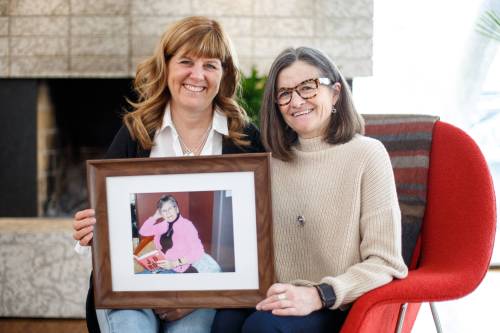
When her father was 12, Humphrey’s grandfather Dudley went missing, presumed killed on a secret military flight to Malta during the Second World War. Meant to take command of an air base, his mission was a covert operation, and so his family received only the sparest information about what happened to him.

In recent years, the British government finally released the investigative file into his death and, even more recently, Humphrey’s aunt discovered a stash of her grandfather’s writing.
With this sudden influx of information, Humphreys is able to piece together a portrait of her grandfather, a man she was never able to meet. She discovers that he had grand plans to move his family from England to Summerland, B.C., where he spent some time working as a bank clerk when he was a young man, and wanted to build an apple orchard. He also hoped to become a writer and wrote several stories about his wartime experiences in both the First and Second World Wars.

While he didn’t manage to realize his dreams before his death, his family seems to have made them come true without him; Humphreys’ father does move the family to B.C., though not specifically to Summerland. And Humphreys herself, with a long and distinguished career, seems to have fulfilled his dream of becoming a writer.

Is this merely coincidence, or did the later generations inherit their grandfather’s dreams, creating an innate pull to live their lives a certain way? Humphreys wonders if, almost like the opposite of generational trauma, happier memories can be passed to later generations as well.

Humphreys’ structure alternates between creative non-fiction or memoir pieces — sharing family history and the facts she can confirm about her grandfather’s life — and short fiction pieces, where she incorporates some of her grandfather’s writing.

The first short story she includes is his, a harrowing account of surviving the trenches in Belgium where he is saved by a mysterious figure who orders a retreat, although it’s impossible to discern if the figure was real or a phantom.

In the two other stories Humphreys emulates her grandfather’s style, creating one narrative that allows him a glimpse of what his future life will be, and another that imagines what could have happened after his plane was shot down.
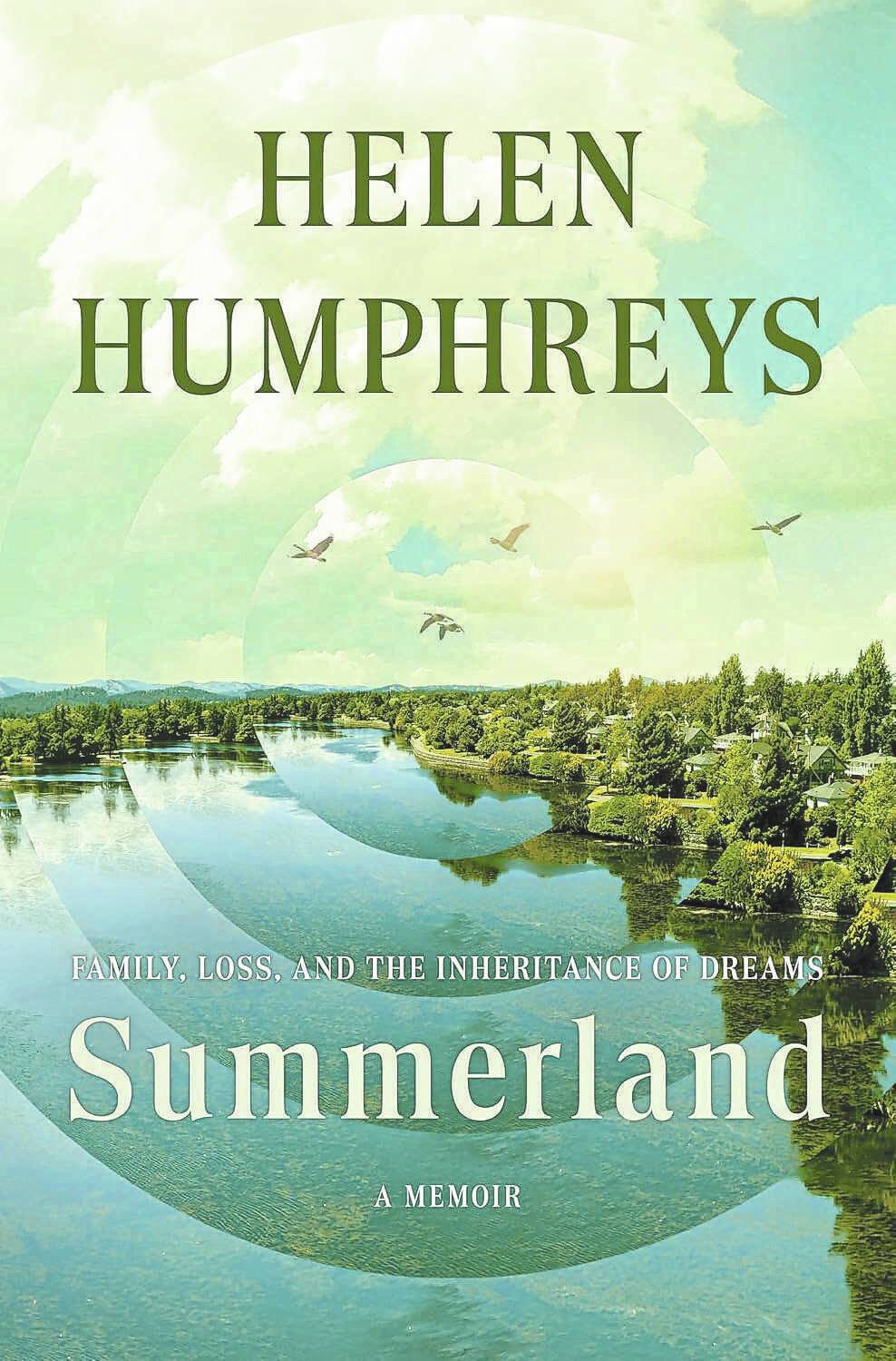
This approach is surprisingly tender and emotionally rich, allowing the reader to share in Humphreys’ deepest thoughts and imaginings of her lost family connection. The ache for what might have been, as well as the appreciation for the life she has led, flow through the text, which is remarkably rich even though it is a slight 200-plus pages.

Fans of Humphreys will surely connect with this earnest and personal exploration of family and loss. Though centred on a family tragedy, Summerland is a quietly hopeful book, a peaceful rumination on why our dreams are important, and why they last.

Keith Cadieux is a Winnipeg writer and editor. His latest story collection Donner Parties and Other Anti-Social Gatherings is out now. He also co-edited the horror anthology What Draws Us Near.
Report Error Submit a Tip

More Stories

Creatures’ comfort key to coping with loss

Maureen Scurfield 5 minute read 2:00 AM CDT

DEAR MISS LONELYHEARTS: Not long ago I lost my husband to illness at far too young an age. My spouse was a great guy, but I do want another one.

I just want to pass on a little tip. When my husband was dying, he encouraged me to bring home warm and loving pets to our acreage just outside the city. They were my saviours when my husband was ill.

Since he has died, they continue to help me keep warm, happy and affectionate. They were my greatest comfort in the later stages when my man was in too much pain to hold me or be held. The cats and the dog would welcome me home from the hospital and transfer their cuddling to me, giving me all the attention I needed, and I always felt so loved.

I have been dating a fair bit for a fairly recent widow because I’m ready to be held and loved, and I feel my husband and the pets saying, “Way to go.”

Winnipeg’s water woes

1 minute read Preview

Winnipeg’s water woes

1 minute read Friday, Feb. 20, 2015

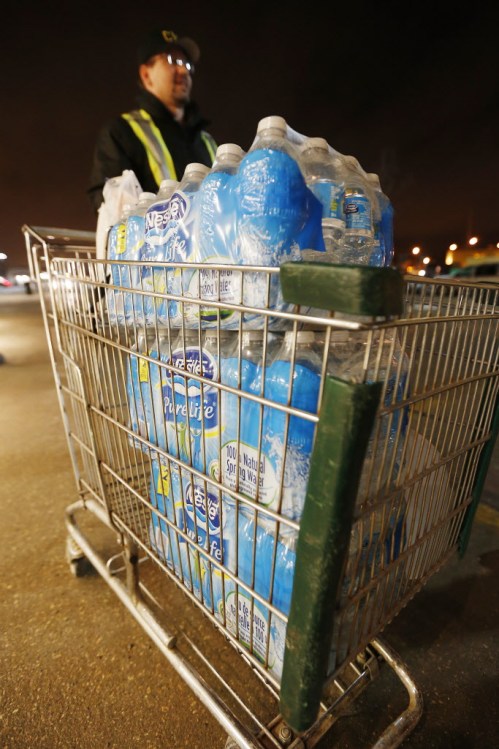
Bottled water flew off the shelves, public fountains were marked off-limits and restaurants closed-up shop Tuesday and Wednesday after the city and WRHA announced a boil-water advisory Tuesday evening.

Read
Friday, Feb. 20, 2015

The War to June 6, 1944: Why Normandy?

The Canadian Press 3 minute read Wednesday, Jun. 5, 2019

OTTAWA - THE WAR TO JUNE 6: Allied fortunes had rebounded by 1944 after the massive German conquests of 1940-41. British and American armies had driven the Germans from North Africa and Sicily, forced Italy to surrender and were moving up the Italian boot while Allied bombers were pounding German cities and towns day and night. In the East, the Soviets were on the march to Berlin. And in the Pacific, the Americans were making headway against the Japanese.

WHY INVADE? Military planners recognized Germany could not be defeated by strategic bombing or naval blockade. Instead, they would have to invade to both free occupied Allies and ensure Europe didn't fall into the hands of the Soviet Union.

WHY NORMANDY? The decision was largely dictated by technology and supply problems. Beaches had to be within range of British-based fighter planes and easy striking distance of a port, which would be needed to unload supplies. The Nazis believed the Allies would attack at the Pas de Calais, which was the closest point to Great Britain. Knowing this, the Allies devised an elaborate deception to keep the Nazis focused on this area while actually preparing for Normandy, which had lighter defences, suitable beaches and the requisite proximity to ports.

WHO HAD THE ADVANTAGE? In many ways, the Allies and Germans were well-matched. The Allies had far superior air and sea power; the Germans had troops and tanks available for quick reinforcement. The Germans had better tanks and anti-tank guns while the Allies had more of both. German troops, in many cases, were better trained and superbly led by hardened veterans. The Germans, however, were hampered by shortages of supplies, especially fuel while the Allies had plenty of everything. German generals also faced ham-handed interference by Adolf Hitler; Allied generals were able to unfold their plans without harassment from above.

City woman chose medically assisted death in church where ALS sufferer had raised her family

Sabrina Carnevale 9 minute read Preview

City woman chose medically assisted death in church where ALS sufferer had raised her family

Sabrina Carnevale 9 minute read Monday, Apr. 4, 2022

When Betty Sanguin decided to end her life with medical assistance, one of her final requests was for it to take place at her church.

Her family helped fulfil her wish. Surrounded by loved ones, including her six children, Sanguin, 86, died in March at her “crossing over” ceremony at Churchill Park United Church. The entire procedure took 15 minutes.

A lifelong volunteer, her life changed forever last spring when she was diagnosed with ALS, better known as Lou Gehrig’s disease.

This was the first provision of medical assistance in dying (MAiD) to take place in a church in Manitoba.

Read
Monday, Apr. 4, 2022

Skaters Kostornaia, Chen win at Internationaux de France

The Associated Press 3 minute read Preview

Skaters Kostornaia, Chen win at Internationaux de France

The Associated Press 3 minute read Saturday, Nov. 2, 2019

GRENOBLE, France - Alena Kostornaia left no doubt there's a new era in women's figure skating by a convincing win over Olympic gold medallist Alina Zagitova at the Internationaux de France, while Nathan Chen won the men's event on Saturday.

In a battle between the two Russians, 16-year-old Kostornaia landed two triple axels as she skated clean on her debut in the Grand Prix series to score 159.45 points in the free skate for a total of 236.

That was nearly 20 points more than Zagitova, who put a hand down on her opening triple lutz jump on the way to a score of 216.06.

Kostornaia is one of three young female Russian skaters, all working with Zagitova's coach, Eteri Tutberidze, who have stepped up to senior level this season. The trio has swept the first three Grand Prix events after Anna Shcherbakova took gold at Skate America and Alexandra Trusova won Skate Canada.

Read
Saturday, Nov. 2, 2019

Drive-in movies to be screened at airport

Gabrielle Piche 3 minute read Preview

Drive-in movies to be screened at airport

Gabrielle Piche 3 minute read Monday, Jun. 8, 2020

Manitobans can unbuckle their seat belts, get their popcorn out and watch a movie on the big screen -- all from the comfort of their personal vehicle.

A series of drive-in movies will begin Thursday outside the Winnipeg James Armstrong Richardson International Airport with a showing of the comedy Date Night in the airport's economy parking lot.

Movies will play nightly on a five metre by nine metre HD LED screen until June 28. Schedules will vary based on movie length and time in between showings.

The drive-in series is a way for people to safely enjoy a movie amidst the COVID-19 pandemic, said Garry Hale, the president of AVentPro, a company partnering with CAA Manitoba to produce the series.

Read
Monday, Jun. 8, 2020