Plotting her course

Mysterious book takes woman to pivotal moments in her past, present and future

Advertisement

Advertise with us

Having the ability to see yourself in the past and future might be a blessing or a curse — you could be forced to relive transformative or traumatic incidents from your past, or discover a happy or tragic future. B.C. author Gail Anderson-Dargatz explores this cosmic dilemma in her new novel, The Atlas Keeper.

Read this article for free:


By clicking the button above, an account will be created and you will begin to receive some of our recommended newsletters. You may opt out of any newsletter by visiting your Email and Communication Preferences page or by clicking "unsubscribe" at the bottom of any email.

or

Already have an account? Log in here »

To continue reading, please subscribe:

Digital Subscription

One year of digital access for only $1.44 a week*

  • Enjoy unlimited reading on winnipegfreepress.com
  • Read the E-Edition, our digital replica newspaper
  • Access News Break, our award-winning app
  • Play interactive puzzles

*Billed as $5.77 plus GST every four weeks. After 52 weeks, price increases to the regular rate of $19.95 plus GST every four weeks. Offer available to new and qualified returning subscribers only. Cancel any time.

To continue reading, please subscribe:

Add Free Press access to your Brandon Sun subscription for only an additional

$1 for the first 4 weeks*

  • Enjoy unlimited reading on winnipegfreepress.com
  • Read the E-Edition, our digital replica newspaper
  • Access News Break, our award-winning app
  • Play interactive puzzles
Start now

*Your next Brandon Sun subscription payment will increase by $1.00 and you will be charged $17.95 plus GST for four weeks. After four weeks, your payment will increase to $24.95 plus GST every four weeks.

Having the ability to see yourself in the past and future might be a blessing or a curse — you could be forced to relive transformative or traumatic incidents from your past, or discover a happy or tragic future. B.C. author Gail Anderson-Dargatz explores this cosmic dilemma in her new novel, The Atlas Keeper.

Anderson-Dargatz won acclaim for both her first novel, The Cure for Death by Lightning, and her second, A Recipe for Bees, both of which were Giller Prize finalists. The Cure for Death by Lightning won the U.K.’s Betty Trask Award, the B.C. Book Prize for Fiction and the Vancity Book Prize. Among her other work, she’s also written thrillers, including The Almost Wife, a Canadian bestseller, and The Almost Widow.

The life changes in The Atlas Keeper’s protagonist are reflected in her first name, as she cycles through calling herself Ellie, Elsie, Beth, Eliza, Lizzy, Ziz, Liz and finally Elizabeth. When the story begins, she’s almost 28, living in a moldy basement suite in a house rented by her sister Bailey, and working as a mapper at her father’s forestry consulting company. She’s barely recovered from a severe depression caused by witnessing her mother’s accidental death on a mountainside. Feeling trapped in her dull life, she doesn’t see a bright future ahead.
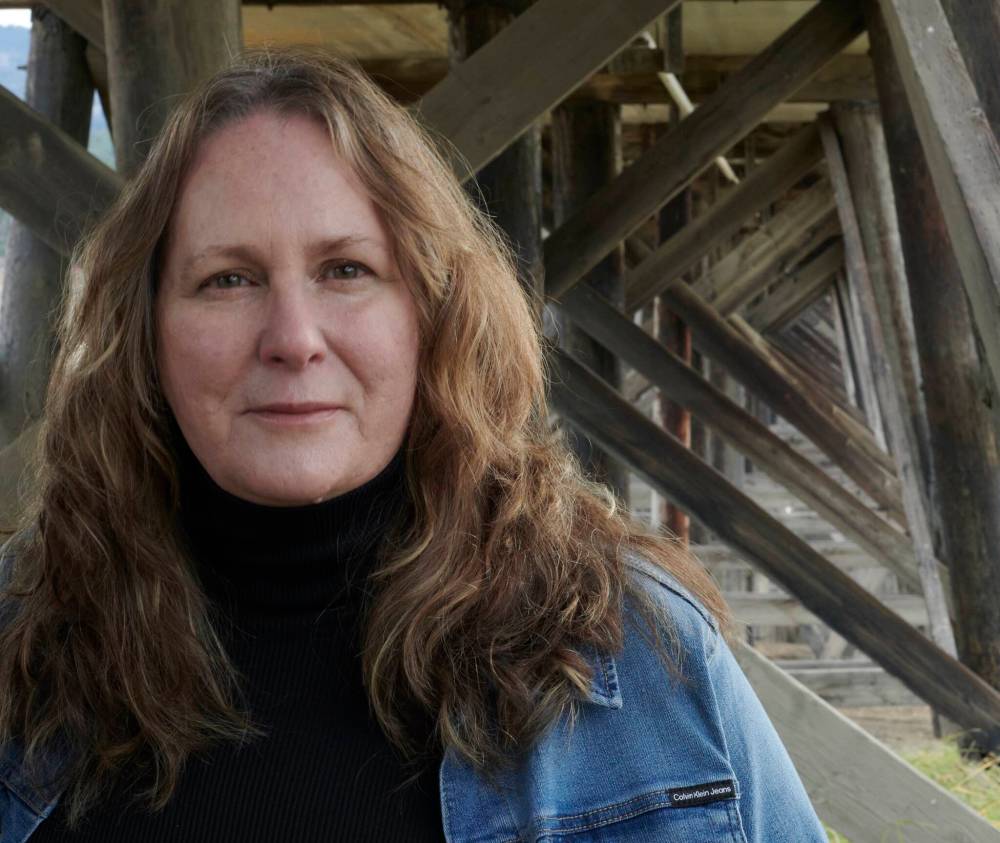
Mitch Krupp photo
                                Gail Anderson-Dargatz’s 1996 debut novel The Cure for Death By Lightning and 1998’s A Recipe for Bees were both finalists for the Giller Prize.

Mitch Krupp photo

Gail Anderson-Dargatz’s 1996 debut novel The Cure for Death By Lightning and 1998’s A Recipe for Bees were both finalists for the Giller Prize.

However, Elsie’s life takes a major turn during a hike with attractive astrologist Zander to mark the fifth anniversary of her mother’s death. Upon reaching the plateau where her mother fell, she sees an old woman in a white nightgown who appears to vanish into thin air. The geocache left on the plateau includes a strange-looking book titled The Pocket Atlas of Nostalgia and Longing which is decorated with the phases of the moon and contains astrological charts.

Back at home, upon opening the book to the first page which reads “The First House: Self,” Elsie finds herself reliving the moment her mother fell down the cliff while she grabs her younger self’s ankles to stop herself from sliding over the edge. Believing she had a vivid flashback, Elsie is stunned.

Elsie and Bailey look through the atlas and see it’s divided into 12 houses and features Elsie’s birth chart along with a geographic location for each house. Elsie realizes most of these locations are familiar, such as her father’s and Bailey’s houses, a favourite café and her office, while others, including a beach, a school and an airport in Victoria, are unknown to her. She suspects Zander might have created the book, but Zander doesn’t know her well enough to make it so personal.

Elsie seeks Zander’s help in interpreting the atlas to anticipate which aspects of her life will be highlighted within each of the upcoming houses. When she triggers the atlas’ time-travel magic, allowing her to return to her mother’s house on Christmas Day 2002, she’s able to speak to her mother and see herself as a seven-year-old. Elsie has to convince her skeptical mother that she really is her daughter, at age 27; she tries to warn her mother about the accident that will claim her life in 15 years, but her mother refuses to consider playing it safe. Elsie is able to find Polaroid photos taken of her visit that day and uses them to show her sister that she’s not going crazy and just imagining she’s travelling through time.

Some of the events Elsie participates in are surprisingly joyful, while others are upsetting as she sees her father’s and Zander’s health deteriorate in the coming years. As she reaches the final house and completes her journey, she’s able to view her life in its entirety and find comfort in her relationships.
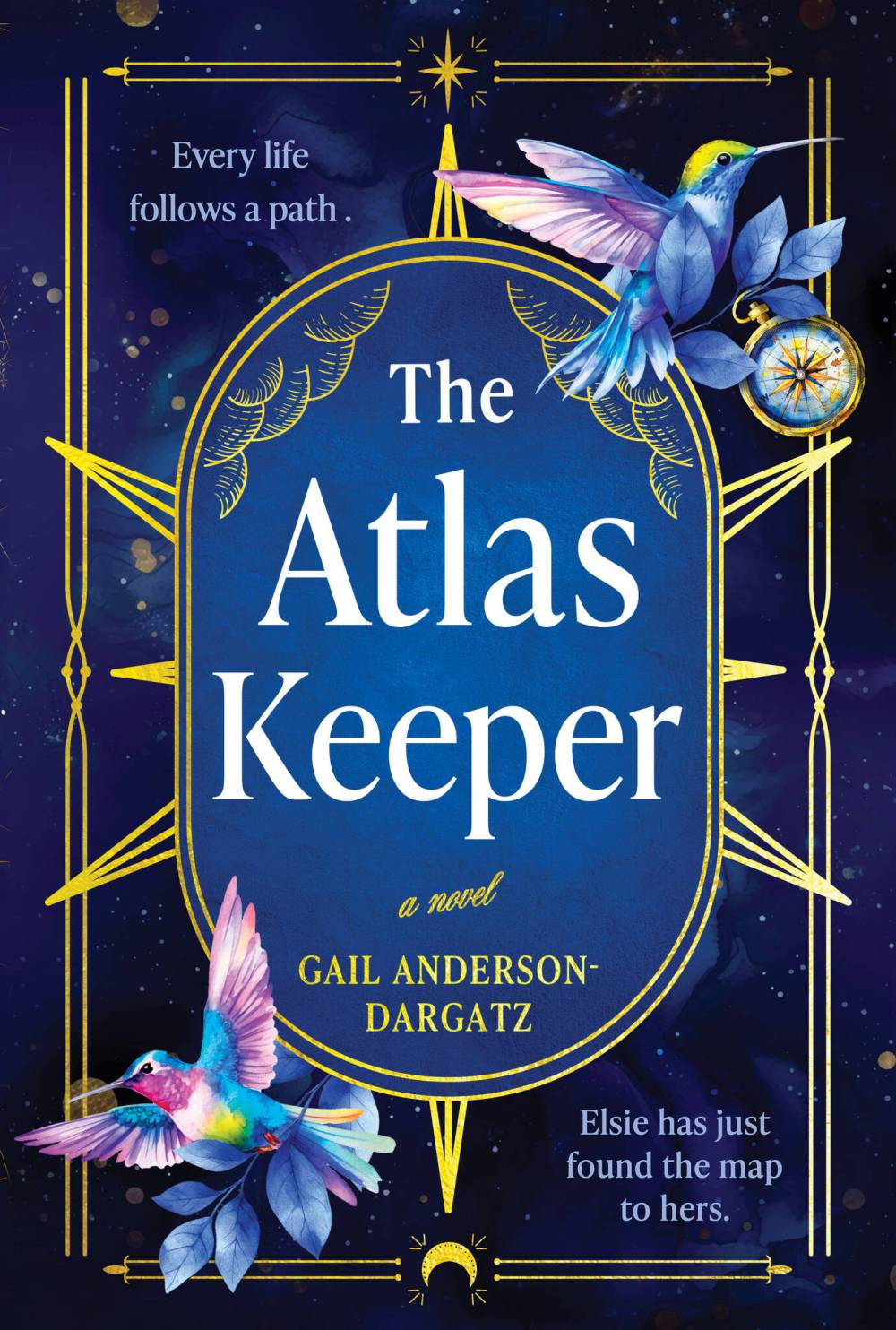
The Atlas Keeper

The Atlas Keeper

While time travel adventures have been featured in previous fiction, Anderson-Dargatz gives the theme an enjoyable modern twist in The Atlas Keeper.

Andrea Geary is a freelance writer in Selkirk.

Report Error Submit a Tip

More Stories

What $4 pumpkin can teach us about workplace culture

Tory McNally 7 minute read Preview

What $4 pumpkin can teach us about workplace culture

Tory McNally 7 minute read 2:02 AM CDT

There are few things more revealing about a workplace than what happens when someone suggests a little fun.

Put a pumpkin on the reception desk, announce a Halloween costume day or suggest that everyone take 20 minutes to enjoy some candy and you may discover that your organization falls into one of two camps.

There are those who embrace the opportunity to do something different and those who immediately begin calculating the cost of lost productivity.

Somewhere, a manager is currently wondering whether the employee who spent 15 minutes decorating their office door could have used that time to answer three emails. Another is worried allowing costumes will somehow lead to a complete collapse of professional standards. A third is quietly trying to figure out whether a bowl of miniature chocolate bars can be claimed as a business expense.

Read
2:02 AM CDT

With 18,000 students in 59 government-funded schools, independent schools are playing an increasingly important role in Manitoba.

Many of these schools are religious schools like The King’s School, Dasmesh School, Springs Christian Academy, Mennonite Brethren Collegiate Institute, Beautiful Saviour Lutheran School, Linden Christian School, Steinbach Christian School and IQRA Islamic School.

On its website, the provincial government says it “strongly supports the rights of parents and guardians to choose their child’s education. Parents choose independent schools for reasons such as faith, philosophy of teaching and learning, and tradition.”

This is quite a contrast to 110 years ago. That’s when the province passed the School Attendance Act of 1916 as a way, during wartime, to promote integration and social cohesion.

Letters, Oct. 24

6 minute read 2:02 AM CDT

A little background info

Re: Bring Power Smart home (Think Tank, Oct. 21)

Steven Fletcher’s op-ed column overlooks important history behind Efficiency Manitoba and the need to reconsider its targets.

In December 2003, Gary Doer’s NDP government announced plans for a separate agency to co-ordinate energy efficiency, water conservation and waste reduction. Provisionally named Efficiency Manitoba in 2004, the initiative became Green Manitoba, a special operating agency launched in April 2006.

Mysterious book takes woman to pivotal moments in her past, present and future

Reviewed by Andrea Geary 4 minute read Preview

Mysterious book takes woman to pivotal moments in her past, present and future

Reviewed by Andrea Geary 4 minute read Saturday, Sep. 26, 2026

Having the ability to see yourself in the past and future might be a blessing or a curse — you could be forced to relive transformative or traumatic incidents from your past, or discover a happy or tragic future. B.C. author Gail Anderson-Dargatz explores this cosmic dilemma in her new novel, The Atlas Keeper.

Anderson-Dargatz won acclaim for both her first novel, The Cure for Death by Lightning, and her second, A Recipe for Bees, both of which were Giller Prize finalists. The Cure for Death by Lightning won the U.K.’s Betty Trask Award, the B.C. Book Prize for Fiction and the Vancity Book Prize. Among her other work, she’s also written thrillers, including The Almost Wife, a Canadian bestseller, and The Almost Widow.

The life changes in The Atlas Keeper’s protagonist are reflected in her first name, as she cycles through calling herself Ellie, Elsie, Beth, Eliza, Lizzy, Ziz, Liz and finally Elizabeth. When the story begins, she’s almost 28, living in a moldy basement suite in a house rented by her sister Bailey, and working as a mapper at her father’s forestry consulting company. She’s barely recovered from a severe depression caused by witnessing her mother’s accidental death on a mountainside. Feeling trapped in her dull life, she doesn’t see a bright future ahead.

However, Elsie’s life takes a major turn during a hike with attractive astrologist Zander to mark the fifth anniversary of her mother’s death. Upon reaching the plateau where her mother fell, she sees an old woman in a white nightgown who appears to vanish into thin air. The geocache left on the plateau includes a strange-looking book titled The Pocket Atlas of Nostalgia and Longing which is decorated with the phases of the moon and contains astrological charts.

Read
Saturday, Sep. 26, 2026

Province chips in $15M to bring Pantages Playhouse back to life

Gabrielle Piché 5 minute read Preview

Province chips in $15M to bring Pantages Playhouse back to life

Gabrielle Piché 5 minute read Tuesday, May. 5, 2026

A string quartet performed at the Pantages Playhouse Theatre Tuesday in celebration of a $15-million contribution from the province to raise the curtain at the historic landmark again.

The musicians provided the backdrop to Premier Wab Kinew’s announcement of the cash injection to “help bring the Pantages Playhouse back to life.”

The theatre — which opened in 1914 and was once a hub for vaudeville performers, including Charlie Chaplin — has been closed for eight years.

“This is a tremendous project to advance arts and culture in Winnipeg and across Manitoba, but it’s also a big investment in our downtown,” Kinew said.

Read
Tuesday, May. 5, 2026

NHL shuffling toward resumption of play

Mike McIntyre 7 minute read Preview

NHL shuffling toward resumption of play

Mike McIntyre 7 minute read Monday, Jul. 6, 2020

Did you hear the one about the hockey players who walked into a bar?

Unfortunately, this isn't the beginning of a corny joke, but rather a real-life reminder that COVID-19 is no laughing matter despite far too many treating it as such. And the best-laid plans of the NHL and NHLPA to return to play this summer — spelled out in an tentative agreement following weeks of around-the-clock negotiations — could quickly come undone if the participants can't help themselves and get out of their own way.

Take the Stanley Cup-champion St. Louis Blues, who had to shutter their voluntary team skates last weekend after a trip to a local watering hole was linked to four unnamed players and a coach testing positive for the virus.

Nice going, guys. Was that swill you call beer really worth it? They join a growing list of players to become infected that now stands at 35 (23 who are participating in Phase 2 skates in their home markets and 12 who have been working out independently). According to the league's own numbers, that's an infection rate of about 5.5 per cent, which is significant. (Manitoba's is 0.2 per cent, while the national rate is 0.8)

Read
Monday, Jul. 6, 2020