

Food literacy curriculum on the menu
Program looks to expand discussions on issues including diet culture, food insecurity

Advertisement
Read this article for free:
or
Already have an account? Log in here »
To continue reading, please subscribe:

Digital Subscription
One year of digital access for only $205*
- Enjoy unlimited reading on winnipegfreepress.com
- Read the E-Edition, our digital replica newspaper
- Access News Break, our award-winning app
- Play interactive puzzles
*First annual payment billed as $205.00 + GST for one year. This annual subscription will automatically renew at $233.00 + GST every 52 weeks (10% off the regular annual price of $259.35). Offer available to new and qualified returning subscribers only. Cancel any time.
To continue reading, please subscribe:
Add Free Press access to your Brandon Sun subscription for only an additional
$1 for the first 4 weeks*
- Enjoy unlimited reading on winnipegfreepress.com
- Read the E-Edition, our digital replica newspaper
- Access News Break, our award-winning app
- Play interactive puzzles
*Your next Brandon Sun subscription payment will increase by $1.00 and you will be charged $17.95 plus GST for four weeks. After four weeks, your payment will increase to $24.95 plus GST every four weeks.
Read unlimited articles for free today:
or
Already have an account? Log in here »
Manitoba has a new recipe for health class and “food literacy” is a key ingredient.
The in-class portion of phys-ed has historically involved lessons about puberty, the risks of consuming drugs and dissecting Canada’s food guide.
A new pilot program asks teachers to expand their nutrition units and include in-depth discussions about how everything from diet culture to food insecurity affects eating habits.
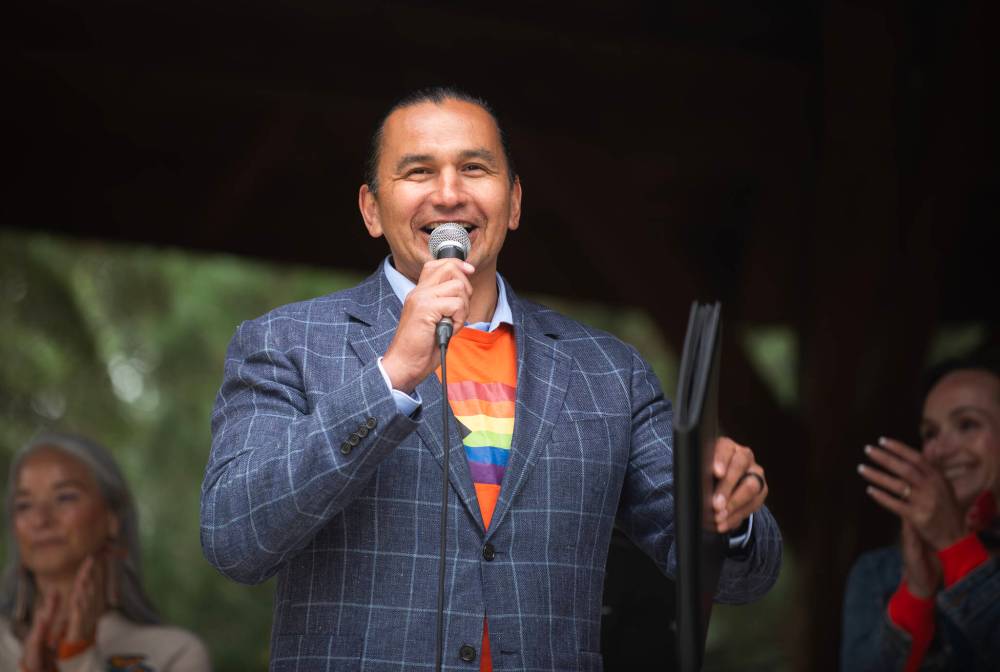
SVJETLANA MLINAREVIC / THE CARILLON
Manitoba Premier Wab Kinew wants to see more education on ‘the dangers of sugary drinks.’
“This is really moving beyond a conception of food as only fuel, where you just boil down food to its calories, its vitamins,” said Sarah Elvins, a food historian at the University of Manitoba who researches popular culture and marketing.
Elvins said the changes acknowledge that decisions people make about food are “very complex” because of different social, political, cultural and economic factors.
The new curriculum identifies building “food literacy skills,” a concept that first appears in Grade 2, as a key goal in 21st century health education.
For Elvins, being literate in a kitchen means knowing how to properly use a measuring cup, analyze labels and advertisements and make informed choices about what ends up on the dinner plate.
Food advertising, disordered eating and the connection between nutrition and mental health — topics previously reserved for the end of high school — are raised throughout the new curriculum.
New requirements include looking at how social determinants of health affect food choices and include taste and hunger satisfaction as key things to consider, along with nutrient needs, in meal planning.
Grade 11 discusses food sovereignty, sustainable farming and how poverty affects individual households and communities.
A new addition in Grade 9 is researching “the need for body-inclusive and food-neutral marketing.”
Community dietitian Clara Birnie said she’s pleased the province has embraced neutral language by no longer requiring Grade 3 students to “differentiate between ‘everyday’ and ‘sometime’ foods.”
As for what’s missing in the draft documents, Birnie said she’d like there to be explicit education about the risks of consuming energy drinks.
School staff regularly ask her team at the Child Nutrition Council of Manitoba for advice on how to talk to students about energy drinks, Birnie said.
The council’s community dietitian said energy drinks should be in the company of tobacco products and other drugs instead of general food.
“I like how this curriculum recognizes that everybody has different requirements and also, everybody is in a different situation with a different budget, access and health needs,” Birnie added.
The draft curriculum is being piloted this fall. The province plans to officially update what nutrition lessons all kindergarten to Grade 12 students are required to learn in September 2028.
For now, Grade 5 is exploring how food intolerance, religious beliefs and food textures influence eating and drinking habits.
The ways in which the social determinants of health affect what Manitobans eat is discussed in high school.
Grade 10 includes studying the hierarchy of food needs — “enough, acceptable, reliable, ongoing access, good tasting, novel, instrumental.”
Charles Cochrane, executive director of the Manitoba First Nations Education Resource Centre, said he is “totally, 100 per cent supportive” of taking a holistic approach to nutrition.
“We’re starting to look at infusing both the academics and our (Indigenous) traditions and values and cultures to the education system,” Cochrane said.
Land-based learning is mandated throughout the new phys-ed and health documents that were developed with input from his colleagues who oversee the Manitoba First Nations School System.
Combined, the changes will help students make healthier choices for themselves and influence their relatives for the better, Cochrane said.
During a news conference to highlight the new curriculum, Premier Wab Kinew raised concerns about the high prevalence of Type 2 diabetes and other health crises in Manitoba.
Manitoba has the highest per capita rate of diabetes, which disproportionately affects Indigenous people, in Canada.
“There’s still too many kids in our society who don’t know the dangers of sugary drinks,” Kinew told reporters at the end of August.

“Pepsi causes more damage to Manitoba than alcohol does. Coca-Cola causes more damage to Manitoba than meth does and if you don’t believe me, go spend time in any of our hospitals.”
Meal planning isn’t new, but changes ask students to consider a wider array of factors as they brainstorm about recipes, budgets and shopping lists.
The Grade 12 health curriculum assigns final-year students with planning a week of meals for living independently.
Students are required to consider the national food guide, nutrients including calcium, fibre and iron, and ways to minimize waste in completing the assignment.
maggie.macintosh@freepress.mb.ca
Maggie Macintosh reports on education for the Winnipeg Free Press. Funding for the Free Press education reporter comes from the Government of Canada through the Local Journalism Initiative.
Our newsroom depends on a growing audience of readers to power our journalism. If you are not a paid reader, please consider becoming a subscriber.
Our newsroom depends on its audience of readers to power our journalism. Thank you for your support.
Maggie Macintosh reports on education for the Winnipeg Free Press. Funding for the Free Press education reporter comes from the Government of Canada through the Local Journalism Initiative.
Our newsroom depends on a growing audience of readers to power our journalism. If you are not a paid reader, please consider becoming a subscriber.
Our newsroom depends on its audience of readers to power our journalism. Thank you for your support.
Advertisement Advertise With Us
Advertisement Advertise With Us