

Ottawa funds sentencing program for northern Manitoba offenders

Advertisement
Read this article for free:
or
Already have an account? Log in here »
To continue reading, please subscribe:

Digital Subscription
One year of digital access for only $205*
- Enjoy unlimited reading on winnipegfreepress.com
- Read the E-Edition, our digital replica newspaper
- Access News Break, our award-winning app
- Play interactive puzzles
*First annual payment billed as $205.00 + GST for one year. This annual subscription will automatically renew at $233.00 + GST every 52 weeks (10% off the regular annual price of $259.35). Offer available to new and qualified returning subscribers only. Cancel any time.
To continue reading, please subscribe:
Add Free Press access to your Brandon Sun subscription for only an additional
$1 for the first 4 weeks*
- Enjoy unlimited reading on winnipegfreepress.com
- Read the E-Edition, our digital replica newspaper
- Access News Break, our award-winning app
- Play interactive puzzles
*Your next Brandon Sun subscription payment will increase by $1.00 and you will be charged $17.95 plus GST for four weeks. After four weeks, your payment will increase to $24.95 plus GST every four weeks.
Read unlimited articles for free today:
or
Already have an account? Log in here »
The federal government has put up $5 million for a Manitoba Keewatinowi Okimakanak project to provide culturally connected sentencing options for First Nations offenders in northern Manitoba.
Northern and Arctic Affairs Minister Rebecca Chartrand announced the funding, alongside MKO Grand Chief Garrison Settee and Manto Sipi Cree Nation Chief Michael Yellowback, in Yellowback’s northern community on God’s River on Thursday.
“For too long, decisions about justice and community and safety have been made far… from the places people call home,” said Chartrand. “But today, we are beginning to change that.”
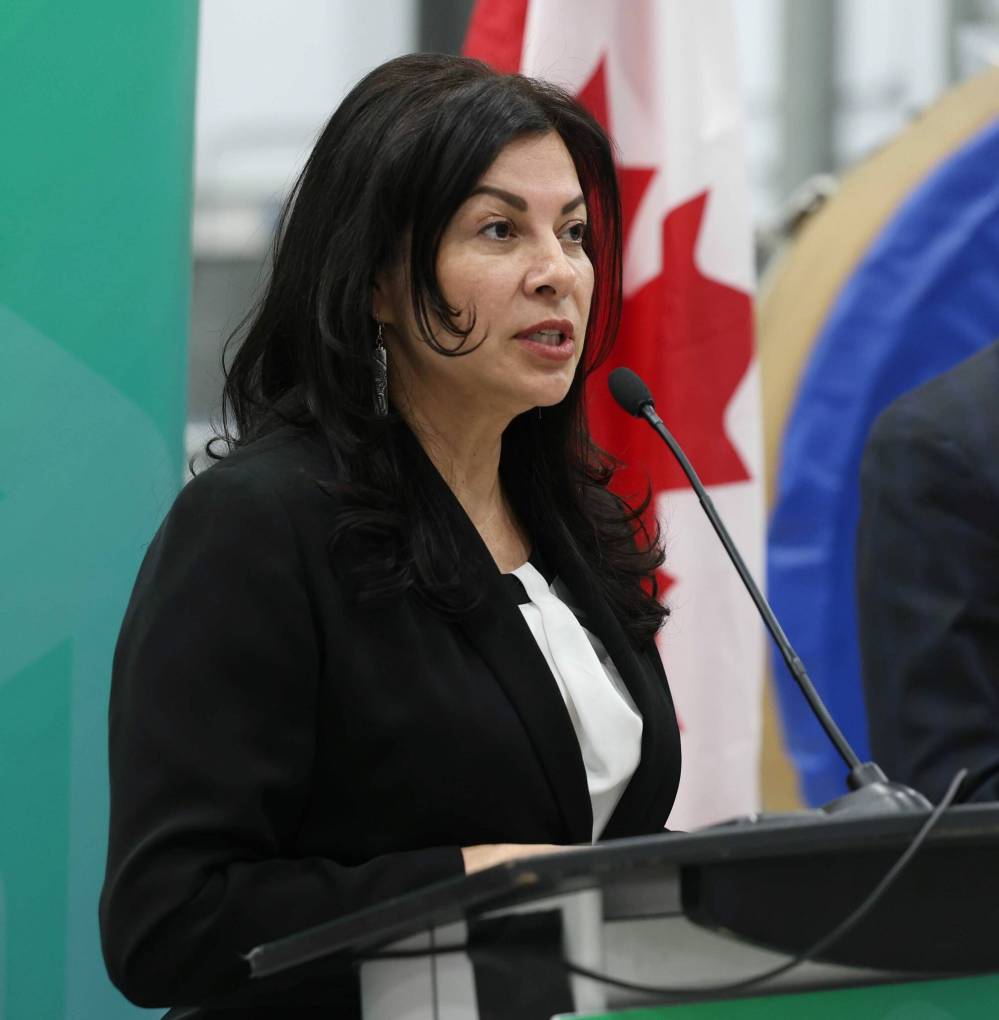
RUTH BONNEVILLE / FREE PRESS FILES
Northern and Arctic Affairs Minister Rebecca Chartrand announced the funding for MKO Thursday.
The funding, to be spent over five years, will support MKO’s Gladue pathways to healing initiative, in which as many as 500 people will participate annually in up to 26 MKO member First Nations in northern Manitoba.
Under what are called Gladue principles, judges are required to consider the systemic and background circumstances and experiences of Indigenous offenders during sentencing.
The offenders are entitled to a Gladue report, which examines their life experience and how factors, such as colonialism and residential schools, affected them. The judge must consider the report during sentencing.
Under the initiative, MKO workers will prepare those reports and develop individualized healing and wellness plans, said Settee.
Participants will receive case management and supports for them, their families and communities.
Staff will help participants connect with housing, health services, addictions, counselling, education and other community resources to help them remain stable in the long term and out of the justice system, officials said.
“This initiative will help increase access to culturally responsive sentencing options for First Nation people living in our North,” said Settee. “It strengthens community involvement, and the justice process is designed to have better outcomes and for individuals and families.”
He said MKO will work closely with the courts as judges decide who is eligible to participate.
Chartrand said the court will continue to carry out its legal responsibilities.
“But instead of every decision and every solution being shaped in a distant courtroom, First Nations will help define pathways for accountability, for healing, and for reintegration,” the minister said.
The project developed out of engagement with MKO First Nations.

“What I heard during those engagement sessions was not uncertainty about what communities needed. I saw strong community leadership and determination,” said Chartrand.
“MKO was clear they wanted to define what safety, justice, wellness, accountability, reintegration and prevention should look like for their own citizens. First Nations wanted approaches grounded in their culture, their language, their realities and the strengths that are already present in the communities.”
Chartrand represents Manitoba’s Churchill—Keewatinook Aski riding in Ottawa.
She announced the funding, which comes from Public Safety Canada’s Indigenous community corrections initiative, on behalf of Public Safety Minister Gary Anandasangaree.
erik.pindera@freepress.mb.ca
Erik Pindera reports for the city desk, with a particular focus on crime and justice.
Our newsroom depends on a growing audience of readers to power our journalism. If you are not a paid reader, please consider becoming a subscriber.
Our newsroom depends on its audience of readers to power our journalism. Thank you for your support.
Erik Pindera reports for the city desk, with a particular focus on crime and justice.
Our newsroom depends on a growing audience of readers to power our journalism. If you are not a paid reader, please consider becoming a subscriber.
Our newsroom depends on its audience of readers to power our journalism. Thank you for your support.
Advertisement Advertise With Us
Advertisement Advertise With Us
History
Updated on Thursday, August 27, 2026 4:22 PM CDT: Fixes typos