

New lab a win for Winnipeg’s long game
Advertisement
Read this article for free:
or
Already have an account? Log in here »
To continue reading, please subscribe:

Digital Subscription
One year of digital access for only $205*
- Enjoy unlimited reading on winnipegfreepress.com
- Read the E-Edition, our digital replica newspaper
- Access News Break, our award-winning app
- Play interactive puzzles
*First annual payment billed as $205.00 + GST for one year. This annual subscription will automatically renew at $233.00 + GST every 52 weeks (10% off the regular annual price of $259.35). Offer available to new and qualified returning subscribers only. Cancel any time.
To continue reading, please subscribe:
Add Free Press access to your Brandon Sun subscription for only an additional
$1 for the first 4 weeks*
- Enjoy unlimited reading on winnipegfreepress.com
- Read the E-Edition, our digital replica newspaper
- Access News Break, our award-winning app
- Play interactive puzzles
*Your next Brandon Sun subscription payment will increase by $1.00 and you will be charged $17.95 plus GST for four weeks. After four weeks, your payment will increase to $24.95 plus GST every four weeks.
Read unlimited articles for free today:
or
Already have an account? Log in here »
It would be easy to overlook the announcement this week that the federal government was green-lighting a quarter-billion-dollar expansion of the National Microbiology Laboratory’s Canadian Science Centre for Human and Animal Health on Arlington Street.
Easy to overlook, in part, because it will take a decade to build the new 140,000-square-foot laboratory specializing in medical countermeasures.
But make no mistake, this latest investment from Ottawa galvanizes Winnipeg’s reputation as a global leader in the research of the world’s most infectious diseases. It also confirms that a wager made by Manitoba political leaders nearly 40 years ago is paying off in spades.
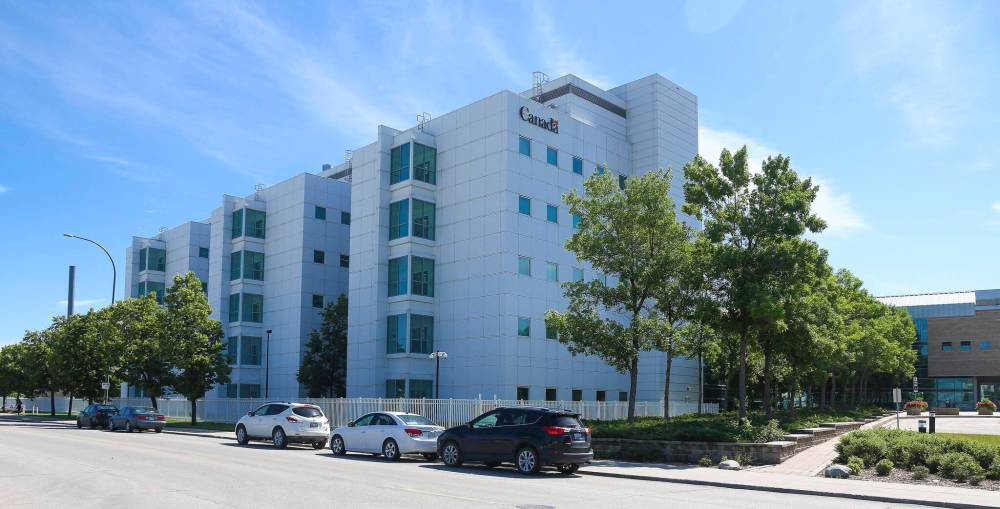
MIKE DEAL / FREE PRESS
The National Microbiology Lab in Winnipeg
The existing NML was, to be frank, hastily conceived compensation for one of the most egregious examples of political pork-barrelling ever seen in Canada.
The year was 1986 and Winnipeg-based Bristol Aerospace was in the pole position to be awarded a lucrative $1.4-billion contract to service CF-18 fighter jets. However, news reports arose suggesting that pressure from the Quebec wing of the federal Progressive Conservative government of then-prime minister Brian Mulroney was mounting to award the contract to Montreal’s Canadair.
Canadair ultimately got the contract but in the process, there was a seismic shift in Western Canadian politics. The CF-18 scandal inflamed the Western separatist movement and prompted — through the creation, at a convention in Winnipeg, of the federal Reform Party — a fracturing of conservative politics in Canada.
Rather than focusing on new political protest parties, leaders at all levels of government in Winnipeg tried to turn the CF-18 disgrace into a political asset. What, these leaders mused, could they get as compensation from Ottawa for having lost a contract that could have triggered decades of economic growth in Manitoba?
The “what” would come in the form of a proposed federal laboratory to conduct research on the world’s most virulent pathogens. At that time, the existing federal laboratory in Ottawa was becoming too small for the work it wanted to do. As well, it did not have the Level 4 containment facilities required to handle the worst of the worst infectious diseases. A new facility was needed and there had been an assumption it would be in Ottawa.
It did not take long for leaders to make a case to the Mulroney government that the lab should go to Winnipeg which, through the University of Manitoba, had already earned a global reputation for leading-edge research on infectious diseases, in particular HIV.
In 1987, barely a year after the fateful decision on the CF-18 contract, representatives from the federal, provincial and municipal governments announced that a new microbiology laboratory to be built in Winnipeg would also house labs used by the Canadian Food Inspection Agency and Agriculture Canada. Hence the birth of the Canadian Science Centre for Human and Animal Health.

Ground was broken for the new facility in 1992, it was completed in 1997 and became fully functional in 2000. For the first 14 years of its operation, the late Dr. Frank Plummer — a U of M professor and global leader in HIV research — served as scientific director of the new lab. In those early years, and in the years following, the Winnipeg NML has been at the forefront of infectious disease research, including advances in influenza prevention and treatment, and development of the world’s first vaccine for Ebola.
All that history makes this most recent expansion announcement among the most important economic developments in the history of Winnipeg and Manitoba.
No, Winnipeg didn’t get the CF-18 contract. But in the end, the city and province got something much bigger.
Bigger long-term economic impact, bigger global profile and a profoundly bigger contribution to the welfare of human kind.
Not a bad trade-off.