Churches face challenges but hope remains, meeting hears

Advertisement
Read this article for free:
or
Already have an account? Log in here »
To continue reading, please subscribe:

Digital Subscription
One year of digital access for only $205*
- Enjoy unlimited reading on winnipegfreepress.com
- Read the E-Edition, our digital replica newspaper
- Access News Break, our award-winning app
- Play interactive puzzles
*First annual payment billed as $205.00 + GST for one year. This annual subscription will automatically renew at $233.00 + GST every 52 weeks (10% off the regular annual price of $259.35). Offer available to new and qualified returning subscribers only. Cancel any time.
To continue reading, please subscribe:
Add Free Press access to your Brandon Sun subscription for only an additional
$1 for the first 4 weeks*
- Enjoy unlimited reading on winnipegfreepress.com
- Read the E-Edition, our digital replica newspaper
- Access News Break, our award-winning app
- Play interactive puzzles
*Your next Brandon Sun subscription payment will increase by $1.00 and you will be charged $17.95 plus GST for four weeks. After four weeks, your payment will increase to $24.95 plus GST every four weeks.
Read unlimited articles for free today:
or
Already have an account? Log in here »
What is the future of the Christian presence in Canada? That was the topic of discussion in May when representatives from various Canadian Protestant denominations met in Winnipeg.
The meeting, which brought together leaders from the United, Presbyterian, Lutheran, Salvation Army, Anglican, Christian Reformed and Disciples of Christ, was organized under the auspices of the Canadian Council of Churches.
The idea for the meeting came from the United Church of Canada, which has been researching the challenges facing its congregations across Canada.
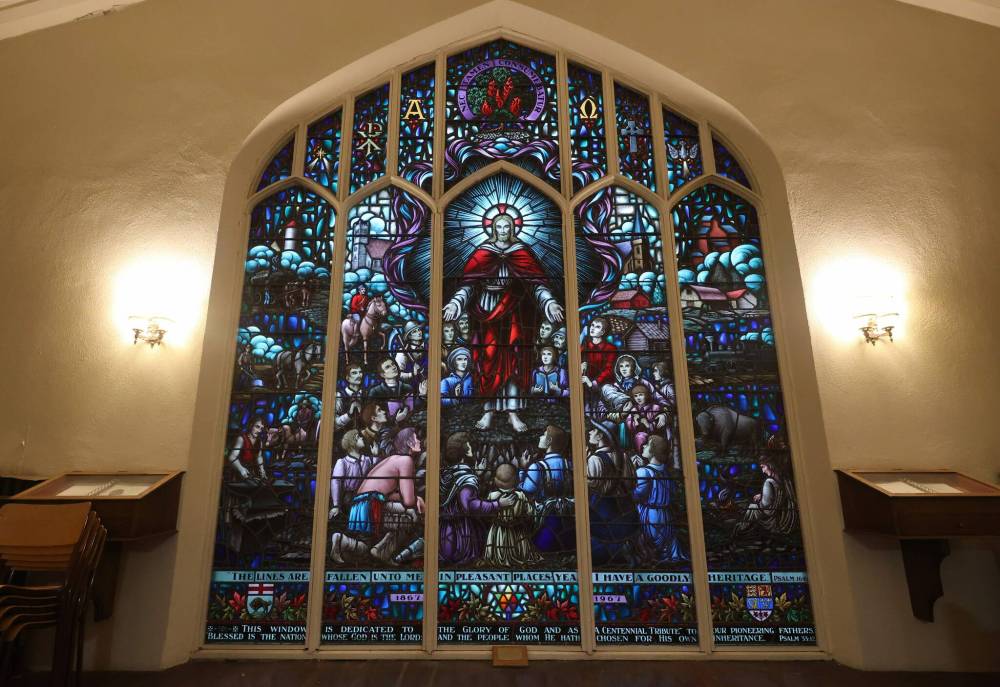
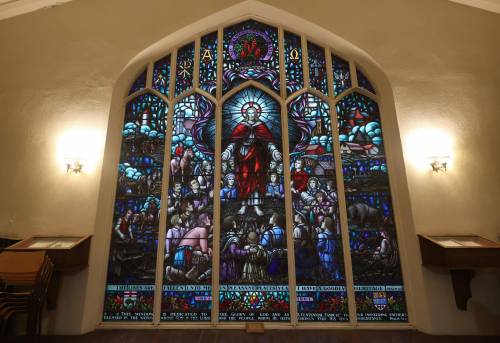
Matt Goerzen / The Brandon Sun files
The meeting in Winnipeg brought together leaders from United, Presbyterian, Lutheran, Salvation Army, Anglican, Christian Reformed and Disciples of Christ congregations.
Using its own statistics, along with information from other sources, the denomination identified a number of churches in rural Canada, especially in the west, that have no neighbouring United Church closer than 50 kilometres away. At the same time, they ascertained how many of those churches are struggling, which ones are thriving and those that could go either way — giving them a red, yellow or green score.
“Should those churches be vulnerable, and should other Christian churches in the same area be vulnerable, there may be a concern about the future of Christian presence in that community or region,” said Jennifer Henry, who directs organizational development and strategy for the denomination.
During the meeting, representatives from the different denominations discussed how they might work together to support each other if churches have to close. Should those congregations merge? Share a building? Or find other ways to strengthen their collective witness?
Peter Noteboom, General Secretary of the Canadian Council of Churches, was at the meeting. While a main issue is what to do if individual churches close, for him it goes deeper than that.
“For me, it’s about the health of the church in Canada in general,” he said.
Noteboom acknowledged the situation is challenging for many churches today, with many of them struggling. “There’s not a denomination it’s not happening to,” he said, acknowledging it is more severe for some than for others.
Collaboration is the way for struggling churches to continue, he said, noting there are different levels where that can happen — through things like sharing services, sharing buildings or sharing ministries.
While not minimizing the challenges of declining memberships, Noteboom wonders if that’s the best way to measure congregational health.
“It’s also about discipleship and passing on the faith,” he said, adding the story of Christianity in Canada isn’t only one about decline.
While that story can’t be ignored, it’s not the only story, he said, noting there are also many positive stories about how congregations are serving their communities.
Those stories for the most part, are not being told. “There are two sides of this conversation,” he said.
Michael Blair, general secretary of the United Church of Canada, was also at the meeting. For him, it was a start to an important and ongoing conversation.
“It planted a seed,” he said, adding it is critical for denominations to talk about the future of Christian presence at a time when the religious landscape of the country is changing so dramatically.
Blair also sees collaboration as key. “We need to figure out how to do ministry together,” he said, adding “I’m not talking about merger, but about ways churches can make sure there is a Christian presence in Canada.”
He acknowledged that things such as polity, practice and theology also need to be considered. But one way to address that might be for various denominations to enter into covenants that would make it easier for churches to work together when they are struggling to survive.
“If a church has to close, they could then reach out to other churches for support,” Blair said, adding “the reality is all denominations are in decline. We have to recognize we are all going to be smaller.”
For Blair, it’s vitally important for churches to find ways to work together. They should do it “for the sake of their communities and for the sake of the world,” as he put it.
Jean-Daniel O’Donncada is national pastor for the Disciples of Christ, a small mainline denomination in Canada. He found the meeting to be realistic about the challenges facing churches in Canada, today, but came away feeling hopeful.
“We came together out of a sense of shared mission,” he said, “not as competitors.”
For O’Donncada, a Christian presence is also about more than numbers.

“It’s about what it means to be doing things for others in the name of Jesus, about how people experience Christianity on the ground,” he said.
When it comes to working together, O’Donncada doesn’t think most Canadians can tell the difference between one denomination or another — all they want to know is whether a congregation steps up to help people when they need assistance.
“It’s about making the love of God known in a community through our actions,” he said, not preserving denominational identities or “getting more people through the church doors.”
That kind of practical service, he added, “is part of what it means to have a Christian presence in Canada.”
Jdl562000@yahoo.com
The Free Press is committed to covering faith in Manitoba through our Religion in the News project. This reporting continues because readers like you step forward to fund it.
Donate now to support our reporting on religion.
Your donation is eligible for a charitable tax receipt.
BECOME A FAITH JOURNALISM SUPPORTER
John Longhurst has been writing for Winnipeg's faith pages since 2003. He also writes for Religion News Service in the U.S., and blogs about the media, marketing and communications at Making the News.
Our newsroom depends on a growing audience of readers to power our journalism. If you are not a paid reader, please consider becoming a subscriber.
Our newsroom depends on its audience of readers to power our journalism. Thank you for your support.
The Free Press is committed to covering faith in Manitoba through our Religion in the News project. This reporting continues because readers like you step forward to fund it.
Donate now to support our reporting on religion.
Your donation is eligible for a charitable tax receipt.
BECOME A FAITH JOURNALISM SUPPORTER
John Longhurst has been writing for Winnipeg's faith pages since 2003. He also writes for Religion News Service in the U.S., and blogs about the media, marketing and communications at Making the News.
Our newsroom depends on a growing audience of readers to power our journalism. If you are not a paid reader, please consider becoming a subscriber.
Our newsroom depends on its audience of readers to power our journalism. Thank you for your support.
Advertisement Advertise With Us
Advertisement Advertise With Us
The Free Press acknowledges the financial support it receives from members of the city’s faith community, which makes our coverage of religion possible.