The journeys of life

In their travels, Zorn’s cast of characters glean valuable insight about the world — and themselves

Advertisement

Advertise with us

Guanajuato, Mahdia, Vienna, Marrakesh: these are a few destinations that Alice Zorn’s stories visit in her collection Mind the Gap.

Read this article for free:


By clicking the button above, an account will be created and you will begin to receive some of our recommended newsletters. You may opt out of any newsletter by visiting your Email and Communication Preferences page or by clicking "unsubscribe" at the bottom of any email.

or

Already have an account? Log in here »

To continue reading, please subscribe:

Digital Subscription

One year of digital access for only $1.44 a week*

  • Enjoy unlimited reading on winnipegfreepress.com
  • Read the E-Edition, our digital replica newspaper
  • Access News Break, our award-winning app
  • Play interactive puzzles

*Billed as $5.77 plus GST every four weeks. After 52 weeks, price increases to the regular rate of $19.95 plus GST every four weeks. Offer available to new and qualified returning subscribers only. Cancel any time.

To continue reading, please subscribe:

Add Free Press access to your Brandon Sun subscription for only an additional

$1 for the first 4 weeks*

  • Enjoy unlimited reading on winnipegfreepress.com
  • Read the E-Edition, our digital replica newspaper
  • Access News Break, our award-winning app
  • Play interactive puzzles
Start now

*Your next Brandon Sun subscription payment will increase by $1.00 and you will be charged $17.95 plus GST for four weeks. After four weeks, your payment will increase to $24.95 plus GST every four weeks.

Guanajuato, Mahdia, Vienna, Marrakesh: these are a few destinations that Alice Zorn’s stories visit in her collection Mind the Gap.

The Montreal author’s Colours in Her Hands — in which the attitudes of a woman with Down syndrome clash unpredictably against those of her care-giving brother — was arguably the best Canadian novel of 2024.

Zorn’s skill is apparent throughout the eight stories of Mind the Gap too, though less dramatically. Its characters travel. In Born – Died, Claudia, on the cusp of adulthood and against the feelings of her adoptive parents, travels to Guanajuato in Mexico to find out about her birth family and seek the reason behind her adoption. Instead, she finds her own gravestone.
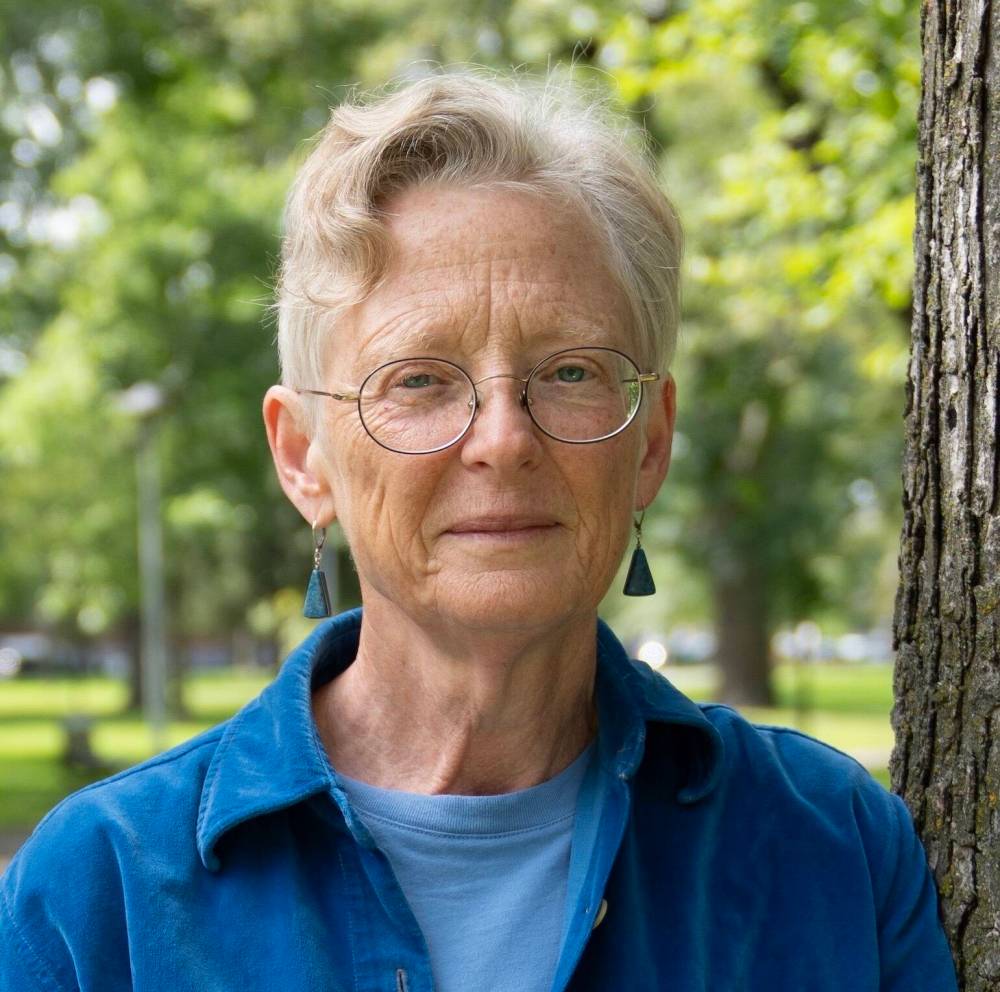
Louise Abbott photo
                                Some of the most compelling components of Alice Zorn’s writing are the myriad forms of human conflict, and the ways characters might rise above.

Louise Abbott photo

Some of the most compelling components of Alice Zorn’s writing are the myriad forms of human conflict, and the ways characters might rise above.

Other stories include that of a formerly independent woman, Pia, who travels to Madia in Tunisia with her boyfriend Luc and the boyfriend’s 13-year-old unfriendly daughter Brigitte. Hearing the phrase “the socks… are dead” from her father’s mouth, Brigitte adopts it as an all-purpose reply to most questions. The potential is certainly there for a vacation from hell. In Zorn’s writing, the most intriguing aspects are the myriad forms of human conflict — in this case step-daughter/step-(what?) — and the potential ways in which the antagonists might rise above said conflict.

The title story traces, often from a distance, the friendship and conflict between narrator Barbara and her Austrian cousin Freddy. When young Barbara travels to meet Freddy and his family, he is already a little snob at age 12, discoursing “from the formidable Rolodex that was his brain” about the grandeur of European history to Barbara, she from parochial Montreal. Yet he also sings Johann Wolfgang von Goethe’s achingly beautiful röslein ballad.

Freddy feels a powerful vocation to dedicate his life to God and become a Benedictine monk — to leave “the mock paradise of the modern world.” Because Barbara is a sympathetic ear, Freddy, having renamed himself “Edmund,” thinks that she understands him (she doesn’t), that she should agree to resist modern social mores (she doesn’t) and that she is an ally in his struggle to free himself from his family’s hat business (mostly, she is).

The “gap” between cousins, far from diminishing, grows as he is pushed out of the monastery back into the modern world and as Barbara finally catches on that Edmund, even though he criticizes her unwillingness to let the church solemnize her own common-law relationship, is gay.

The cautionary title warns about the dangerous space between train and platform, but Zorn also uses it as a metaphor for the distance between people, not only between Canadian travellers and Mexicans or Moroccans, but also between Barbara and Edmund — close genetically, culturally and emotionally, yet miles apart.

Zorn’s forays into the complexity of human motive — even monks hold petty jealousies — are convincing and often moving. Her prose can also be funny: “Edmund made marriage sound as attractive as a soldering gun,” she writes in the title story. In the characters’ back-and-forth between modernity and tradition, Zorn, to her credit, doesn’t solve things with a final answer. Although the open ending weakens the story esthetically, she avoids the tendency to cheer, despite all costs, for modern freedoms.

Similarly, in the collection’s novella Morocco, Zorn navigates an insoluble conflict between two women, Nessa and Bev, who travel to Morocco to find out why Nessa’s boyfriend Sky seems to have disappeared there. Bev’s slightly reckless “carpe diem” attitude clashes with Nessa’s safer approach, not only during their travel, but also in a deeper conflict that only slowly becomes apparent.

Again Zorn, to her credit, doesn’t choose between the two women. Instead, she lets her characters try to carry the weight of their humanity. And they do.

Reinhold Kramer is a Brandon University English professor. His most recent book is Are We Postmodern Yet? And Were We Ever?

Report Error Submit a Tip

More Stories

Indigenous-, newcomer-focused job fair puts opportunity in spotlight

Gabrielle Piché 3 minute read Tuesday, Oct. 27, 2026

Canadian Armed Forces pamphlets grazed the side of Serena Valiquette’s ribbon skirt, as the Grade 9 student clutched the handouts tight.

“When I get to age, I’ll probably apply,” said Serena, 14, joining pockets of students hopping from booth to booth — City of Winnipeg here, Manitoba Public Insurance there — at a job fair in Winnipeg on Tuesday.

The job seekers, present and future, were largely Indigenous and newcomers. It was the demographic organizer Clayton Sandy aimed to attract.

“We have the ability to open doors for young people,” Sandy said. “This is one of the ways we use.”

Bombers look to avenge past playoff losses to Argos

Taylor Allen 5 minute read Preview

Bombers look to avenge past playoff losses to Argos

Taylor Allen 5 minute read Yesterday at 6:43 PM CDT

The Winnipeg Blue Bombers should see blue and white confetti in their nightmares.

Despite being favourites on both occasions, the Bombers lost the 2022 and 2024 Grey Cup games to the Toronto Argonauts — not that anyone around these parts needs a reminder.

While they’ll never be able to rewrite history, the Bombers can at least get a taste of revenge Saturday when the rivalry adds another chapter with the two sides battling in the Eastern semifinal at BMO Field.

That’s got to add some fuel to the fire, no?

Read
Yesterday at 6:43 PM CDT

Director Schrader returns to silver screen with complex view of religion and belief

Alison Gillmor 4 minute read Preview

Director Schrader returns to silver screen with complex view of religion and belief

Alison Gillmor 4 minute read Thursday, Jun. 14, 2018

Bleak, wintry and rigorously controlled — until it’s not — this Book of Job-like drama from American filmmaker Paul Schrader looks at the challenges of faith.

The 71-year-old Schrader, known for scripting four Martin Scorsese films (including Taxi Driver and Raging Bull) and for directing his own (including American Gigolo, Affliction and Auto Focus), grew up in a strict Calvinist home — he famously did not see a film until he was 17 — and has always been drawn to stories of agonizing and uncertain redemption.

As the Rev. Toller (Ethan Hawke) wrestles with what it means to lead a righteous life in our badly broken world, his spiritual fate remains in doubt. It is certain, however, that First Reformed marks a cinematic rebirth for Schrader after recent disasters like The Canyons and Dog Eat Dog. Serious, complex and moving, this is not a perfect film, but even its flaws are powerful.

Toller is a solitary man who has come to the ministry late in life, after a family tragedy and a failed marriage. First Reformed, a historic church in upstate New York that was once a stop on the Underground Railroad, has since been reduced to an austerely beautiful tourist shop, more of a museum than a place of worship.

Read
Thursday, Jun. 14, 2018

Carrying a torch for tiki

Eva Wasney 5 minute read Preview

Carrying a torch for tiki

Eva Wasney 5 minute read Monday, Nov. 15, 2021

A paper tiki mask is the only indication that the door it’s affixed to leads somewhere other than a dive bar. Ring the doorbell and walk through the kitchen, however, and you’ll be transported to an island-themed lounge that’s equal parts kitschy and comfortable.

“This is just from people’s houses, like my mom’s,” says Allan Pineda, pointing to the wood carvings, water-buffalo horns and rattan furniture decorating the room. “A lot of the stuff you see in here, you’d see in a Filipino’s house back in the day — like second-wave immigrants in the ‘60s and ‘70s, they’d bring this stuff home (from the Philippines).”

Pineda is a local chef and part of the team behind the Bahay Kubo Tiki Bar, a pop-up Filipino drinking and dining experience hosted weekly at an undisclosed Winnipeg establishment.

The details are hush-hush because the temporary eatery is meant to operate like a speakeasy. The dinners are an offshoot of Baon Manila Nights, which Pineda started as a way to highlight Winnipeg’s Filipino culinary scene.

Read
Monday, Nov. 15, 2021

Multi-year budget to force councillors, bureaucrats to focus on the big picture

Aldo Santin 12 minute read Preview

Multi-year budget to force councillors, bureaucrats to focus on the big picture

Aldo Santin 12 minute read Tuesday, Feb. 26, 2019

City hall is putting the final touches on the 2019 preliminary budget -- but the real tough job will start after that.

The city is committed to developing a four-year budget beginning with 2020, and having it in place by the end of this year.

It's a process that is filled with uncertainties, trying to balance four successive annual budgets at the same time, using assumptions on revenues and expenses that can change without notice: a provincial government that has frozen funding to city hall at 2016 levels and is reluctant to disclose annual funding commitments or share in unexpected revenues; erratic fuel prices; a possible change in government in Ottawa, which could bring new spending priorities. And in the middle of that four-year span, another civic election where new members of council may have other priorities than those laid out by the current crop of office holders.

Municipal governments across Manitoba are required to approve their annual operating and capital budgets by the end of March each year. But the criticism of decision-making at city hall has been that all the decisions are made on a year-to-year basis, keeping voters happy with an eye on the next election.

Read
Tuesday, Feb. 26, 2019

Pandemic point man didn’t resign, exactly

Dan Lett 5 minute read Preview

Pandemic point man didn’t resign, exactly

Dan Lett 5 minute read Thursday, Jan. 14, 2021

The rumours of Paul Beauregard's demise appear to have been greatly exaggerated.

Email inboxes and phone lines were burning-hot Thursday morning with the news that Treasury Board Secretary Beauregard — arguably the most powerful bureaucrat in the Manitoba government and the point man for the province's pandemic response — had resigned his post while the province is still very much in the grips of a public-health crisis.

Beauregard is a controversial figure who been caught up in a scrap with the Opposition NDP over allegations he was improperly involved in the awarding of a contract to Bell MTS, his former employer. The political battle prompted Beauregard to file an unprecedented harassment and bullying complaint against an NDP MLA.

But even with all of Beauregard's baggage and the myriad problems with Manitoba's pandemic response, changing leadership mid-crisis would be a horrible blow to a government already suffering from a deficit in public confidence.

Read
Thursday, Jan. 14, 2021