Ex-cop’s memoir excels in detailing homicide investigations

Advertisement

Advertise with us

Hank Idsinga spent 30 years as a cop with the Toronto Police Service (TPS), his last 14 years working homicide cases. For the last five of those years, he was the force’s top homicide inspector.

Read this article for free:


By clicking the button above, an account will be created and you will begin to receive some of our recommended newsletters. You may opt out of any newsletter by visiting your Email and Communication Preferences page or by clicking "unsubscribe" at the bottom of any email.

or

Already have an account? Log in here »

To continue reading, please subscribe:

Digital Subscription

One year of digital access for only $1.44 a week*

  • Enjoy unlimited reading on winnipegfreepress.com
  • Read the E-Edition, our digital replica newspaper
  • Access News Break, our award-winning app
  • Play interactive puzzles

*Billed as $5.77 plus GST every four weeks. After 52 weeks, price increases to the regular rate of $19.95 plus GST every four weeks. Offer available to new and qualified returning subscribers only. Cancel any time.

To continue reading, please subscribe:

Add Free Press access to your Brandon Sun subscription for only an additional

$1 for the first 4 weeks*

  • Enjoy unlimited reading on winnipegfreepress.com
  • Read the E-Edition, our digital replica newspaper
  • Access News Break, our award-winning app
  • Play interactive puzzles
Start now

*Your next Brandon Sun subscription payment will increase by $1.00 and you will be charged $17.95 plus GST for four weeks. After four weeks, your payment will increase to $24.95 plus GST every four weeks.

Hank Idsinga spent 30 years as a cop with the Toronto Police Service (TPS), his last 14 years working homicide cases. For the last five of those years, he was the force’s top homicide inspector.

In 2021, Toronto Life magazine touted his homicide team as having “a murder clearance rate of over 74 percent — among the best for metropolitan areas in North America.” In other words, 74 per cent of TPS homicide investigations were closed as solved cases.

Idsinga’s was a storied career and, not surprisingly, full of stories. But even memoir, though non-fiction, must flesh out its players and places to add depth and colour in the telling.
Cole Burston / Canadian Press files
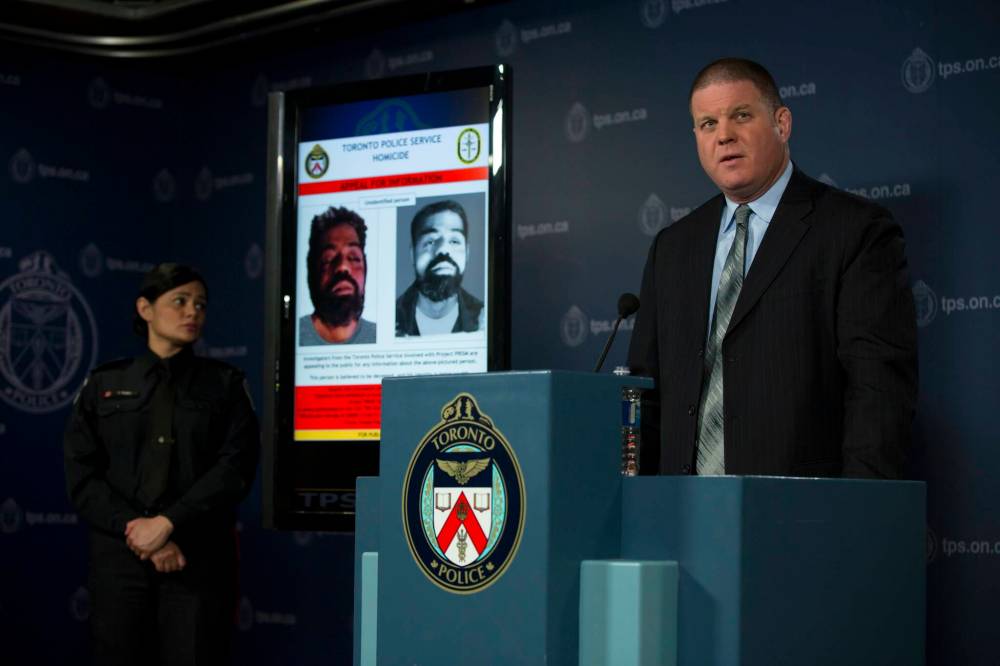
                                In this 2018 photo, then-detective sergeant Hank Idsinga speaks to the media about an individual possibly connected to the Bruce McArthur case.

Cole Burston / Canadian Press files

In this 2018 photo, then-detective sergeant Hank Idsinga speaks to the media about an individual possibly connected to the Bruce McArthur case.

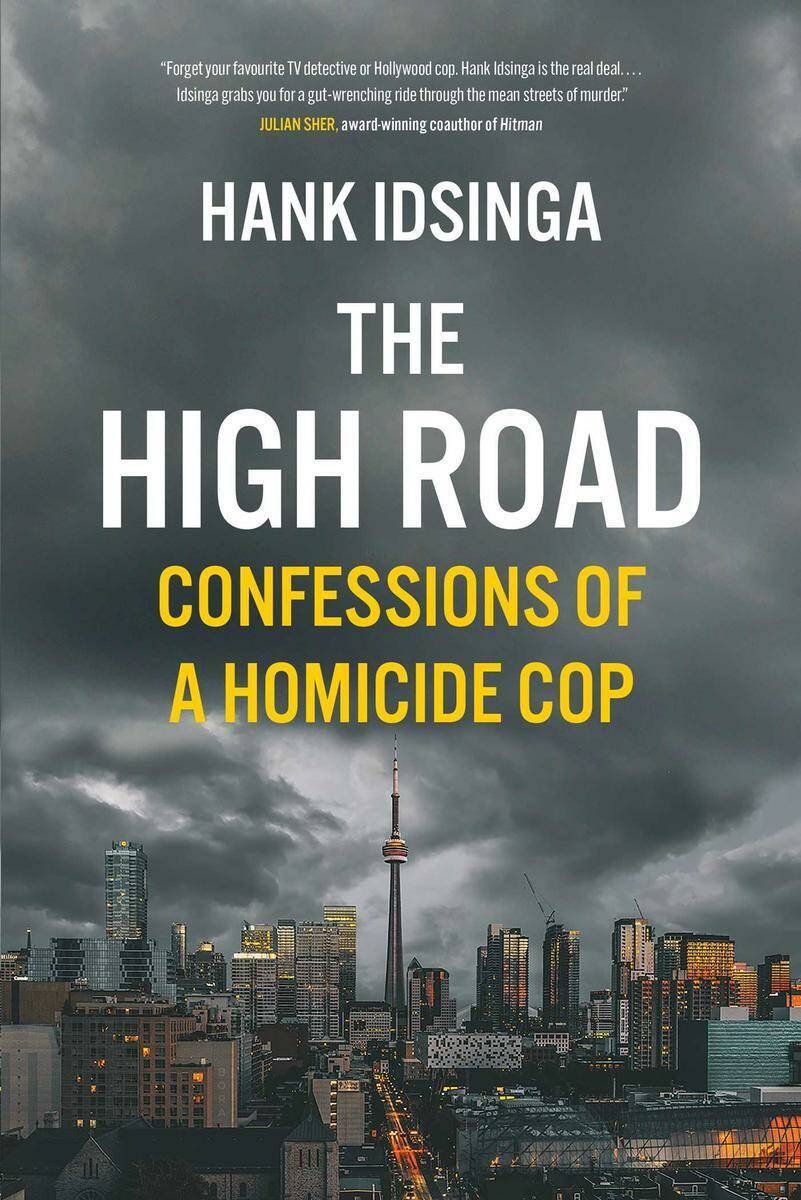
The first third of Idsinga’s memoir The High Road, which relates his work in two different Toronto police divisions before jumping to homicide duty in 2005, drags.

Initial chapters recounting his years as a divisional police constable deliver brief anecdote after brief anecdote, piled one on top of the other. While it makes for an easy-to-follow chronological record, they resemble a collection of journal entries more than a cohesive narrative.

Only when he gets to the guts of his work as a homicide investigator does his story start to sing. And then it sings nicely.

The lengthy chapter on the strategy, logistics and forensic evidence gathering that in 2018 saw Bruce McArthur, a serial killer of gay men, finally nabbed is stellar. Faced with the overwhelming evidence gathered by Idsinga’s team, in January 2019 McArthur pleaded guilty to eight counts of first-degree murder and received eight concurrent life sentences.

Likewise, the detailed account of the investigation of local gangster Mark Moore’s casual killing spree (four murders) affords a terrific inside look at the often grinding process and methods that lead to arrest.

The extra layer of depth arising from Idsinga’s getting close to the crime and victims, which is missing in the early chapters, surfaces in these hunts for a killer. He adroitly pulls you into the process of accumulating enough evidence to charge a murderer and, even more importantly, make that charge stick in a court of law.

Idsinga isn’t without an axe to grind, though he mostly withholds judgment until the memoir’s last chapters.

He’s broadly critical of the paramilitary policing model the TPS follows.

He believes the force’s adoption of a hallowed traditional military-style organization impairs proper management and communication. A rigidly hierarchical structure is, in his view, often counterproductive because it discourages robust discussion of issues that could lead to better policing. And it’s a cogent argument.
The High Road

The High Road

Yet paradoxically, he earlier writes approvingly of a senior officer’s archaic weekly “system for ranking officers by their workload” known as officer performance reports (OPRs).

“One point would be awarded for each parking ticket, two for each provincial offences ticket, and three for each arrest and summons,” he explains.

But is this the best metric of good policing?

Idsinga doesn’t address whether the sole measure of a cop’s excellence is properly based on the number of tickets issued and arrests made — not to mention the obvious bias to overzealous or even bogus law enforcement to jack up the number of earned points.

When he finally warms to his subject, Idsinga’s memoir pulls you along. But the early chapters impair his account. A professional life story that begins with recollections delivered with all the verve of a police incident report doesn’t make for gripping reading.

Douglas J. Johnston is a Winnipeg lawyer and writer.
Report Error Submit a Tip

More Stories

Colorado low blow: flood fears rise as Manitoba faces yet another weather warning

Chris Kitching 5 minute read Preview

Colorado low blow: flood fears rise as Manitoba faces yet another weather warning

Chris Kitching 5 minute read Thursday, Apr. 28, 2022

Forecasters are saying with certainty another Colorado low will hit southern Manitoba this weekend, putting flood-hit municipalities — including four already in local states of emergency — on high alert.

The third such event in as many weeks is set to arrive Friday and linger through Sunday, with the bulk of the rain falling Saturday, said Natalie Hasell, warning preparedness meteorologist with Environment and Climate Change Canada.

“There is agreement to the point where, yes, a Colorado low is coming, but exactly what it will mean for southern Manitoba is unclear,” she said Wednesday. “I hope people are prepared for another uncomfortable weekend.”

As municipalities filled sandbags and pumped standing water, weather models still disagreed on the storm’s track.

Read
Thursday, Apr. 28, 2022

Sharpton decries 'stench of racism' in Daunte Wright's death

Aaron Morrison, Tim Sullivan And Tammy Webber, The Associated Press 5 minute read Friday, Apr. 23, 2021

MINNEAPOLIS - Daunte Wright, the young Black man shot by an officer during a traffic stop in suburban Minneapolis, was not “just some kid with an air freshener,” but a “prince” whose life ended too soon at the hands of police, the Rev. Al Sharpton said Thursday during an emotional funeral.

Hundreds of people wearing COVID-19 masks packed into Shiloh Temple International Ministries to remember Wright, a 20-year-old father of one who was shot by a white police officer on April 11 in the small city of Brooklyn Center. The funeral was held just two days after former Minneapolis police Officer Derek Chauvin was convicted in the death of George Floyd and amid a national reckoning on racism and policing.

“The absence of justice is the absence of peace,” Sharpton said. “You can’t tell us to shut up and suffer. We must speak up when there is an injustice.”

The civil rights leader's thundering eulogy included a stinging rebuke of the possibility that Wright was pulled over for having air fresheners dangling from his mirror. Wright’s mother has said her son called her after he was stopped and told her that was the reason. Police said it was for expired registration.

Listening after decades of hearing

Melissa Martin 7 minute read Preview

Listening after decades of hearing

Melissa Martin 7 minute read Friday, Oct. 1, 2021

It seemed that all of Canada glowed orange, in act or in mind. On the streets of Winnipeg, a sea of people marched in orange shirts, carrying orange signs. On social media, people shared text posts on orange backgrounds, urging more attention to the Truth and Reconciliation Commission's 94 calls to action.

Even city buses — though not orange — marked the day on their digital signs.

If you'd come to me 10 years ago and told me this week would happen, I wouldn't have believed you. If you'd told me that on the last day of September 2021, everything from a cocktail bar to a Botox clinic would close to remember the children and survivors of residential schools, I would have said you were telling me about a dream.

Not the kind we seek to create, but the kind that disintegrates upon waking.

Read
Friday, Oct. 1, 2021

Has the political wind changed?

Gwynne Dyer 5 minute read Yesterday at 2:01 AM CDT

It has been quite a week. First we had “Lula” – Luiz Inácio da Silva (as nobody but his mother ever called him) – defying everybody’s expectations. After winding up two million votes behind his challenger, Flávio Bolsonaro, in the first round of the Brazilian presidential election, he made a “miraculous” comeback in the second.

It was like a man going into a revolving door behind you and coming out in front. At the end of the first round, Lula was two million votes behind; at the end of the second round on Oct. 25 he was four million votes ahead. So how did he win a fourth term without cheating?

That’s what Bolsonaro claims he did, having fled to the United States; Trump, Flávio’s mentor, hints at the same. But Lula’s victory was not miraculous. He only learned to read when he was 10, and at 80 he still refused to have a mobile phone. His team finally made him get one and use it.

He wouldn’t do social media videos, so they created a WhatsApp channel called Lula’s Army, and made him appear on it at least daily. The channel went from zero to 10.8 million viewers in two weeks, and Lula won.

Imperialist crusades: 21st-century style

John R. Wiens 5 minute read Preview

Imperialist crusades: 21st-century style

John R. Wiens 5 minute read Wednesday, Jul. 8, 2026

In the 11th century and lasting into the 13th, the papacy launched a series of at least eight military campaigns we now refer to as the Crusades, or Holy Wars. They were an imperialistic call to arms for Christians to retake Jerusalem, which was at the time under Muslim rule.

Spiritual rewards for participation were implied, and other incentives offered, to dull the extra taxation demanded to fund the campaigns. Over time, the “crusades” morphed to become massacres of not only Muslims but also Jews and Christian dissidents — in other words, any enemies of the papacy. If today’s news sounds like déjà vu all over again, it probably should.

The stories keep repeating themselves in many forms. We now know that two 20th century world wars, global in scope, were caused by imperialistic ambitions, changes in the balance of international powers and corresponding arms races. The first was attributed to the assassination of the heir to the Austro-Hungarian throne by a Bosnian Serb, a kind of “regime change” initiative. The second resulted from rising tensions between Allied and Axis powers, triggered by the rise of European fascism and Japanese militarism. The human toll of both was unimaginable.

In the First World War, 15 to 22 million people, including soldiers and civilians, were killed and another 23 million were wounded. These numbers do not account for those otherwise affected — victims of chemical warfare whose compromised health shortened their lives; of the subsequent Spanish flu epidemic amplified by the displacement of peoples; others who died from other diseases caused by war conditions; and those who were malnourished or starved. Nor do they account for the ongoing trauma and resentments passed on intergenerationally to this day.

Read
Wednesday, Jul. 8, 2026

Letters, Oct. 31

6 minute read Yesterday at 2:01 AM CDT

Civic election a missed opportunity

The outcome of the latest municipal election in Winnipeg is nothing short of baffling. The decline of what was once a proud, beautiful prairie hub is impossible to ignore.

Winnipeg is rapidly sliding into a state of structural and social dilapidation, yet voters have inexplicably chosen to hand incumbent Mayor Scott Gillingham a second term. The decision smells of complacency, and sadly, it represents a massive missed opportunity for real urban renewal.

Walking through downtown Winnipeg today is an exercise in heartbreak. A city centre that should be a bustling economic and cultural core has instead transformed into an absolute eyesore. Encampments and tents are permitted to dot the heart of the city. Streets that used to thrive are now dominated by the tragic, visible reality of severe addiction, with individuals wandering and staggering through public spaces without adequate intervention or care.