Musings on voluntary simplicity offer food for thought
Advertisement
Read this article for free:
or
Already have an account? Log in here »
To continue reading, please subscribe:

Digital Subscription
One year of digital access for only $205*
- Enjoy unlimited reading on winnipegfreepress.com
- Read the E-Edition, our digital replica newspaper
- Access News Break, our award-winning app
- Play interactive puzzles
*First annual payment billed as $205.00 + GST for one year. This annual subscription will automatically renew at $233.00 + GST every 52 weeks (10% off the regular annual price of $259.35). Offer available to new and qualified returning subscribers only. Cancel any time.
To continue reading, please subscribe:
Add Free Press access to your Brandon Sun subscription for only an additional
$1 for the first 4 weeks*
- Enjoy unlimited reading on winnipegfreepress.com
- Read the E-Edition, our digital replica newspaper
- Access News Break, our award-winning app
- Play interactive puzzles
*Your next Brandon Sun subscription payment will increase by $1.00 and you will be charged $17.95 plus GST for four weeks. After four weeks, your payment will increase to $24.95 plus GST every four weeks.
Read unlimited articles for free today:
or
Already have an account? Log in here »
The latest book from Mark A. Burch, longtime educator, author and practitioner of “voluntary simplicity,” comes from a series of lectures he gave in 2005 to the Sisters of Mission Service — lectures based on a set of monastic rules written by St. Benedict in the sixth century that are ancient history, but relevant today.
Voluntary simplicity, initially defined as “the deliberate organization of life for a purpose,” was popularized in the 1930s by Quaker activist Richard Gregg. Burch has continued the tradition of invoking a Christian belief system to support engagement with this movement, though it is not clear the two need be entwined.
Voluntary simplicity advocates for a movement away from the thoughtless pursuit of money and material goods in favour of a life lived in accordance with deeper values such as healing, community, sustainability and a sense of meaning or purpose.
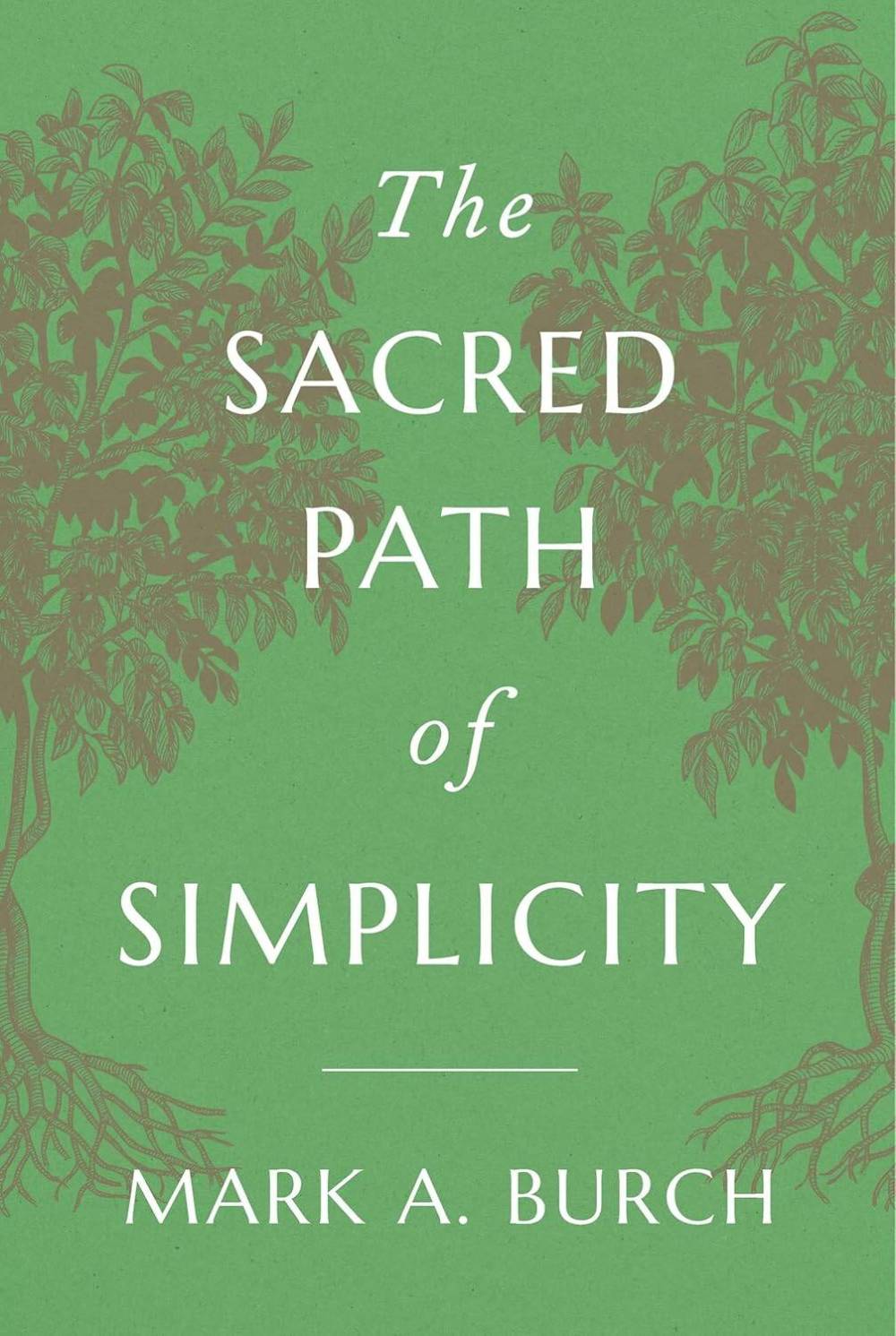
The Sacred Path of Simplicity
It is not about self-control or rigid restraint or avoiding life’s pleasures, but does ask us to resist the lure of consumer culture and to face the harmful consequences of capitalism. It is about doing as little harm as possible; not contributing to systems that perpetuate violence; making ethical decisions; and simplifying our lives so that the things we truly value have more room within them.
The book is more geared towards what individuals might do differently rather than on how to contribute to larger systemic changes.
At their core, these principles are ones many of us can get on board with, no matter our religious or spiritual beliefs and backgrounds. In the chapter entitled “Listen,” for example, Burch reminds himself that he should “try to listen the way God listens — lovingly, without judgment, with tenderness and empathy — that is, listening with my complete being.” While some readers will be fine to translate this language into that of their own spiritual traditions or moral sensibilities, others may understandably have more difficulty.
Much of this book reads as though it contains advice and wisdom for the socially privileged (those with the luxury, for instance, of being able to give away possessions). Burch argues, for example, that “the call to listen is also the call to awaken, to take to heart what we hear,” which is important advice for those who have lived lives sheltered from the suffering of others. But if addressed to those whose voices have been historically marginalized, it could also be read as a kind of problematic silencing.

Burch admits he grew up in a middle-class home and describes an idyllic relationship with his parents. He never directly acknowledges the advice in this book may be difficult to apply for those from different backgrounds.
There are also missed opportunities to collaborate with and learn from Indigenous elders and knowledge- keepers, whose ancestors have lived sustainably on this land for thousands of years. At times Burch invokes other spiritual traditions (such as Buddhism), but when discussing how voluntary simplicity is “synonymous with the practice of environmental trusteeship,” or when he says things like “if I can glimpse the sacredness that pervades all things, then I might have some prayer of using things with the respect and care they deserve,” the potential overlap and shared values with Indigenous traditions and beliefs is notable. It’s easy to wonder about this as a possible arena for some of the work of reconciliation. The work is not in conversation with other academic thinkers on these subjects either, but seems to exist in a kind of scholarly bubble.
Perhaps these issues are due, in part, to much of the book’s content having been written over 20 years ago. Updates would have been helpful, and it is mystifying as to why this work wasn’t undertaken in a deeper way.
But for those of us from privileged backgrounds, and who can handle a little spirituality, this is an excellent resource on how to live a more meaningful and ethical life, and how to contribute to our world in ways that we hope will alleviate some of its (and our) suffering.
Jennifer Robinson is a Winnipeg writer and psychotherapist.