

Let sleeping dogs lie — lessons from dogs and museums
Advertisement
Read this article for free:
or
Already have an account? Log in here »
To continue reading, please subscribe:
Monthly Digital Subscription
$1 per week for 24 weeks*
- Enjoy unlimited reading on winnipegfreepress.com
- Read the E-Edition, our digital replica newspaper
- Access News Break, our award-winning app
- Play interactive puzzles
*Billed as $4.00 plus GST every four weeks. After 24 weeks, price increases to the regular rate of $19.95 plus GST every four weeks. Offer available to new and qualified returning subscribers only. Cancel any time.
Monthly Digital Subscription
$4.99/week*
- Enjoy unlimited reading on winnipegfreepress.com
- Read the E-Edition, our digital replica newspaper
- Access News Break, our award-winning app
- Play interactive puzzles
*Billed as $19.95 plus GST every four weeks. Cancel any time.
To continue reading, please subscribe:
Add Free Press access to your Brandon Sun subscription for only an additional
$1 for the first 4 weeks*
- Enjoy unlimited reading on winnipegfreepress.com
- Read the E-Edition, our digital replica newspaper
- Access News Break, our award-winning app
- Play interactive puzzles
*Your next Brandon Sun subscription payment will increase by $1.00 and you will be charged $17.95 plus GST for four weeks. After four weeks, your payment will increase to $24.95 plus GST every four weeks.
Read unlimited articles for free today:
or
Already have an account? Log in here »
On the front page of Monday’s Free Press was a story titled Canine Comfort, describing accredited facility dogs at Manitoba Law Courts helping victims navigate the justice system. It was a powerful reminder of something many of us already know: dogs have an extraordinary ability to comfort and connect — especially in difficult circumstances.
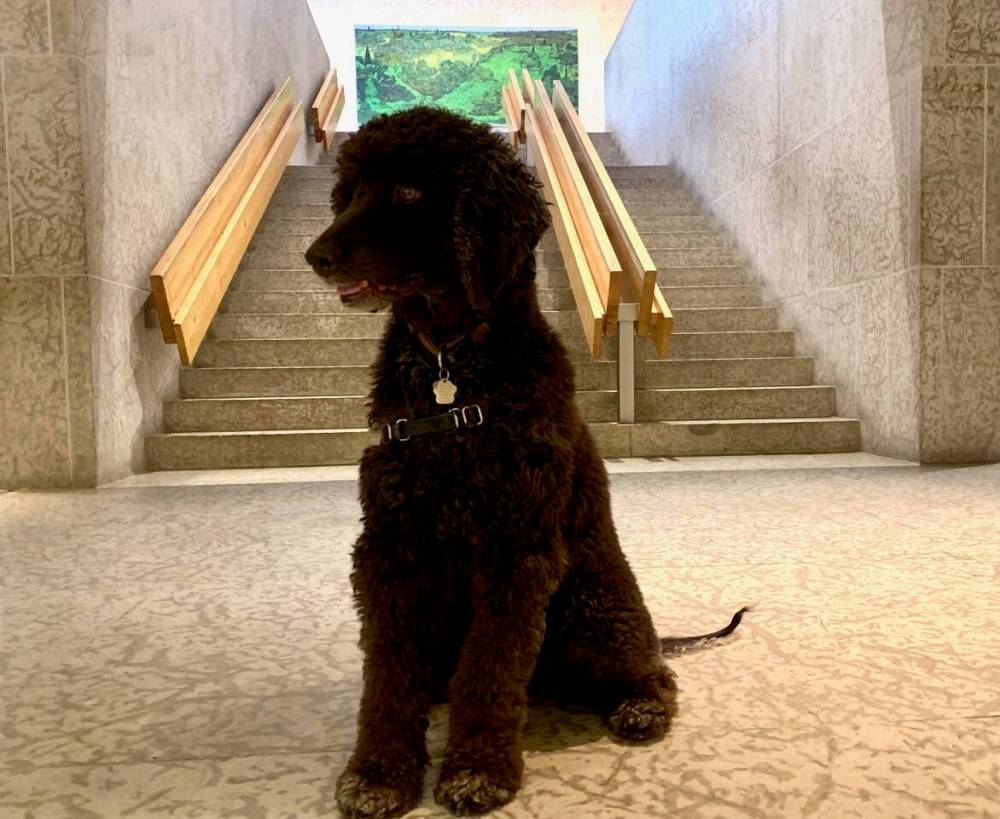
It may seem unusual for an art historian and museum executive to write about dogs. My work has long focused on museums and collections, architecture and the role of cultural institutions in civic life. Over the years — and especially this past week, following the death of our Irish Water Spaniel, Liadan — I’m reminded how they’ve shaped how I think about museums, workplaces and community.
I first began thinking about dogs in a cultural context as a PhD student at McGill University. My doctoral adviser, Dr. Thomas Glen, a Rubens scholar who completed his doctorate at Princeton, once wrote a graduate paper titled On Letting Sleeping Dogs Lie — an exploration of the depiction of dogs in portrait paintings of the Habsburg dynasty during the Baroque period. In these paintings, dogs symbolized loyalty, status and friendship.
Stephen Borys Photo
Liadan, Stephen Borys’s dearly departed Irish Water Spaniel, during a past visit to the WAG-Qaumajuq
Dr. Glen also bred, trained and trialled golden retriever field dogs on his hobby farm outside Ottawa. His passion for dogs left a lasting impression. Tom has since passed away, but his influence — and love of dogs — remain with me. Even then, I began to understand that dogs were more than companions — they reflected human values and relationships.
During my studies at McGill, I recall an exhibition at the Montreal Museum of Fine Arts organized by then-director Pierre Théberge. It featured dog houses designed by artists and architects. The idea surprised me at the time, but in hindsight it made perfect sense. Museums reflect the fullness of human life — and animals have long been part of that story.
Another formative experience came during my time as a research curator at the Canadian Centre for Architecture in Montreal. The CCA’s founder and director, Phyllis Lambert — who secured my first curatorial appointment — often brought her great Bouvier to work. She would sometimes walk with her dog through the CCA gardens, stopping to talk with staff or visitors. The presence of a dog softened the institutional environment, making it more welcoming and human.
When I began my curatorial career at the National Gallery of Canada, I encountered this idea again. Pierre Théberge — now director of the National Gallery — brought his Airedale terrier to the gallery most days. The dog became part of the rhythm of the institution. Staff greeted the dog each morning. Visitors occasionally noticed. The atmosphere felt warmer and more relaxed. Pierre has also passed away, but like Thomas Glen, his example continues to shape how I think about cultural leadership and institutions.
These early experiences shaped how I saw dogs — not just as companions, but as contributors to workplace culture and community.
Years later, after the pandemic, when I was director and CEO of the Winnipeg Art Gallery–Qaumajuq, I explored the idea of allowing staff to bring their dogs to work on a structured schedule. We called it “WAG at the WAG.”
Like many organizations, we were rebuilding connection and workplace culture after a period of isolation and uncertainty. The goal wasn’t simply to accommodate pets, but to bring warmth and humanity into the office — small gestures to help rebuild morale and community.
Although we weren’t able to launch the initiative before my departure, I was happy to bring Liadan to the WAG for a few days. She joined meetings, walked through offices, greeted staff and settled beside my desk. The impact was immediate. People smiled more. Conversations flowed more easily. The atmosphere softened. It was a small change, but a meaningful one.
Dogs do something remarkable — in our lives, and in our institutions. They remind us to slow down. They encourage us to step outside. They create moments of connection and calm.
Anyone who has walked a dog or seen a service dog in action knows this. Conversations begin more easily. Neighbours become familiar. Strangers become friends. In a world that often feels divided or hurried, dogs quietly foster connection.
And, of course, dogs teach us.
They teach patience, loyalty and forgiveness — and joy in small things: a walk, a swim a familiar voice at the door.
Last week, as we said goodbye to our beloved Liadan just days after her 13th birthday, I was reminded of these lessons again. The loss has been harder than I imagined. But the calls, emails, posts and memories from those who understand the power of animals in our lives have been deeply sustaining. What began as something personal quickly revealed itself as something widely shared.
Dogs offer something rare. They love without condition. They are present without judgment. They give generously and ask for little in return.
In museums, we often talk about making institutions more welcoming and connected to community. Sometimes that comes through exhibitions and architecture. Sometimes, it comes through something simpler: the presence of a dog, quietly reminding us of our shared humanity.
Looking back, I now see that the dogs I encountered throughout my career — from McGill to the Winnipeg Art Gallery — were not incidental. They were part of a broader lesson about leadership, community and creating spaces that feel alive and human.

Dogs ask very little of us. A walk. A moment of attention. A place beside us.
In return, they give us patience, loyalty, companionship and joy.
Liadan did all of that and more. And in her quiet way, she reminded us — as dogs often do — how to be better humans.
Dedicated to the memory of Thomas Glen and Pierre Théberge, whose love of dogs and art — and generosity of spirit — continue to shape my life and work.
Stephen Borys is president and CEO of Civic Muse, and former director and CEO of the Winnipeg Art Gallery–Qaumajuq.