

The need to reform Manitoba’s lobbying legislation
Advertisement
Read this article for free:
or
Already have an account? Log in here »
To continue reading, please subscribe:
Monthly Digital Subscription
$1 per week for 24 weeks*
- Enjoy unlimited reading on winnipegfreepress.com
- Read the E-Edition, our digital replica newspaper
- Access News Break, our award-winning app
- Play interactive puzzles
*Billed as $4.00 plus GST every four weeks. After 24 weeks, price increases to the regular rate of $19.95 plus GST every four weeks. Offer available to new and qualified returning subscribers only. Cancel any time.
Monthly Digital Subscription
$4.99/week*
- Enjoy unlimited reading on winnipegfreepress.com
- Read the E-Edition, our digital replica newspaper
- Access News Break, our award-winning app
- Play interactive puzzles
*Billed as $19.95 plus GST every four weeks. Cancel any time.
To continue reading, please subscribe:
Add Free Press access to your Brandon Sun subscription for only an additional
$1 for the first 4 weeks*
- Enjoy unlimited reading on winnipegfreepress.com
- Read the E-Edition, our digital replica newspaper
- Access News Break, our award-winning app
- Play interactive puzzles
*Your next Brandon Sun subscription payment will increase by $1.00 and you will be charged $17.95 plus GST for four weeks. After four weeks, your payment will increase to $24.95 plus GST every four weeks.
Read unlimited articles for free today:
or
Already have an account? Log in here »
It’s time to do something about Manitoba’s lobbying laws.
On Dec. 22, 2025 when announcing the intention of his government to establish a public inquiry into the unconstitutional, failed attempt by the former PC government to green light the controversial Sio Silica sand mine proposal, Premier Wab Kinew suggested that strengthening Manitoba’s weak, mainly symbolic lobbyist registration law would be the primary outcome of the inquiry.
An earlier investigation by the ethics commissioner under a new integrity law led to a former premier and two former PC cabinet ministers being fined after a vote in the legislature. However, the ethics commissioner’s report covered only part of the background story.
ALEX LUPUL / WINNIPEG FREE PRESS/FILE
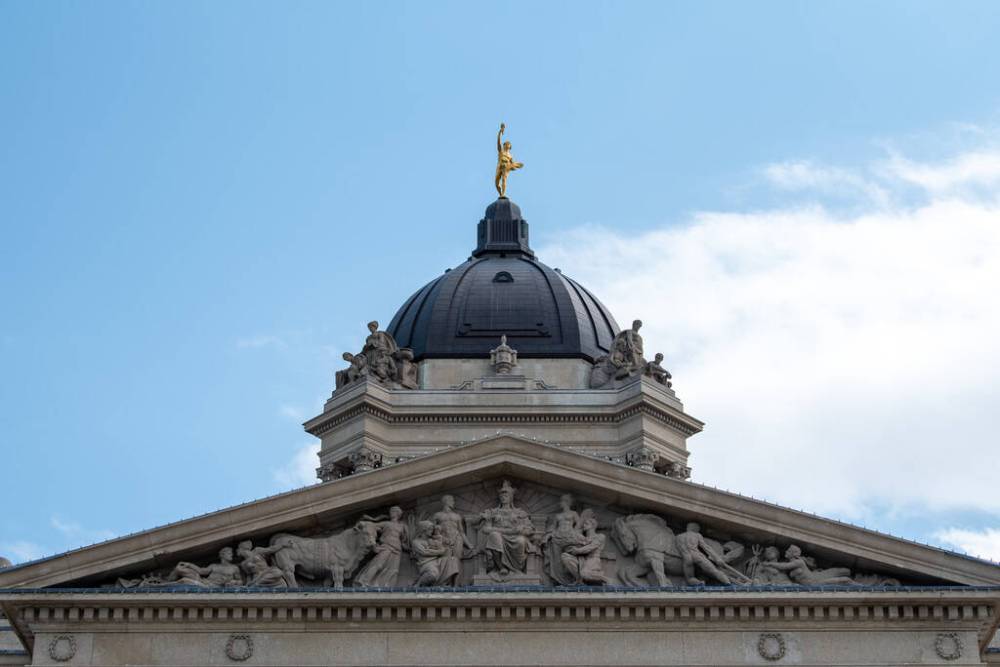
Manitoba’s Golden Boy may shibe atop the Manitoba Legislative Building, but the province’s laws against political lobbying are more than a little tarnished.
As a result, a number of private-sector actors backing the Sio Silica proposal who engaged in inappropriate conduct, including failing to register as lobbyists, were not held fully accountable in terms of paying a material price for their actions.
Inquiries take time and involve significant public expense. To assist the inquiry process, here are my free suggestions on how to reform the lobbying law. Details are crucial to the formulation and implementation of lobbying rules, but only brief general points can be presented in this space.
Currently, the law distinguishes between organizational and consultant lobbyists. In defining organizational lobbyists, a revised act should make it clear that subsidiaries and business affiliates fall within the scope of reporting requirements.
Consultant (for hire) lobbyists must always register for any activity, whereas organizational lobbyists are only required to register if their activity exceeds 100 hours annually.
The trend in other provinces is to eliminate the annual 100-hour threshold because it ignores the fact that lobbying activity is often compressed into shorter time periods. At the national level, the commissioner now requires in-house lobbyists to report when their activity level reaches eight hours or more in any four-week period.
Preparation time is now included in the calculation of the threshold.
The Manitoba law does not ban contingency fees which involve consultant lobbyists only being paid if they are successful in their lobbying efforts. Such fees are prohibited under the national law because they represent an incentive for improper conduct.
Currently, lobbyists representing non-profit organizations are not required to register. The assumption is that they have less incentive to use inappropriate tactics and meeting reporting requirements could be a burden for smaller entities. However, a blanket exemption is inappropriate. British Columbia’s lobbying law covers non-profits, and a manual from the commissioner eases compliance requirements.
Like other jurisdictions, the Manitoba law casts a wide net by identifying as potential targets of lobbying everyone who is paid to occupy a public office. To deal with the “revolving door” in which former senior public office holders use insider knowledge for lobbying purposes, MLAs and senior public executives are prohibited from lobbying for one year after they leave office. This “cooling off” period is too short. The post-employment restriction on lobbying should be expanded to three years.
“Grassroots lobbying” refers to organized attempts to shape public opinion and to motivate citizens to contact public officials to promote certain causes. A revised law should make it clear that communications campaigns, including on social media, targeted at office holders, should be explicitly recognized, while not inhibiting citizen protests.
Reporting and transparency are central to all lobbying rules, but if disclosure is sparse, regulation of lobbyists becomes mainly a symbolic gesture, which is the case in Manitoba.
The public is entitled to know in some detail who is lobbying whom about what matters (legislation, spending, contracts, appointments etc.) and with what intended outcomes. Lobbyists must be required to provide more detailed information on the context, purposes and targets of their lobbying efforts.
For a revised law to work as intended, the content, format and search function of the lobbyist registration website must be drastically improved. Without ease of access and navigation, MLAs, the media and interested citizens will be unable to discern and understand lobbying patterns.
Upgrading the registration and reporting process will require more funding and staff for the office of the registrar. An annual report from the registrar should also be required.
Manitoba’s lobbying registrar currently has limited enforcement authority. He verifies information submitted by lobbyists and may refuse to accept a filing by a lobbyist. Complaints about potential violations must be filed with the police, who may refer them for potential prosecution through the courts.
Serious violations can result in fines up to $25,000. No lobbyist has ever been charged.
The increased number of lobbyists and their use of more varied techniques require that the registrar have a broader range of regulatory tools. He needs authority to initiate investigations of problematic lobbyist behaviour. He should have authority to issue enforceable orders to compel testimony and the production of documents.

Sanctions for failure to comply with rules must be proportionate and timely, such as the authority to temporarily suspend lobbyists and to impose administrative monetary fines. The registrar should have authority to refer potential offences under other laws to the appropriate authorities.
Adoption of a lobbyist code of conduct would promote the principles of honesty, transparency and professionalism in the lobbying community. It would cover some of the “grey areas” which cannot be fully prescribed by the law, promote voluntary compliance, and provide the registrar with leverage in dealing with lobbyists.
The promised inquiry, which has yet to be launched, may not be complete before the next election, which must be held by Oct. 5, 2027. There is the further complication that Manitoba’s former ethics commissioner, who doubles as the lobbyist registrar, moved to the same position in B.C. so the legislature needs to appoint a permanent replacement.
All political parties should commit to an early appointment of a new commissioner and to a fundamental overhaul of a weak and outdated lobbying law.
Paul G. Thomas is professor emeritus of Political Studies at the University of Manitoba.