Peace in the balance

As instability threatens to sweep across the globe, leadup to previous wars offer lessons for today’s powers

Advertisement

Advertise with us

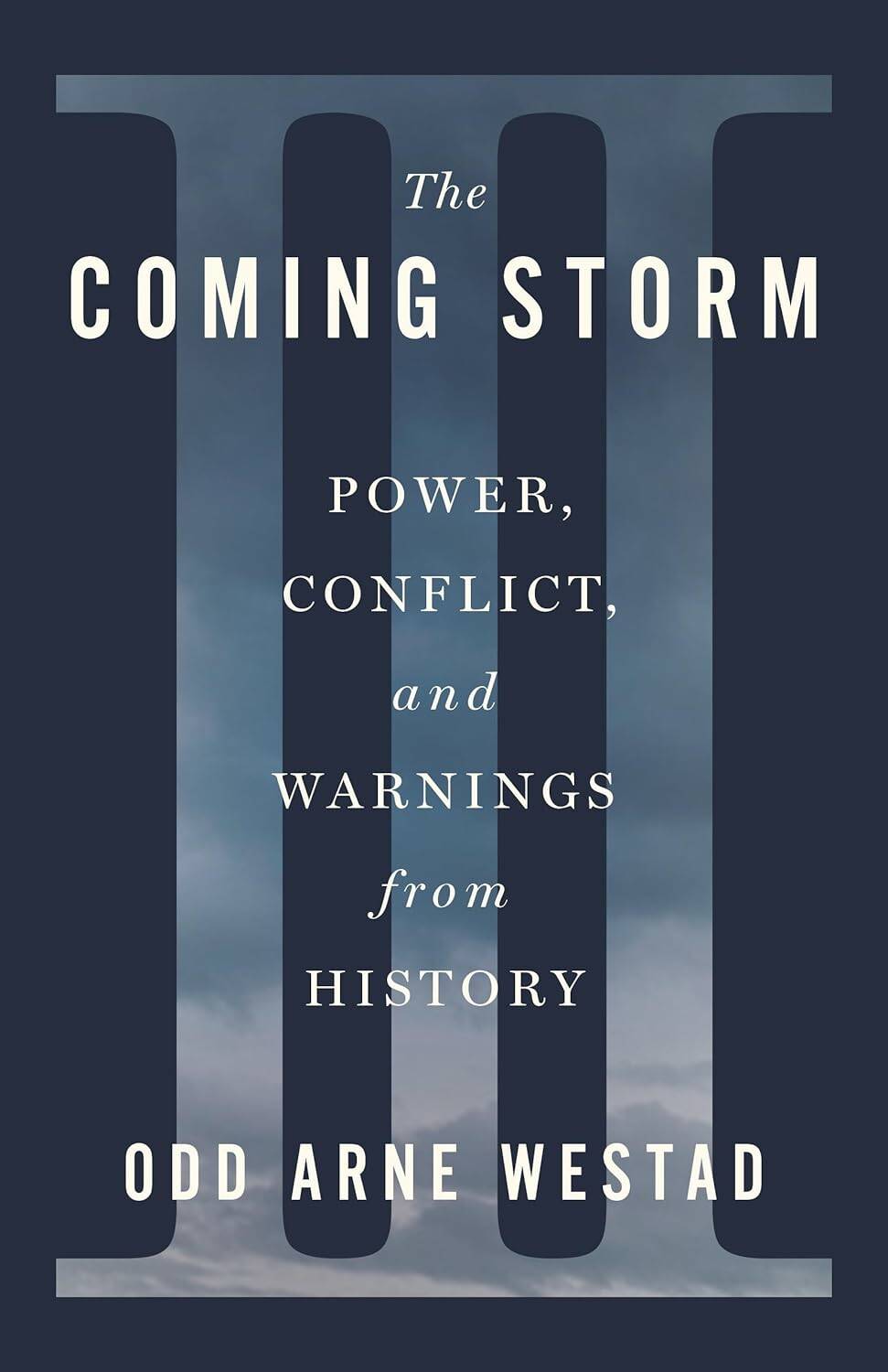
Author Odd Arne Westad probably has more degrees than a thermometer. However, he seems to think us ordinary folks are smarter than we are — at least some of us — because in his new (and 18th) book The Coming Storm he leaves out some critical, basic information.

Read this article for free:


or

Already have an account? Log in here »

To continue reading, please subscribe:

Subscribe and receive a limited-edition Free Press branded hat or tote.

Digital Subscription

One year of digital access for only $205*

  • Enjoy unlimited reading on winnipegfreepress.com
  • Read the E-Edition, our digital replica newspaper
  • Access News Break, our award-winning app
  • Play interactive puzzles

*First annual payment billed as $205.00 + GST for one year. This annual subscription will automatically renew at $233.00 + GST every 52 weeks (10% off the regular annual price of $259.35). Offer available to new and qualified returning subscribers only. Cancel any time.

To continue reading, please subscribe:

Add Free Press access to your Brandon Sun subscription for only an additional

$1 for the first 4 weeks*

  • Enjoy unlimited reading on winnipegfreepress.com
  • Read the E-Edition, our digital replica newspaper
  • Access News Break, our award-winning app
  • Play interactive puzzles
Start now

*Your next Brandon Sun subscription payment will increase by $1.00 and you will be charged $17.95 plus GST for four weeks. After four weeks, your payment will increase to $24.95 plus GST every four weeks.

Author Odd Arne Westad probably has more degrees than a thermometer. However, he seems to think us ordinary folks are smarter than we are — at least some of us — because in his new (and 18th) book The Coming Storm he leaves out some critical, basic information.

Nowhere in his book does Westad list the world’s Great Powers, as he calls them, all together. He writes about five of them all at once, and in a manner that leaves the mistaken impression that’s all there are. Later, more of them pop up here and there, if you can keep track. It’s distracting and needless.

Secondly, Westad speaks often in his book of multipolar/multipolarity. But he never unpacks what it is.
Alexander Zemlianichenko / Associated Press files
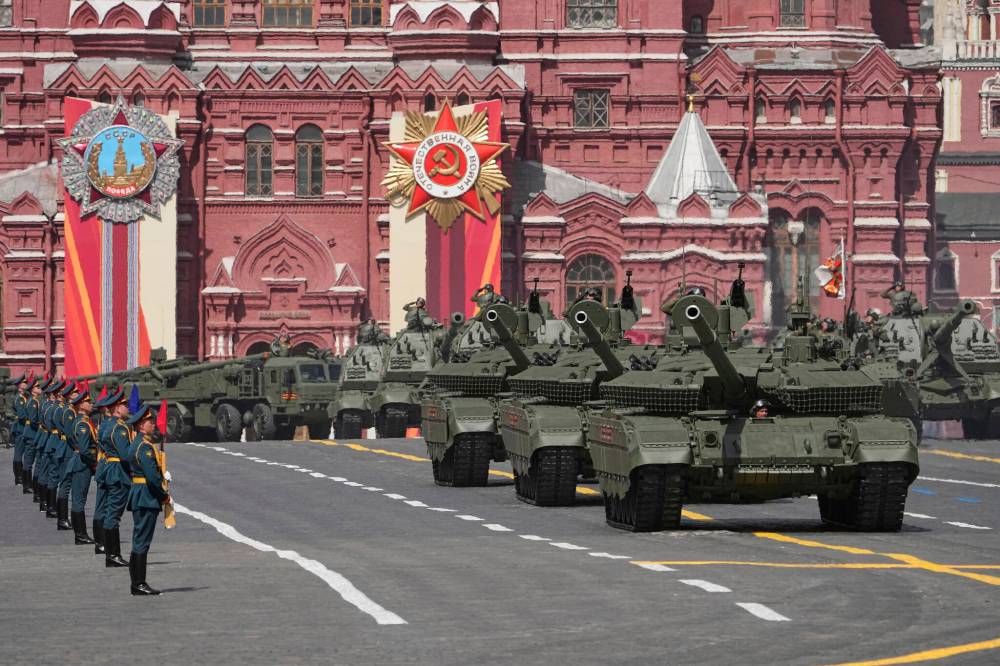
                                Odd Arne Westad believes what he calls the ‘Great Powers’ must seek compromise, tentative deals on at least some of the issues that are making today’s conflicts more intense.

Alexander Zemlianichenko / Associated Press files

Odd Arne Westad believes what he calls the ‘Great Powers’ must seek compromise, tentative deals on at least some of the issues that are making today’s conflicts more intense.

Westad, a historian at Yale, is already celebrated for his sprawling 2017 book The Cold War: A World History, his intensive study of the causes of the Cold War between the U.S. and the Soviet Union from 1945 to 1991. He has also taught at Harvard and the London School of Economics; his multilingualism (he speaks six languages) helps him research efficiently.

In The Coming Storm, Westad is as perturbed as writer Kenneth Rosen in his recent book Polar War (reviewed in the Free Press on Feb. 21) that humanity is barrelling towards self-destruction this century.

Rosen believes a third world war is coming, and Westad hopes a developing new world order may prevent it.

Westad believes that even if the next war were non-nuclear, “Millions would die. Human development would be set back by a generation, and our children would spend their lifetimes putting the pieces of progress back together again.”

The Great Powers must seek compromise, says Westad, tentative deals for at least some of the issues that today are making conflicts more intense. If not, the cost in human life and suffering, and in social destruction, “would make all other current wars pale in comparison.”

Westad is confident in his analysis of the future, having intimately studied the common factors that existed in the world before the First World War and Second World War, and how these factors helped generate those wars. More importantly, he has identified what he believes would generate a third world war and has come up with ways to avoid it.

A complicating factor in Westad’s rationale is Donald Trump, president of the most powerful nation in the world. He may discredit Westad’s message.

Westad doesn’t mention Trump by name, but does say his country “is going through an era of political and social unrest and a deep fear of decline.”

(“Donald Trump’s presidency threatens much of what is good in this country,” former FBI director James Comey said in A Higher Loyalty in 2018 after he was fired by Trump.)

“If we want to avoid war, we have to prepare for how to avoid it,” Westad says. “The alternative… is war on a scale that the vast majority of us have never experienced.”

Westad describes the issues the Great Powers must address: “One is at least temporary compromises on dangerous issues of sovereignty or territory, such as between the People’s Republic of China and Taiwan. Another is ending ongoing wars, such as in Ukraine and Palestine. A third is not to stifle global trade through tariffs and embargoes. A fourth is to limit arms races in sensitive technologies, A fifth is to co-operate where co-operation is possible, such as on climate issues, pandemics and space exploration.”

Unfortunately, says Westad, “we are not moving toward any such compromises. Instead, we are moving farther away from them.”
The Coming Storm

The Coming Storm

One of the problems as Westad sees it is that today the Great Powers, as they did before the First World War, “act as if they believe full sovereignty exists only for them and not for smaller countries, be it Iraq or Ukraine.”

Westad explains that “perhaps the most difficult lesson is that the preservation of peace must not make change in the international system impossible.”

For example, he says that means “it is likely that (China) will get at least some of the position of overall influence in East Asia that it searches for.”

As for Ukraine, Westad says: “It is crucial that Ukraine be offered a fast track to EU membership and economic opportunities through working with Europe.”

Finally, Westad concludes that we face uncertain times. “The only thing that is certain is that constellations of power will not remain what they were before and that new solutions will have to be found to keep countries secure and to prevent another world war.

“The task is how to manage the transition to multipolarity without creating the kind of spheres of influence for Great Powers that are based solely on might making right.

“A multipolar world is not something the Great Powers can use or prevent. It is happening today because of changes in the underlying economic and social structure of world affairs.”

He concludes: “On that ambition rests the future of world peace and of generations to come. ”

Barry Craig is a retired journalist.
Report Error Submit a Tip

More Stories

Coalition dismayed after U of M decides not to establish master’s in speech-language pathology

Maggie Macintosh 5 minute read Preview

Coalition dismayed after U of M decides not to establish master’s in speech-language pathology

Maggie Macintosh 5 minute read 4:46 PM CDT

A new coalition representing students who stutter, speak with a lisp and struggle with other speech challenges is decrying the University of Manitoba’s decision to shelve plans to train in-demand clinicians.

U of M recently scrapped a proposal to establish a master of speech-language pathology — a program that exists only outside the province.

“It’s hard to provide the support that students deserve and support teachers and school teams and families with our large caseloads,” said Allison Sexton, a speech-language pathologist who works in the public education sector.

Sexton is one of the organizers behind a campaign that is ramping up ahead of back-to-school season to raise awareness about a chronic shortage of experts in her field and related wait lists.

Read
4:46 PM CDT

A timeline of key events in the SNC-Lavalin affair

The Canadian Press 7 minute read Preview

A timeline of key events in the SNC-Lavalin affair

The Canadian Press 7 minute read Wednesday, Dec. 18, 2019

OTTAWA - A chronology of key developments in the SNC-Lavalin controversy, according to public documents, reports and testimony to the House of Commons justice committee:

Feb. 19, 2015 - The RCMP lays corruption and fraud charges against Montreal-based engineering and construction firm SNC-Lavalin over business dealings in Libya. SNC-Lavalin says the charges are without merit.

March 27, 2018 - The Liberals table a budget bill allowing for "remediation agreements," plea-bargain-like deals for corporations to avoid criminal proceedings by making reparations for bad behaviour. SNC-Lavalin lobbied for such a provision in Canadian law.

Sept. 4 - The Public Prosecution Service rejects SNC-Lavalin's request to negotiate a remediation agreement. Justice Minister Jody Wilson-Raybould is informed of the decision.

Read
Wednesday, Dec. 18, 2019

Election won't stall EI review, minister says

Jordan Press, The Canadian Press 4 minute read Preview

Election won't stall EI review, minister says

Jordan Press, The Canadian Press 4 minute read Wednesday, Jul. 21, 2021

OTTAWA - A planned review of the sprawling and antiquated employment insurance system will go ahead even if the country is plunged into a federal election campaign, Employment Minister Carla Qualtrough says.

Qualtrough said consultations will start next month on how the decades-old system can be modernized after its shortcomings were exposed by the COVID-19 pandemic.

But looming over the consultation call is an anticipated federal election that labour and business groups have worried would kibosh the long-sought review.

Speaking to The Canadian Press, Qualtrough said departmental officials will start consultations and keep them going even during an election campaign.

Read
Wednesday, Jul. 21, 2021

Democrats try to stamp out school closures as omicron surges

Nicholas Riccardi And Collin Binkley, The Associated Press 8 minute read Preview

Democrats try to stamp out school closures as omicron surges

Nicholas Riccardi And Collin Binkley, The Associated Press 8 minute read Wednesday, Jan. 12, 2022

When Chicago teachers voted to work remotely last week to protest COVID-19 safety protections in the nation’s third-largest school district, Democratic Party officials leapt into action.

Illinois Gov. J.B. Pritzker pushed for a quick end to the job action and helped secure rapid tests to entice teachers back to the classroom. Mayor Lori Lightfoot said the teachers “abandoned their posts” in “an illegal walkout.” White House press secretary Jen Psaki stressed that students should be in school. The standoff ended with a tentative agreement late Monday.

Nearly two years into a pandemic that shows no signs of waning, Democrats are speaking out more forcefully against COVID-19 school closures, recognizing a rising anger among parents worried that their kids are falling behind. But in doing so, Democrats risk angering some teachers unions, which are advocating for more protections for educators as the omicron variant takes hold and whose support helped get Democrats elected.

The political peril for Democrats became clear after their candidate lost the Virginia governor’s race in November to a Republican who focused on education and slammed the prior year’s school closures. Now, in what already promises to be a tough midterm election year, with frustrations mounting among their base over stalled voting and spending legislation, they may face real trouble over an issue that directly affects Americans' lives.

Read
Wednesday, Jan. 12, 2022

Manitoba prepares project pitches for investment summit

Gabrielle Piché 6 minute read Preview

Manitoba prepares project pitches for investment summit

Gabrielle Piché 6 minute read 6:17 PM CDT

Powerhouse investors may hear pitches on Manitoba mines, silica sand projects and a massive greenhouse during Canada’s first major investors summit.

The Manitoba government is finalizing its list of projects to pitch at the Canada Investment Summit next month.

“The conversations that’ll be had… will be about investments in the billions of dollars,” Premier Wab Kinew said Friday.

“It’ll be one step among many that we take to build a bright future in Manitoba.”

Read
6:17 PM CDT

Proposed Transcona development — which could add 20,000 people — gets thumbs down from residents

Joyanne Pursaga 5 minute read Preview

Proposed Transcona development — which could add 20,000 people — gets thumbs down from residents

Joyanne Pursaga 5 minute read 6:15 PM CDT

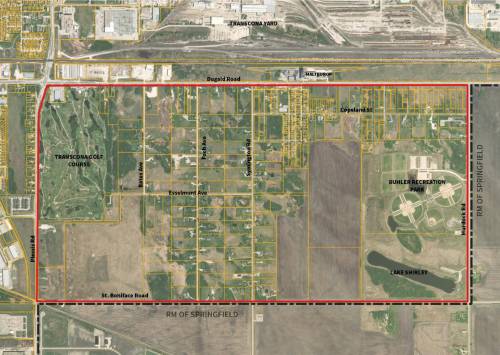
Dozens of Winnipeggers fear plans to make way for up to 20,000 more people to live in south Transcona would dramatically alter their neighbourhood and tie hefty fees for new services to their property titles.

If city council adopts the proposed South Transcona secondary plan, all future development applications would need to conform to its goals. The affected area is located south of Dugald Road, north of St. Boniface Road, east of Plessis Road and west of Murdock Road.

Homeowner Virginia Page Jähne fears the plan could add a massive tab to the title of her 4.3-acre property to cover services required for the development.

“My main concern is that they are wanting to put $1.4 million onto my title to pay for this. Now, they say that I will not have to pay it unless I subdivide. But if a person comes by and wants to buy from me … and they see that $1.4 million … what’s the first thing (they’re) going to do?” said Page Jähne, in an interview.

Read
6:15 PM CDT