Communities celebrate Passover together
Interfaith Seder will be held at Congregation Shaarey Zedek
Advertisement
Read this article for free:
or
Already have an account? Log in here »
To continue reading, please subscribe:

Digital Subscription
One year of digital access for only $205*
- Enjoy unlimited reading on winnipegfreepress.com
- Read the E-Edition, our digital replica newspaper
- Access News Break, our award-winning app
- Play interactive puzzles
*First annual payment billed as $205.00 + GST for one year. This annual subscription will automatically renew at $233.00 + GST every 52 weeks (10% off the regular annual price of $259.35). Offer available to new and qualified returning subscribers only. Cancel any time.
To continue reading, please subscribe:
Add Free Press access to your Brandon Sun subscription for only an additional
$1 for the first 4 weeks*
- Enjoy unlimited reading on winnipegfreepress.com
- Read the E-Edition, our digital replica newspaper
- Access News Break, our award-winning app
- Play interactive puzzles
*Your next Brandon Sun subscription payment will increase by $1.00 and you will be charged $17.95 plus GST for four weeks. After four weeks, your payment will increase to $24.95 plus GST every four weeks.
Read unlimited articles for free today:
or
Already have an account? Log in here »
For the 30th year, dozens of Winnipeggers representing diverse religious groups will sit down together, not to break bread, but to break matzah, at the annual B’nai Brith Canada-sponsored interfaith model Passover Seder.
B’nai Brith is a human rights organization and the interfaith Seder is one of many advocacy, education and anti-defamation programs that it regularly sponsors in Winnipeg.
This year the interfaith Seder will be held at Congregation Shaarey Zedek on March 18, two weeks prior to the start of the eight day Passover holiday, which begins on the evening of April 1.
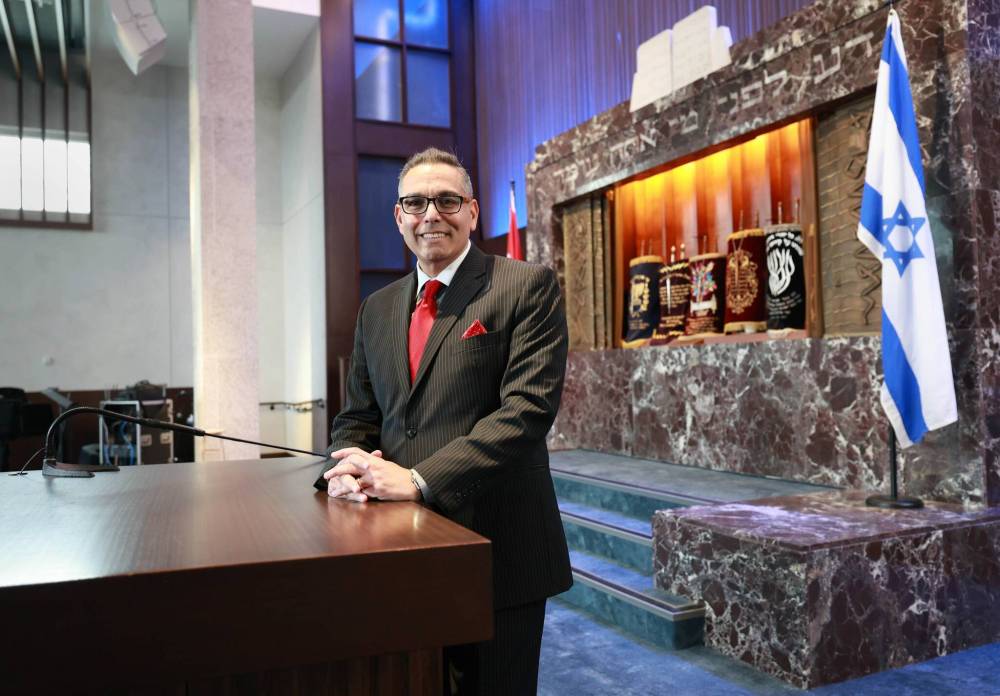
Ruth Bonneville / Free Press files
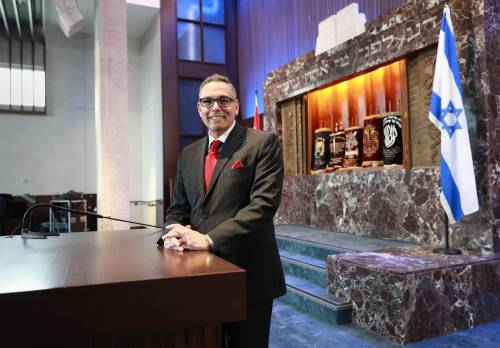
‘There seems to be tremendous interest in the Seder,’ says Rabbi Carnie Rose, one of the Shaarey Zedek clergy who will be leading the Seder.
Passover, or Pesach, celebrates the Israelites’ liberation from slavery in Egypt circa 1446 BC. The Passover Seder is a ritual meal that follows 15 steps outlined in the Haggadah, the holiday’s liturgical text. That text consists of questions, songs, readings, recitations and rabbinical commentaries, all designed to encourage participants to fully understand and appreciate the Exodus narrative and the gift of freedom.
“The Interfaith Seder is intentionally welcoming people of all faiths, cultures and backgrounds, reflecting the shared values of freedom, dignity and community,” explains Ruth Ashrafi, B’nai Brith’s Manitoba regional director. “It is an opportunity for people from very different backgrounds to meet and get to know each other. It is a safe place to ask questions and to learn.”
Inclusive and interactive, the Seder is a much anticipated and increasingly popular annual event that, this year, is expected to attract 200 participants from the Jewish, Muslim, Christian, Hindu and First Nations communities.
“There seems to be tremendous interest in the Seder,” says Rabbi Carnie Rose, one of the Shaarey Zedek clergy who will be leading the Seder. “It is such a nice thing to see in this day and age when there has been so much tension in our community.”
The interfaith Seder, he continues, provides an opportunity for its hosts to showcase the beauty of Jewish tradition while inviting others to share in that beauty.
At the same time, the Seder provides a unique platform for reflection and the enhancing of dialogue and understanding among people with different beliefs, customs and cultures.
That is part of what has drawn Fr. Mark Filips, the Priest Chaplain at St. Paul’s College at the University of Manitoba, to chair the interfaith model Seder committee and bring a delegation of students, faculty and alumni with him to the event.
“There are numerous benefits to interfaith dialogue, such as fostering peace, reducing prejudice and encouraging collaboration on shared social issues,” he says.
Additionally, the fact that the Passover Seder is so focused on the concept of freedom, lends it a universality that, both Filips and Rose emphasize, can be appreciated by all people regardless of their religious convictions.
“Beyond the tradition, which is beautiful, the Exodus narrative resonates with everyone because it speaks to the human desire for liberation,” Filips says.
Rose echoes that sentiment with a rhetorical question.
“Who doesn’t want to talk about freedom and liberation and that all people should be free?” he asks. “The symbols of the seder transcend and are meant for the world at large.”
Those symbols, typically displayed on a decorative centrepiece Seder plate, but also consumed intermittently in the course of the Seder, include bitter herbs representing the harshness and humiliation of captivity and forced labour, salt water representing the tears of the slaves, and a green vegetable representing the promise of spring and renewal. Matzah, the unleavened bread that the Israelites hastily baked as they were fleeing Egypt, is the fundamental symbolic food of the ritual meal and represents both affliction and liberation.

Whether guests at the model Seder will be tasting matzah for the first time or for the 30th time, they will be participating in an ancient ritual that for generations has united the Jewish people, reminded them of their suffering under slavery, their exaltation in their emancipation, and their responsibility to advocate for all other people who are not yet free.
Simultaneously, by tasting the matzah in the company of new friends of different faiths, participants in Winnipeg’s unique multi-religious Seder, will be setting an example worthy of being replicated around the world.
“The ability to come together as faith communities,” Rose says, “is just a wonderful moment in time to rededicate ourselves to what I think is special about Canada, which is the multiculturalism.”
“And with us being right in the middle of the country,” he continues, “hopefully all the things we create here in terms of brotherhood and sisterhood and a sense of fealty with one another will spread out from the centre to the rest of the country and beyond.”
swchisvin@gmail.com
The Free Press is committed to covering faith in Manitoba through our Religion in the News project. This reporting continues because readers like you step forward to fund it.
Donate now to support our reporting on religion.
Your donation is eligible for a charitable tax receipt.
BECOME A FAITH JOURNALISM SUPPORTER
The Free Press acknowledges the financial support it receives from members of the city’s faith community, which makes our coverage of religion possible.