

In Winnipeg, change has to come
Advertisement
Read this article for free:
or
Already have an account? Log in here »
To continue reading, please subscribe:
Monthly Digital Subscription
$1 per week for 24 weeks*
- Enjoy unlimited reading on winnipegfreepress.com
- Read the E-Edition, our digital replica newspaper
- Access News Break, our award-winning app
- Play interactive puzzles
*Billed as $4.00 plus GST every four weeks. After 24 weeks, price increases to the regular rate of $19.95 plus GST every four weeks. Offer available to new and qualified returning subscribers only. Cancel any time.
Monthly Digital Subscription
$4.99/week*
- Enjoy unlimited reading on winnipegfreepress.com
- Read the E-Edition, our digital replica newspaper
- Access News Break, our award-winning app
- Play interactive puzzles
*Billed as $19.95 plus GST every four weeks. Cancel any time.
To continue reading, please subscribe:
Add Free Press access to your Brandon Sun subscription for only an additional
$1 for the first 4 weeks*
*Your next subscription payment will increase by $1.00 and you will be charged $16.99 plus GST for four weeks. After four weeks, your payment will increase to $23.99 plus GST every four weeks.
Read unlimited articles for free today:
or
Already have an account? Log in here »
Winnipeg has long wrestled with a contradiction it can no longer afford to ignore.
We say we want a greener city, lower taxes, vibrant neighbourhoods and affordable housing. Yet when concrete proposals arrive to add homes within the existing city — especially in established neighbourhoods — the reflex is often resistance.
The proposed four-storey mixed-use development at 1460 Corydon Ave. is a case in point. A one-storey former bank branch would be replaced with a bakery and cafe at street level and 20 residential units above. It is precisely the kind of development the city needs; modest density on a major artery, close to transit, services and jobs.
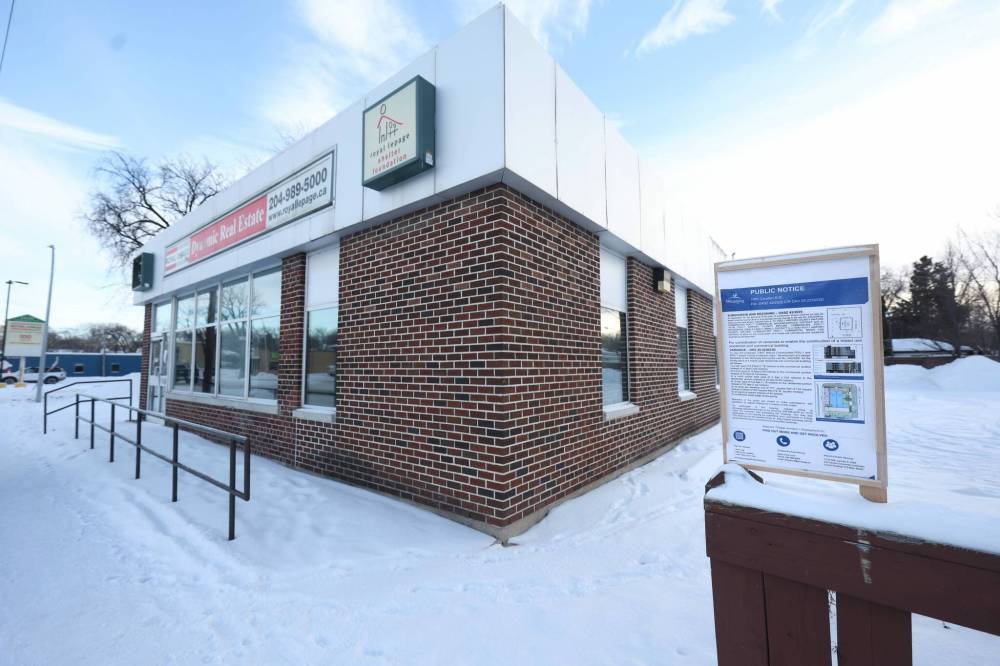
Ruth Bonneville / Free Press
1460 Corydon Ave.
And yet, as has become almost routine, nearby residents have organized to oppose it.
The concerns raised by the Stop 1460 Corydon Avenue group are familiar. Fears about shadows, parking, privacy, neighbourhood “fit” and property values are all being aired. Residents argue the building should be reduced to two storeys to better match the surrounding context.
These concerns deserve to be heard — but they should not be allowed to veto the city’s future.
Winnipeg is facing a housing shortage. Rents are rising and vacancy rates remain tight. Affordable housing is especially scarce.
At the same time, the costs of servicing new subdivisions on the edge of the city continue to balloon, putting pressure on property taxes and municipal finances.
The answer cannot be endless outward growth. Urban sprawl is expensive, inefficient and environmentally damaging. It locks residents into car dependency, stretches infrastructure thin and hollows out older neighbourhoods.
The city’s own long-term planning document, Our Winnipeg 2045, recognizes this reality. It calls for increasing residential capacity in mature communities by up to 50 per cent over the next two decades, particularly along major corridors like Corydon Avenue. That goal is not radical; it is necessary.
Four storeys is not a skyscraper. Mixed-use buildings with shops at street level and apartments above are a hallmark of healthy, walkable cities.
Corydon already has examples — including the development at 1100 Corydon with Stella’s Cafe and Kevin’s Bistro — that have become well-used neighbourhood amenities rather than blights.
Architect Pedro Chagas, who also lives nearby, has made clear efforts to address specific impacts: recessed balconies, stepped-back upper floors, attention to sight lines and sunlight. These are reasonable design responses, not the dismissive posture critics sometimes fear from developers.
The argument that the planning process is “stacked” against residents also needs perspective. Public engagement is important, but it cannot mean that those who already own property effectively control who gets to live in a neighbourhood next. Cities exist to serve current and future residents alike — including those who do not yet have a home.

NIMBYism — “not in my backyard” — is not unique to Winnipeg, but it has been particularly effective here in slowing or watering down needed housing. If every proposal must perfectly match what already exists, nothing will ever change. And if nothing changes, the costs will be borne by renters, first-time buyers and younger generations priced out of the city’s most livable areas.
Parking shortages and traffic impacts are legitimate issues, but they too must be weighed realistically. Not every new resident owns a car. Developments on major routes are exactly where reduced parking ratios make sense, especially as the city works to improve transit and active transportation.
Winnipeg does not need to choose between livable neighbourhoods and growth. Thoughtful density can enhance communities, support local businesses and keep the city financially sustainable.
The Corydon proposal will not be the last of its kind. Nor should it be. The city must have the courage to follow through on its own plans, even when change is uncomfortable.
Density is not the enemy. Pretending Winnipeg can stand still is.