Body’s signals to brain worth heeding for health

Advertisement

Advertise with us

The erosion of the relationship between science communication and the general public became increasingly evident during the COVID-19 pandemic. Part of this is no doubt due to a numbness caused by the popular media barrage of new cancer and disease cures, if not the end of aging itself.

Read this article for free:


By clicking the button above, an account will be created and you will begin to receive some of our recommended newsletters. You may opt out of any newsletter by visiting your Email and Communication Preferences page or by clicking "unsubscribe" at the bottom of any email.

or

Already have an account? Log in here »

To continue reading, please subscribe:

Digital Subscription

One year of digital access for only $1.44 a week*

  • Enjoy unlimited reading on winnipegfreepress.com
  • Read the E-Edition, our digital replica newspaper
  • Access News Break, our award-winning app
  • Play interactive puzzles

*Billed as $5.77 plus GST every four weeks. After 52 weeks, price increases to the regular rate of $19.95 plus GST every four weeks. Offer available to new and qualified returning subscribers only. Cancel any time.

To continue reading, please subscribe:

Add Free Press access to your Brandon Sun subscription for only an additional

$1 for the first 4 weeks*

  • Enjoy unlimited reading on winnipegfreepress.com
  • Read the E-Edition, our digital replica newspaper
  • Access News Break, our award-winning app
  • Play interactive puzzles
Start now

*Your next Brandon Sun subscription payment will increase by $1.00 and you will be charged $17.95 plus GST for four weeks. After four weeks, your payment will increase to $24.95 plus GST every four weeks.

Hey there, time traveller!
This article was published 29/11/2025 (321 days ago), so information in it may no longer be current.

The erosion of the relationship between science communication and the general public became increasingly evident during the COVID-19 pandemic. Part of this is no doubt due to a numbness caused by the popular media barrage of new cancer and disease cures, if not the end of aging itself.

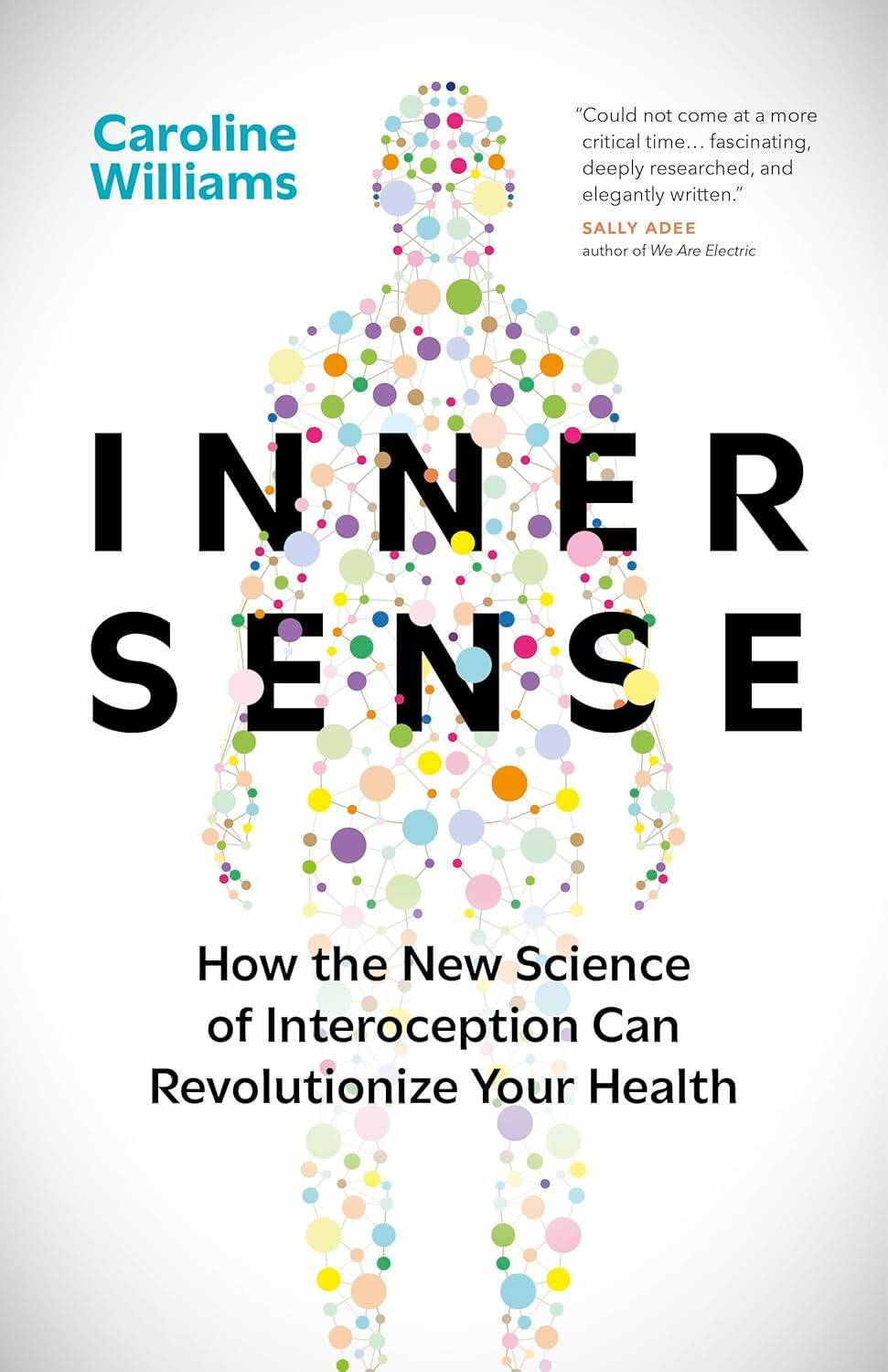
Caroline Williams is a seasoned translator of neuroscience into accessible language. In Inner Sense, her study of interoception traces the history of a niche scientific field as well as potential future vistas.

Interoception refers to signals arising from the body and communicated to the brain — perceptions of fullness, feelings of worry and respiration rates are familiar examples. When heeded and correctly interpreted, interoception keys us to shifts away from homeostasis towards incipient illness and dangers. Williams heralds research into interoception as one of the most significant areas of study to emerge in science and medicine in many years.
Inner Sense

Inner Sense

Interoceptive ability varies by individuals, but is trainable. Improvements can influence our behaviour to foster greater health resiliency and energy and to reduce stress. Research may offer insights into treatments for arthritis, fatigue, depression and many other maladies; these interventions range from developing heart-rate awareness to more invasive surgical procedures.

An accessible writer, Williams articulates the complicated nuance of signaling pathways and digestive physiology into compelling narrative. AI (artificial intelligence) research, she notes, begins with the brain and often ends absent any sense of body, demonstrating an ongoing obliviousness to the body’s interdependent nature.

Whatever its strengths, Inner Sense feels like it was written too early and too narrowly. Despite promises of an accessible health revolution, concrete advice oscillates between easy fixes and a strange, privileged valorization of technology. We’re encouraged to take a bath, laugh, eat whole foods, try yoga, to spend more (or less) time with others.

Further afoot from banally familiar health advice, Williams suggests we consider wearable technology to track biometrics. She seems largely unaware of both the cost and imprecision of smart devices when tracking data as basic as heart-rate variability, a marker of stress. Anything truly new is left to an uncertain scientific future.

That the brain and body are interconnected is a keystone of Williams’ pitch. For all the energy expended supporting this thesis, it’s novel in neither the world of science or philosophy. Her lack of awareness of context and even culture bleeds into other areas. Many meditative practices are intimately linked to interoceptive awareness, but they get shorter shrift than, say, costly sensory deprivation tanks.

Buddhism, which has rich cultural histories exploring many of the same key concepts, is never mentioned.

Inner Sense frequently reads like a breathless announcement to a Canadian that recreation may be possible on ice surfaces.

Williams is confident that the nature of the self has been resolved through neuroscience — certainly not a unanimous opinion. Addiction is treated with some delicacy, but the focus on the role of interoception is so strong that history, cultural or personal, is largely effaced.

Inner Sense becomes increasingly scattershot in its final section, identifying the possibility of interoception as critical to avoiding online scammers and navigating conflict. At best Williams is being darkly humorous when she notes its role in surviving climate change so that we’re aware of the need for shade and water in a rapidly warming world.

While interoception is an important area of research, so is understanding complex phenomena within cultural and historical contexts. Science is crucial to meeting present-day challenges, but public communication of its findings, tentative as they be, is imperative.

The near-frantic sales pitch of Inner Sense promises too much and delivers too little. It’s almost enough to quicken the pulse.

Jarett Myskiw is a teacher.
Report Error Submit a Tip

More Stories

Group’s second LP made to get hearts racing

By Sheldon Birnie 6 minute read Preview

Group’s second LP made to get hearts racing

By Sheldon Birnie 6 minute read 2:00 AM CDT

While a live performance is a moment in time that comes and goes, a record is something that, ostensibly, lives on.

Both are important, often complementary methods of artistic expression for any band of musicians, not the least independent local artists carving out names for themselves in the dark heart of the continent.

Claire Thérèse & the Lockdown are celebrating the vinyl release of Racing Heart, its second full-length LP, with a gig tonight at Public Domain. The group’s last full-length record, Villainy!, was released in 2022.

“For me, this seems like perfect timing,” says Thérèse, primary vocalist and songwriter in the group. “This album has been done for almost two years now. I don’t even know if I would call it procrastination, (but) there are just those steps that one needs to take to actually release something into the world, and that’s how long it has taken me.”

Read
2:00 AM CDT

Ontario’s top court paves way to reopen challenge of Hamilton’s anti-encampment law

Jordan Omstead, The Canadian Press 3 minute read Preview

Ontario’s top court paves way to reopen challenge of Hamilton’s anti-encampment law

Jordan Omstead, The Canadian Press 3 minute read Friday, Oct. 9, 2026

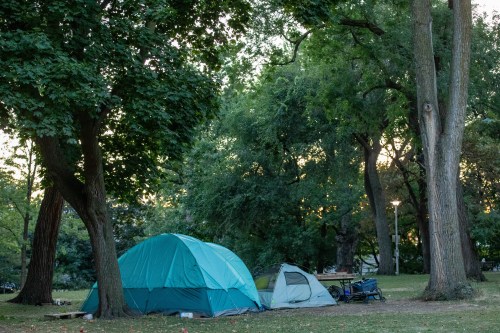
A challenge to Hamilton’s anti-encampment bylaw was revived on Friday by Ontario’s top court, after a panel of appeal judges found the lower court relied on stereotypes to discount the testimony of some homeless residents. 

The Ontario Court of Appeal left the constitutionality of the bylaw and the city’s enforcement practices for a new trial judge to decide. 

The challenge was brought by 14 encampment residents who argued their evictions and the city's bylaw that blocks sleeping in parks were unconstitutional. It's among a number of court cases in Canada to grapple with whether a city can clear an encampment when there's no viable alternative place to shelter and city-run sites are filled up. 

The Appeal Court's unanimous ruling found the trial judge's rejection leaned heavily on his finding that none of those evictions had taken place overnight, contrary to the testimony of several residents. 

Read
Friday, Oct. 9, 2026

St. Boniface University wrestles with appalling Indigenous history

Niigaan Sinclair 6 minute read Preview

St. Boniface University wrestles with appalling Indigenous history

Niigaan Sinclair 6 minute read Friday, Nov. 1, 2019

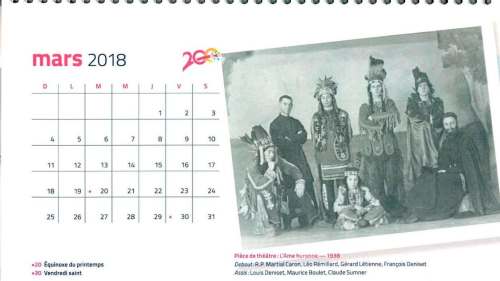
To mark its 200th anniversary in 2018, the l'Université de Saint-Boniface produced a calendar that honours its history. The month of March featured a large photograph from 1938 of a priest and student actors, who were dressed as “Indians,” from a play called L'âme huronne (The Huron Soul).

The play tells of the “good” Christians struggling with witches, the devil, and Indians. It has nothing to do with actual Indigenous peoples but the fantasies and desires non-Indigenous peoples invent about Indigenous peoples. None of the actors was “Indian” – although some are named Boulet, Caron and Sumner, which are names Indigenous peoples have today.

In fact, I know none of these actors was “Indian” because in 1938 it was illegal to wear traditional clothing in public (it wasn't legal until 1951, for the anniversary of the Calgary Stampede).

In the calendar, there is no context, no explanation about how things have “changed,” or much else; and no real reason to “honour” this history at all.

Read
Friday, Nov. 1, 2019

First Nations should not have to defend truth of residential schools

Kyra Wilson 5 minute read Preview

First Nations should not have to defend truth of residential schools

Kyra Wilson 5 minute read 2:00 AM CDT

The truth about residential schools should never have been this difficult for Canada to acknowledge. And it should never be this difficult to defend.

For generations, survivors have carried the memories of children taken from their families, the abuse they endured, the languages and cultures they were forbidden to practise, and the children who never came home. They have told their stories, often at tremendous personal cost, so Canada could no longer claim it did not know.

How many times must survivors tell their stories before the responsibility shifts from those who suffered to those who have a duty to listen and act?

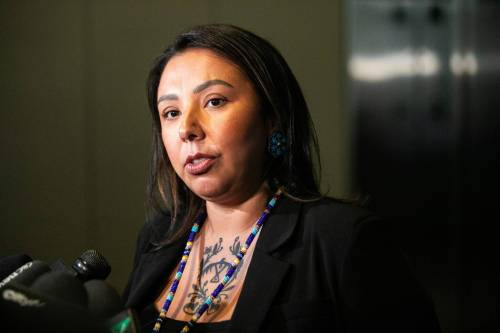
On Oct. 9, Manitoba Premier Wab Kinew said residential school denialism should not be criminalized, arguing that continued education and efforts to combat misinformation are the answer.

Read
2:00 AM CDT

Slain chef’s family infuriated by stayed charges

Morgan Modjeski 3 minute read Preview

Slain chef’s family infuriated by stayed charges

Morgan Modjeski 3 minute read Wednesday, Oct. 14, 2026

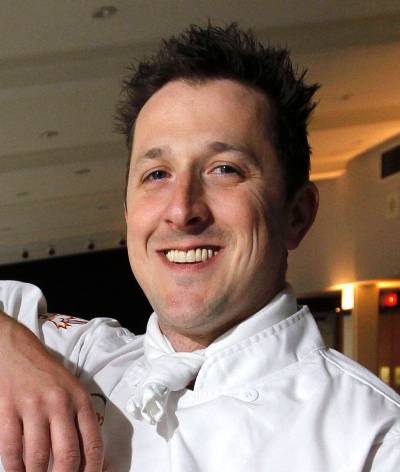
The family of a Ste. Anne chef who died after an altercation at a party says they are angry a manslaughter charge has been stayed against a 46-year-old man.

“What I’ve been told is they don’t have enough evidence to prosecute criminally because the only ones that are alive to tell the story are saying they did it in self defence,” said Jason Huley, brother of 49-year-old Cameron Huley, who died May 3.

“I’m pissed. I hate our justice system … I feel they let us down.”

Steinbach RCMP were called to a home in the RM of Ste. Anne just after 11:30 p.m. on May 2 about an assault. Cameron Huley was found suffering from serious injuries. He died hours later in hospital, police said.

Read
Wednesday, Oct. 14, 2026

Puzzles Palace

1 minute read Updated: Yesterday at 7:55 AM CDT

To solve our puzzles, please subscribe with this special offer: |