Smartphones deeply intertwined with our personal lives

Advertisement

Advertise with us

Consider for a moment the stress of misplacing your iPhone or Android device. Now compare this to 20 years ago, and how you might feel about misplacing a flip phone.

Read this article for free:


By clicking the button above, an account will be created and you will begin to receive some of our recommended newsletters. You may opt out of any newsletter by visiting your Email and Communication Preferences page or by clicking "unsubscribe" at the bottom of any email.

or

Already have an account? Log in here »

To continue reading, please subscribe:

Digital Subscription

One year of digital access for only $1.44 a week*

  • Enjoy unlimited reading on winnipegfreepress.com
  • Read the E-Edition, our digital replica newspaper
  • Access News Break, our award-winning app
  • Play interactive puzzles

*Billed as $5.77 plus GST every four weeks. After 52 weeks, price increases to the regular rate of $19.95 plus GST every four weeks. Offer available to new and qualified returning subscribers only. Cancel any time.

To continue reading, please subscribe:

Add Free Press access to your Brandon Sun subscription for only an additional

$1 for the first 4 weeks*

  • Enjoy unlimited reading on winnipegfreepress.com
  • Read the E-Edition, our digital replica newspaper
  • Access News Break, our award-winning app
  • Play interactive puzzles
Start now

*Your next Brandon Sun subscription payment will increase by $1.00 and you will be charged $17.95 plus GST for four weeks. After four weeks, your payment will increase to $24.95 plus GST every four weeks.

Hey there, time traveller!
This article was published 08/11/2025 (342 days ago), so information in it may no longer be current.

Consider for a moment the stress of misplacing your iPhone or Android device. Now compare this to 20 years ago, and how you might feel about misplacing a flip phone.

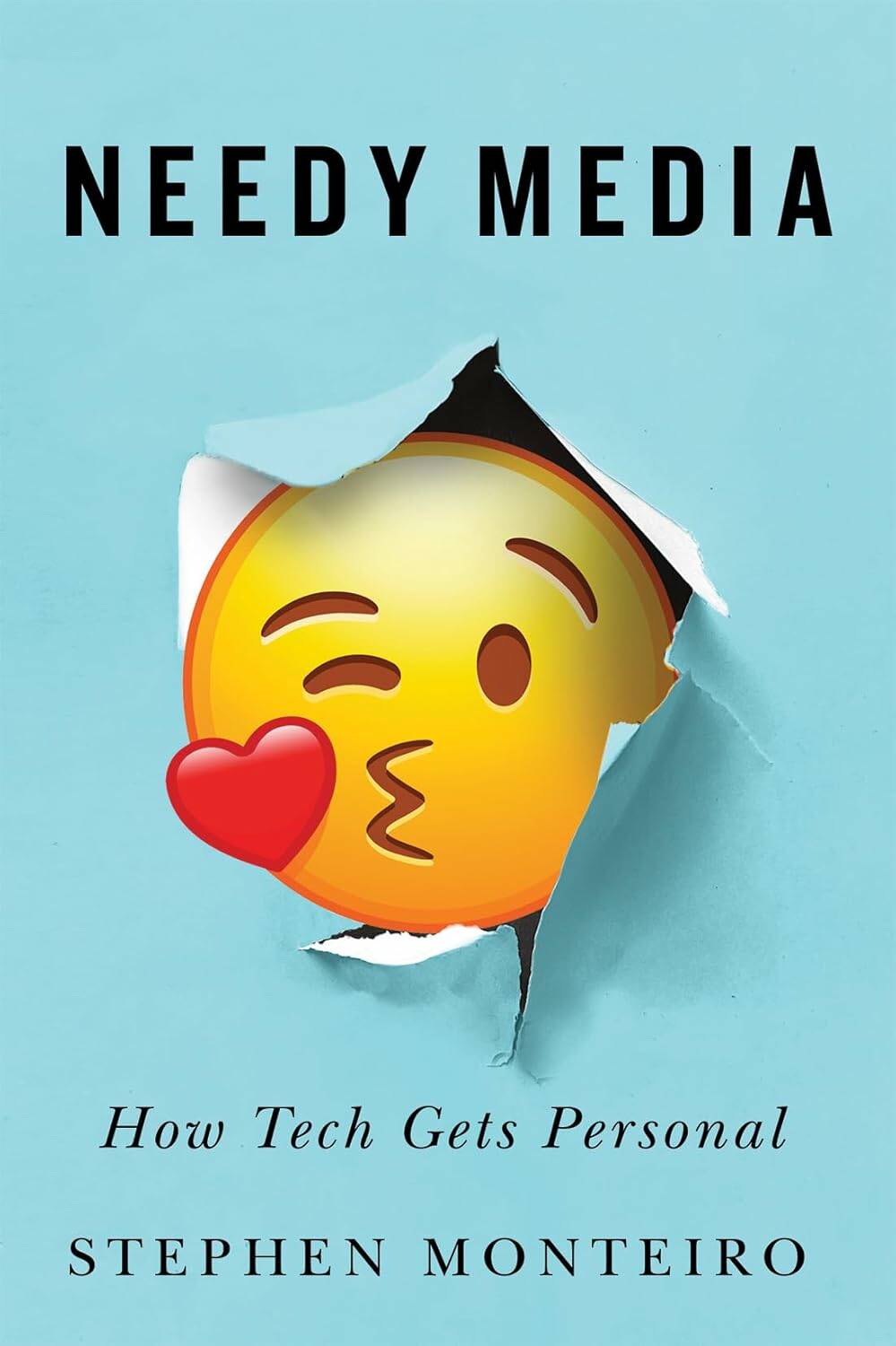
In Needy Media: How Tech Gets Personal professor Stephen Monteiro, who teaches in the department of communications at Concordia University, shows what has changed and why, illustrating how our lives are now intertwined with our personal devices. Losing one of these is much more than losing a flip phone.

Our devices now collect personal data while adjusting to our hour-by-hour activities. Like a suspicious spouse, these devices are needy; they track our activities via GPS, store our experiences through video and photos and even monitor our conversations. Depending on which apps we download, they know our musical likes and dislikes, our sleeping patterns, our calorie intake and when we exercise (or not). They also now recognize our faces and fingerprints. In other words, our personal devices have made us more “bionic” than ever before.
Needy Media

Needy Media

How did we get here? Monteiro provides a history of home computers and personal technologies. This includes hobbyists in the 1970s who purchased computer kits like the Altair 8800. These kits required a lot of effort to assemble, and often failed to work in the end. When they did function, they “computed” by the user flipping toggle switches rather than through a keyboard or mouse.

Early home computers were primarily marketed to men, often through sexist advertising. One consequence for many families was the creation of what were termed “computer widows” whose husbands were totally absorbed by their new machines.

Similar to the demise of crystal radio kits built by hobbyists in the 1920s and the rise of user-friendly radio sets in the ‘20s and ‘30s, by 1980 computer kits were replaced by desktop computers produced under such brands as Apple, Tandy and Commodore, and came out of a box ready to play.

As computer technologies advanced and started to become smaller, they shifted from the top of desks to personal, handheld devices. In the latter half of 1990s and early 2000s, professionals and business executives were widely adopting the PalmPilot and BlackBerry. Ten years later, wearable devices were becoming common, including Fitbits for the wrist to track heart rates and exercise.

One consequence of these evolving technologies is our loss of privacy; the more we use our iPhones and Android devices, the more they learn about us. “The intimacy the user develops with the device” leads to “greater dependency,” Monteiro correctly notes. Furthermore, with increased use, our personal information is transformed into something to be monetized for anonymous third-party profits. In other words, your personal life is someone else’s profit.

While the cover of Needy Media will catch many people’s eyes, Monteiro is really writing for an academic audience. He makes several references to influential theorists, including French philosopher Michel Foucault and American sociologist and psychologist Sherry Turkle, assuming the reader is familiar with their works. Furthermore, his style is sometimes hard to digest, using words and phrases like “dialogical relationship,” “dramaturgical” and “symbolic interactionism.” In short, this volume is for the serious reader.

Those seeking to follow an easier history of computers and technology should turn to Paul E. Ceruzzi’s Computing: A Concise History or Bill Gates’ entertaining autobiography Source Code: My Beginnings. However, Monteiro seeks to do more than give an account of changing technologies and computers — he shows how our phones are now inseparable from our personal worlds. They are needy indeed, absorbing our attention and serving more than one master.

Christopher Adams is an adjunct professor in the department of political science at the University of Manitoba and rector of St. Paul’s College. He recently co-edited The Keystone Province: Politics and Governance in Manitoba.


Report Error Submit a Tip

More Stories

Capital punishment as macabre theatre

Editorial 4 minute read Preview

Capital punishment as macabre theatre

Editorial 4 minute read 2:00 AM CDT

There was already enough to write about the question of capital punishment when the State of Tennessee attempted to execute Christa Pike.

Pike would have been the first woman executed in Tennessee in more than 200 years, but her execution on Sept. 30 did not go as planned — she survived, despite two lethal injections of pentobarbital, and was taken to hospital in critical condition.

Pike was released from hospital and sent back to the same prison where she has been incarcerated for the last 30 years, ever since she was convicted — as an 18-year-old — of the murder of 19-year-old Colleen Slemmer in 1995.

Pike faces a long recovery, and an uncertain one. Tennessee assistant attorney general Will Ayers has not said if the state will attempt to execute Pike again, but Gov. Bill Lee has halted all executions this year and ordered an independent review of what went wrong.

Read
2:00 AM CDT

Alberta judge rejects NDP court challenge on voter list changes

Jack Farrell, The Canadian Press 2 minute read Preview

Alberta judge rejects NDP court challenge on voter list changes

Jack Farrell, The Canadian Press 2 minute read Friday, Oct. 9, 2026

EDMONTON - 
An Alberta judge has thrown out a court challenge filed by the Opposition NDP on restricted voter list rules made by the government last month.

Court of King's Bench Justice John Gill says in his decision that the government was within its rights to restrict what private information is provided to political parties.

He also says he agrees with the government that the restrictions won't meaningfully undermine the integrity of the upcoming separation referendum.

The government's changes mean Elections Alberta can only provide political parties with the number of registered voters in each voting area and municipality, rather than lists with full names, addresses and phone numbers.

Read
Friday, Oct. 9, 2026

Explosion forces residents to evacuate Kennedy Street Manitoba Housing complex

Scott Billeck 4 minute read Preview

Explosion forces residents to evacuate Kennedy Street Manitoba Housing complex

Scott Billeck 4 minute read Monday, Apr. 20, 2026

Residents of an inner-city high-rise say they were forced to evacuate Monday afternoon after explosions blew out a window on the eighth floor.

Darrell Klassen, who lives on the top floor of the 16-storey Manitoba Housing apartment complex at 444 Kennedy St., said he heard several blasts before noticing the smell of smoke.

“The elevators were shut down, so we had to take the stairwells,” Klassen said. “Both stairwells were full of smoke, so I had to mask up and put a wet cloth over my face.”

Klassen said the incident marks the seventh fire in as many years, adding that many are linked to drug activity.

Read
Monday, Apr. 20, 2026

Letters, Oct. 16

6 minute read 2:00 AM CDT

Concern over closure

As advocates for seniors in Manitoba, CARP Manitoba (Canadian Association of Retired Persons) is deeply concerned about the closure of the Lions Club Charleswood Adult Day Club.

This closure will have a significant impact on seniors in the community who rely on the Adult Day Club for social connection, companionship, meaningful activities and stimulation. It will also place additional pressure on other Adult Day Clubs throughout the city, many of which are already experiencing increased demand and are now being required to establish waiting lists.

Families of affected seniors are understandably concerned that, without access to this important community-based support, their loved ones may eventually require admission to personal care homes. Adult Day Clubs play an important role in helping seniors remain independent, connected to their communities and living in their own homes for as long as possible.

St. Boniface University wrestles with appalling Indigenous history

Niigaan Sinclair 6 minute read Preview

St. Boniface University wrestles with appalling Indigenous history

Niigaan Sinclair 6 minute read Friday, Nov. 1, 2019

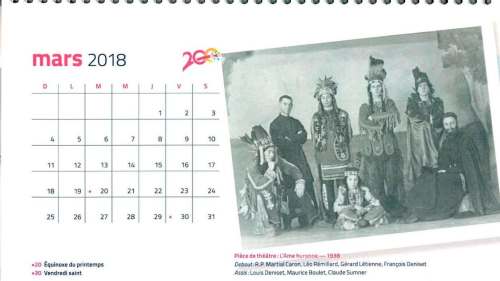
To mark its 200th anniversary in 2018, the l'Université de Saint-Boniface produced a calendar that honours its history. The month of March featured a large photograph from 1938 of a priest and student actors, who were dressed as “Indians,” from a play called L'âme huronne (The Huron Soul).

The play tells of the “good” Christians struggling with witches, the devil, and Indians. It has nothing to do with actual Indigenous peoples but the fantasies and desires non-Indigenous peoples invent about Indigenous peoples. None of the actors was “Indian” – although some are named Boulet, Caron and Sumner, which are names Indigenous peoples have today.

In fact, I know none of these actors was “Indian” because in 1938 it was illegal to wear traditional clothing in public (it wasn't legal until 1951, for the anniversary of the Calgary Stampede).

In the calendar, there is no context, no explanation about how things have “changed,” or much else; and no real reason to “honour” this history at all.

Read
Friday, Nov. 1, 2019

Today’s horoscope

Georgia Nicols 4 minute read Preview

Today’s horoscope

Georgia Nicols 4 minute read Yesterday at 2:00 AM CDT

MOON ALERT: Avoid shopping (except food and gas) or important decisions for the rest of the day after 4:30 p.m. The moon is in Sagittarius.

ARIES (March 21-April 19)

This is a wonderful day to expand your world by learning something exciting that broadens your view of life. You might enjoy a vacation or even feel like you’re on holiday. Activities with children, sporting events and the arts will delight.

TAURUS (April 20-May 20)

Read
Yesterday at 2:00 AM CDT