Extreme heat represents a new threat to trees and plants in the Pacific Northwest

Advertisement

Advertise with us

PORTLAND, Ore. (AP) — From June 25 to July 2, 2021, the Pacific Northwest experienced a record-breaking heat wave that sent the normally temperate region into Death Valley-like extremes that took a heavy toll on trees as well as people.

Read this article for free:


or

Already have an account? Log in here »

To continue reading, please subscribe:

Subscribe and receive a limited-edition Free Press branded hat or tote.

Digital Subscription

One year of digital access for only $205*

  • Enjoy unlimited reading on winnipegfreepress.com
  • Read the E-Edition, our digital replica newspaper
  • Access News Break, our award-winning app
  • Play interactive puzzles

*First annual payment billed as $205.00 + GST for one year. This annual subscription will automatically renew at $233.00 + GST every 52 weeks (10% off the regular annual price of $259.35). Offer available to new and qualified returning subscribers only. Cancel any time.

To continue reading, please subscribe:

Add Free Press access to your Brandon Sun subscription for only an additional

$1 for the first 4 weeks*

  • Enjoy unlimited reading on winnipegfreepress.com
  • Read the E-Edition, our digital replica newspaper
  • Access News Break, our award-winning app
  • Play interactive puzzles
Start now

*Your next Brandon Sun subscription payment will increase by $1.00 and you will be charged $17.95 plus GST for four weeks. After four weeks, your payment will increase to $24.95 plus GST every four weeks.

Hey there, time traveller!
This article was published 21/12/2023 (1007 days ago), so information in it may no longer be current.

PORTLAND, Ore. (AP) — From June 25 to July 2, 2021, the Pacific Northwest experienced a record-breaking heat wave that sent the normally temperate region into Death Valley-like extremes that took a heavy toll on trees as well as people.

Seattle and Portland, Ore., recorded their hottest-ever temperatures, reaching 108 degrees Fahrenheit (42.2 Celsius) and 116 Fahrenheit (46.6 Celsius), respectively. In British Columbia, the small town of Lytton reached 121 degrees Fahrenheit (49.6 Celsius).

What become known as the “heat dome” is estimated to have killed hundreds of people in Oregon, Washington and British Columbia.
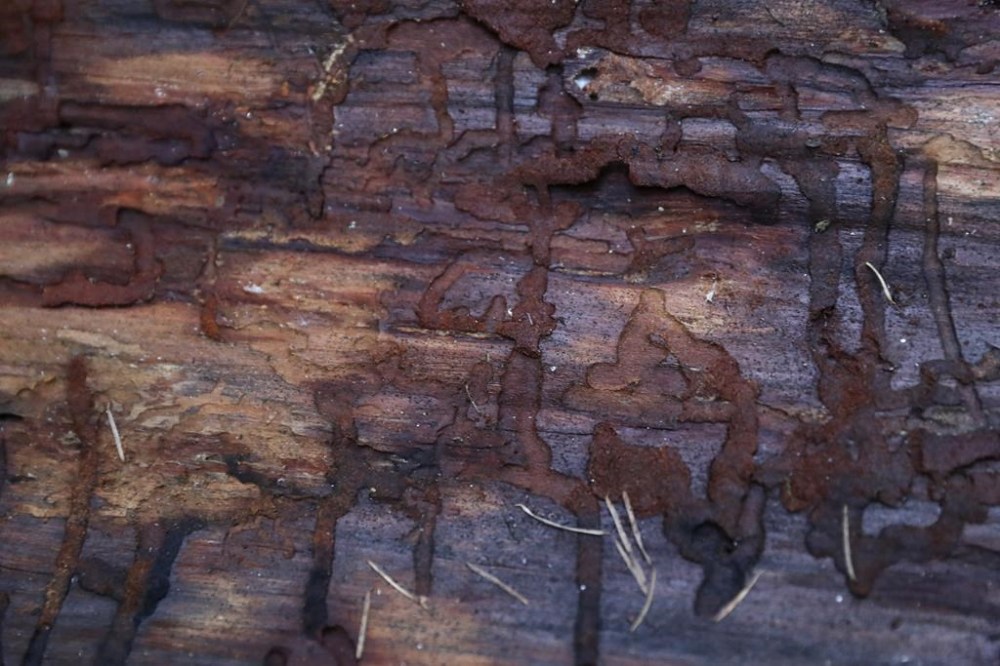
Douglas fir tree bark is studied by scientists to examine insect damage that led to the tree's death following heat stress in the Willamette National Forest, Ore., Friday, Oct. 27, 2023. Scientists are investigating what they say is a new, woefully underestimated threat to the world’s plants: climate change-driven extreme heat. (AP Photo/Amanda Loman)

As this human tragedy unfolded, a lesser-known ecological tragedy was happening, one that scientists warn has grim repercussions for the world’s plants and the many animal species that depend on them.

In a matter of a few days, the 2021 heat dome turned many of the green leaves and needles on the region’s trees to orange, red and brown.

But, as recent research suggests, tree foliage didn’t simply dry out in the heat. Instead, it underwent “widespread scorching.”

“A lot of this reddening and browning of leaves was just that the leaves cooked. It really wasn’t a drought story,” said Chris Still, professor at Oregon State University’s College of Forestry and a leading researcher on the effects of heat on trees.

Still is part of a growing number of scientists investigating what they say is a new, woefully underestimated threat to the world’s plants: climate change-driven extreme heat.
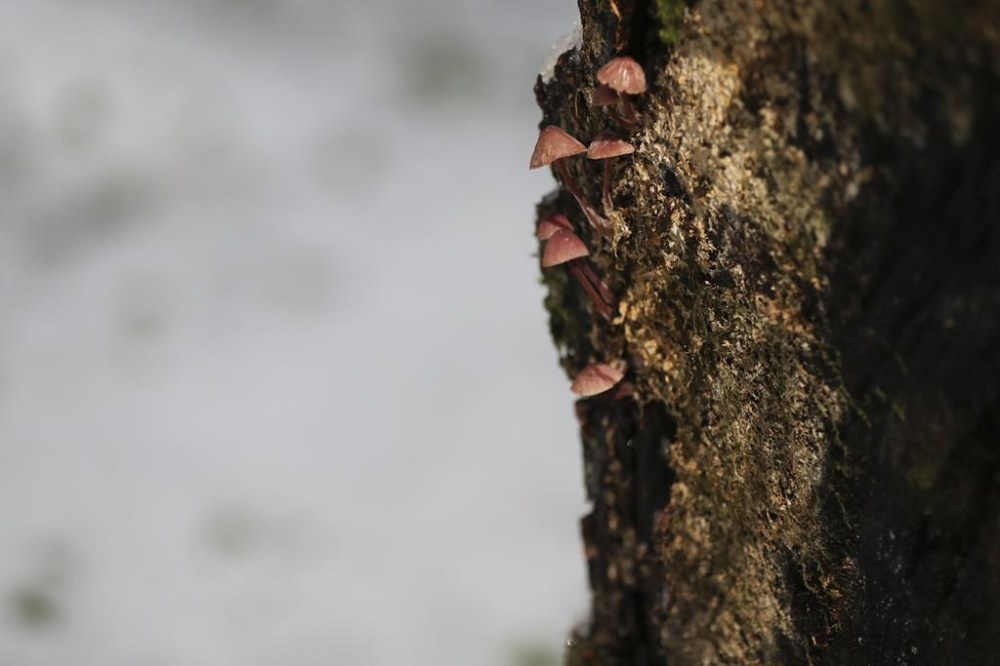
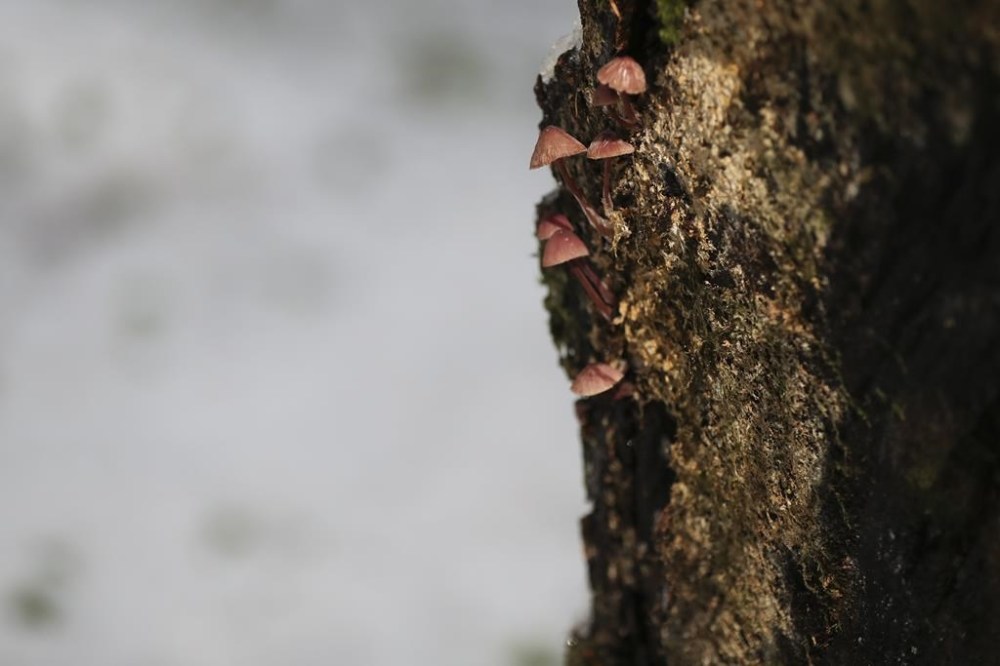
Mushrooms grow on a fallen Noble fir tree in the Willamette National Forest, Ore., Friday, Oct. 27, 2023. Scientists are investigating what they say is a new, woefully underestimated threat to the world’s plants: climate change-driven extreme heat. (AP Photo/Amanda Loman)

——

EDITOR’S NOTE: This story is part of a collaboration between The Associated Press and Columbia Insight, exploring the impact of climate on trees in the Pacific Northwest.

——

In recent years, scientists in the Pacific Northwest have linked the decline of 10 native tree species to drought.

In many cases, conditions that have brought about the decline are known as “hot droughts.”
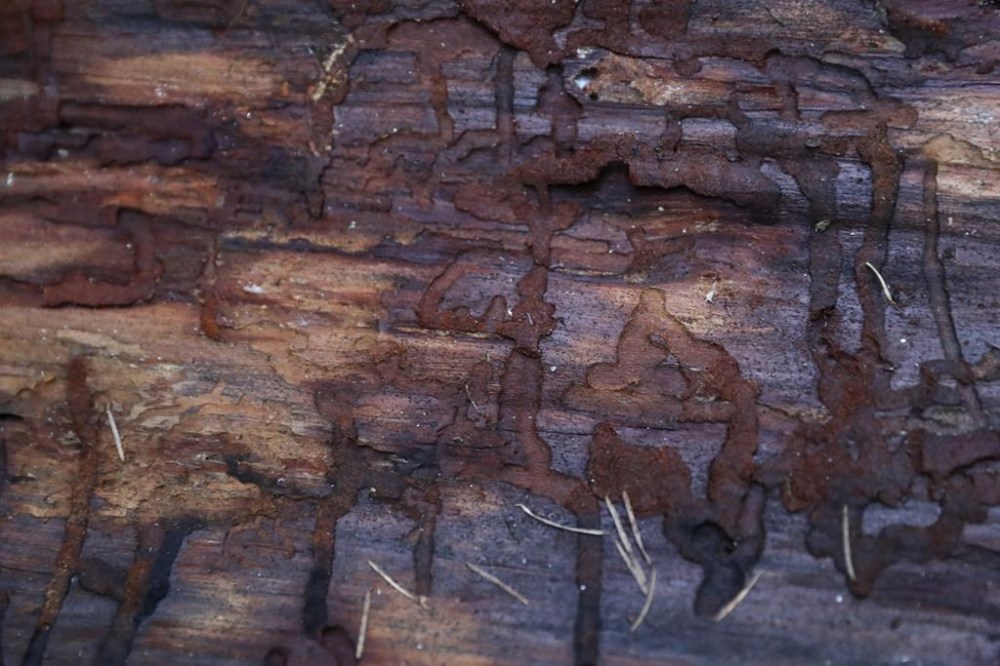
Douglas fir tree bark is studied by scientists to examine insect damage that led to the tree's death following heat stress in the Willamette National Forest, Ore., Friday, Oct. 27, 2023. Scientists are investigating what they say is a new, woefully underestimated threat to the world’s plants: climate change-driven extreme heat. (AP Photo/Amanda Loman)

Driven by above-normal temperatures, hot droughts can be far more damaging to trees than droughts that result simply from a lack of moisture. Hot droughts not only dry out soil; they also dry out the air. This stresses trees, and can cause water-carrying tissues inside them to collapse — a process called “hydraulic failure.”

In a paper earlier this year in the journal Tree Physiology, Still made the case that damage to the region’s trees during the heat dome was triggered primarily by direct damage from heat and solar radiation rather than indirectly by drought caused by the extreme heat.

“I’m not trying to say that drought is not a huge and important factor,” said Still. “But I think with events like the 2021 heat wave becoming more common and intense, it’s important to look at the response of trees and other plants to these events and not just at drought, which has been the dominant paradigm.”

Still’s argument includes the observation that “foliage scorch” was primarily found on the southern and western sides of trees and forests — a pattern that follows the track of the sun across the summer sky.

“Basically, it was like a sunburn across the entire forest. It was quite disturbing,” said co-author Daniel DePinte, U.S. Forest Service aerial survey program manager, who observed the phenomenon from an airplane.

Douglas fir tree bark is studied by scientists to examine insect damage that led to the tree's death following heat stress in the Willamette National Forest, Ore., Friday, Oct. 27, 2023. Scientists are investigating what they say is a new, woefully underestimated threat to the world’s plants: climate change-driven extreme heat. (AP Photo/Amanda Loman)

Multiple tree species were scorched, DePinte said, noting that the role played by the sun became clear when the same trees were viewed from an orientation not exposed to direct sunlight.

“It almost appeared as if the forest damage disappeared,” he said.

The paper was written in response to an earlier study published in the same journal that argued a different position: that the heat dome led to widespread drought stress and hydraulic failure in Pacific Northwest trees. “Overall I agree … that heat damage played a big role in the damage caused to trees (during) the 2021 PNW heat wave. But in my view, hydraulic failure was as important, if not more,” wrote that study’s lead author Tamir Klein, professor of plant and environmental sciences at the Weizmann Institute of Science in Rehovot, Israel.

Exactly how hot is too hot for trees and other plants is the research focus of William Hammond, a plant ecophysiologist at the University of Florida.

Hammond called the scientific community’s current understanding of extreme heat’s effect on plants a worrying “blind spot.”
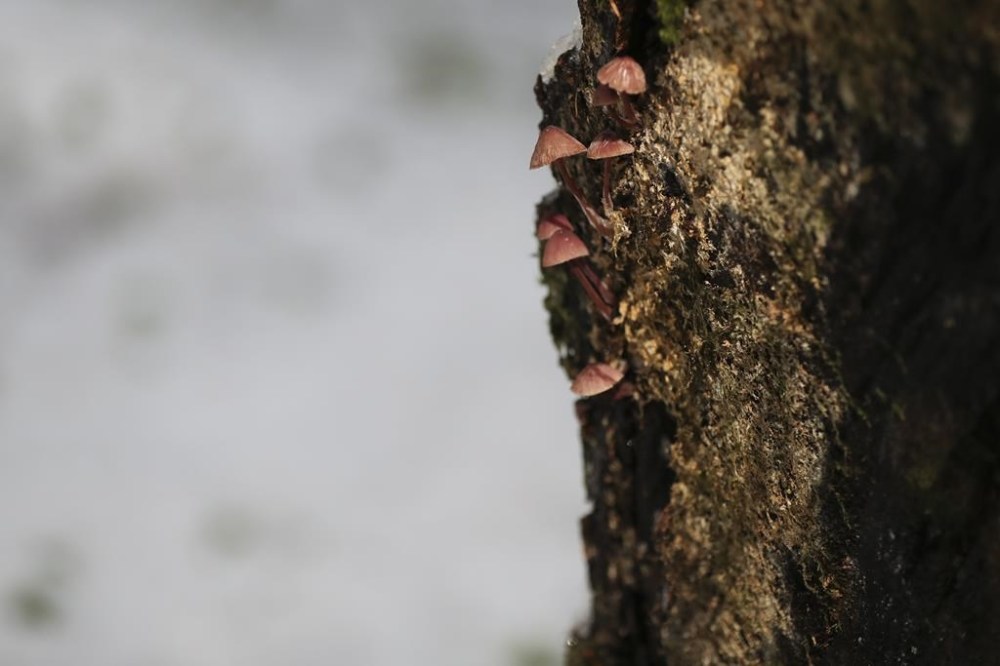
Mushrooms grow on a fallen Noble fir tree in the Willamette National Forest, Ore., Friday, Oct. 27, 2023. Scientists are investigating what they say is a new, woefully underestimated threat to the world’s plants: climate change-driven extreme heat. (AP Photo/Amanda Loman)

“One thing is for sure, we know a lot more about how dry is too dry for plant survival than we know about how hot is too hot,” he said.

What scientists call “thermal tolerances” have been established for just 1,028, or less than 1%, of the world’s 330,200 recognized land-based plants, according to a frequently cited 2020 paper in The Proceedings of the National Academy of Sciences.

No single thermal limit fits all plant species, but in general extreme damage to plant tissues occurs around 122 degrees Fahrenheit (50 Celsius), Hammond said.

“With those temperatures you might think ‘wow, the air doesn’t get that hot,’ but that’s the temperature of the plant, not the temperature of the air. And those things can be quite different,” he said.

Just how different is something Still has been tracking.
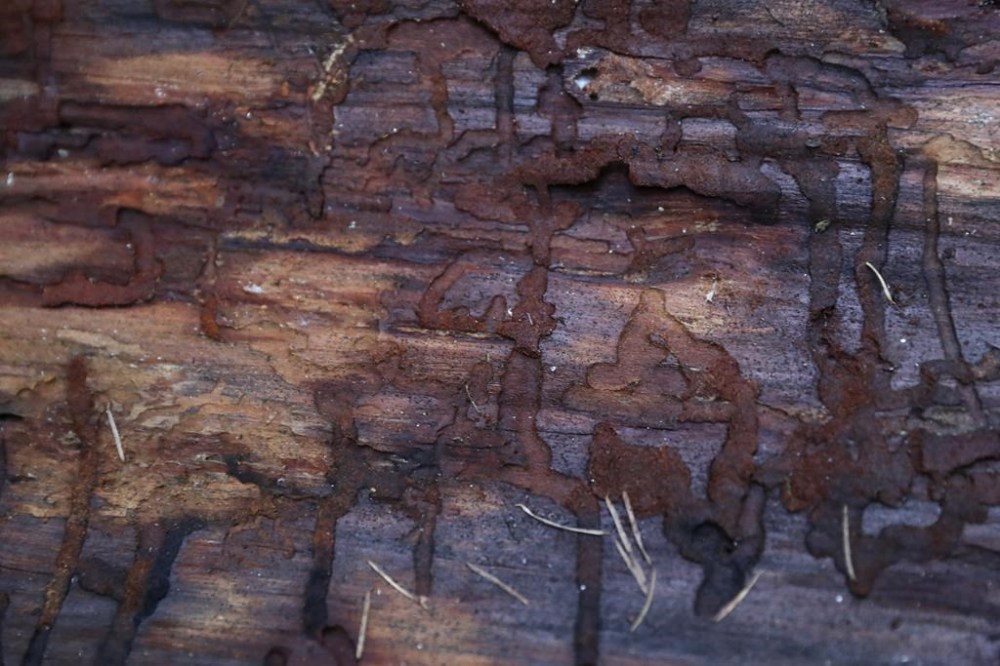
Douglas fir tree bark is studied by scientists to examine insect damage that led to the tree's death following heat stress in the Willamette National Forest, Ore., Friday, Oct. 27, 2023. Scientists are investigating what they say is a new, woefully underestimated threat to the world’s plants: climate change-driven extreme heat. (AP Photo/Amanda Loman)

During the heat dome, he and colleagues recorded air temperatures around a Douglas fir tree reaching 112 degrees Fahrenheit (about 44 Celsius), the hottest ever recorded in the forest where the measurements were taken. The needles of the tree, however, reached 124 Fahrenheit (51.1 Celsius) due to exposure to direct sunlight.

Still says observations like this and similar ones in forests around the world dispute a common misconception even among some scientists that plants can withstand extreme temperatures and stay cooler than air around them, especially when given access to water.

“Plants can control their temperature to some degree, but if the heat is extreme enough, some plants won’t be able to get through it even if they have a ton of water,” he said.

Hammond has reached the same conclusion based on work in his lab. “If temperature gets high enough, heat stress can kill living plant tissues even if they have water,” said Hammond.

___
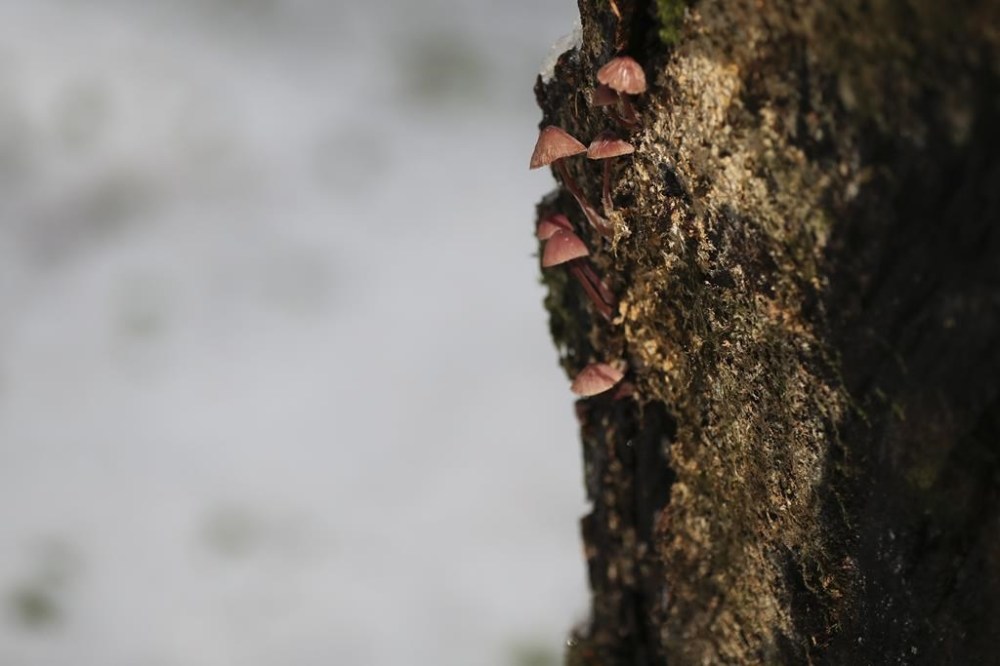
Mushrooms grow on a fallen Noble fir tree in the Willamette National Forest, Ore., Friday, Oct. 27, 2023. Scientists are investigating what they say is a new, woefully underestimated threat to the world’s plants: climate change-driven extreme heat. (AP Photo/Amanda Loman)

Nathan Gilles is a science writer and journalist based in Vancouver, Washington.

___

Columbia Insight is an Oregon-based nonprofit news website covering environmental issues affecting the Pacific Northwest.

___

Associated Press climate and environmental coverage receives support from several private foundations. See more about AP’s climate initiative here. The AP is solely responsible for all content.
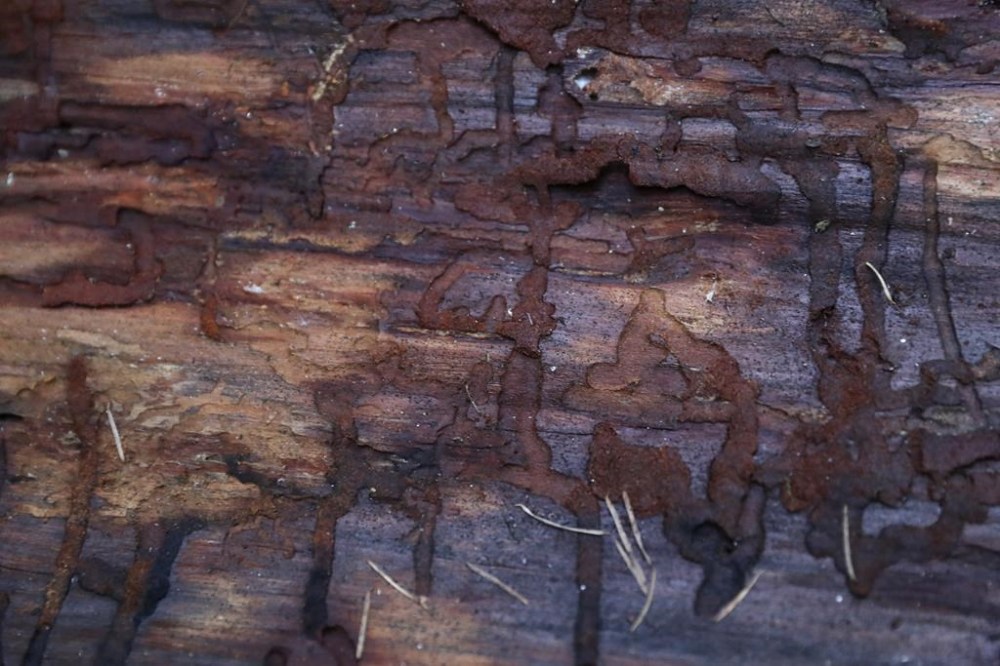
Douglas fir tree bark is studied by scientists to examine insect damage that led to the tree's death following heat stress in the Willamette National Forest, Ore., Friday, Oct. 27, 2023. Scientists are investigating what they say is a new, woefully underestimated threat to the world’s plants: climate change-driven extreme heat. (AP Photo/Amanda Loman)
Mushrooms grow on a fallen Noble fir tree in the Willamette National Forest, Ore., Friday, Oct. 27, 2023. Scientists are investigating what they say is a new, woefully underestimated threat to the world’s plants: climate change-driven extreme heat. (AP Photo/Amanda Loman)
Report Error Submit a Tip

More Stories

DeKalb victory adds Team Ackland to list of province’s top curling teams

Taylor Allen 5 minute read Preview

DeKalb victory adds Team Ackland to list of province’s top curling teams

Taylor Allen 5 minute read Monday, Dec. 5, 2022

MORRIS, Man., — Don’t forget about Abby Ackland.

Read
Monday, Dec. 5, 2022

RRC Polytech among schools selected to train RCAF aircraft technicians

Gabrielle Piché 5 minute read Preview

RRC Polytech among schools selected to train RCAF aircraft technicians

Gabrielle Piché 5 minute read Yesterday at 8:27 PM CDT

Red River College Polytechnic will become one of the first civilian schools to train Royal Canadian Air Force aircraft technicians.

The first cohort is expected to begin aircraft maintenance engineer training in fall 2027. Students will attend the post-secondary’s Stevenson campus in Winnipeg.

“There’s a lot of opportunity for us to grow,” Fred Meier, RRC Polytech’s president, said as he and University of Manitoba president Michael Benarroch addressed business executives at a Manitoba Chambers of Commerce event Tuesday morning in Winnipeg.

They highlighted the local post-secondaries’ increasing work with the Canadian Armed Forces and broader defence sector.

Read
Yesterday at 8:27 PM CDT

Decorated business vet Spiring announced as NSL Winnipeg president

Grace Anne Paizen 5 minute read Preview

Decorated business vet Spiring announced as NSL Winnipeg president

Grace Anne Paizen 5 minute read Updated: Yesterday at 12:30 PM CDT

Manitoba’s own Dayna Spiring is no stranger to the sports world, but her latest venture into the world of football — this time of the kick-about variety — is a whole new ball game.

“I’m getting up to speed on that as quickly as I can,” Spiring told the Free Press Tuesday, shortly after the accomplished business leader was announced as Northern Super League Winnipeg’s president.

Spiring joins an already stacked roster on the first women’s professional sports team in the Keystone province alongside the likes of NSL Winnipeg’s decorated co-founders Desiree Scott and Rob Gale.

And her own stats sheet is just as historic. Spiring was one of the first women to serve on the CFL’s Board of Governors and was the first woman to serve as chair of the Winnipeg Football Club’s board of directors. She is also the first woman to have her name engraved on the Grey Cup when the Winnipeg Blue Bombers captured back-to-back titles in 2019 and 2021.

Read
Updated: Yesterday at 12:30 PM CDT

Labour leaders, councillors urge Wyatt to reconsider re-election bid

Malak Abas 5 minute read Preview

Labour leaders, councillors urge Wyatt to reconsider re-election bid

Malak Abas 5 minute read Updated: Yesterday at 5:55 PM CDT

City councillors and labour leaders called on incumbent Transcona councillor Russ Wyatt to reconsider his decision to seek re-election while facing sexual assault charges.

A day after the longtime councillor announced he would be running again, the Canadian Union of Public Employees Local 500 and the Winnipeg Labour Council, joined by Couns. Cindy Gilroy and Evan Duncan, told reporters Wyatt would not be able to serve Transcona while fighting multiple sexual assault charges in court and should step aside.

The community of Transcona, traditionally known for its working-class roots, has “been through enough drama,” the president of the city’s largest union said.

“I am not declaring him guilty of anything, the courts will decide that, and his lawyer says that he is innocent. I’m stating a plain fact about capacity. Every hour spent on legal defence is an hour not spent on Transcona,” CUPE 500 president Patrick Troughton said at city hall Tuesday afternoon.

Read
Updated: Yesterday at 5:55 PM CDT

Hellebuyck determined to turn numbers around

Jason Bell 6 minute read Preview

Hellebuyck determined to turn numbers around

Jason Bell 6 minute read Tuesday, Oct. 30, 2018

HELSINKI — Connor Hellebuyck is enjoying a visit to the Finnish capital city and has wandered some of the twisting cobblestone paths in search of its many sights — a well-timed distraction from the outcomes of his most recent NHL starts and the mediocre stats that accompany them.

By his own admission, the Winnipeg netminder — who emerged last season as one of the top goaltenders in the NHL — hasn't had a banner beginning to the 2018-19 campaign. In nine opportunities to guard the Jets net, Hellebuyck has posted a 4-4-1 record, a 3.00 goals-against average and .907 save percentage.

Those aren't numbers that warrant a 911 response, but they're not what Jets fans were accustomed to seeing from the 25 year old during a breakout 2017-18 season.

Most importantly, they don't resemble the body of work the Michigan-born goaltender, who dropped his last two starts, demands of himself.

Read
Tuesday, Oct. 30, 2018

Autopsy confirms dog attack killed animal-rescue volunteer on First Nation

Free Press staff 3 minute read Preview

Autopsy confirms dog attack killed animal-rescue volunteer on First Nation

Free Press staff 3 minute read Tuesday, Jul. 28, 2026

An autopsy has confirmed an animal rescue volunteer died of a dog attack on Sandy Bay Ojibway Nation earlier this month, the Manitoba First Nations Police Service says.

Amanda Nobiss, a 37-year-old woman from Winnipeg, was found dead in Sandy Bay on July 17 after police were contacted by a friend trying to locate her.

She often visited the community 180 kilometres northwest of Winnipeg to save animals.

The police service said Tuesday that an autopsy confirmed her “injuries were consistent with a dog attack.”

Read
Tuesday, Jul. 28, 2026