Canada, other G7 nations launch sustainable mining alliance at COP15 nature meeting
Advertisement
Read this article for free:
or
Already have an account? Log in here »
To continue reading, please subscribe:

Digital Subscription
One year of digital access for only $205*
- Enjoy unlimited reading on winnipegfreepress.com
- Read the E-Edition, our digital replica newspaper
- Access News Break, our award-winning app
- Play interactive puzzles
*First annual payment billed as $205.00 + GST for one year. This annual subscription will automatically renew at $233.00 + GST every 52 weeks (10% off the regular annual price of $259.35). Offer available to new and qualified returning subscribers only. Cancel any time.
To continue reading, please subscribe:
Add Free Press access to your Brandon Sun subscription for only an additional
$1 for the first 4 weeks*
- Enjoy unlimited reading on winnipegfreepress.com
- Read the E-Edition, our digital replica newspaper
- Access News Break, our award-winning app
- Play interactive puzzles
*Your next Brandon Sun subscription payment will increase by $1.00 and you will be charged $17.95 plus GST for four weeks. After four weeks, your payment will increase to $24.95 plus GST every four weeks.
Read unlimited articles for free today:
or
Already have an account? Log in here »
Hey there, time traveller!
This article was published 12/12/2022 (1393 days ago), so information in it may no longer be current.
MONTREAL – Canada and other G7 countries have formed a new alliance to compel mining companies to adopt more environmentally sustainable and socially responsible standards, as the Western world ramps up its critical mineral supply chains.
Natural Resources Minister Jonathan Wilkinson announced the agreement on Monday at the COP15 biodiversity talks in Montreal. The deal involves countries that are trying to reduce China’s dominance in the critical mineral field.
Critical minerals refer to about three dozen metals and minerals needed for most modern technology, including laptops and cellphones. But they are also essential to rechargeable batteries used in electric vehicles, as well as energy storage, and renewable energy production in solar panels and wind turbines.
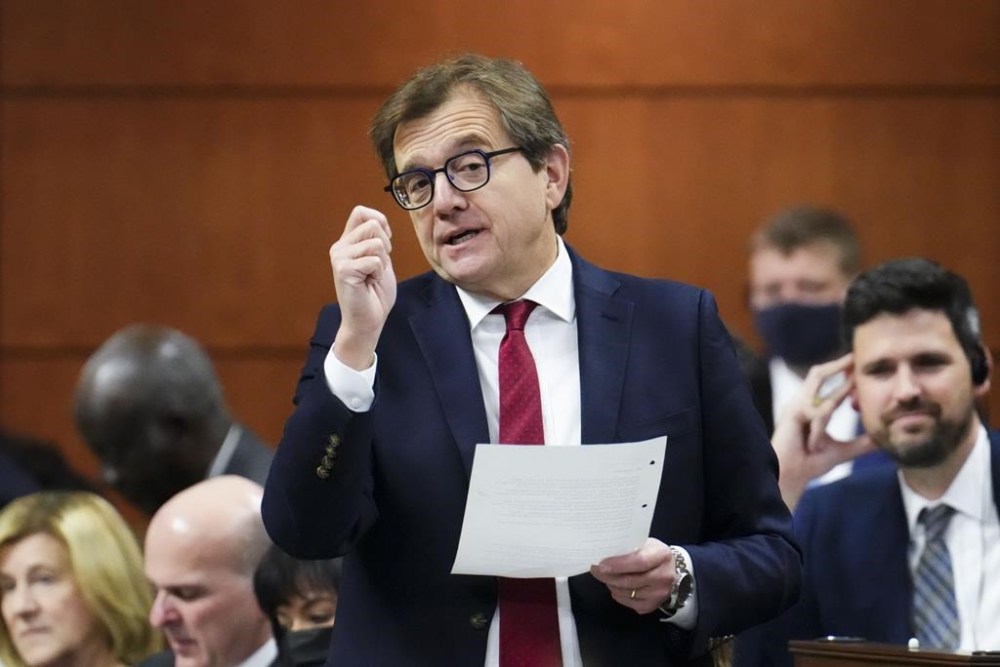
“There is no energy transition without critical minerals,” Wilkinson told reporters. “Critical minerals are the building blocks for the green and digital economy.”
The announcement came three days after Wilkinson published Canada’s critical mineral strategy, which aims to expand Canada’s production in a way that is environmentally sustainable, ensures Indigenous equity and improves global security.
Canada and the United States are among the Western democracies that have made clear that China cannot be allowed to dominate critical minerals in a way that gives it political influence similar to Russia’s leverage over oil and gas exports to Europe. China is the dominant player in critical minerals, particularly in the refining and processing and manufacturing uses.
Asked if the alliance was aimed at China, Wilkinson said, “It’s a call to action to all countries that they should be actually doing this in a manner that is environmentally sustainable, that respects labour rights and that respects the rights of Indigenous Peoples.”
All G7 countries but Italy have joined the alliance, as has Australia.
“We understand that net-zero by 2050 will involve more mining, not less,” said Katherine Ruiz-Avila, the Australian deputy high commissioner to Canada, adding that her country joined the alliance to help ensure “critical minerals are mined, processed and recycled in ways that make a positive contribution to the lives of local communities, to First Nations people and to the quality of our natural environment.”
The Canadian strategy is focused only on domestic mining, and Wilkinson acknowledged it is silent on the sustainability of raw materials that are mined elsewhere and brought to Canada for further processing or used in the manufacturing of batteries.
The alliance is an attempt to extend the Canadian strategy globally, though it is not clear how heavy-handed Canada or any of the others will be about ensuring imported critical minerals follow the same environmental and social standards as those mined at home.
The agreement also does not specify what role the alliance members will play in ensuring that their own companies follow the standards when operating on foreign soil. Canada’s mining companies have a good reputation for sustainable mining practices at home, but internationally it is a different story. There have been several lawsuits — for environmental damage, health impacts and human rights violations — filed against Canadian companies operating in other countries.
Asked how the alliance would change the practices of Canadian mining companies, Wilkinson defended the industry.
“Canada’s mining companies, actually both domestically and internationally, have some of the highest standards in the world. That’s not to say that we don’t need to do more; we do need to do more in the context of ensuring that we are stemming the decline in biodiversity that exists here and around the world,” he said.
The alliance members are also not clear on whether they will limit exports to China of raw materials mined in their territories. Canada has already begun enforcing a new policy to limit the role state-owned enterprises in non-democratic countries play in Canadian critical minerals, forcing three Chinese companies to sell their ownership stakes in some small Canadian mining developments.
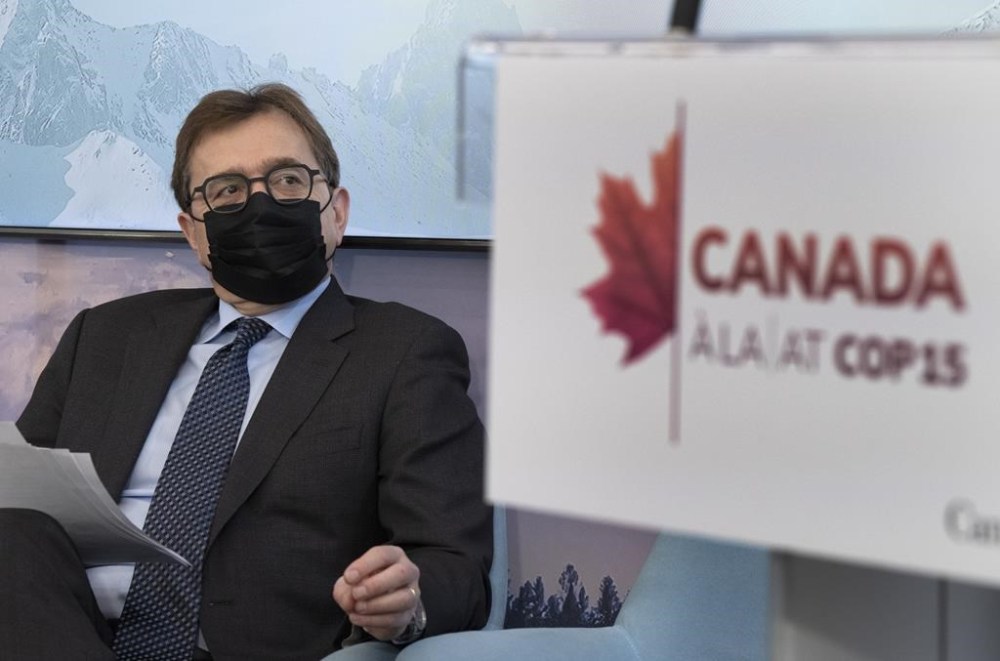
Wilkinson said, however, that the alliance will influence where Canada sources its critical minerals.
“We’re all, essentially, committing ourselves to certain standards that relate to how we produce the minerals, but also where we buy minerals from,” he said. “If you are a country that has critical mineral resources, and you want to sell it to the United Kingdom, or to Japan or to Canada, you need to respect those principles.”
The COP15 nature talks are an effort by most countries in the world to agree to policies that will both halt and repair the destruction that human activities, including mining, have brought on global ecosystems and wild species. Some environmental advocates aren’t pleased the Canadian government is announcing a strategy that expands mining.
Caroline Brouillette, national policy director at the Climate Action Network Canada, said the strategy is disconnected from conversations happening at COP15 and reinforces “our dependence on destructive business models that exhaust resources and harm communities.”

Aimee Boulanger, executive director of the Initiative for Responsible Mining Assurance, said governments have an essential role to play in ensuring that the extraction of minerals used in the transition away from fossil fuels is done responsibly.
“We need to make sure that the solutions to the problems we’re trying to deal with don’t themselves cause greater harm,” she said in an interview.
But Boulanger said that even in the countries that are members of the alliance, local laws are currently not strong enough to prevent significant harm from industrial mining.
This report by The Canadian Press was first published Dec. 12, 2022.
— Mia Rabson in Ottawa and Jacob Serebrin in Montreal.