As COVID-19 becomes routine, Africa readies for next crisis
Advertisement
Read this article for free:
or
Already have an account? Log in here »
To continue reading, please subscribe:
Digital Subscription
One year of digital access for only $1.44 a week*
- Enjoy unlimited reading on winnipegfreepress.com
- Read the E-Edition, our digital replica newspaper
- Access News Break, our award-winning app
- Play interactive puzzles
*Billed as $5.77 plus GST every four weeks. After 52 weeks, price increases to the regular rate of $19.95 plus GST every four weeks. Offer available to new and qualified returning subscribers only. Cancel any time.
To continue reading, please subscribe:
Add Free Press access to your Brandon Sun subscription for only an additional
$1 for the first 4 weeks*
- Enjoy unlimited reading on winnipegfreepress.com
- Read the E-Edition, our digital replica newspaper
- Access News Break, our award-winning app
- Play interactive puzzles
*Your next Brandon Sun subscription payment will increase by $1.00 and you will be charged $17.95 plus GST for four weeks. After four weeks, your payment will increase to $24.95 plus GST every four weeks.
Read unlimited articles for free today:
or
Already have an account? Log in here »
Hey there, time traveller!
This article was published 08/12/2022 (1422 days ago), so information in it may no longer be current.
ABUJA, Nigeria (AP) — Building on the experience of battling the COVID-19 pandemic, African countries are strengthening health systems to prepare for the next health crisis, the World Health Organization’s Africa director said Thursday.
At the onset of the pandemic in early 2020, some of the 54 countries in the continent of 1.3 billion people lacked the facilities or trained health workers to respond adequately to the health crisis, with some struggling to provide hospital isolation wards and intensive care units, Matshidiso Moeti, the World Health Organization’s Africa regional director, said at an online briefing Thursday.
However, over the course of three years, African countries have ramped up investments in health infrastructure in the race against the pandemic with support from global donors, she said.
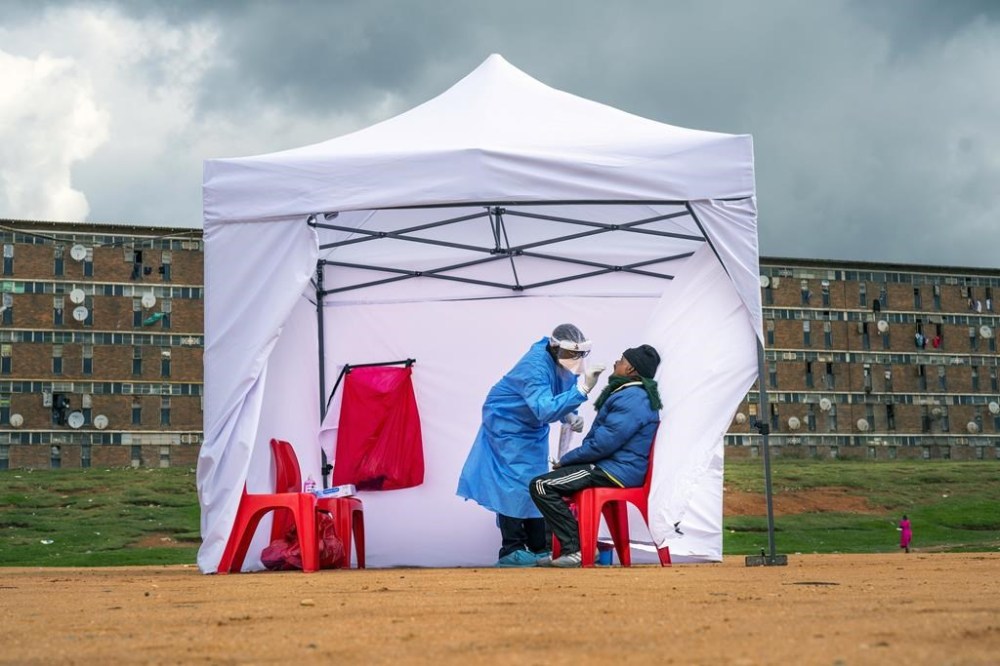
“The future, however difficult the past couple of years have been, will find us in a much better situation in terms of our strategies, our investments and our capacities to confront public health threats,” said Moeti.
“We know now what we need to do to be able to make sure that our systems are resilient to the impact of a shock like an outbreak,” she said.
Across the continent, she said, WHO is working with countries to reinforce their capacities by training first responders while work is also ongoing to strengthen public health institutions and emergency operations.
One of the “most exciting outcomes of the struggle” Africa faced in getting COVID-19 vaccines is that some countries in the continent are now developing their capacities to produce those key tools locally, Moeti added.
“Whatever happens in the future, the next pandemic will find the world and Africa much readier” in its response, she said, optimistic about “important partnerships” and African institutions being established “to take the lead to work in the area of preparedness and also in primary healthcare.”

In Gambia, as in many countries across Africa, the pandemic was “very difficult” for many health systems but it was “an eye-opener for all of us to know where the gaps have been,” said Ahmadou Lamin Samateh, Gambia’s minister of health.
Samateh called for a global support system that offers more assistance and resources to countries experiencing challenges.
“National governments have roles to play but international communities have important roles to play as well,” he said. “We’ve seen in the COVID-19 pandemic that one problem in one part of the world is a problem for the entire world.”
And even with Africa still facing gaps in COVID-19 vaccinations, Moeti, director of WHO’s Africa regional office, warned that more work needs to be done to sustain the gains from the pandemic response.
“As we move into 2023, it’s time to bring COVID-19 out of emergency response mode integrate it into routine health care,” Moeti said.