Alberta, Saskatchewan chiefs call for sovereignty acts to be withdrawn

Advertisement

Advertise with us

OTTAWA - First Nations chiefs from Alberta and Saskatchewan are calling for their provinces to toss proposed legislation they say is inherently undemocratic, unconstitutional and infringes on Indigenous rights.

Read this article for free:


or

Already have an account? Log in here »

To continue reading, please subscribe:

Subscribe and receive a limited-edition Free Press branded hat or tote.

Digital Subscription

One year of digital access for only $205*

  • Enjoy unlimited reading on winnipegfreepress.com
  • Read the E-Edition, our digital replica newspaper
  • Access News Break, our award-winning app
  • Play interactive puzzles

*First annual payment billed as $205.00 + GST for one year. This annual subscription will automatically renew at $233.00 + GST every 52 weeks (10% off the regular annual price of $259.35). Offer available to new and qualified returning subscribers only. Cancel any time.

To continue reading, please subscribe:

Add Free Press access to your Brandon Sun subscription for only an additional

$1 for the first 4 weeks*

  • Enjoy unlimited reading on winnipegfreepress.com
  • Read the E-Edition, our digital replica newspaper
  • Access News Break, our award-winning app
  • Play interactive puzzles
Start now

*Your next Brandon Sun subscription payment will increase by $1.00 and you will be charged $17.95 plus GST for four weeks. After four weeks, your payment will increase to $24.95 plus GST every four weeks.

Hey there, time traveller!
This article was published 07/12/2022 (1386 days ago), so information in it may no longer be current.

OTTAWA – First Nations chiefs from Alberta and Saskatchewan are calling for their provinces to toss proposed legislation they say is inherently undemocratic, unconstitutional and infringes on Indigenous rights.

“We are not looking for change or amendments to the bill. We want it withdrawn,” Chief Tony Alexis said Wednesday on behalf of Treaty 6.

The chiefs are putting forward an emergency resolution at the Assembly of First Nations special assembly to reject sovereignty bills that are before both provincial legislatures.
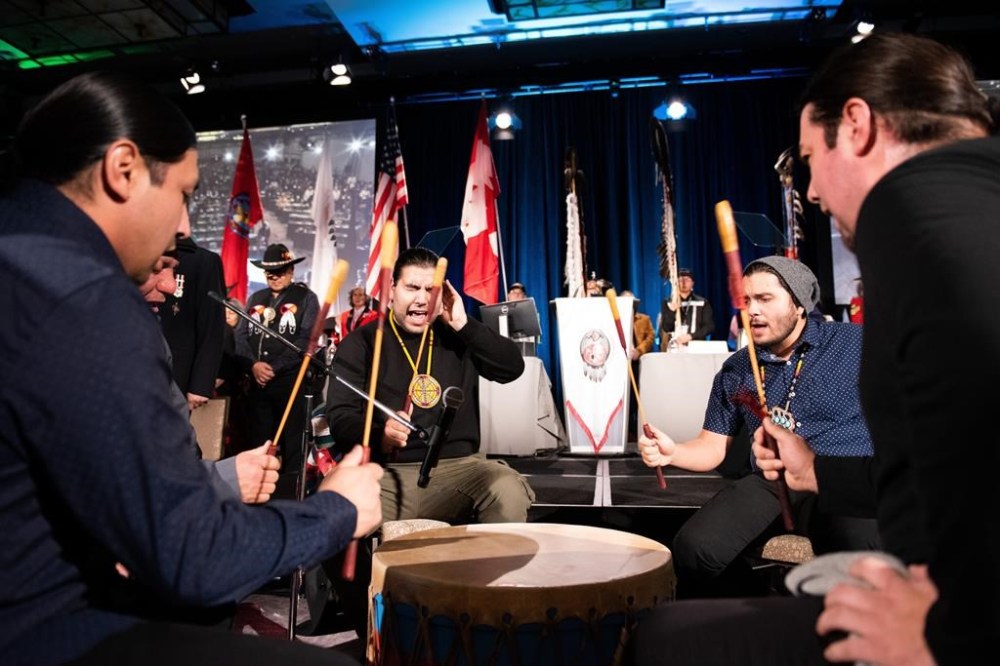
Indigenous drummers perform a song during the official start of the Assembly of First Nations Special Chiefs Assembly in Ottawa, on Tuesday, Dec. 6, 2022. First Nations Chiefs in Alberta and Saskatchewan are calling for their provinces to toss legislation they say is inherently undemocratic, unconstitutional and will infringe on Indigenous rights. THE CANADIAN PRESS/Spencer Colby

Alexis, of the Alexis Nakota Sioux Nation northwest of Edmonton, said there has been no consultation or dialogue with First Nations around the Alberta bill.

It has been criticized for giving the premier and cabinet unchecked powers to pass laws behind close doors, although amendments to change that have recently been put forward.

Alexis said the bill is harmful to Albertans and Canadians. He said it infringes on treaty rights and could set a harmful precedent.

“We are deeply concerned that, if passed, it would have a domino effect across Canada,” Alexis said. “And what would keep other provinces from following suit and, ultimately, what will that mean for treaty rights across Canada?”

Vice Chief Aly Bear of the Federation of Sovereign Indigenous Nations also said the act in Saskatchewan is unconstitutional. The bill, tabled last month, looks to unilaterally amend the Constitution to reassert the province’s jurisdiction over its natural resources.

Premier Scott Moe has said the act doesn’t affect treaty rights and is aimed at growing the economy to benefit all people, including Indigenous people

Bear said, however, that the proposed legislation creates more harm than good. She said there has also not been consultation with Indigenous groups in Saskatchewan.

“If we want to fix that relationship, we have to be sitting down at the table,” she said.

The chiefs said the federal government has, so far, taken a hands-off approach to the bills and encouraged officials to meet with First Nations leaders from the provinces.

Assembly of First Nations National Chief RoseAnne Archibald said she stands with the chiefs in Saskatchewan and Alberta, calling for the acts to be withdrawn.

She said the bills have a specific agenda around lands and resources and that they infringe on First Nations inherent and treaty rights.

“We will not stand idly by.”

This report by The Canadian Press was first published Dec. 7, 2022.

— By Kelly Geraldine Malone in Saskatoon

Report Error Submit a Tip

More Stories

Changing Transit Plus drivers’ status a ‘ridiculous anti-worker provision,’ councillor says

Joyanne Pursaga 5 minute read Preview

Changing Transit Plus drivers’ status a ‘ridiculous anti-worker provision,’ councillor says

Joyanne Pursaga 5 minute read 5:32 PM CDT

Some fear a change of status for Winnipeg Transit Plus drivers could allow them to be paid less and receive fewer benefits.

However, council’s public works chairwoman said pay protections are now embedded in contracts and the change is needed to attract enough workers.

Three years ago, city council passed a motion that required Winnipeg Transit Plus drivers to be employees of companies the city hires to provide accessible transit service.

Coun. Brian Mayes said that clause prevents “sub-minimum wages” from being permitted for subcontracted drivers and ensures drivers can access multiple benefits.

Read
5:32 PM CDT

Decorated business vet Spiring announced as NSL Winnipeg president

Grace Anne Paizen 5 minute read Preview

Decorated business vet Spiring announced as NSL Winnipeg president

Grace Anne Paizen 5 minute read Updated: 12:30 PM CDT

Manitoba’s own Dayna Spiring is no stranger to the sports world, but her latest venture into the world of football — this time of the kick-about variety — is a whole new ball game.

“I’m getting up to speed on that as quickly as I can,” Spiring told the Free Press Tuesday, shortly after the accomplished business leader was announced as Northern Super League Winnipeg’s president.

Spiring joins an already stacked roster on the first women’s professional sports team in the Keystone province alongside the likes of NSL Winnipeg’s decorated co-founders Desiree Scott and Rob Gale.

And her own stats sheet is just as historic. Spiring was one of the first women to serve on the CFL’s Board of Governors and was the first woman to serve as chair of the Winnipeg Football Club’s board of directors. She is also the first woman to have her name engraved on the Grey Cup when the Winnipeg Blue Bombers captured back-to-back titles in 2019 and 2021.

Read
Updated: 12:30 PM CDT

Province announces free daycare for low-income families

Nicole Buffie 3 minute read Preview

Province announces free daycare for low-income families

Nicole Buffie 3 minute read Wednesday, Sep. 2, 2026

Eligible parents will have their child-care fees waived come Sept. 13.

The province announced Wednesday child care would be free for about 4,100 children from 3,000 families as part of a budget commitment to eliminate the $2-per-day fee for low-income families.

“This announcement that we’re making here today is going to be hugely, hugely impactful for the families that rely on this important, important service of child care,” Education and Early Childhood Learning Minister Tracy Schmidt said at a news conference at Panda Bear Day Care.

She said the program would save families between $520 and $2,600 per child per year.

Read
Wednesday, Sep. 2, 2026

Hydro board members visit First Nation communities to discuss damage from past developments

Free Press staff 3 minute read Preview

Hydro board members visit First Nation communities to discuss damage from past developments

Free Press staff 3 minute read 1:18 PM CDT

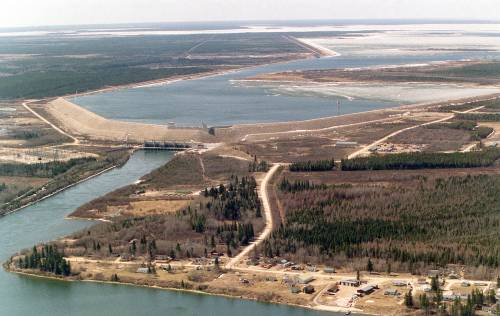
Members of the Manitoba Hydro board visited Misipawistik Cree Nation and Chemawawin Cree Nation last week to learn more about the impacts of the Grand Rapids Generating Station and strengthen relationships with communities affected by hydroelectric development.

The two-day visit included spending time at culturally significant sites and discussions with leadership and community members, and a tour of generating stations and Grand Rapids fish hatchery, a Manitoba Hydro news release said.

The visit is part of Manitoba Hydro’s ongoing engagement with Indigenous communities affected by hydroelectric development, the release said. In 2024, the Manitoba Hydro board visited Gillam and met with First Nations that partner in the Keeyask Generating Station.

Last week’s visit to Misipawistik and Chemawawin came just weeks after the Federal Court on Sept. 3 ordered Ottawa pay Opaskwayak Cree Nation $27 million over damages suffered due to the construction of the Grand Rapids hydro dam in the 1960s.

Read
1:18 PM CDT

Colourful history of Neepawa's cemetery draws visitors from all over

By Bill Redekop 12 minute read Preview

Colourful history of Neepawa's cemetery draws visitors from all over

By Bill Redekop 12 minute read Monday, Sep. 28, 2015

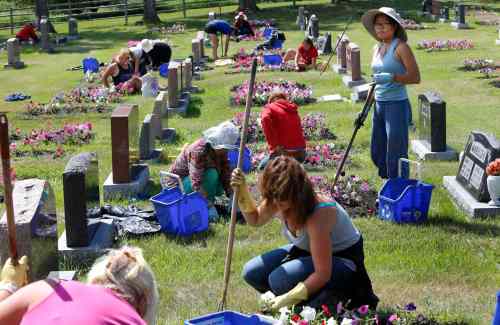
NEEPAWA — Headstones can make for interesting reading.

Take this rhyme from the headstone of John James Black, b. Apr. 4, 1860; d. Dec. 9, 1934, in Neepawa’s Riverside Cemetery.

“Reader behold as you pass by,

As you are now, so once was I.

Read
Monday, Sep. 28, 2015

Hot topic: mayor considers max temp for rental properties

Joyanne Pursaga 3 minute read Preview

Hot topic: mayor considers max temp for rental properties

Joyanne Pursaga 3 minute read Tuesday, Jul. 14, 2026

Mayor Scott Gillingham says he’s open to exploring a call to set a maximum temperature for indoor rental units.

“I think we should be looking at that, as far as what the specifics would be … (In) our overall body of work, recently, we have been addressing the heat and making sure people have places to get out from under the heat,” said Gillingham.

Tenant and environmental groups have called for a maximum indoor rental unit heat limit that doesn’t exceed 26 C. A city bylaw does require landlords to maintain a minimum daytime temperature of 21 C during cold weather.

Gillingham noted the city has added 24-7 safe spaces, extended spray pad hours, opened libraries as cooling spaces and added drinking water stations to provide relief on very hot days.

Read
Tuesday, Jul. 14, 2026