Refugee recalls Syrian torture

Advertisement

Advertise with us

This isn’t a memoir for the faint of heart.

Read this article for free:


By clicking the button above, an account will be created and you will begin to receive some of our recommended newsletters. You may opt out of any newsletter by visiting your Email and Communication Preferences page or by clicking "unsubscribe" at the bottom of any email.

or

Already have an account? Log in here »

To continue reading, please subscribe:

Digital Subscription

One year of digital access for only $1.44 a week*

  • Enjoy unlimited reading on winnipegfreepress.com
  • Read the E-Edition, our digital replica newspaper
  • Access News Break, our award-winning app
  • Play interactive puzzles

*Billed as $5.77 plus GST every four weeks. After 52 weeks, price increases to the regular rate of $19.95 plus GST every four weeks. Offer available to new and qualified returning subscribers only. Cancel any time.

To continue reading, please subscribe:

Add Free Press access to your Brandon Sun subscription for only an additional

$1 for the first 4 weeks*

  • Enjoy unlimited reading on winnipegfreepress.com
  • Read the E-Edition, our digital replica newspaper
  • Access News Break, our award-winning app
  • Play interactive puzzles
Start now

*Your next Brandon Sun subscription payment will increase by $1.00 and you will be charged $17.95 plus GST for four weeks. After four weeks, your payment will increase to $24.95 plus GST every four weeks.

Hey there, time traveller!
This article was published 03/12/2022 (1426 days ago), so information in it may no longer be current.

This isn’t a memoir for the faint of heart.

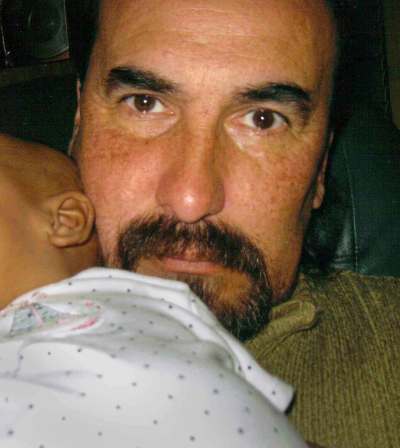
Author Jamal Saeed arrived in Canada as a refugee in 2016, after spending 12 years as a political prisoner in Syria. He currently lives in Kingston, Ont., where he works as a writer and visual artist.

Saeed was a communist, opposed to the regime of dictator Hafez al-Assad, father of Syria’s current dictator president, Bashar al-Assad.
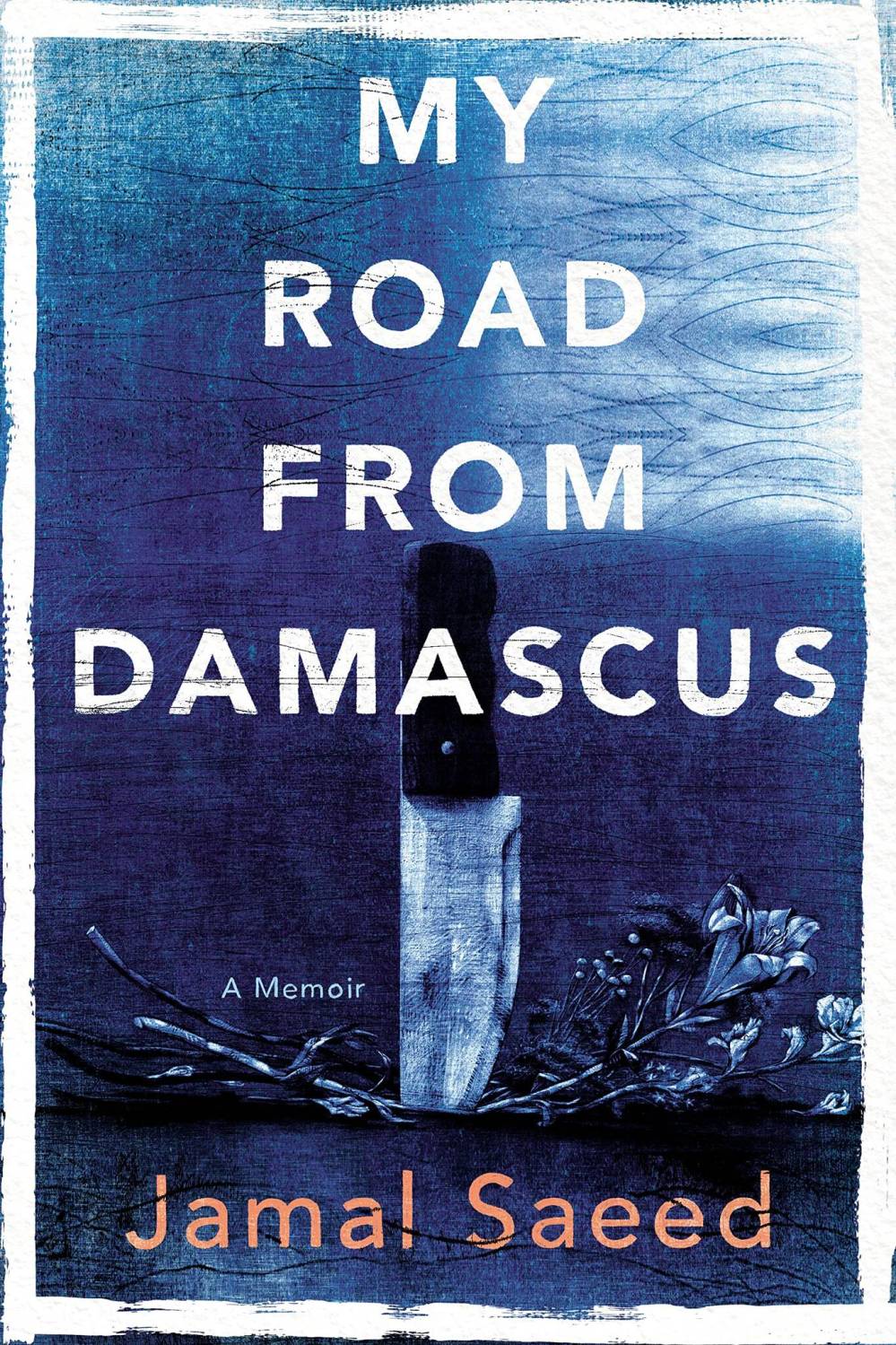
My Road From Damascus

My Road From Damascus

Imprisoned three different times, on each occasion he was neither formally charged with a crime nor ever brought before any judicial process.

Unspeakable tortures and deprivations were visited on him in Syria’s prisons. But what makes his prison experiences so supremely horrific is how casually daily and routine were his guards’ and interrogators’ cruelties.

At base, this is a story about the attempted breaking of a man, and the successful making of a writer.

The use of torture by the Syrian state is long-standing and pervasive. Thousands of people — most of them political opponents of the Bashar al-Assad regime, and before him that of his father — have died in custody in government detention centres over the last several decades.

In what amounts to a cruel joke, this year the Syrian government passed an anti-torture law. It’s widely seen as a transparent attempt to deflect efforts to hold the Syrian government accountable for its brutal treatment of prisoners, contrary to the United Nations Convention Against Torture.

Being an imprisoned communist in Syria put Saeed in double jeopardy. Not only did the Assad regime torture him, but he was jailed with members of the other principal opponent of the Assad regime, the Muslim Brotherhood, many of whom regarded him as an apostate or infidel, and wanted him dead.

The book’s title is an allusion to the biblical apostle Paul who, struck by a supernatural revelation, converted from Judaism to Christianity while travelling on the road to Damascus. More generally, a “road to Damascus” moment is a metaphor for any life-altering experience or epiphany.

Saeed’s moment occurred in 2014 when, despairing of the future of his country, he realized he, his wife and his two young children would never be safe in his homeland. That year they fled Syria, initially for Dubai.

Interspersed among his prison-diary stories are portraits of his family, school and schoolmates, and his village life as a child and adolescent.

There are even several romantic/erotic episodes from his years spent underground, hiding from state-security police goons. Saeed was by his own admission a bit of a rake, albeit a charming one. He seems to have equally worshipped Marx and the ladies.

This a graphic recounting of life as a “detainee” of the Syrian state.

But it’s also a confessional and candid one. Saeed doesn’t hesitate to portray himself, warts and all.

His memoir is the keenly rendered story of a life of astonishing courage and perseverance. And he does justice to that life with writing so fine it’s novelistic in its attention to description and mood.

Douglas J. Johnston is a Winnipeg lawyer and writer.
Report Error Submit a Tip

More Stories

Transit driver killed in knife attack on U of M campus

8 minute read Preview

Transit driver killed in knife attack on U of M campus

8 minute read Tuesday, Feb. 14, 2017

A Winnipeg Transit driver was killed early this morning after he was stabbed by the only passenger on his bus at the University of Manitoba campus.

Irvine Jubal Fraser, 58, was rushed to hospital in critical condition but later died, police said.

The attack occurred at about 2 a.m. in the area of Dafoe Road West and Gillson Street.

Witnesses pointed officers led by the canine unit in the direction of the Red River, where a 22-year-old suspect trying to cross to the St. Vital side was arrested and taken into custody.

Read
Tuesday, Feb. 14, 2017

Voter turnout in mayoral race about 38 per cent

Free Press staff 2 minute read Preview

Voter turnout in mayoral race about 38 per cent

Free Press staff 2 minute read Updated: 1:16 PM CDT

Voter turnout in Wednesday’s mayoral contest in Winnipeg was 38 per cent, based on a Free Press analysis of unofficial results.

The city has not yet provided a figure for overall turnout for the municipal and school board election.

Incumbent Scott Gillingham won a second term with 39.82 per cent of the vote. He was followed by Kevin Klein (20.71 per cent), Noah Redden (19.84 per cent) and Mike Vogiatzakis (9.66 per cent) in a field of 12 candidates.

Unofficial voter turnout within the city’s 15 wards ranged from 26 per cent (Point Douglas) to 46 per cent (River Heights-Fort Garry).

Read
Updated: 1:16 PM CDT

Waiting for Cormier verdict the ‘calm before the storm’

Katie May 6 minute read Preview

Waiting for Cormier verdict the ‘calm before the storm’

Katie May 6 minute read Thursday, Feb. 22, 2018

As the jury room door closed behind the seven women and four men who are now deliberating on the evidence against Tina Fontaine’s accused killer, Thelma Favel rose from the chair she’s occupied for most of Raymond Cormier’s second-degree murder trial.

Almost every day over the past three weeks, Favel, the woman who raised 15-year-old Tina, has sat right up front, directly across from the jury box, listening, sobbing and soaking in disturbing details of the teen’s last days that have come to light over the course of Cormier’s second-degree murder trial.

On Wednesday afternoon, after Court of Queen’s Bench Chief Justice Glenn Joyal instructed the jury and sent them off to be sequestered until they decide whether 56-year-old Raymond Cormier is guilty of killing Tina, Favel got up and hugged Crown prosecutor Breta Passler. It was one of many moments, this one shielded from jurors, that have long since proven the emotional impact of the case and the lasting power of Tina’s legacy.

Tina’s death sparked a public outcry that renewed calls for a national inquiry into disproportionately high rates of missing and murdered Indigenous women and girls across Canada, and the criminal trial for the man accused of killing her hasn’t happened in a vacuum.

Read
Thursday, Feb. 22, 2018

Submit a news tip

1 minute read Monday, Mar. 16, 2026

Submit a news tip

Shared Health, heal thyself

Editorial 4 minute read Preview

Shared Health, heal thyself

Editorial 4 minute read 2:00 AM CDT

Doctors are trained to seek out the causes of illness, not just to treat the symptoms.

That is, perhaps, a style of examination that the government of Premier Wab Kinew should be following with the health-care system as a whole.

Because the symptoms are looking a little dire.

Last week, provincial chief medical officer Dr. José François announced he would be leaving his position in January 2027. That means he will be leaving a position he has only held since April 2024 — less than three years.

Read
2:00 AM CDT

Railways report more accidents with dangerous goods

Dylan Robertson 6 minute read Preview

Railways report more accidents with dangerous goods

Dylan Robertson 6 minute read Monday, Jan. 20, 2020

OTTAWA — The number of rail accidents involving dangerous goods more than doubled in Canada in 2018.

There were 25 accidents involving dangerous goods in 2018, involving one death, according to Transport Canada data published Monday.

There were 11 accidents recorded a year prior, and five in 2016.

These accidents involve dangerous goods — flammable or corrosive substances — that either exploded or leaked.

Read
Monday, Jan. 20, 2020