Twitter ends enforcement of COVID misinformation policy

Advertisement

Advertise with us

Twitter will no longer enforce its policy against COVID-19 misinformation, raising concerns among public health experts that the change could have serious consequences if it discourages vaccination and other efforts to combat the still-spreading virus.

Read this article for free:


By clicking the button above, an account will be created and you will begin to receive some of our recommended newsletters. You may opt out of any newsletter by visiting your Email and Communication Preferences page or by clicking "unsubscribe" at the bottom of any email.

or

Already have an account? Log in here »

To continue reading, please subscribe:

Digital Subscription

One year of digital access for only $1.44 a week*

  • Enjoy unlimited reading on winnipegfreepress.com
  • Read the E-Edition, our digital replica newspaper
  • Access News Break, our award-winning app
  • Play interactive puzzles

*Billed as $5.77 plus GST every four weeks. After 52 weeks, price increases to the regular rate of $19.95 plus GST every four weeks. Offer available to new and qualified returning subscribers only. Cancel any time.

To continue reading, please subscribe:

Add Free Press access to your Brandon Sun subscription for only an additional

$1 for the first 4 weeks*

  • Enjoy unlimited reading on winnipegfreepress.com
  • Read the E-Edition, our digital replica newspaper
  • Access News Break, our award-winning app
  • Play interactive puzzles
Start now

*Your next Brandon Sun subscription payment will increase by $1.00 and you will be charged $17.95 plus GST for four weeks. After four weeks, your payment will increase to $24.95 plus GST every four weeks.

Hey there, time traveller!
This article was published 29/11/2022 (1432 days ago), so information in it may no longer be current.

Twitter will no longer enforce its policy against COVID-19 misinformation, raising concerns among public health experts that the change could have serious consequences if it discourages vaccination and other efforts to combat the still-spreading virus.

Eagle-eyed users spotted the change Monday night, noting that a one-sentence update had been made to Twitter’s online rules: “Effective November 23, 2022, Twitter is no longer enforcing the COVID-19 misleading information policy.”

By Tuesday, some Twitter accounts were testing the new boundaries and celebrating the platform’s hands-off approach, which comes after Twitter was purchased by Elon Musk.
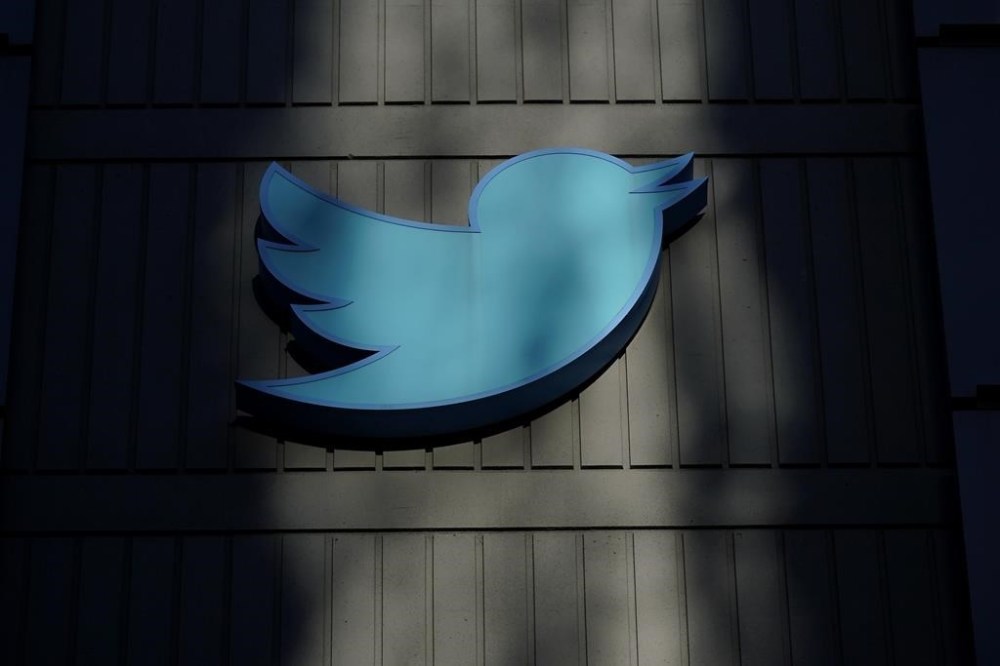
A sign at Twitter headquarters is shown in San Francisco, Friday, Nov. 18, 2022. (AP Photo/Jeff Chiu)

“This policy was used to silence people across the world who questioned the media narrative surrounding the virus and treatment options,” tweeted Dr. Simone Gold, a physician and leading purveyor of COVID-19 misinformation. “A win for free speech and medical freedom!”

Twitter’s decision to no longer remove false claims about the safety of COVID-19 vaccines disappointed many public health officials, however, who said it could lead to more false claims about the virus, or the safety and effectiveness of vaccines.

“Bad news,” tweeted epidemiologist Eric Feigl-Ding, who urged people not to flee Twitter but to stay and stand up for accurate information about the virus. “Stay folks — do NOT cede the town square to them!”

The virus, meanwhile, continues to spread. Nationally, new COVID cases averaged nearly 38,800 a day as of Monday, according to data from Johns Hopkins University — far lower than last winter but a vast undercount because of reduced testing and reporting. About 28,100 people with COVID were hospitalized daily and about 313 died, according to the most recent federal daily averages.

Cases and deaths were up from two weeks earlier. Yet a fifth of the U.S. population hasn’t been vaccinated, most Americans haven’t gotten the latest boosters, and many have stopped wearing masks.

Musk, who has himself spread COVID misinformation on Twitter, has signaled an interest in rolling back many of the platform’s previous rules meant to combat misinformation.

Last week, Musk said he would grant “amnesty” to account holders who had been kicked off Twitter. He’s also reinstated the accounts for several people who spread COVID misinformation, including that of Rep. Marjorie Taylor Greene, whose personal account was suspended this year for repeatedly violating Twitter’s COVID rules.

Greene’s most recent tweets include ones questioning the effectiveness of masks and making baseless claims about the safety of COVID vaccines.

Since the pandemic began, platforms like Twitter and Facebook have struggled to respond to a torrent of misinformation about the virus, its origins and the response to it.

Under the policy enacted in January 2020, Twitter prohibited false claims about COVID-19 that the platform determined could lead to real-world harms. More than 11,000 accounts were suspended for violating the rules, and nearly 100,000 pieces of content were removed from the platform, according to Twitter’s latest numbers.

Despite its rules prohibiting COVID misinformation, Twitter has struggled with enforcement. Posts making bogus claims about home remedies or vaccines could still be found, and it was difficult on Tuesday to identify exactly how the platform’s rules may have changed.

Messages left with San Francisco-based Twitter seeking more information about its policy on COVID-19 misinformation were not immediately returned Tuesday.

A search for common terms associated with COVID misinformation yielded lots of misleading content, but also automatic links to helpful resources about the virus as well as authoritative sources like the Centers for Disease Control and Prevention.

Dr. Ashish Jha, the White House COVID-19 coordinator, said Tuesday that the problem of COVID-19 misinformation is far larger than one platform, and that policies prohibiting COVID misinformation weren’t the best solution anyway.

Speaking at a Knight Foundation forum Tuesday, Jha said misinformation about the virus spread for a number of reasons, including legitimate uncertainty about a deadly illness. Simply prohibiting certain kinds of content isn’t going to help people find good information, or make them feel more confident about what they’re hearing from their medical providers, he said.

“I think we all have a collective responsibility,” Jha said of combating misinformation about COVID. “The consequences of not getting this right — of spreading that misinformation — is literally tens of thousands of people dying unnecessarily.”

Report Error Submit a Tip

More Stories

Doctor’s departure stressful for teen

Kevin Rollason 6 minute read Preview

Doctor’s departure stressful for teen

Kevin Rollason 6 minute read Sunday, Oct. 24, 2021

Morgan Walker is a typical teen — but only because a piece of his brain the size of a deck of cards was removed four years ago.

Walker, who had seizures multiple times a day before his surgery, fears other people might not be so lucky.

That’s because his surgeon, Dr. Demitre Serletis, is leaving the province and Health Sciences Centre. Serletis will start practising at the Cleveland Clinic in the new year.

“I was kind of shocked, but I understood why,” Walker said from his home in Brandon. “The government really hasn’t been respecting doctors.”

Read
Sunday, Oct. 24, 2021

Rural hospital shutdowns continue into fall

Katie May 5 minute read Preview

Rural hospital shutdowns continue into fall

Katie May 5 minute read Monday, Sep. 12, 2022

Summer shutdowns at some rural Manitoba hospitals have quietly extended into fall, and the uncertainty about reopening is frustrating residents.

Read
Monday, Sep. 12, 2022

Olympics Overnight: Canada reclaims gold in women’s hockey, Thompson wins silver in ski cross, and Kamila Valieva struggles in women’s free skate

Richie Assaly - Toronto Star, Toronto Star 8 minute read Preview

Olympics Overnight: Canada reclaims gold in women’s hockey, Thompson wins silver in ski cross, and Kamila Valieva struggles in women’s free skate

Richie Assaly - Toronto Star, Toronto Star 8 minute read Thursday, Feb. 17, 2022

Here’s what you missed overnight at Day 13 of the 2022 Beijing Olympics.

Read
Thursday, Feb. 17, 2022

Human rights museum responds to reopening backlash

Julia-Simone Rutgers 4 minute read Preview

Human rights museum responds to reopening backlash

Julia-Simone Rutgers 4 minute read Thursday, Jul. 29, 2021

The Canadian Museum for Human Rights reopened to fully vaccinated members of the public this week, drawing cries of discrimination from those who have chosen not to get vaccinated against COVID-19.

While the some of the backlash has been “disturbing,” museum CEO Isha Khan said the conflict has opened room for a conversation about human rights during the pandemic.

“We made the decision to open in compliance with that law, really because we’re a public institution and we saw it as our responsibility to open as soon as we could to the public — within the restrictions as they currently are,” Khan said Thursday.

“But it’s really important to us, as the Canadian Museum for Human Rights we have a mandate for human rights education, that we’re trying to ground the conversation in human rights principles.”

Read
Thursday, Jul. 29, 2021

Industry minister to meet Rogers CEO after outage

Tyler Griffin, The Canadian Press 4 minute read Preview

Industry minister to meet Rogers CEO after outage

Tyler Griffin, The Canadian Press 4 minute read Sunday, Jul. 10, 2022

TORONTO - Canada's industry minister will convene a meeting with the leader of Rogers Communications in the wake of a massive outage that paralyzed the company's network and hampered several crucial services, his office announced on Sunday, even as some customers continued to report service disruptions.

A statement released from the office of François-Philippe Champagne said he plans to meet with Tony Staffieri and other telecom leaders to discuss the importance of improving "the reliability of networks across Canada."

The statement said Champagne found last week's widespread service disruption — which lasted at least 15 hours and knocked out access to numerous law enforcement, health care and banking services — "unacceptable," adding he has expressed that view directly to Staffieri.

"These services are vitally important for Canadians in their day to day life and we expect our telecom industry to meet the highest standards that Canadians rightly deserve," the statement read.

Read
Sunday, Jul. 10, 2022

Actor-director Cooper takes new approach to familiar tale

Randall King 4 minute read Preview

Actor-director Cooper takes new approach to familiar tale

Randall King 4 minute read Thursday, Oct. 4, 2018

TORONTO — In his self-directed version of A Star Is Born, Bradley Cooper plays a rock star named Jackson Maine.

Note the name: it marks the character as a member of a cinematic lineage that descends all the way to 1937.

That year, the first A Star Is Born was made, with Frederick March in the role of alcoholic actor Norman Maine. The name stayed in 1954, when James Mason took over the role of an actor who first nurtures the career of Judy Garland’s up-and-coming star Vicki Lester before his drunken shenanigans threaten to derail it. By 1976, Kris Kristofferson played the role of musician John Norman Howard, a rock singer with a musical stake in the ascent of Barbra Streisand’s Esther Hoffman.

Cooper, 43, remembered the Maine name, but also brought his own vision as a first-time feature filmmaker to the new version, which opens Thursday, Oct. 4, opposite Lady Gaga after the originally designated director, Clint Eastwood, dropped out. While actors might not want to see different interpretations of a role, Cooper embraced the opportunity to see all the past iterations.

Read
Thursday, Oct. 4, 2018