Hard-working Colombian beetles clean garbage, retire as pets
Advertisement
Read this article for free:
or
Already have an account? Log in here »
To continue reading, please subscribe:

Digital Subscription
One year of digital access for only $205*
- Enjoy unlimited reading on winnipegfreepress.com
- Read the E-Edition, our digital replica newspaper
- Access News Break, our award-winning app
- Play interactive puzzles
*First annual payment billed as $205.00 + GST for one year. This annual subscription will automatically renew at $233.00 + GST every 52 weeks (10% off the regular annual price of $259.35). Offer available to new and qualified returning subscribers only. Cancel any time.
To continue reading, please subscribe:
Add Free Press access to your Brandon Sun subscription for only an additional
$1 for the first 4 weeks*
- Enjoy unlimited reading on winnipegfreepress.com
- Read the E-Edition, our digital replica newspaper
- Access News Break, our award-winning app
- Play interactive puzzles
*Your next Brandon Sun subscription payment will increase by $1.00 and you will be charged $17.95 plus GST for four weeks. After four weeks, your payment will increase to $24.95 plus GST every four weeks.
Read unlimited articles for free today:
or
Already have an account? Log in here »
Hey there, time traveller!
This article was published 22/11/2022 (1359 days ago), so information in it may no longer be current.
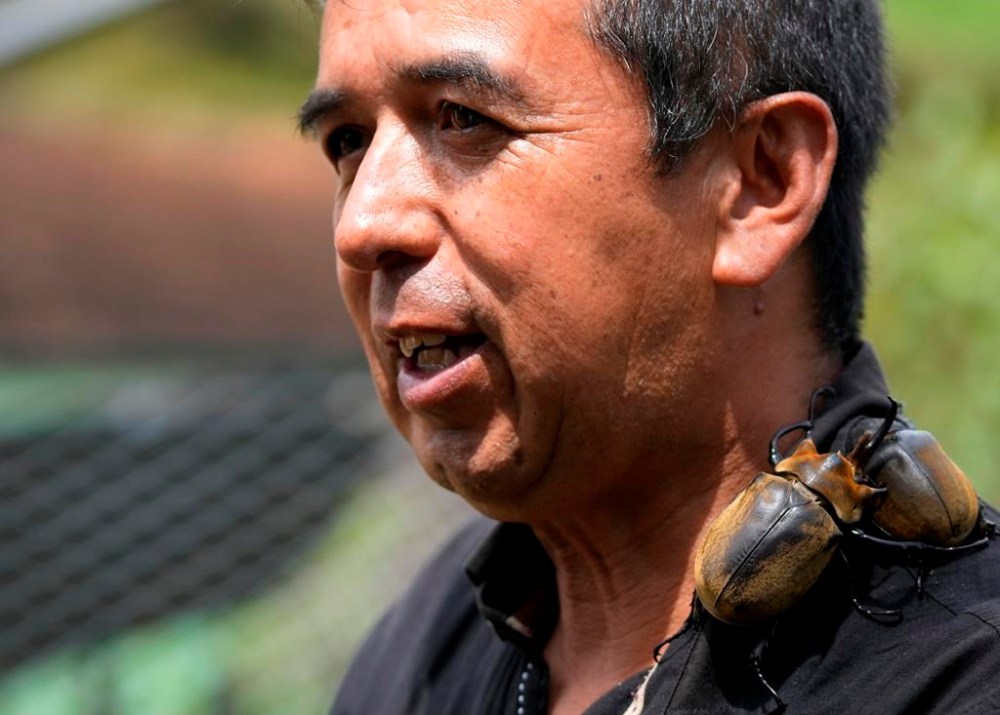
TUNJA, Colombia (AP) — Three yellow-and-black beetles clung to the shirt of Germán Viasus Tibamoso, a Colombian environmental engineer who uses beetle larvae to transform food waste into fertilizers.
As he encouraged them to move along, he murmured to them in Japanese — trying to get them accustomed, he said, to the sounds of their future homes.
The not-so-little bugs — which can grow up to 17 centimeters (6.5 inches) long — have a remarkably productive and complicated life among the humans who breed and collect them.
Viasus operates a company called Tierra Viva in a rural area around the city of Tunja, a city some 150 kilometers (95 miles) northwest of the Colombian capital of Bogota.
An attempt as a postgraduate student to produce organic fertilizer with worms failed, Viasus said, but he found beetle larvae in the bags of earth that remained. He tried using them instead. And it worked.
Tons of food scraps collected from nearby communities are spread in concrete ditches and covered with earth. Then beetle larvae — the stage between egg and adulthood — are introduced.
They chew through the refuse and their digestive microorganisms transform it into a fertilizer rich in nitrogen and phosphorous.
After four months or so, the product passes through a filter that separates the fertilizer from the larvae, who are at the point of becoming adult beetles.
They mate, and their eggs are used to start the process anew. The adults, however, go on very different journeys. Some are headed for scientific labs. And a lucky few embark on a future across the Pacific in Japan, where beetles are popular as pets, and are even sold over online emporiums such as Amazon.
Tierra Viva has been exporting the bugs — largely Hercules beetles — since 2004, and Viasus said they can bring as much as $150 each.
This year the company sent 100 beetles to Tokyo — down from 300 last year — held in little plastic cases with air holes and food.

The sales are often in the company’s variant of cryptocurrency, called “Kmushicoin” — a variant on a Japanese word for beetle.
Viasus, 52, said he hopes the project can grow and prosper for another century — perhaps with its fertilizer used in reforestation projects.
“It’s very difficult in Colombia … because we do it without any help from the state or any other entity. In any other country of the world, a project like this would get a lot of help,” he said.
___
Associated Press writer Mari Yamaguchi in Tokyo contributed to this report.