NASA capsule on way to moon after launch by giant new rocket

Advertisement

Advertise with us

CAPE CANAVERAL, Fla. (AP) — A space capsule hurtled toward the moon Wednesday for the first time in 50 years, following a thunderous launch of NASA’s mightiest rocket in a dress rehearsal for astronaut flights.

Read this article for free:


or

Already have an account? Log in here »

To continue reading, please subscribe:

Subscribe and receive a limited-edition Free Press branded hat or tote.

Digital Subscription

One year of digital access for only $205*

  • Enjoy unlimited reading on winnipegfreepress.com
  • Read the E-Edition, our digital replica newspaper
  • Access News Break, our award-winning app
  • Play interactive puzzles

*First annual payment billed as $205.00 + GST for one year. This annual subscription will automatically renew at $233.00 + GST every 52 weeks (10% off the regular annual price of $259.35). Offer available to new and qualified returning subscribers only. Cancel any time.

To continue reading, please subscribe:

Add Free Press access to your Brandon Sun subscription for only an additional

$1 for the first 4 weeks*

  • Enjoy unlimited reading on winnipegfreepress.com
  • Read the E-Edition, our digital replica newspaper
  • Access News Break, our award-winning app
  • Play interactive puzzles
Start now

*Your next Brandon Sun subscription payment will increase by $1.00 and you will be charged $17.95 plus GST for four weeks. After four weeks, your payment will increase to $24.95 plus GST every four weeks.

Hey there, time traveller!
This article was published 16/11/2022 (1397 days ago), so information in it may no longer be current.

CAPE CANAVERAL, Fla. (AP) — A space capsule hurtled toward the moon Wednesday for the first time in 50 years, following a thunderous launch of NASA’s mightiest rocket in a dress rehearsal for astronaut flights.

No one was on board this debut flight, just three test dummies. The capsule is headed for a wide orbit around the moon and then a return to Earth with a Pacific splashdown in about three weeks.

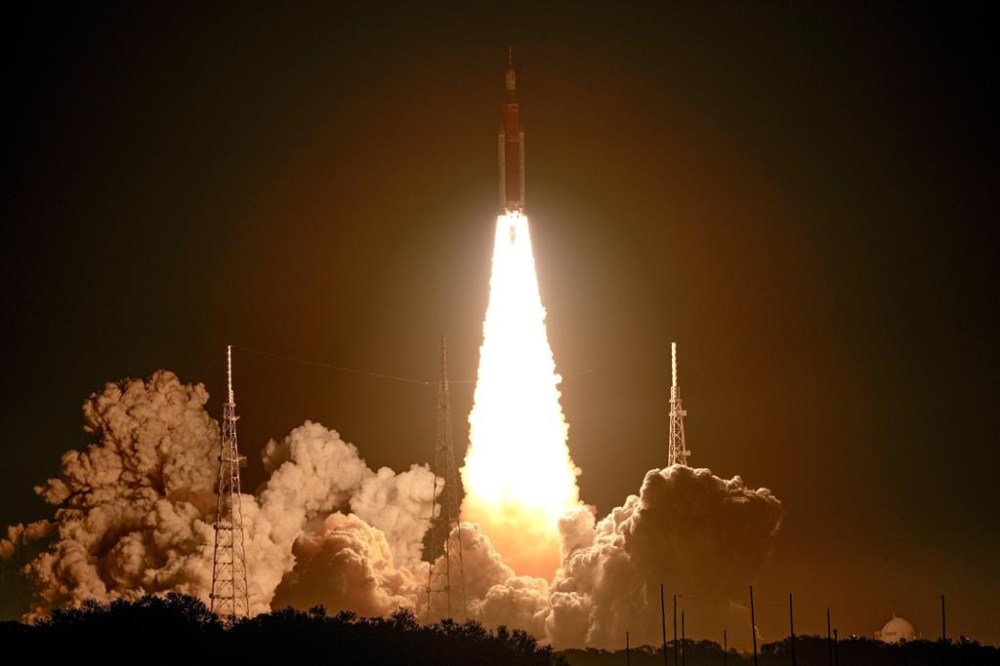
After years of delays and billions in cost overruns, the Space Launch System rocket roared skyward, rising from Kennedy Space Center on 8.8 million pounds (4 million kilograms) of thrust and hitting 100 mph (160 kph) within seconds. The Orion capsule was perched on top and, less than two hours into the flight, busted out of Earth’s orbit toward the moon.

“It was pretty overwhelming,” said NASA Administrator Bill Nelson. ”We’re going out to explore the heavens, and this is the next step.”

The moonshot follows nearly three months of vexing fuel leaks that kept the rocket bouncing between its hangar and the pad. Forced back indoors by Hurricane Ian at the end of September, the rocket stood its ground outside as Nicole swept through last week with gusts of more than 80 mph (130 kph). Although the wind caused some damage, managers gave the green light for the launch.

An estimated 15,000 people jammed the launch site, with thousands more lining the beaches and roads outside the gates, to witness NASA’s long-awaited sequel to Project Apollo, when 12 astronauts walked on the moon from 1969 and 1972. Crowds also gathered outside NASA centers in Houston and Huntsville, Alabama, to watch the spectacle on giant screens.

The rocket rode a huge trail of flames toward space, with a half-moon glowing brightly and buildings shaking.

The liftoff marked the start of NASA’s Artemis lunar exploration program, named after Apollo’s mythological twin sister. The space agency is aiming to send four astronauts around the moon on the next flight, in 2024, and land humans there as early as 2025.

In this photo provided by NASA, guests at the Banana Creek viewing site wait for the launch of NASA's Space Launch System rocket carrying the Orion spacecraft on the Artemis I flight test, Tuesday, Nov. 15, 2022, at NASA's Kennedy Space Center in Fla. (Keegan Barber/NASA via AP)

“For the Artemis generation, this is for you,” launch director Charlie Blackwell-Thompson called out, referring to all those born after Apollo. She later told her team: “You have earned your place in history.”

The 322-foot (98-meter) SLS is the most powerful rocket built by NASA, with more thrust than either the space shuttle or the mighty Saturn V that carried men to the moon. A series of hydrogen fuel leaks plagued the summertime launch attempts as well as countdown tests. A fresh leak erupted at a new spot during Tuesday night’s fueling, but an emergency team tightened the faulty valve on the pad. Then a U.S. Space Force radar station went down, resulting in another scramble, this time to replace an ethernet switch.

“The rocket, it’s alive. It’s creaking. It’s making venting noises. It’s pretty scary,” said Trent Annis, one of the three men who entered the blast danger zone to fix the leak. “My heart was pumping. My nerves were going.”

Orion should reach the moon by Monday, more than 230,000 miles (370,000 kilometers) from Earth. After coming within 80 miles (130 kilometers) of the moon, the capsule will enter a far-flung orbit stretching about 40,000 miles (64,000 kilometers) beyond.

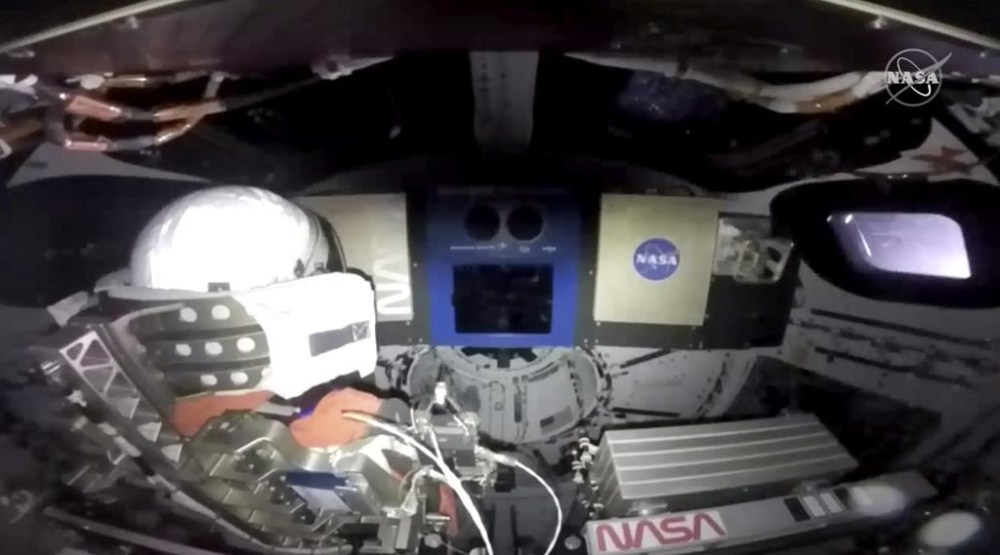
The $4.1 billion test flight is set to last 25 days, roughly the same as when crews will be aboard. The space agency intends to push the spacecraft to its limits and uncover any problems before astronauts strap in. The test dummies — NASA calls them moonikins — are fitted with sensors to measure such things as vibration, acceleration and cosmic radiation.
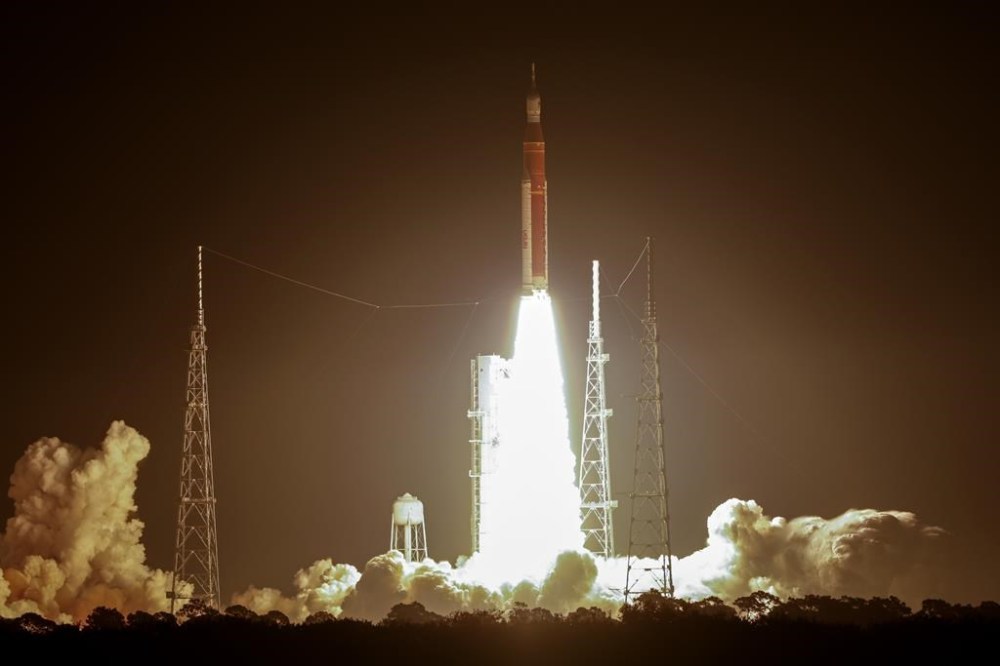
NASA's new moon rocket lifts off from Launch Pad 39B at the Kennedy Space Center in Cape Canaveral, Fla., Wednesday, Nov. 16, 2022. This launch is the first flight test of the Artemis program. (AP Photo/Terry Renna)

Nelson cautioned “things will go wrong” during this demo. A few minor issues cropped up early in the flight, although preliminary indications were the boosters and engines performed well.

“I personally am not going to rest well until we get safely to splashdown and recovery,” said mission manager Mike Sarafin.

The rocket was supposed to have made its dry run by 2017. Government watchdogs estimate NASA will have spent $93 billion on the project by 2025.

Ultimately, NASA hopes to establish a base on the moon and send astronauts to Mars by the late 2030s or early 2040s.

Many hurdles still need to be cleared. The Orion capsule will take astronauts only to lunar orbit, not the surface.
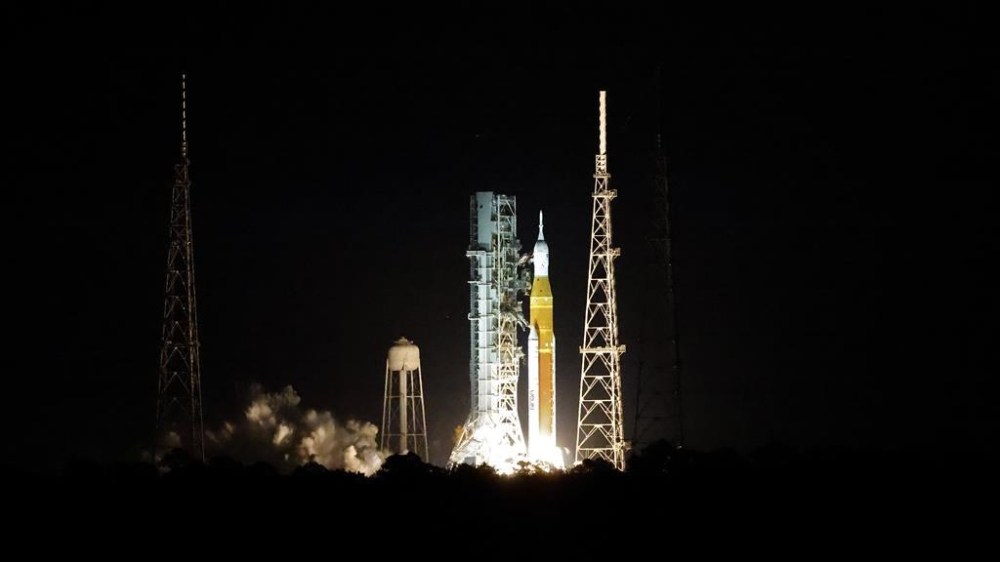
NASA's new moon rocket lifts off from Kennedy Space Center's Launch Pad 39-B Wednesday, Nov. 16, 2022, in Cape Canaveral, Fla. (AP Photo/Terry Renna)

NASA has hired Elon Musk’s SpaceX to develop Starship, the 21st-century answer to Apollo’s lunar lander. Starship will carry astronauts back and forth between Orion and the lunar surface, at least on the first trip in 2025. The plan is to station Starship and eventually other companies’ landers in orbit around the moon, ready for use whenever new Orion crews pull up.

Reprising an argument that was made during the 1960s, Duke University historian Alex Roland questions the value of human spaceflight, saying robots and remote-controlled spacecraft could get the job done more cheaply, efficiently and safely.

“In all these years, no evidence has emerged to justify the investment we have made in human spaceflight — save the prestige involved in this conspicuous consumption,” he said.

NASA is waiting until this test flight is over before introducing the astronauts who will be on the next one and those who will follow in the bootsteps of Apollo 11′s Neil Armstrong and Buzz Aldrin.

Most of NASA’s corps of 42 active astronauts and 10 trainees were not even born yet when Apollo 17 moonwalkers Gene Cernan and Harrison Schmitt closed out the era, 50 years ago next month.

Spectators wait for the launch of NASA's new moon rocket launch at Pad 39B at the Kennedy Space Center in Cape Canaveral, Fla., Wednesday, Nov. 16, 2022. This launch is the first flight test of the Artemis program. (AP Photo/Terry Renna)

“We are jumping out of our spacesuits with excitement,” astronaut Christina Koch said before the launch.

After a nearly yearlong International Space Station mission and all-female spacewalk, Koch, 43, is on NASA’s short list for a lunar flight. So is astronaut Kayla Barron, 35, who finally got to witness her first rocket launch, not counting her own a year ago.

“It took my breath away, and I was tearing up,” Barron said. “What an amazing accomplishment for this team.”

___

The Associated Press Health and Science Department receives support from the Howard Hughes Medical Institute’s Department of Science Education. The AP is solely responsible for all content.
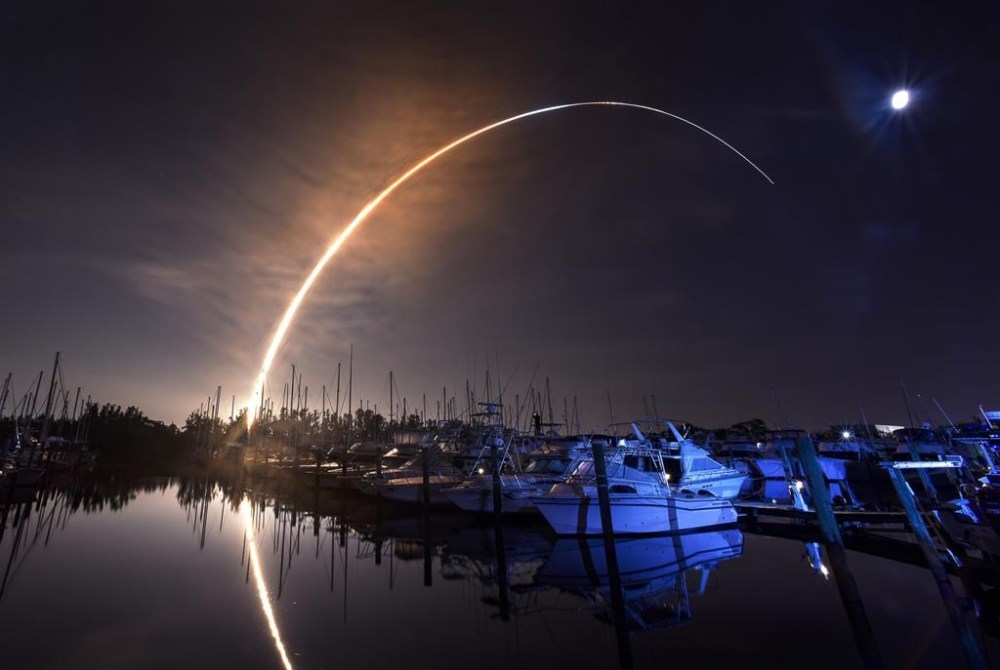
NASA's new moon rocket lifts off from the Kennedy Space Center in Cape Canaveral, Wednesday morning, Nov. 16, 2022, as seen from Harbor town Marina on Merritt Island, Fla. The moon is visible in the sky. (Malcolm Denemark/Florida Today via AP)
NASA's new moon rocket lifts off from Launch Pad 39B at the Kennedy Space Center in Cape Canaveral, Fla., Wednesday, Nov. 16, 2022. This launch is the first flight test of the Artemis program. (AP Photo/John Raoux)
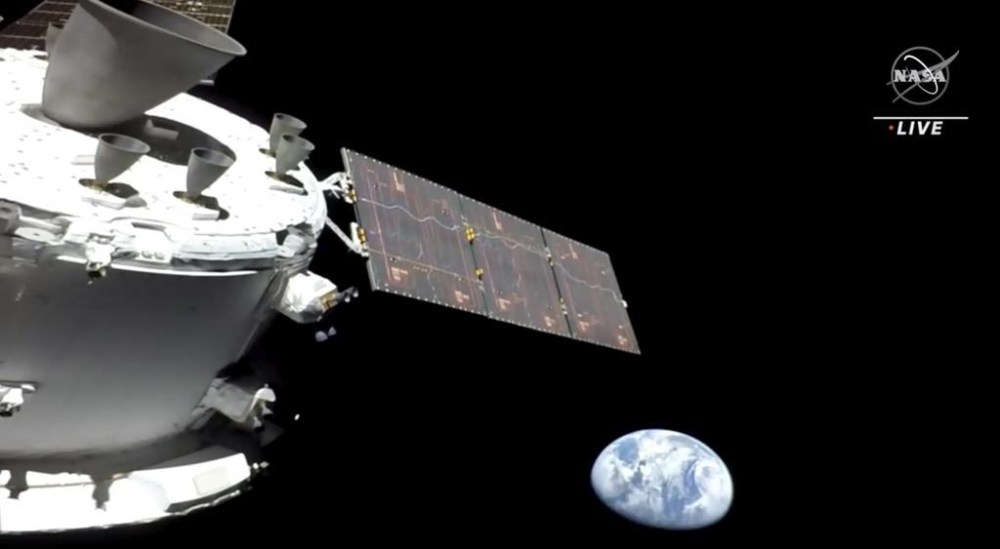
This screengrab from NASA TV shows Earth, as seen from the NASA moon rocket, on Wednesday, Nov. 16, 2022. NASA's new moon rocket blasted off on its debut flight with three test dummies aboard Wednesday, bringing the U.S. a big step closer to putting astronauts back on the lunar surface for the first time since the end of the Apollo program 50 years ago. (NASA via AP)
This screengrab from NASA shows inside the NASA moon rocket, an un-crewed test flight, on Wednesday, Nov. 16, 2022. NASA's new moon rocket blasted off on its debut flight with three test dummies aboard Wednesday, bringing the U.S. a big step closer to putting astronauts back on the lunar surface for the first time since the end of the Apollo program 50 years ago. (NASA via AP)
Report Error Submit a Tip

More Stories

Ottawa urged to boost local colleges

Alex Lambert 3 minute read Preview

Ottawa urged to boost local colleges

Alex Lambert 3 minute read Thursday, Feb. 19, 2026

BRANDON — Governments need to support local colleges to help Manitoba’s future workforce, Assiniboine College president Mark Frison told a Brandon Chamber of Commerce luncheon on Thursday.

Frison said it’s time for the federal government to step up, as the provincial government has added seats and programs for the college in multiple sectors.

“If all the dentists, architects and, unfortunately, physicians can be trained in Winnipeg, there is no reason why other occupations can’t be (trained) at other parts of the province,” Frison said.

“Just like we train all the apprenticeship welders and agricultural technologists here in Brandon.”

Read
Thursday, Feb. 19, 2026

Goodness alive, well in N.L.-set musical

Jen Zoratti 4 minute read Preview

Goodness alive, well in N.L.-set musical

Jen Zoratti 4 minute read Yesterday at 2:02 AM CDT

I first saw Come From Away — the true-story musical about the incredible efforts of the residents of Gander, N.L. on Sept. 11, 2001, who welcomed nearly 7,000 travellers diverted to their remote town after the attacks on the World Trade Center and the Pentagon — in 2022, when Broadway Across Canada brought it to the Centennial Concert Hall.

I went in cold, but with blunted expectations; it seemed, on premise alone, like it could tilt too far into shmaltzy sentimentality, that it would be too earnest in its goodness.

So, when I wept until my face was as wet and salty as though it had been slapped by the waves of the North Atlantic, I was pleasantly surprised. I loved it. It’s emotional, yes. It’s sentimental, yes. But you can’t help but feel both buoyed — and, dare I say, patriotic — by the end of it.

Written by Canadians Irene Sankoff and David Hein, Come From Away seemed an unlikely hit when it opened on Broadway in 2017. But there was, by then, an appetite for it.

Read
Yesterday at 2:02 AM CDT

Socialite dying to die can’t find a killer

Reviewed by Julie Carl 4 minute read Preview

Socialite dying to die can’t find a killer

Reviewed by Julie Carl 4 minute read Saturday, Sep. 5, 2026

Agnes Maurer wants to die. And she wants someone to do that for her.

Agnes Lives!, the debut novel of screenwriter Hallie Elizabeth Newton — her first screenplay credit, At Any Price, screened at TIFF in 2013 — covers 24 hours in socialite Agnes’s life as she seeks someone to murder her.

Would it be her boss, editor of the anti-fashion magazine Whorl, where Agnes, a former model, is listed as “cultural council”? The editor has a very attractive knife Agnes thinks could do the job, but editor Justine does not use it. Agnes takes the knife, full of hope she will find someone else to use it.

Will that be Agnes’s famous writer-director boyfriend? No, it won’t. The murderer won’t be the gun dealer she finds on Craigslist, nor the operator of a gun club who insists Agnes watch a video on gun safety. Nor is it the old politician from a previous life, nor a security guard who watches Agnes pee in an alley, nor the apparent Chinatown thugs she tries to buy a gun from, nor is it the famous director, nor the avant-garde artist.

Read
Saturday, Sep. 5, 2026

The port of Churchill — but done right

Editorial 4 minute read Preview

The port of Churchill — but done right

Editorial 4 minute read Yesterday at 2:00 AM CDT

The seagoing grain carrier wasn’t christened with a champagne bottle. There was no confetti or streamers. Nevertheless, the Aug. 31 event marking the first shipment of grain to be loaded at the Port of Churchill since 2020 was celebrated like the launch of a brand new vessel.

The presence of the federal minister of northern and arctic affairs, provincial cabinet ministers and leaders and elders from several northern First Nations signalled that the fast-tracked process of refurbishing and buffing up Manitoba’s deep-water seaport gem is gaining momentum.

For OneNorth, the partnership of 29 First Nations and 12 northern communities which owns the Port of Churchill and the Hudson Bay Railway (both operated by the Arctic Gateway Group) the event heralded a new beginning. It’s been eight years since OneNorth purchased the port and railroad, and six years since grain was moved by rail through Manitoba and then by ship to European markets. Two more grain shipments, plus shipments of potash and critical minerals, will continue through the fall.

When Prime Minister Mark Carney solicited the premiers to suggest “nation-building” projects following his election in 2025, Premier Wab Kinew pitched a Manitoba trade corridor that would move wheat, critical minerals, potash and energy (oil or liquid natural gas) through the Port of Churchill.

Read
Yesterday at 2:00 AM CDT

Nifty neighbours also jonesing for geniality

Maureen Scurfield 4 minute read Yesterday at 2:02 AM CDT

DEAR MISS LONELYHEARTS: Recently, a new couple with no children moved onto our cul de sac, and everybody is taking notice! This attractive pair with no kids both drive amazing cars, work from home and leave their garage doors up a lot. Everybody on the street walks by to sneak a peek into the big garage at just about any time of day.

Lately, the man’s been out on his front lawn in a muscle shirt in the late afternoon, planting shrubs and putting up stylish fall-themed ornaments. At night they often leave the living-room curtains open. That makes for convenient viewing for curious neighbours like us!

A few days ago, my wife invited the new couple over for a barbecue and swim in our pool. They are really nice people, but mentioned that other people nearby have been pretty stand-offish. They wonder why. Should I tell them it’s probably just jealousy over their beautiful vehicles and enviable lifestyle, or should I just shut up?

—Wanting to Help, Sage Creek

Dark money drags democracy toward the abyss

Russell Wangersky 6 minute read Yesterday at 2:00 AM CDT

There’s an object lesson playing out to the south of us, and not exactly the one you may be thinking about.

It’s not the obvious one of “don’t elect a federal leader who has a clear history of caring about his own grievances before he thinks about the needs of his citizens,” or more simply, “don’t elect someone who is less an agent of change than he is an agent of chaos.”

No, the lesson playing out to the south of us — one likely to have an impact on U.S. midterm elections later this fall as well as the last U.S. presidential election — is that there is a clear danger in allowing dark money to fuel political campaigns.

There are estimates that political action campaigns — or PACs — will once again dump billions of U.S. dollars into the mix, funding advertising campaigns and other political campaign efforts, and steamrolling less-funded efforts.