Road map to reconciliation

Chief Robert Joseph shares personal residential-school story — and a potential path forward

Advertisement

Advertise with us

In August 2022, Pope Francis apologized — finally — for Roman Catholic complicity in “cultural genocide” and the Indian Residential School system.

Read this article for free:


or

Already have an account? Log in here »

To continue reading, please subscribe:

Subscribe and receive a limited-edition Free Press branded hat or tote.

Digital Subscription

One year of digital access for only $205*

  • Enjoy unlimited reading on winnipegfreepress.com
  • Read the E-Edition, our digital replica newspaper
  • Access News Break, our award-winning app
  • Play interactive puzzles

*First annual payment billed as $205.00 + GST for one year. This annual subscription will automatically renew at $233.00 + GST every 52 weeks (10% off the regular annual price of $259.35). Offer available to new and qualified returning subscribers only. Cancel any time.

To continue reading, please subscribe:

Add Free Press access to your Brandon Sun subscription for only an additional

$1 for the first 4 weeks*

  • Enjoy unlimited reading on winnipegfreepress.com
  • Read the E-Edition, our digital replica newspaper
  • Access News Break, our award-winning app
  • Play interactive puzzles
Start now

*Your next Brandon Sun subscription payment will increase by $1.00 and you will be charged $17.95 plus GST for four weeks. After four weeks, your payment will increase to $24.95 plus GST every four weeks.

Hey there, time traveller!
This article was published 24/09/2022 (1428 days ago), so information in it may no longer be current.

In August 2022, Pope Francis apologized — finally — for Roman Catholic complicity in “cultural genocide” and the Indian Residential School system.

“I am sorry. I ask forgiveness, in particular, for the ways in which many members of the Church… co-operated… in projects of cultural destruction and forced assimilation…”

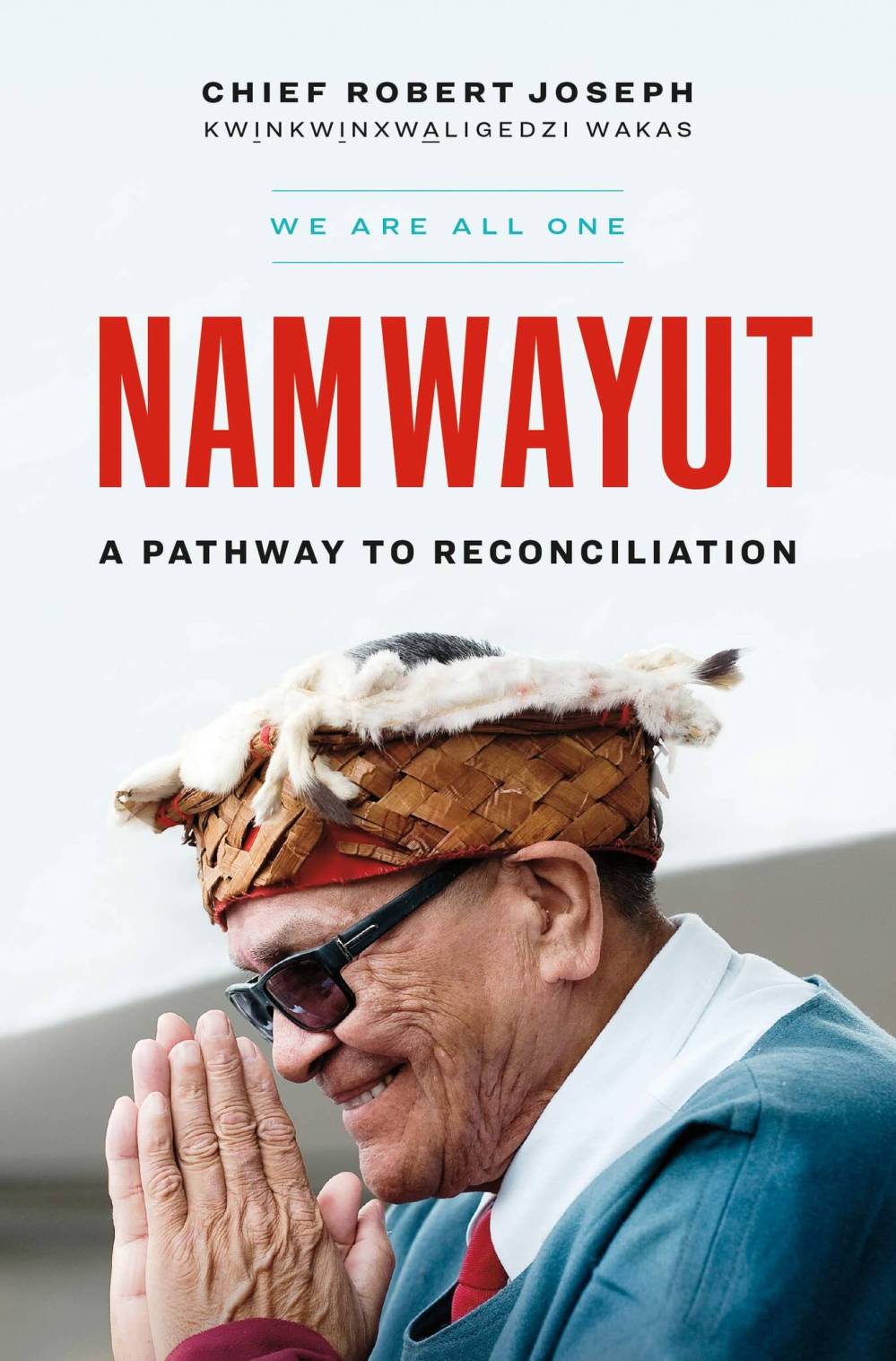
In his stirring and hopeful memoir of overcoming his abandonment to St .Michael’s Residential School in Alert Bay, B.C., Kwakwaka’wakw Chief Robert Joseph notes his disappointment at a 1998 expression of “regret” by then-Indian affairs minister Jane Stewart. “Yes, the word ‘sorry’ was used in the speech, eventually,” he says, “but what the government officially offered was regret.”
Supplied 
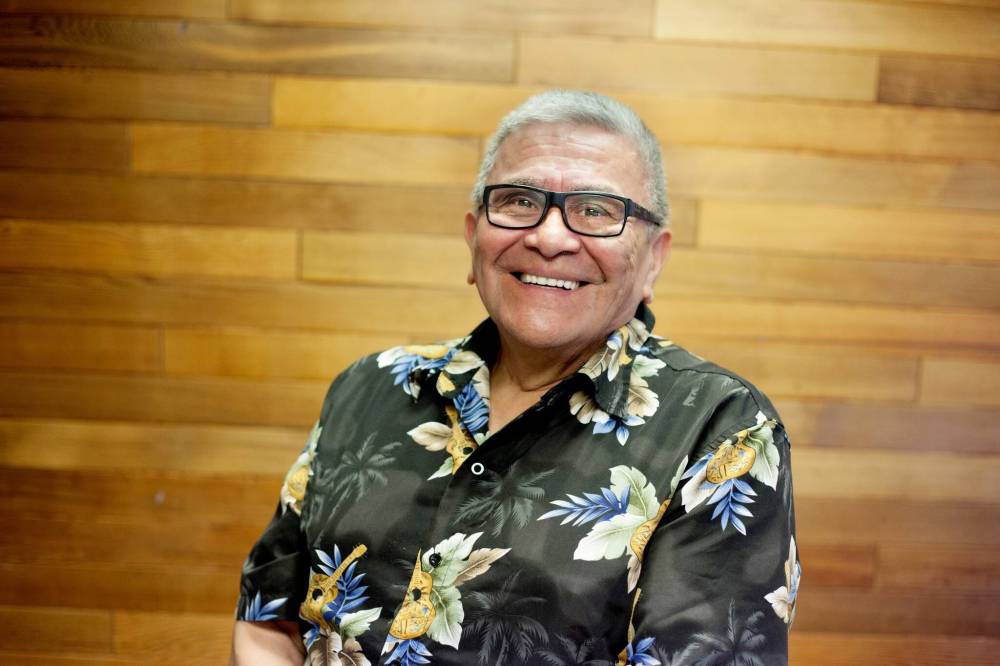
                                Considering his experiences at residential school, the lack of rancour in Chief Robert Joseph’s memoir shows his commitment to reconciliation.

Supplied

Considering his experiences at residential school, the lack of rancour in Chief Robert Joseph’s memoir shows his commitment to reconciliation.

Ten years later, before the announcement of the Truth and Reconciliation Commission, Chief Joseph told prime minister Stephen Harper to “end in a place of hope.” He describes Harper’s apology as beautiful, including the words, ‘for this we are truly sorry.’”

Chief Joseph’s memoir, subtitled A Pathway to Reconciliation, chronicles his own struggles — with the abuse and damage he suffered at the residential school, and later the ramifications and consequences. But throughout, he brings the reader along on his winding road toward healing.

He holds several honorary doctorates, including in law, from the University of British Columbia and from Vancouver Island University, and in divinity from Vancouver School of Theology. He is an officer of the Order of Canada.

St. Michael’s, where “there was no possible way to learn anything,” succeeded in destroying his self-esteem and made him embarrassed by his culture, resulting in years of broken relationships and alcoholism.

Details of his experiences are jumbled, nightmarish, horrifying and mercifully not the emphasis of the book, although brutal enough to reinforce for readers the overwhelming evil of forced assimilation.

Mostly, he concentrates on efforts to bring himself, other Indigenous peoples and the rest of the residents of Canada — and the world — to feel “our way back into our culture.”

Two formative years when there was a day school in his village allowed him to interact with his primary father figure, Chief Tom Dawson.

“I flourished at the Kingcome Inlet Indian Day School, with high marks in composition… science…and reading, and even an A in arithmetic.”

More importantly, he was connected to his Kwak’wala language and culture through Dawson’s example and teaching, which promoted a “box of treasures” in potlatches.

“Chiefs had possession of these metaphorical boxes in which they collected everything of value: their family’s songs and dances, their prerogatives. Our origin, our place in the universe, togetherness, belonging… flowed from those boxes.”
Namwayut
                                 Namwayut

Namwayut

Namwayut

Joseph continues that leadership tradition at his own potlatches, and as ambassador for peace and reconciliation with the Interreligious and International Federation for World Peace, extending the ideas of togetherness and belonging to Indigenous and immigrants alike.

“We all need to be reconciled to love,” he insists. “Reconciliation should be a virtue, a core value, and it should suffuse the way that we live and breathe.”

Considering the pain and desertion he experienced at St. Michael’s, the lack of rancour in this memoir is a sobering manifestation of Joseph’s commitment to his pathway to reconciliation.

Controversially, he optimistically wrests a “blessing” out of the overwhelming harm. “The Indigenous residential school story may be what will transform this country in galvanizing all of us, together. Canada will be a better country for knowing this story.

“We need each other… Survivors, and all people, need a welcoming, safe, and sacred space to tell our stories.”

Namwayut (We Are All One) is a good place to start, under Chief Robert Joseph’s loving and inclusive leadership.

Bill Rambo teaches at the Laureate Academy on Treaty 1 territory in St. Norbert.

Report Error Submit a Tip

More Stories

Judge decries ‘senseless acts’ during sentencing for killers in Berens River manslaughter

Erik Pindera 4 minute read Preview

Judge decries ‘senseless acts’ during sentencing for killers in Berens River manslaughter

Erik Pindera 4 minute read Yesterday at 4:37 PM CDT

Two men have admitted their guilt in the beating death of a 45-year-old father in Berens River First Nation last winter.

Michael Oliver Franklin, 32, and Thomas Bryton Goosehead, 24, pleaded guilty to manslaughter Thursday in the Feb. 13, 2025 killing of Leslie Neil Mason.

“These types of senseless acts happen far too often in Berens River and every other small community in Manitoba, including here in Winnipeg,” Court of King’s Bench Justice Kenneth Champagne said.

The men had been charged with second-degree murder, but admitted to the lesser offence as part of a plea bargain struck between their defence lawyers and Crown prosecutor Thomas Boult, largely due to concerns with the strength of the case Boult developed after meeting with witnesses in Berens River.

Read
Yesterday at 4:37 PM CDT

Climate change, capable ships could extend Churchill shipping season by months, studies show

Gabrielle Piché 5 minute read Preview

Climate change, capable ships could extend Churchill shipping season by months, studies show

Gabrielle Piché 5 minute read Updated: Yesterday at 5:14 PM CDT

Climate change and ice-strengthened ships — but not the most expensive icebreakers — could enable a much longer shipping season through the Port of Churchill, new studies released Friday suggest.

However, the studies flagged concerns including unpredictable sea ice conditions and tricky navigation to the northern Manitoba port.

The provincial government shared results of studies from the University of Manitoba, Arctic Research Foundation and Fednav, Canada’s largest international dry bulk shipping company.

“Churchill could be a year-round port right now, with current technology and using icebreakers and ships that are a lot cheaper, a lot more affordable than we previously thought,” Premier Wab Kinew said.

Read
Updated: Yesterday at 5:14 PM CDT

Educated people vote

John R. Wiens 5 minute read Yesterday at 2:00 AM CDT

I add my voice to Erna Buffie’s Think Tank piece “Democracy is a civic election issue” (Aug. 13) by asserting that democracy is a public education issue. Put another way, this fall’s municipal and school board elections are a test of public education — educating democratic citizens who appreciate our democratic inheritance enough to take responsibility for renewing it.

Voter turnouts for elections in Canada are abysmal. Where there should be 100 per cent participation, it often approaches 50 per cent federally and provincially, 25 per cent in local elections. The explanations given seem insufficient and unsatisfying, as are the reasons given by those who decide not to bother.

Some say they feel disempowered and alienated from the political process, feeling they have no say in governmental decisions which rule their lives.

Others appear resigned to the fact that, if they were to speak, they would simply be passed over or ignored, choosing not to vote because their votes, like their voices, make no difference and count for nothing. Still others say they’re too busy or just don’t care.

Bishnoi Gang active in Manitoba

Erik Pindera 4 minute read Monday, Jul. 20, 2026

The Bishnoi Gang, which is run by a convicted gangster from his prison cell in India, appears to have gained a foothold in Manitoba.

A civil forfeiture lawsuit filed in the Court of King’s Bench this month has revealed a 36-year-old man, who was arrested this year, had claimed he is a member of the Bishnoi Gang when he tried to extort cash from a Winnipeg resident.

Arshdeep Singh Brar was arrested by Winnipeg Police Service officers in Headingley on March 3 and charged with extortion and two firearms offences, says the claim.

The victim, identified in the court documents as a man of South Asian descent, had gone to police.

Summer flooding sinks some fall harvest hopes

Tiago Resko 4 minute read Preview

Summer flooding sinks some fall harvest hopes

Tiago Resko 4 minute read Yesterday at 7:08 PM CDT

A number of Manitoba farmers say they are expecting this year’s harvest to be one of the worst they’ve seen after major flooding decimated fields at the start of summer.

Bob Elliot, who has been farming east of Stonewall for 43 years, said he’s expecting the operation’s 5,500 acres to produce roughly half their normal yield.

Stonewall has logged the most precipitation this summer, with 523 millimetres of rainfall between May 1 and Aug. 16, according to Manitoba’s weather conditions report.

Elliot said the amount of rain has created a “unique” situation for farmers. “This is something that I don’t think anyone around here has ever seen.”

Read
Yesterday at 7:08 PM CDT

Downtown outage caused by construction mishap: Bell MTS

Zoe Pierce 3 minute read Preview

Downtown outage caused by construction mishap: Bell MTS

Zoe Pierce 3 minute read Thursday, Aug. 20, 2026

Some customers in downtown Winnipeg are experiencing a Bell MTS service interruption after telecommunications infrastructure was damaged Tuesday.

Bell MTS said on social media that a third-party construction crew accidentally cut a copper cable, causing the outage.

Contractors drilled through multiple underground ducts, causing significant damage to several cables and requiring extensive repairs.

A small number of buildings, mainly concentrated on Fort Street, Garry Street and York Avenue, may be experiencing landline or internet issues because of the damage, said Bell spokesperson Elise von Scheel.

Read
Thursday, Aug. 20, 2026