EXPLAINER: Pregnancy complications under abortion spotlight

Advertisement

Advertise with us

Serious pregnancy complications are rare in the United States but they still affect thousands of women each year.

Read this article for free:


or

Already have an account? Log in here »

To continue reading, please subscribe:

Subscribe and receive a limited-edition Free Press branded hat or tote.

Digital Subscription

One year of digital access for only $205*

  • Enjoy unlimited reading on winnipegfreepress.com
  • Read the E-Edition, our digital replica newspaper
  • Access News Break, our award-winning app
  • Play interactive puzzles

*First annual payment billed as $205.00 + GST for one year. This annual subscription will automatically renew at $233.00 + GST every 52 weeks (10% off the regular annual price of $259.35). Offer available to new and qualified returning subscribers only. Cancel any time.

To continue reading, please subscribe:

Add Free Press access to your Brandon Sun subscription for only an additional

$1 for the first 4 weeks*

  • Enjoy unlimited reading on winnipegfreepress.com
  • Read the E-Edition, our digital replica newspaper
  • Access News Break, our award-winning app
  • Play interactive puzzles
Start now

*Your next Brandon Sun subscription payment will increase by $1.00 and you will be charged $17.95 plus GST for four weeks. After four weeks, your payment will increase to $24.95 plus GST every four weeks.

Hey there, time traveller!
This article was published 22/08/2022 (1508 days ago), so information in it may no longer be current.

Serious pregnancy complications are rare in the United States but they still affect thousands of women each year.

They may endanger the health of the mother, fetus or both. Many are more common in Black patients and contribute to their disproportionately high maternal mortality rate.

Severe cases may force patients and their physicians to consider abortions, but laws enacted or proposed since the Supreme Court overturned Roe v. Wade in June have limited that option.
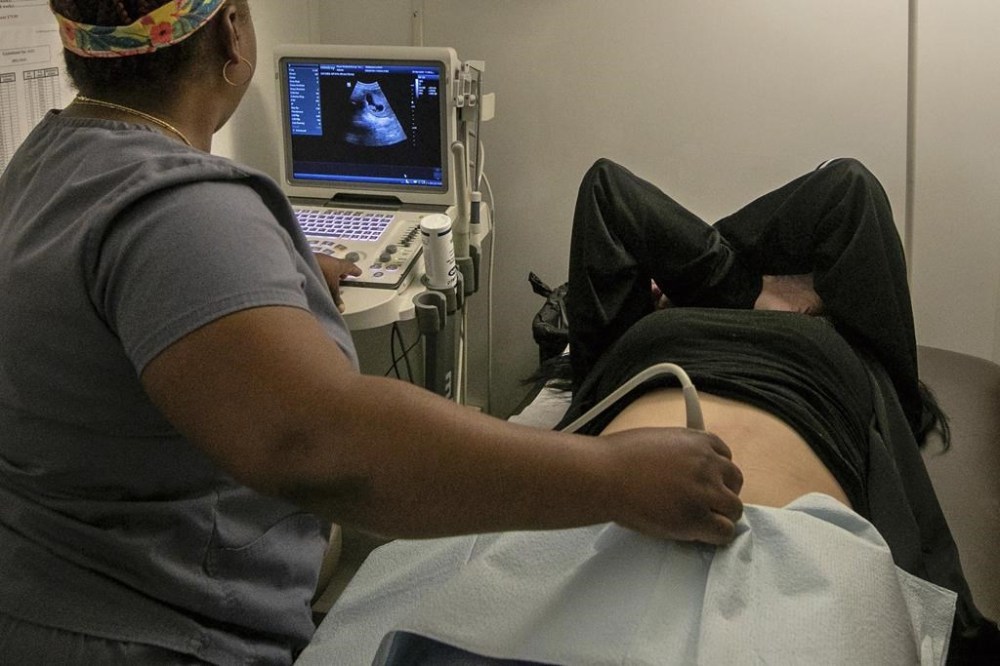
FILE - An operating room technician performs an ultrasound on a patient at an abortion clinic in Shreveport, La., Wednesday, July 6, 2022. Serious pregnancy complications are rare in the United States but they still affect thousands of women each year. (AP Photo/Ted Jackson, File)

At least 19 states with abortion restrictions allow exemptions if the mother develops a condition with severe or life-threatening health consequences, but determining whether either situation exists can be a challenging judgment call. Physicians have said they feel new abortion limits are forcing them to let patients with complications deteriorate.

Here’s a look at some of the most common pregnancy complications that could lead a doctor to recommend an abortion:

PREECLAMPSIA

A serious high blood pressure condition that can develop suddenly in pregnancy, typically during the second half, is called preeclampsia.

It develops in about 1 in 25 pregnancies. Symptoms include swollen limbs, headaches and blurred vision.

In addition to elevated blood pressure, patients may develop kidney problems. In severe cases, fluid in the lungs, seizures or strokes may occur.

Treatment may include hospitalization, along with medicines to lower blood pressure and promote fetal lung development. Ending the pregnancy by inducing delivery or with an abortion may be recommended when the mother’s life is in danger.

PREMATURE RUPTURE OF MEMBRANES

Membranes in the fluid-filled amniotic sac that surrounds the fetus often rupture or break at the start of childbirth — commonly called water breaking. In at least 3% of pregnancies, the sac ruptures too early, often leading to preterm birth.

The condition increases chances for a uterine infection. Doctors may recommend ending the pregnancy, especially if water breaks before 24 weeks, when infant survival chances are slim.

Instead of abortion, doctors could monitor the patients and closely watch for signs of infection. But risks of severe maternal complications are greatly increased and chances of a successful birth are small, recent studies have shown.

ECTOPIC PREGNANCIES

Ectopic pregnancies are when a fertilized egg grows outside the womb, often in a fallopian tube. It happens in about 2% of U.S. pregnancies.

There is no chance for the embryo to survive, but it can cause the tube to burst, leading to dangerous internal bleeding.

Treatment for less severe cases may include medication that stops the embryo from growing, ending the pregnancy. Otherwise surgery is done, sometimes requiring removing the affected tube.

Doctors emphasize that treatment for ectopic pregnancies is not the same as an abortion.

Some politicians who oppose abortions have suggested that ectopic pregnancies could be reimplanted in the uterus, sometimes citing two unsubstantiated case reports published decades apart in medical journals. Experts say any such attempts would damage the embryo and could not result in a successful pregnancy.

PLACENTA ABRUPTION

The placenta is a crucial structure that develops in pregnancy and attaches to the uterine wall, connecting with the umbilical cord to help nourish the fetus.

In about 1 in 100 pregnancies, the placenta separates prematurely from the womb, after about 20 weeks of pregnancy. That can pose a life-threatening risk to the fetus and can cause dangerous maternal bleeding.

Inducing childbirth or ending the pregnancy may be recommended.

___

Follow AP Medical Writer Lindsey Tanner at @LindseyTanner.

___

The Associated Press Health and Science Department receives support from the Howard Hughes Medical Institute’s Department of Science Education. The AP is solely responsible for all content.

Report Error Submit a Tip

More Stories

Uber bans city driver facing sexual assault charge

Matthew Frank 2 minute read Yesterday at 12:43 PM CDT

A Winnipeg Uber driver has been permanently banned from the platform after police charged the man for allegedly sexually assaulting a passenger last month.

A woman reported that she used the ride service on Sept. 27 and the 27-year-old driver sexually assaulted her once the vehicle reached its destination in the Weston neighbourhood, the Winnipeg Police Service said in a news release.

Police said the woman was able to escape and get to safe place. The driver was arrested on Sept. 28 at an apartment complex on Kennedy Street. He was later released with conditions.

An Uber spokesperson said the driver is permanently banned, and the company is assisting police with the investigation.

Kinew, two NDP caucus members file lawsuit defence, deny defaming former party MLA Wasyliw to expel him

Erik Pindera 5 minute read Preview

Kinew, two NDP caucus members file lawsuit defence, deny defaming former party MLA Wasyliw to expel him

Erik Pindera 5 minute read Yesterday at 5:22 PM CDT

The premier and two New Democrat caucus members have denied they conspired to defame another politician as an excuse to oust him from the party.

Mark Wasyliw, now an independent Member of the Legislative Assembly representing Fort Garry, was booted from the NDP in September 2024, which the party claimed was due to Wasyliw’s former law partner representing convicted sex offender and disgraced fashion mogul Peter Nygard.

The independent MLA, who’s a defence lawyer, claims statements his former colleagues made in September 2024 linking him to Nygard or accusing him of lying, harmed him and his reputation.

Wasyliw filed his lawsuit in December last year, naming Premier Wab Kinew, Natural Resources Minister Ian Bushie and Seine River MLA Billie Cross as defendants. The claim was later amended to remove Bushie as a defendant and add Environment Minister Mike Moyes, who was at the time chair of the NDP caucus, in his place.

Read
Yesterday at 5:22 PM CDT

Canadian Mennonite University students, staff victims of cyberattack

Free Press staff 3 minute read Preview

Canadian Mennonite University students, staff victims of cyberattack

Free Press staff 3 minute read Updated: Yesterday at 6:26 PM CDT

Canadian Mennonite University fell victim to a cyberattack that compromised the data of current and former students and employees last month.

School officials became aware of the cybersecurity incident, in which an “unknown third party” accessed its information technology systems without authorization, on Sept. 18, university president Cheryl Pauls said in a recent statement.

The university has since confirmed the third party used that access to steal information from its systems.

“We immediately initiated our incident response plan, retained expert assistance, and informed the university community whose workflows were affected as soon as we became aware of the incident,” Pauls said. “We also reported this incident to law enforcement and will be filing a report with the Office of the Privacy Commissioner of Canada.”

Read
Updated: Yesterday at 6:26 PM CDT

This week’s silly geopolitical spat

Gwynne Dyer 4 minute read Yesterday at 2:01 AM CDT

“I would not like to call this an incident. Let’s say it’s a diplomatic misunderstanding,” said Ukrainian Foreign Affairs Minister Andrii Sybiha. But the South Korean president definitely sees it as a serious incident, and he has already gone public with it.

“If (Ukraine’s) refusal to acknowledge the facts and issue a public apology continues, we will take additional measures,” President Lee Jae-myung wrote on X. He probably means cutting the non-military aid South Korea gives to Ukraine. (There is no military aid, since the constitution bans Seoul from providing arms to a country actively involved in a war).

What monstrous misdeed did the Ukrainian government commit to deserve such harsh words from a country that is generally sympathetic to Ukraine’s struggle against its giant neighbour? Have the South Koreans discovered Ukrainian spies in the Blue House?

No, it’s what we professionals call a “spat.”

Letters, Oct. 7

6 minute read Yesterday at 2:01 AM CDT

On diet and humanity

Re: “Maybe ASI will need us” (Letters, Oct. 5)

Mr. Martin, humans eating animals is not part of the circle of life. Many cultures with abundant plant resources, or for religious beliefs, have historically subsisted on largely or strictly vegetarian diets. Likewise, in extreme environments such as the Arctic, Inuit rely heavily on animal products due to the near-absence of arable land. Humans adapt locally to their environments and do not have a single ancestral diet.

Clearly vegetarian or vegan diets are not fringe, as evidenced by plant-based products on main-stream grocery store shelves. To suggest the Free Press is morally endorsing a fringe diet is rubbish, (the newspaper) merely gives the public a platform for diverse opinions, thus generating individual, thought-provoking ideas and conversations — a practice that is desperately needed these days.

RRC Polytech tallies pair of tech programs

Aaron Epp 4 minute read Yesterday at 7:00 PM CDT

Red River College Polytechnic has announced two new degree programs aimed at preparing students to meet workforce demands in Manitoba industries such as engineering and manufacturing.

The first cohorts working toward bachelor of technology degrees in advanced manufacturing and mechatronics will enter the classroom in January at the Winnipeg college’s Notre Dame Avenue campus.

The two programs include a foundation in research methods, Indigenous worldviews and Industry 4.0 technologies to equip graduates with the skills and confidence to take on increasing responsibility in the workplace, RRC Polytech announced earlier this week.

They offer more options for existing students, graduates and mid-career professionals, the school said.