Indigenous leaders wish Pope’s acknowledgment of genocide was made on Canadian soil

Advertisement

Advertise with us

A member of the National Indian Residential School Circle of Survivors says it's good Pope Francis acknowledged that what happened in the schools amounted to genocide, but that he should have said it before he left Canada.

Read this article for free:


By clicking the button above, an account will be created and you will begin to receive some of our recommended newsletters. You may opt out of any newsletter by visiting your Email and Communication Preferences page or by clicking "unsubscribe" at the bottom of any email.

or

Already have an account? Log in here »

To continue reading, please subscribe:

Digital Subscription

One year of digital access for only $1.44 a week*

  • Enjoy unlimited reading on winnipegfreepress.com
  • Read the E-Edition, our digital replica newspaper
  • Access News Break, our award-winning app
  • Play interactive puzzles

*Billed as $5.77 plus GST every four weeks. After 52 weeks, price increases to the regular rate of $19.95 plus GST every four weeks. Offer available to new and qualified returning subscribers only. Cancel any time.

To continue reading, please subscribe:

Add Free Press access to your Brandon Sun subscription for only an additional

$1 for the first 4 weeks*

  • Enjoy unlimited reading on winnipegfreepress.com
  • Read the E-Edition, our digital replica newspaper
  • Access News Break, our award-winning app
  • Play interactive puzzles
Start now

*Your next Brandon Sun subscription payment will increase by $1.00 and you will be charged $17.95 plus GST for four weeks. After four weeks, your payment will increase to $24.95 plus GST every four weeks.

Hey there, time traveller!
This article was published 02/08/2022 (1550 days ago), so information in it may no longer be current.

A member of the National Indian Residential School Circle of Survivors says it’s good Pope Francis acknowledged that what happened in the schools amounted to genocide, but that he should have said it before he left Canada.

Ken Young, who is the former Manitoba regional chief of the Assembly of First Nations, says he believes the Pope failed to make the acknowledgment during his Canadian visit last week because Canadian Catholic officials failed to brief him properly.

Francis apologized multiple times throughout the week for abuses of Catholic-run residential schools, but didn’t use the word “genocide” until he was asked by reporters on his plane back to Rome if he accepted that members of the church participated in genocide.

Francis said the reason he did not say that on his apology visit was because he felt “genocide” was a technical term.

The Truth and Reconciliation Commission referred to residential schools as a form of cultural genocide when it released its final report in 2015, and since then, a number of Indigenous groups have amended this to say it was genocide.

Young says he believes Francis, when at the end of the Canadian visit, was free to express his own point of view.

“It’s good that he said it … but he should have said it when he was talking to people here in Canada, and in particular the First Nation survivors of Indian residential schools, and of course the Métis and Inuit,” Young said in a phone interview Monday in Winnipeg.

“I understood what he meant and why he said it. A lot of people would be surprised because a lot of people don’t appreciate and understand what genocide means within the meaning of the UN convention.”

Kenneth Deer, a member of the Mohawk Nation of Kahnawake, near Montreal, and a member of the Haudenosaunee External Relations Committee, said he felt the statement from the Pope aboard the papal plane was likely an accurate indication of what he feels.

“I thought his statement was amazing, I’m glad he said it. I wish he’d said it while he was in Canada instead of over the ocean,” Deer said.

“I think what you heard from the Pope at that time is what he really feels because he was talking off the cuff; all the other statements were prepared statements.”

Last year, after the Tk’emlups te Secwepemc First Nation in British Columbia said ground-penetrating radar detected what are believed to be the remains of 215 Indigenous children at a former residential school in Kamloops, Toronto Metropolitan University (formerly Ryerson University) law professor Pamela Palmater said the United Nations Convention on the Prevention and Punishment of the Crime of Genocide applies to Canada’s actions.

She said the convention states that a genocide is committed when members of a group are killed, subjected to serious physical or mental harm, put in conditions to destroy them, become victims to measures intended to prevent births or have their children forcibly transferred to another group.

Guelph University professor David MacDonald said at the time that the forcible transfer of children, which is part of the UN convention, occurred in the system of residential schools in Canada.

Deer said the Pope’s acknowledgment is important given many people were arguing against the findings of the Truth and Reconciliation Commission that the residential schools were a cultural genocide.

“But now we have the Pope, the head of the Catholic Church, saying yes it’s a genocide, so that’s why it’s very important,” Deer said.

Young, meanwhile, said he doesn’t think there’s a difference between “genocide” and “cultural genocide.”

“It’s either genocide or it’s no genocide,” Young said. “That’s the way I see it. It’s kind of black or white, I guess, but that’s my view.”

This report by The Canadian Press was first published Aug. 2, 2022.

Report Error Submit a Tip

The Free Press acknowledges the financial support it receives from members of the city’s faith community, which makes our coverage of religion possible.
More Stories

Cabbie, passenger dead after Salter Street collision

Free Press staff 2 minute read Preview

Cabbie, passenger dead after Salter Street collision

Free Press staff 2 minute read Updated: 5:46 PM CDT

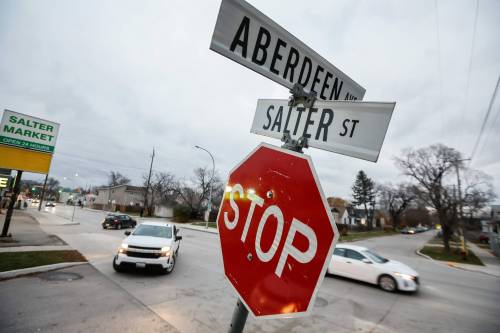
Two men died in a Wednesday morning collision between a taxi and a sedan on Salter Street near Aberdeen Avenue, police said Thursday.

Winnipeg Police Service officers were sent to the intersection at about 6:30 a.m., where they found the cab driver, a man in his 40s, and his passenger, a man in his 50s, in critical condition. Paramedics took the men to hospital, where they later died.

The sedan driver, a woman in her late teens, and an adult passenger, had minor injuries.

Traffic investigators believe the sedan was travelling west on Aberdeen when it collided with the cab that was southbound on Salter.

Read
Updated: 5:46 PM CDT

Waiting for Cormier verdict the ‘calm before the storm’

Katie May 6 minute read Preview

Waiting for Cormier verdict the ‘calm before the storm’

Katie May 6 minute read Thursday, Feb. 22, 2018

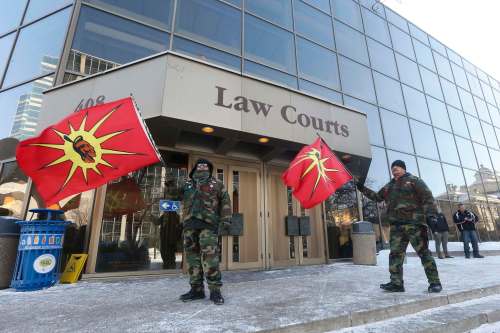
As the jury room door closed behind the seven women and four men who are now deliberating on the evidence against Tina Fontaine’s accused killer, Thelma Favel rose from the chair she’s occupied for most of Raymond Cormier’s second-degree murder trial.

Almost every day over the past three weeks, Favel, the woman who raised 15-year-old Tina, has sat right up front, directly across from the jury box, listening, sobbing and soaking in disturbing details of the teen’s last days that have come to light over the course of Cormier’s second-degree murder trial.

On Wednesday afternoon, after Court of Queen’s Bench Chief Justice Glenn Joyal instructed the jury and sent them off to be sequestered until they decide whether 56-year-old Raymond Cormier is guilty of killing Tina, Favel got up and hugged Crown prosecutor Breta Passler. It was one of many moments, this one shielded from jurors, that have long since proven the emotional impact of the case and the lasting power of Tina’s legacy.

Tina’s death sparked a public outcry that renewed calls for a national inquiry into disproportionately high rates of missing and murdered Indigenous women and girls across Canada, and the criminal trial for the man accused of killing her hasn’t happened in a vacuum.

Read
Thursday, Feb. 22, 2018

World Indigenous Business Forum comes home to Winnipeg for first time, ponders questions for future prosperity

Aaron Epp 5 minute read Preview

World Indigenous Business Forum comes home to Winnipeg for first time, ponders questions for future prosperity

Aaron Epp 5 minute read Tuesday, Oct. 27, 2026

When Nicola Shirley-Phillips imagines what the Indigenous economy in her country might look like 100 years from now, she doesn’t mention social media or artificial intelligence. Instead, she envisions a holistic way of life where people work alongside each other in a way that cares for the planet.

“I see community (and) I see us being more respectful of all the energies around us — our water energy, our climate (and) the soil,” she said. “In all of that, there are opportunities for us to create businesses and opportunities to provide our services.”

Shirley-Phillips, a serial entrepreneur, organic farmer and community economic development specialist from Jamaica, shared her vision Tuesday morning during a panel discussion focused on Indigenous women and prosperity.

The discussion was one of the first items on the schedule during the first full day of the World Indigenous Business Forum at the RBC Convention Centre in Winnipeg.

Read
Tuesday, Oct. 27, 2026

City rec facilities crumbling

Ryan Thorpe 6 minute read Preview

City rec facilities crumbling

Ryan Thorpe 6 minute read Monday, Oct. 22, 2018

Throughout Winnipeg, decades-old community assets — pools, arenas and recreation and leisure centres — are deteriorating so quickly that service disruptions are inevitable.

Meanwhile, the city’s community services department, which is responsible for managing those assets, operates with an annual deficit of roughly $80 million, meaning there are scant resources to do little more than bail water on a sinking ship.

Soon, Winnipeggers will have a choice: fewer community services or higher costs.

“It poses a huge challenge because we have very limited dollars that we have to invest in our existing facilities. We also have growing demands for new amenities in new areas. We have to be very strategic,” said Ken McKim, manager of asset management for the department.

Read
Monday, Oct. 22, 2018

Hellebuyck’s numbers down, but problems go beyond crease

Andrew Berkshire 6 minute read Preview

Hellebuyck’s numbers down, but problems go beyond crease

Andrew Berkshire 6 minute read Friday, Dec. 7, 2018

After hitting a bit of a skid in the last couple weeks of November when they lost four of six games, the Jets have turned it around to win four straight heading into Friday’s matchup against the St. Louis Blues, averaging over four goals per game in the process.

They’ve needed that goal support because, outside of Tuesday’s win over the Islanders, they have allowed three or more against in seven of their last nine games. As it is any time a team allows a lot of goals over a short stretch, many are looking straight at Connor Hellebuyck and expecting him to shut the door, going forward.

Goaltending isn’t that simple, and as I mentioned in mid-November, there were signs this season that Hellebuyck’s performance so far this season was as good and in some ways superior to last season, despite the drop in save percentage.

Things change as time goes on though, and because Hellebuyck’s save percentage since then is an unimpressive 87.8 per cent, it’s probably worthwhile to look at his overall numbers to see what’s going on.

Read
Friday, Dec. 7, 2018

Three in-custody fatalities trigger inquests

Free Press staff 2 minute read Preview

Three in-custody fatalities trigger inquests

Free Press staff 2 minute read 1:50 PM CDT

The province’s chief medical examiner has called inquests into the deaths of three men, including two who died by suicide in correctional facilities earlier this year.

Craig Flett, 32, was found hanging in his cell in the Stony Mountain Institution prison on Feb. 10 this year.

Corrections officers were able to cut him down and tried to resuscitate him, but he later died of a brain injury. Flett was serving a life sentence at the time.

Sebastian Atkinson, a 25-year-old inmate at the Winnipeg Remand Centre, was found hanging in his cell by a linen sheet tied to a metal bar about five feet from the floor.

Read
1:50 PM CDT