Manitoba residential school survivors set Alberta course to see Pope

Advertisement

Advertise with us

A group of residential school survivors from Indigenous communities served by the Archdiocese of Saint Boniface will travel to Alberta to see Pope Francis speak when he visits the Prairie province in late July.

Read this article for free:


or

Already have an account? Log in here »

To continue reading, please subscribe:

Subscribe and receive a limited-edition Free Press branded hat or tote.

Digital Subscription

One year of digital access for only $205*

  • Enjoy unlimited reading on winnipegfreepress.com
  • Read the E-Edition, our digital replica newspaper
  • Access News Break, our award-winning app
  • Play interactive puzzles

*First annual payment billed as $205.00 + GST for one year. This annual subscription will automatically renew at $233.00 + GST every 52 weeks (10% off the regular annual price of $259.35). Offer available to new and qualified returning subscribers only. Cancel any time.

To continue reading, please subscribe:

Add Free Press access to your Brandon Sun subscription for only an additional

$1 for the first 4 weeks*

  • Enjoy unlimited reading on winnipegfreepress.com
  • Read the E-Edition, our digital replica newspaper
  • Access News Break, our award-winning app
  • Play interactive puzzles
Start now

*Your next Brandon Sun subscription payment will increase by $1.00 and you will be charged $17.95 plus GST for four weeks. After four weeks, your payment will increase to $24.95 plus GST every four weeks.

Hey there, time traveller!
This article was published 17/06/2022 (1566 days ago), so information in it may no longer be current.

A group of residential school survivors from Indigenous communities served by the Archdiocese of Saint Boniface will travel to Alberta to see Pope Francis speak when he visits the Prairie province in late July.

A total of 55 representatives, about seven from each community, will be selected by the chiefs and band councils from the communities to travel by bus to Alberta. Transportation and accommodations will be paid for by the archdiocese.

Survivors will come from Poplar River, Berens River, Bloodvein, Little Grand Rapids/Pauingassi, Hollow Water, Manigotagan and Sagkeeng/Fort Alexander.
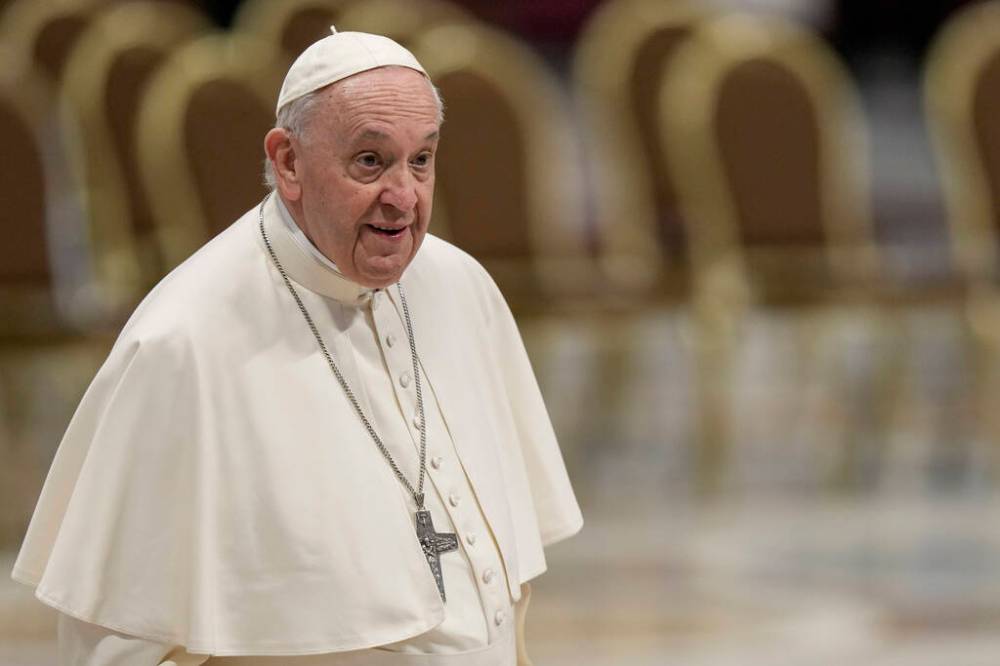
A total of 55 representatives residential school survivors will travel to Alberta to meet Pope Fancis in July. (Andrew Medichini / The Associated Press files)

They will be accompanied by Archbishop Albert LeGatt, who said he looks forward to “spending time on the bus getting to know each other, to be with one another, to establish relationships.”

For LeGatt, the visit is an opportunity to highlight the “changing and improving quality of the relationships” between the Roman Catholic Church and Indigenous people in Canada.

The papal visit “is a gift that opens doors,” he said, adding the Pope is “carrying a message of reconciliation and walking in harmony” with Indigenous people.

LeGatt encouraged those unable to go to Alberta to see the Pope to follow along via the media, “to be present for those moments.”

After the Pope returns to Rome, Canadian Roman Catholics are invited “to inform ourselves, particularly from Indigenous voices and perspectives, to thus open ourselves up, to read Indigenous literature, to hear Indigenous stories, and to connect, one on one, with Indigenous people in our communities.”

The papal visit (during which Pope Francis will make stops in Edmonton, Quebec City and Iqaluit), LeGatt added, is “one step in the long journey of reconciliation which remains at hand.”

A spokesperson for the Archdiocese of Winnipeg said they are also making plans for taking residential survivors to Alberta, but nothing is finalized.

faith@freepress.mb.ca

The Free Press is committed to covering faith in Manitoba through our Religion in the News project. This reporting continues because readers like you step forward to fund it.

Donate now to support our reporting on religion.

Your donation is eligible for a charitable tax receipt. BECOME A FAITH JOURNALISM SUPPORTER

John Longhurst

John Longhurst
Faith reporter

John Longhurst has been writing for Winnipeg's faith pages since 2003. He also writes for Religion News Service in the U.S., and blogs about the media, marketing and communications at Making the News.

Our newsroom depends on a growing audience of readers to power our journalism. If you are not a paid reader, please consider becoming a subscriber.

Our newsroom depends on its audience of readers to power our journalism. Thank you for your support.

Report Error Submit a Tip

The Free Press acknowledges the financial support it receives from members of the city’s faith community, which makes our coverage of religion possible.

More Stories

Billions of dollars spent on health, but scattershot financial reporting leaves decision-makers, Manitobans in the dark, auditor general says

Nicole Buffie 3 minute read Preview

Billions of dollars spent on health, but scattershot financial reporting leaves decision-makers, Manitobans in the dark, auditor general says

Nicole Buffie 3 minute read Yesterday at 5:20 PM CDT

Manitoba’s auditor general says significant gaps in health-sector financial reporting make it difficult to understand how billions of dollars in public funds are spent.

Auditor General Tyson Shtykalo is calling for clearer, more transparent reporting in his latest report, titled Observations on Health Sector Financial Reporting and Accountability in Manitoba.

“Manitoba spends nearly $10 billion annually on health care, but current financial reporting does not provide a clear picture of how that money is spent, what services cost, or the financial pressures facing the system,” Shtykalo said in a news release.

While some financial information is available, the reports do not provide a “complete, consistent, or easily understood” picture of how health-care funds are spent, the report said.

Read
Yesterday at 5:20 PM CDT

Plenty of losses all around

Gwynne Dyer 4 minute read Wednesday, Jul. 15, 2026

The last time oil-tankers were being shot up in the Persian Gulf, back in the 1980s, it was Saddam Hussein’s brutal tyranny in Iraq versus Ayatollah Khomeini’s revolutionary Islamist regime in Iran.

The United States backed Saddam because he was just another murderous thug, whereas the new regime in Tehran was an actual threat to American interests. It had overthrown Iran’s American-backed puppet king and wanted to spread its Islamist ideology across the region.

So, of course, Ronald Reagan’s administration chose Saddam’s side. It sent Iraq arms by clandestine means (because Congress wouldn’t authorize it) and even provided targeting information for Iraqi poison gas attacks on Iran. The Americans chose the “lesser evil,” but at least they knew it was evil.

Once in a while they would even say it out loud, quoting U.S. diplomat Henry Kissinger: “It’s a shame that both sides can’t lose.” But they never did anything about it, and after eight years of slaughter, the war ended in a no-score draw.

Rich colours, nature-inspired hues key decorating trends for 2026

AV Kitching 6 minute read Preview

Rich colours, nature-inspired hues key decorating trends for 2026

AV Kitching 6 minute read Monday, Jan. 12, 2026

Forget featureless white walls and cold, pale floors, a warm, rich colour palette is one of the key decorating trends this year — and it won’t break the budget to update your house if repainting isn’t on the cards.

Despite Pantone’s announcement of a “soft, serene and versatile” shade of white as 2026’s colour, interior designers and decorators are eschewing Cloud Dancer, informally christened “the landlord’s special,” for richer, jewel- and nature-inspired hues such as soft ochre, deep green and earthy brown.

Moving away from the sleek, clinical practicality of flat minimalism, this year’s trends reflect the uncertain political, social and economic climate, firmly re-establishing the home as a place of safety, comfort and refuge.

“Spaces that are overly minimal can feel empty and dated,” says Michelle Chisick, interior designer at Interior Illusions on Princess Street.

Read
Monday, Jan. 12, 2026

Night terrors

AV Kitching 7 minute read Preview

Night terrors

AV Kitching 7 minute read Monday, Oct. 20, 2025

Before we go any further, let me just unequivocally state: Six Pines is not for the weak.

I was so terrified my mind has effectively erased the entire experience.

I shall do my best to give you a comprehensive, cohesive review of the night my friend and I visited, but please forgive the lack of detail.

What you are about to read are snatches of memories, dragged kicking and screaming from the depths of my fear-addled brain, which is, even as I type, trying to block all attempts of retrieval.

Read
Monday, Oct. 20, 2025

Alarm sounded over school divisions’ silence

Katrina Clarke 6 minute read Preview

Alarm sounded over school divisions’ silence

Katrina Clarke 6 minute read Monday, Sep. 26, 2022

A near-blanket refusal by Manitoba school divisions to provide information about teacher misconduct is “insulting” and “nonsensical,” privacy experts say.

Read
Monday, Sep. 26, 2022

The man who ran for president from his cell

Allan Levine 5 minute read Friday, Apr. 26, 2024

Should Donald Trump be found guilty of all 34 felony charges he is currently on trial for in a New York City courtroom, he could be sentenced to 20 years in prison, the maximum sentence the state allows for the type of offences he has allegedly committed.

The odds are that his prison term would be much less, if he is incarcerated at all.

Even if he is locked up, and assuming that he becomes the Republican party presidential nominee, a conviction would not disqualify him. True, millions of voters might (finally) turn against him, yet there is no U.S. constitutional law that individuals with a criminal record cannot run for a federal office.

Moreover, it has happened before. More than a century ago, Eugene Debs, the head of the Socialist Party of America (SPA), ran as a third-party candidate in the 1920 presidential election from his cell in the Atlanta Federal Penitentiary. In September 1918, he had been convicted on charges for violating the Espionage and Sedition Acts and was given a 10-year prison sentence.